

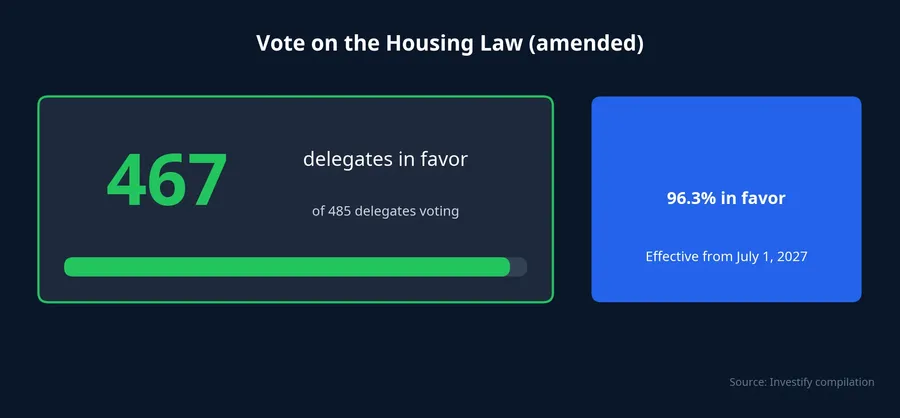
On the morning of November 21, the National Assembly passed the amended Housing Law, with 467 of 485 delegates voting in favor.Người Quan Sát The law takes effect on July 1, 2027.Thời báo Ngân hàng Many headlines that day led with the same point: after five years, a social housing owner who resells does not have to pay the land-use fee.
For apartments, that exemption is not new, since the 2023 Housing Law now in force already provides it. What the new law actually changes is the list of people allowed to buy the home. This article works through three questions that decide how much a social housing owner takes home at resale: who may buy, what must be paid, and what happens when a sale breaks the rules.
What the law says before and after year five
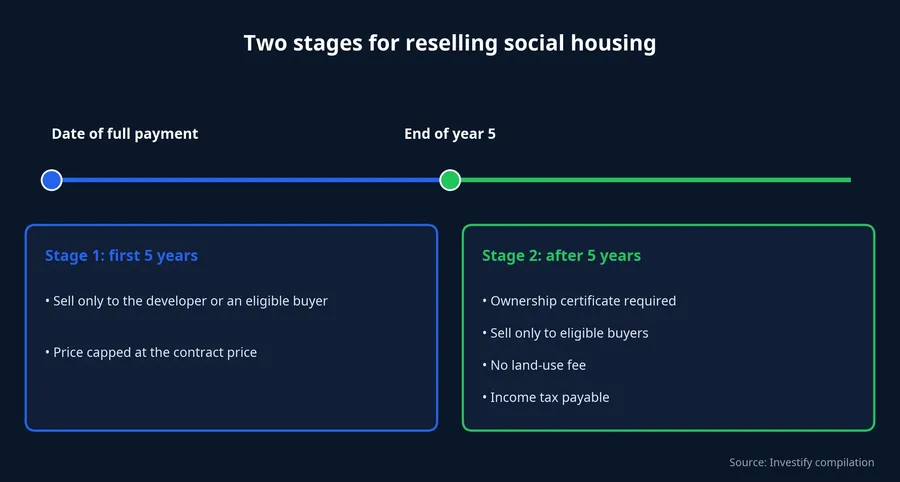
The five-year clock runs from the date the buyer or lease-purchaser has paid in full, not from the contract signing or the handover date.Thời báo Ngân hàng
During the first five years, an owner who wants to sell may sell only back to the project developer or to someone eligible to buy social housing. The maximum price is the price in the original contract with the developer.VTC News In other words, a seller in this window has no price gap to pocket.
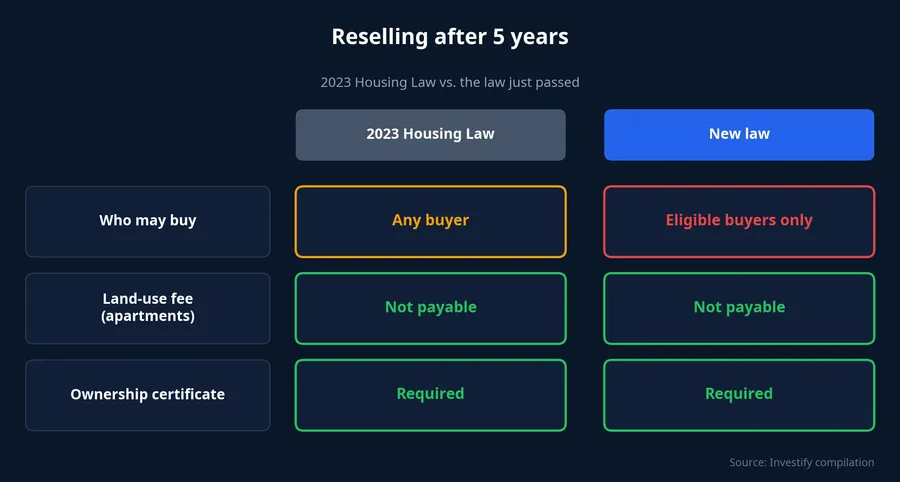
After five years, a buyer or lease-purchaser may resell to an eligible person once the ownership certificate has been issued. The seller owes no land-use fee but must pay income tax under tax law.Thời báo Tài chính Việt Nam The cap at the original contract price applies to the first five years.
Who may buy: a door closes
The 2023 Housing Law now in force lets an owner, after five years and with the ownership certificate in hand, resell at market terms to anyone who needs a home, so the buyer pool is unrestricted.VnExpressCafeF
The new law shuts that door. A resale buyer must belong to one of the groups entitled to buy social housing: people with revolutionary contributions, poor and near-poor households, low-income earners, workers, officers and professional soldiers, civil servants and public employees, people who have returned public-service housing, and people whose land was reclaimed without compensation in the form of housing or residential land.VOH The buyer must also own no home in the province or city where the project sits.VTC News The government will set detailed housing and income conditions.
For the seller, the effect shows up on the demand side. When the people paying for the home are limited to those who meet policy-level income and housing conditions, the achievable price is likely to follow that group's ability to pay and borrow rather than the price level of commercial apartments nearby. That is an inference from the structure of the buyer pool, not a published figure, but it goes straight to how much the seller receives.
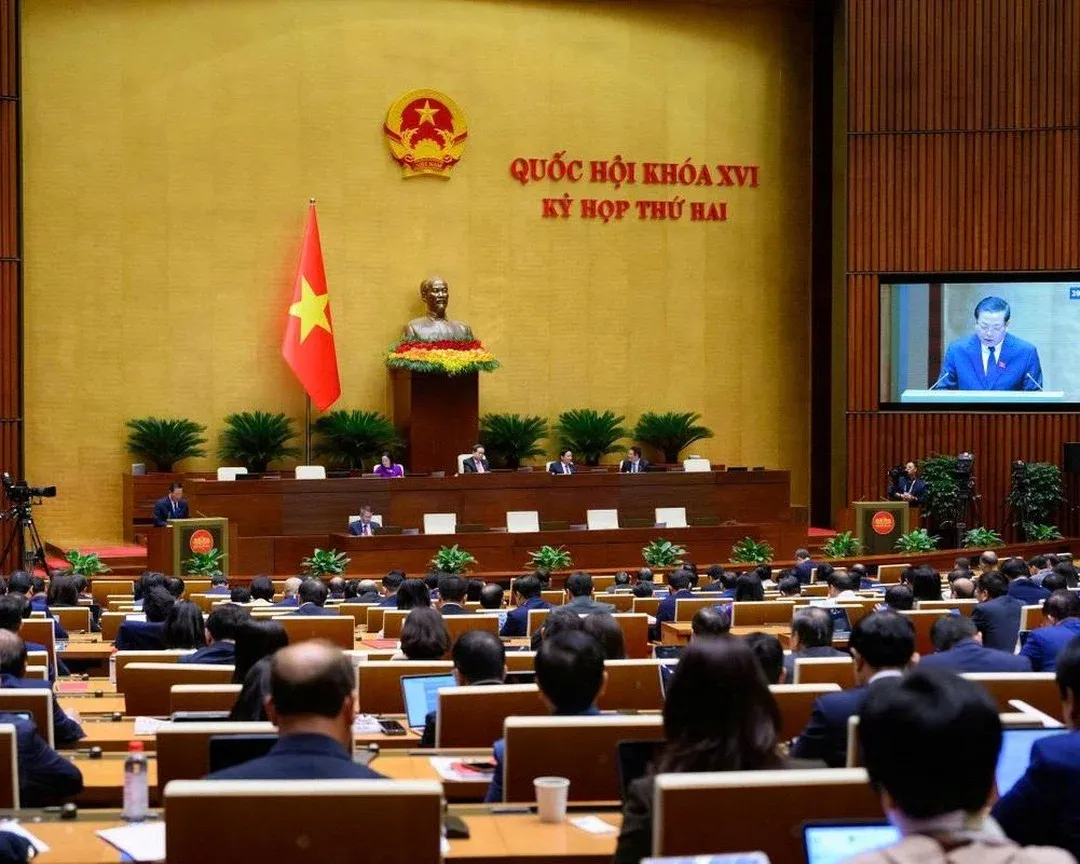
Trần Hồng Minh, Minister of Construction, told the Assembly in his explanatory report ahead of the vote that the draft had been reviewed to limit abuse of social housing policy as far as possible.VTC News A proposal to let owners resell into the Housing Fund was not adopted. The stated reason: the Fund exists to create rental housing that is public property, and buying scattered units would spread public assets across projects with mixed private and state ownership, making them hard to manage and raising operating costs.VOH According to Mr. Minh, the government proposed resale only to people entitled to social housing support.
What must be paid: the part that changes least
"No land-use fee" is easy to read as a new benefit. On financial obligations for a post-five-year sale, the draft submitted to the Assembly carried over the 2023 Housing Law: an apartment seller owes no land-use fee and must pay income tax.CafeF
Detached social housing is different. Under current rules, a seller after five years pays 50% of the land-use fee under Article 42 of Decree 100/2024, plus personal income tax.CafeF Reports on the passed law say only that "the seller does not pay the land-use fee," so whether detached homes get the same treatment will be settled when the law's text and the implementing decree are published. For an apartment owner, the financial obligations on a post-five-year sale stay nearly the same as under current law.
Income tax is still due. Mr. Minh said the government will direct the Ministry of Construction to work with the tax-law drafting agency so that rules are consistent with the amended Housing Law when tax legislation is revised.Thời báo Ngân hàng
So the seller's costs barely move. The change is on the revenue line, because the sale price now depends on a narrower pool of buyers.
Paperwork and void contracts
The ownership-certificate condition before a post-five-year sale was already in the 2023 law.CafeF What the new provision clarifies is the consequence of a sale that breaks the rules.
If a sale or lease-purchase of social housing violates the rules on eligible buyers or conditions, the contract is void. The buyer or lease-purchaser must hand the home back to the developer or the social housing manager. If they do not, the provincial People's Committee organizes forced recovery. Each eligible individual or household may buy or lease-purchase only one unit.VTC NewsThời báo Tài chính Việt Nam
This deserves a careful read for anyone holding a social housing unit through a power of attorney or a three-way side deal with the previous owner, especially if they are not themselves eligible. By the wording of the law, if a transaction is found to have been made to an ineligible buyer, the buyer cannot keep the home. How money is returned between the parties in that case depends on the implementing guidance.
Who gains and who loses from July 1, 2027
Someone who buys social housing to wait out five years and then sell at a markup to an open-market buyer loses that route on contracts governed by the new law. This is the group the law targets when it talks about stopping policy abuse.
Eligible buyers on the waiting list gain a supply source: units resold after five years can now only go to people in their own group, rather than being bid away by open-market buyers.
An owner selling after five years still pays no land-use fee on an apartment, as before. What they give up is the price they might have reached by selling to the wider market. How large that is depends on the gap between nearby commercial apartment prices and what eligible buyers in each area can afford.
For social housing developers, the rule changes the product's appeal in two directions: fewer buyers purchasing for investment, but genuine demand to live in the home stays within the same customer group.
Which law covers those who bought before July 1, 2027
This is the biggest question for current owners. At the draft stage, the draft submission said homes fully paid for more than five years before the law takes effect would face no limit on who may buy them.VnExpress The draft that CafeF cited goes further: for sale contracts signed before the effective date, resale after five years continues to follow the 2023 Housing Law.CafeF
The two versions give different results for someone who signed a contract but has not reached five years by July 1, 2027. At the morning session on November 21, Mr. Minh said the government had directed the Ministry of Construction to work with the Assembly's Committee on Law and Justice to review the transitional provisions closely and avoid a legal gap.Thời báo Ngân hàng
The thesis here is simple: the new law does not add a tax or fee burden for apartment sellers, it narrows the group of people who will pay for the home. The transitional provisions in the published text, together with the implementing decree on housing and income conditions, will show who each owner can sell to. For anyone considering buying a resale social housing unit, three things are worth checking before putting down money: whether the unit already has an ownership certificate, the date of full payment, and whether the buyer is eligible.