


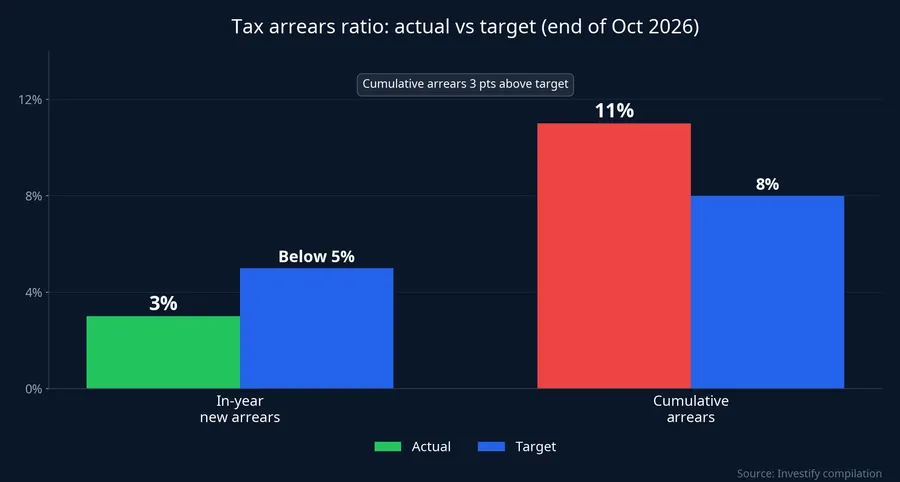
On the morning of November 12, in the National Assembly's question-and-answer session, Finance Minister Ngô Văn Tuấn gave two figures that point in opposite directions. Tax arrears arising in 2026 stand at 3% of total revenue, below the target of under 5% set by the Tax Sector Development Strategy.Tạp chí Tài chính Cumulative arrears across all years stand at 11%, or more than VND 267,000 billion, above the target of 8% or less.VnEconomy Both figures run through the end of October 2026.
So the tax authority is meeting one of its two targets. It is missing the other for a reason that is tied largely to the property market: according to the Minister, more than 50% of total tax arrears are land-use fees.
Two targets, two different measures
As relayed by Tạp chí Tài chính, the Minister said the Tax Sector Development Strategy sets two separate targets. The first is that new arrears arising each year stay below 5% of total tax revenue. The second is that cumulative arrears across years stay at 8% or less.
The two measure different things. The annual target shows how much taxpayers left unpaid this year. The cumulative target shows how high the pile of money not yet received by the budget has grown over several years. New arrears can be small, yet old debt that is never collected stays on the books, and next year's new arrears are added on top.
That is why new arrears of 3% are not enough to pull the total down to 8%. To bring total arrears down, the tax authority has to collect debt from previous years, not just stop new debt from forming.
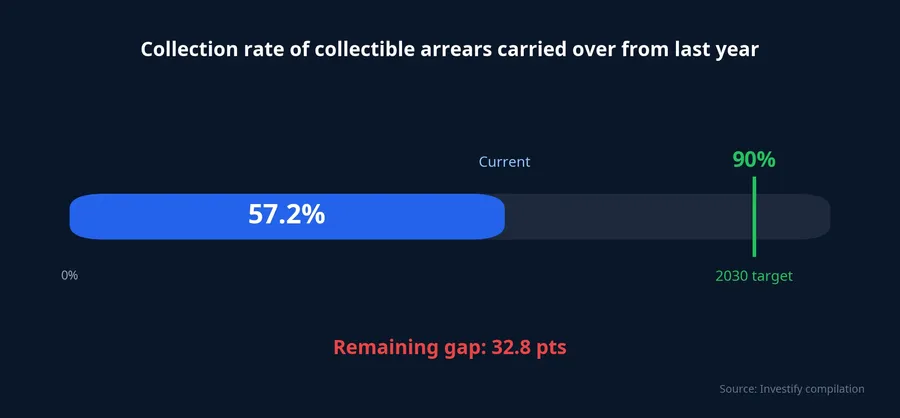
Collection of old debt is still far from the goal. According to the tax department, cited by Thời báo Tài chính Việt Nam on November 13, the sector has recovered VND 99.3 trillion in arrears, equal to 57.2% of the collectible debt carried over from last year.Thời báo Tài chính Việt Nam The Ministry of Finance's target for 2030 is 90% or higher.Báo Pháp luật Việt Nam Results also vary by locality: only 12 of 34 provinces and cities have reduced their arrears.
Land-use fees are the largest part of the debt
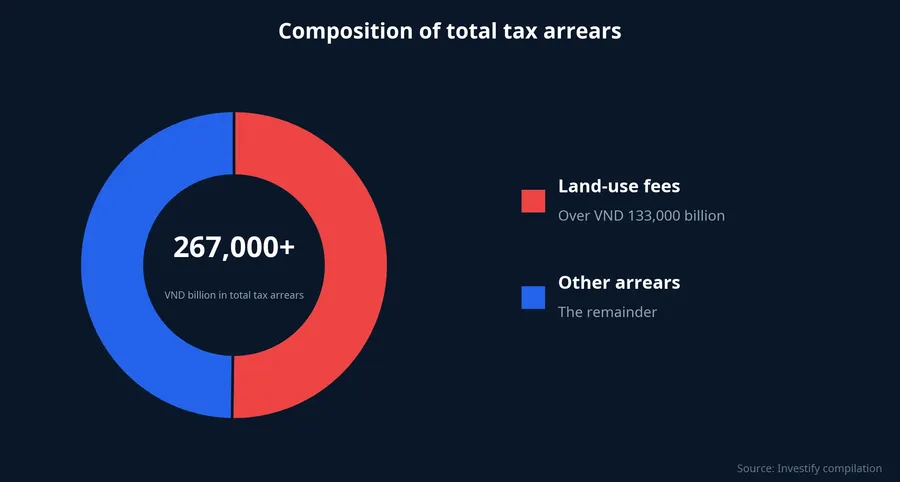
Breaking down the structure of the debt, Minister Tuấn said more than 50% of total tax arrears are land-use fees. Against total arrears of over VND 267,000 billion, simple arithmetic puts the land portion above VND 133,000 billion.VnEconomy
Land-use fees differ from ordinary taxes in that they are tied directly to the land. A company allocated land for a project, or an individual converting the use of a plot, must pay the State this fee. If the project has not sold its units, or the person converting the land has no cash yet, the amount stays due and becomes arrears.
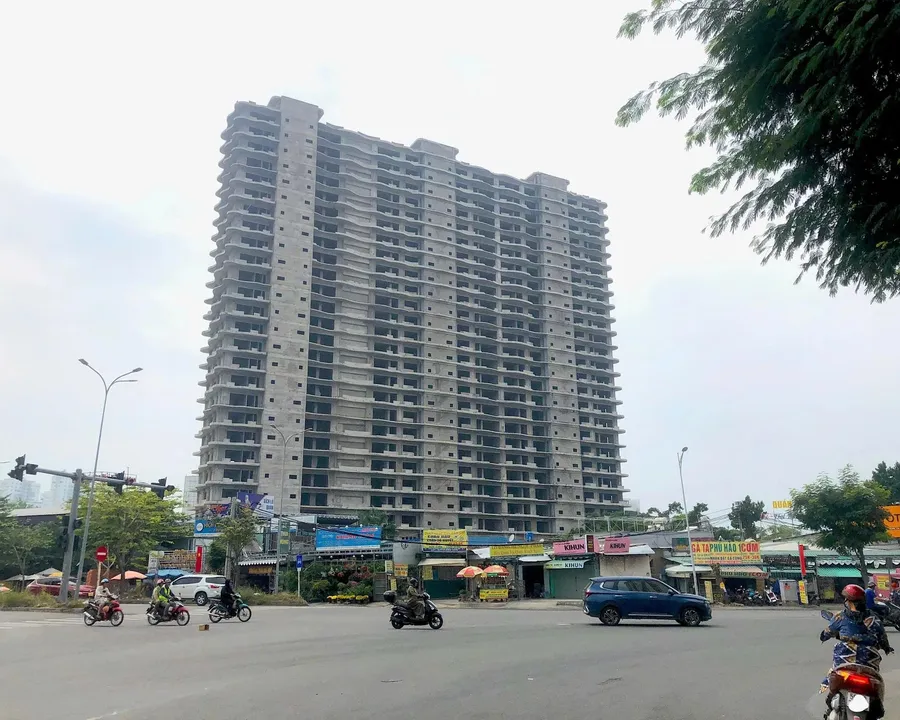
The Minister named the main cause: the debt is large "amid a still subdued real estate market." He stressed that pressure from tax arrears "comes not only from taxpayers' compliance with their obligations, but is also affected by market conditions and the ability to meet financial obligations related to land."VnEconomy
That changes how the VND 267,000 billion figure should be read. If most of it were sales tax or income tax being withheld, the answer would lie in tighter discipline. When more than half is land money, how much gets collected depends on whether the property market can generate cash flow for those who owe. The tax authority can press and enforce, but it cannot create buyers for a project.
Extensions: a later deadline, not forgiven debt
A further layer comes from support policy. According to a tax department representative cited by Thời báo Tài chính Việt Nam, Decree 245/2026/NĐ-CP extends the payment deadline for value-added tax, corporate income tax, personal income tax and land rent during 2026. The total amount extended is estimated at about VND 125,000 billion.Thời báo Tài chính Việt Nam
The tax department explains that an extension "only changes the timing of the financial obligation" and does not change the tax owed. During the extension, the amount is still booked as arrears, so the arrears figure in the system rises. Tax department leaders cite this extension, together with companies' cash-flow difficulties, as the reason total arrears are temporarily elevated.Báo Pháp luật Việt Nam
The list of extended items given by the tax department covers taxes and land rent, not land-use fees. The two layers of debt therefore differ in origin: one is debt with a deadline that policy has pushed back, the other is land-use money not yet paid. Even the extended layer does not disappear on its own. The tax department notes that some companies with cash-flow trouble still have not paid in full when the extension ends, and that portion also adds to arrears.
A word on the scope of the data. The VND 267,000 billion figure is cumulative arrears through the end of October 2026, as stated by the Minister. The tax department gave a different figure, as of the end of September 2026, of VND 223.6 trillion, down 9.8% from the end of 2025.Thời báo Tài chính Việt Nam The two numbers were compiled at different dates and presented in different ways, so one cannot be subtracted from the other to conclude that tax arrears rose or fell in a single month.
The tax authority focuses on large debts and land-related debts
The Ministry of Finance has pushed collection pressure down to individual officials. It has set performance targets for managing tax arrears from the local level to each officer directly tracking them. The Minister also said inspection and supervision will increase and penalties will be raised for organizations and individuals "who are able to meet their obligations but deliberately stall."Tạp chí Tài chính
The tax department has set out its order of priority. Its leadership told the whole sector to classify each debt accurately and concentrate on collectible debts, large debts and land-related debts.Thời báo Tài chính Việt Nam The sector also plans to share data with banks, business registration offices and immigration authorities to track cash flow and enforce collection promptly.Báo Pháp luật Việt Nam
One locality shows how strong these measures can be. In the first nine months of 2026, the Cần Thơ City tax authority issued 8,836 enforcement decisions on tax arrears and notified exit suspensions for 1,045 legal representatives of companies with tax debts. The city collected VND 2,810 billion in arrears over the same period.Thời báo Tài chính Việt Nam
Who bears the direct pressure
Putting these statements together, the group under direct collection pressure is those who still owe land-use fees and are able to pay. They may be project developers or individuals who converted land use. The tax authority distinguishes two states: having no money because the market is subdued, and having money but not paying. The second group is the one the Minister said will face tougher penalties.
For investors holding real estate stocks, the point to remember is that unpaid land-use fees remain a payable, even if recorded as long-standing tax arrears. If the property market recovers, companies have more cash to settle it. If the market stays subdued, the payable remains, while the tax authority has moved land-related debt into its priority collection group.
The thesis here is fairly clear: new arrears are under control, while old arrears, mostly land-use fees, are where the tax authority is missing its target, and progress on that debt is tied more to the pace of the property recovery than to enforcement measures. The next marker to watch is the end-2026 arrears data. If the cumulative ratio drifts toward 8%, collection of old debt is making progress. If it stays around 11%, the land-related debt is standing still.