
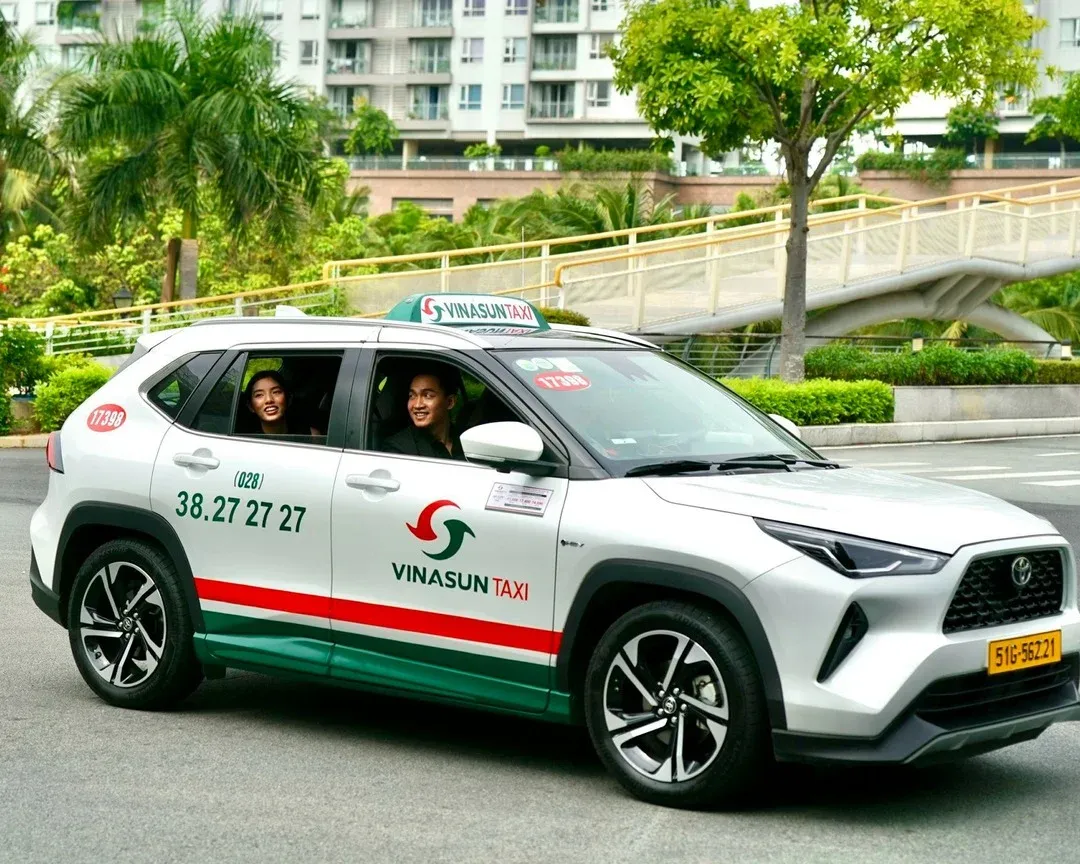

When a family holding 42.56% of a company asks to go past 51% without making a public tender offer, the first question is who gets to approve it. At Vinasun (ticker VNS, HOSE), the current rules take the founding family and the two people selling shares out of the vote. The decision falls to the remaining shareholders: after deducting the family's 42.56% and the 8.92% being transferred, that group holds at most about 48.52% of capital.
The request is still a proposal put to shareholders; no resolution has been passed.
The Founder Left the Chair but Remains the Largest Individual Holder
According to Dan Tri, Dang Phuoc Thanh, founder of Anh Duong Viet Nam JSC (Vinasun), stepped down as board chairman about three years ago and is still the company's largest individual shareholder. His son, Dang Thanh Duy (born 1984), is now a board member and CEO, and the company's legal representative.
30 June 2026: Three People Held 42.56%
In the first-half 2026 governance report, as relayed by VnEconomy, Mr. Thanh held 24.92% at the end of June, Ngo Thi Thuy Van (Mr. Duy's mother) held 11.91%, and Mr. Duy held 5.73%. Together that is about 28.88 million shares, or 42.56% of Vinasun.
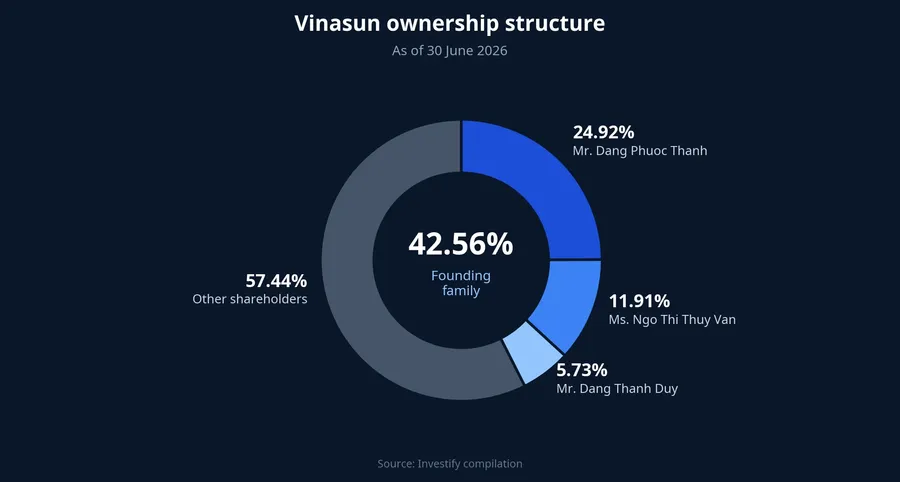
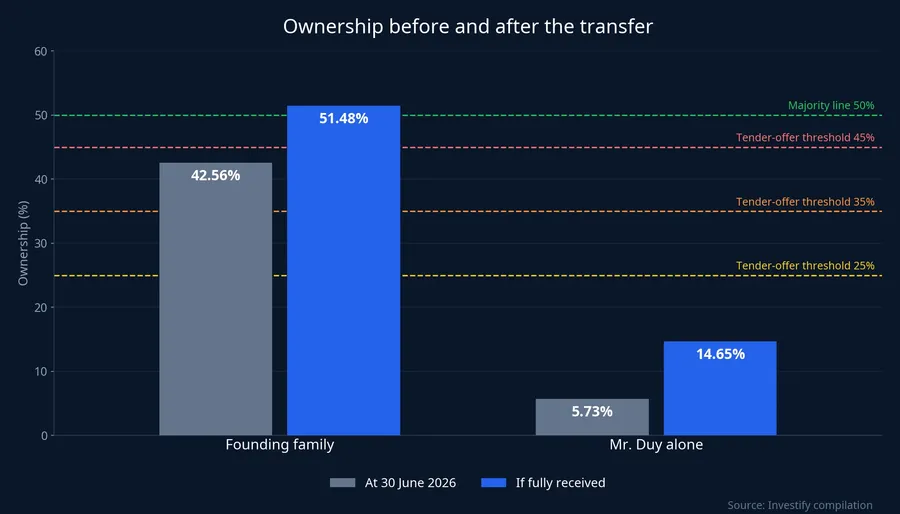
At 42.56%, the group is already past the 25% and 35% levels that the Securities Law uses to trigger tender-offer obligations. The next level is 45%.
The 9 November Proposal: Another 8.92% for Mr. Duy
According to Dan Tri, the board's proposal, signed on 9 November, asks shareholders to let Mr. Duy receive up to 6,055,451 VNS shares from two individuals. VnEconomy gives the split: up to 2,765,691 shares from Dang Van Tam and 3,289,760 from Pham Kim Lien, through negotiated trades. The total is roughly 8.92% of charter capital.
If he receives the full amount and his parents' holdings stay the same, Mr. Duy would directly hold nearly 9.95 million shares, or 14.65%. The three family members together would hold nearly 34.93 million shares, or 51.48%, which is a majority.VnEconomy As Tin nhanh chung khoan relays the proposal, the board is asking shareholders to let Mr. Duy hold more than 45% of voting rights, related persons included, without launching a public tender offer.
What a Tender Offer Does for Small Shareholders
Under Article 35 of the 2019 Securities Law, an individual who, together with related persons, already holds 25% or more of a public company's voting shares must make a public tender offer, registered with the State Securities Commission, before buying further to reach or cross 35%, 45%, 55%, 65% or 75%.
A tender offer means the buyer puts the bid to every shareholder, rather than buying privately from a few holders who agreed in advance. For small shareholders it is a chance to sell to whoever is accumulating control, especially in a thinly traded stock like VNS: only 3,600 shares changed hands on 10 November and 1,100 on 11 November.
The law also allows a waiver. Under point b, clause 2 of Article 35, a buyer of outstanding shares is exempt from a public tender offer if the general meeting of shareholders approves it, provided the resolution names both seller and buyer. Vinasun's proposal names all three. Asking shareholders is therefore the procedure the law provides; what deserves attention is who holds the ballots.
Who Gets to Vote
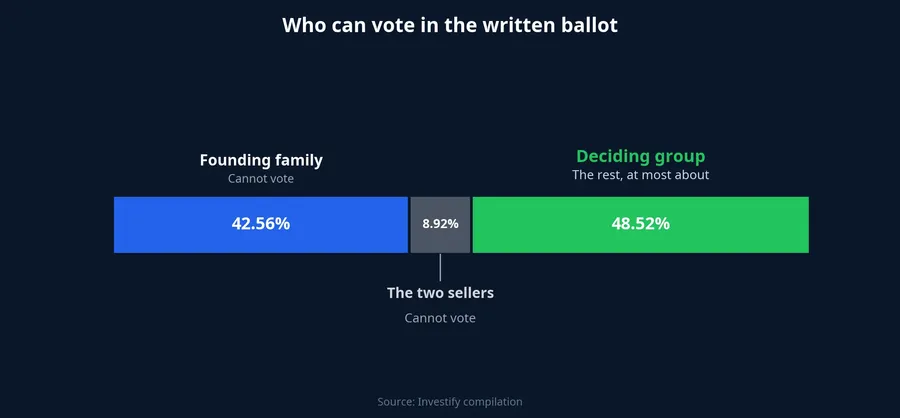
Article 84 of Decree 155/2020 says that, where the waiver under point b, clause 2 of Article 35 applies, the transferor, the transferee and their related persons have no vote on the transfer. The resolution passes when holders of more than 50% of the votes of the remaining eligible shareholders approve. The exact threshold is set by the company's charter.
Applied to Vinasun: Mr. Duy is the transferee, his parents are related persons, and Mr. Tam and Ms. Lien are the transferors. The three family members hold 42.56%, and the two sellers are transferring at least 8.92%. What remains, at most about 48.52%, is the group that decides. The real figure may be lower, because Mr. Tam and Ms. Lien may hold more than the part they are selling, and their related persons cannot vote either.
The Voting Calendar
Per Dan Tri, Vinasun is polling shareholders in writing from a list closed on 4 November, with ballots accepted from 20 to 30 November and counting expected on the morning of 1 December. Ballots are due before 4 p.m. on 30 November 2026.VnEconomy Because the list closed on 4 November, anyone who bought VNS after that date is not on it for this vote.
How Vinasun Is Doing This Year
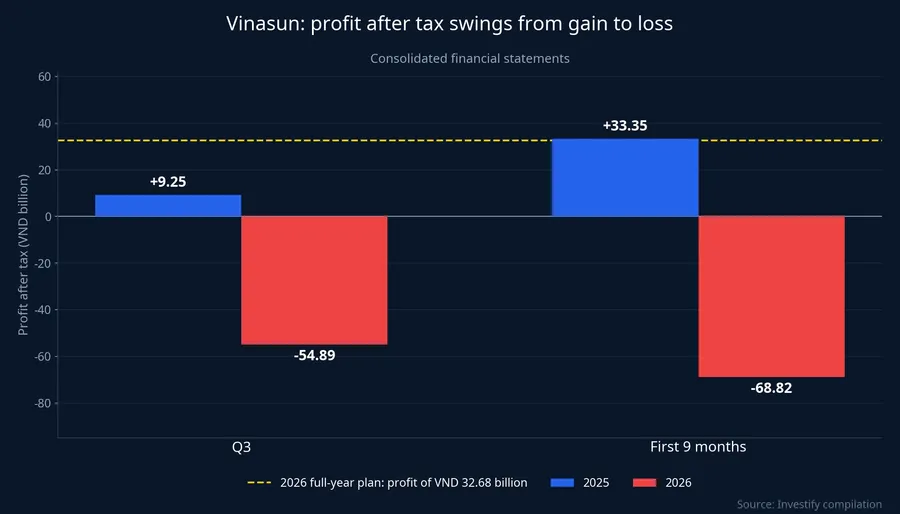
The proposal comes in a year of heavy pressure on the business. On the consolidated accounts, the company lost nearly VND 14 billion after tax in the first half. In the third quarter, net revenue was VND 177.02 billion, down 18.5% year on year; gross margin fell from 22.4% to 11.4%; and the after-tax loss was VND 54.89 billion, against a profit of VND 9.25 billion in Q3 2025.Tin nhanh chung khoan According to CafeF, this is Vinasun's largest quarterly loss since Q4 2021.
How does Vinasun explain it? Per CafeF, in its Q3 explanatory filing to regulators, the company said profit fell because revenue declined while it kept its driver-support policies in place. VnEconomy reports the same two reasons. CafeF also notes that other activities lost nearly VND 33 billion, against a gain of more than VND 7 billion a year earlier, mainly due to costs tied to disposing of fixed assets; over nine months, the company took in more than VND 105 billion from asset disposals, with related costs of about VND 147 billion.CafeF
Over nine months, net revenue was VND 596.08 billion, down 10.8%. Profit after tax swung from VND 33.35 billion a year earlier to a loss of VND 68.82 billion. The 2026 plan calls for an after-tax profit of VND 32.68 billion.Tin nhanh chung khoan To hit it, the fourth quarter would need a profit of about VND 101.5 billion, roughly three times last year's nine-month profit.
Borrowings and finance leases fell from nearly VND 498 billion at the start of the year to about VND 404 billion at the end of Q3.CafeF On the exchange, VNS traded at VND 5,300 in the morning session on 12 November, after sitting at VND 5,610 over the three sessions from 9 to 11 November.
After 1 December: Two Outcomes, One Question About the Tender Offer
If shareholders with voting rights approve, the family group rises to about 51.48% of capital, a majority of the voting shares, and other shareholders receive no tender offer for this increase.
If they do not, Mr. Duy would have to make a public tender offer to all shareholders in order to take his holding, together with related persons, past 45%. The other path is to stay below 45%, which leaves room for only about 2.44% more from the 42.56% held at 30 June.
The point to watch is the vote count on the morning of 1 December, and two numbers in it: the approval rate and the number of votes counted as eligible. The second shows precisely how much of Vinasun's capital sat outside this ballot.