
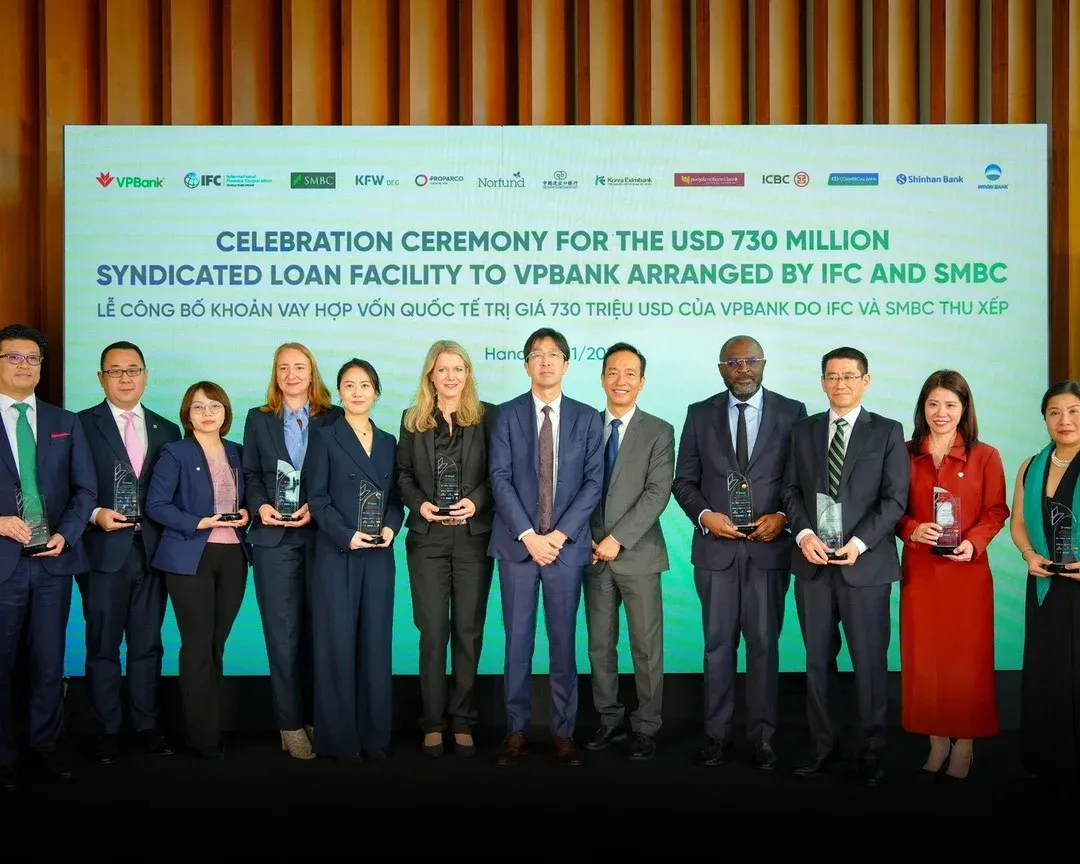

On November 10, Vietnam Prosperity Joint Stock Commercial Bank (VPBank, ticker VPB on HoSE) announced an international syndicated loan of USD 730 million, equal to nearly VND 19,000 billion.Người Quan Sát The loan has three tenors of 3, 5 and 7 years, and will be disbursed in several tranches during 2026.CafeF According to Allen Forlemu, Director of the Financial Institutions Group for Asia-Pacific at the International Finance Corporation (IFC), it is the first time IFC has extended a 7-year loan to a Vietnamese bank.VietnamFinance
IFC and Sumitomo Mitsui Banking Corporation (SMBC) acted as coordinators and arrangers. SMBC is also a strategic shareholder of VPBank, holding 15% of its charter capital since 2023.Người Quan Sát Just one day before the ceremony, Ngô Chí Dũng, Chairman of VPBank's Board of Directors, said the two sides are negotiating to raise that stake from 15% to 20%.VNA The relationship between VPBank and its Japanese partner is therefore running on two tracks at once: lending and equity. This article separates the two, looks at the numbers behind each, and flags what VPB shareholders should wait for.
Who Is Lending, and Where the Money Goes
Besides IFC and SMBC, the loan brings together three groups of lenders. The development finance institutions are Germany's DEG, France's Proparco and Norfund of Norway. The export-import banks are the Export-Import Bank of China and the Export-Import Bank of Korea. The commercial banks are SMBC, ICBC, Shinhan Bank, Woori Bank, Punjab National Bank, Commercial Bank of Ceylon and KEXIM Asia Limited.VietnamFinance The participants come from the US, Germany, France, Norway, China, South Korea, Japan, India and Sri Lanka.
According to VPBank, the proceeds are earmarked for small and medium-sized enterprises (SMEs), especially women-owned or women-led businesses and agricultural firms. The stated purposes are working capital, investment in production capacity and business expansion.Vietnam+ Alongside the loan, IFC has also pledged to help VPBank build its agricultural lending capacity.
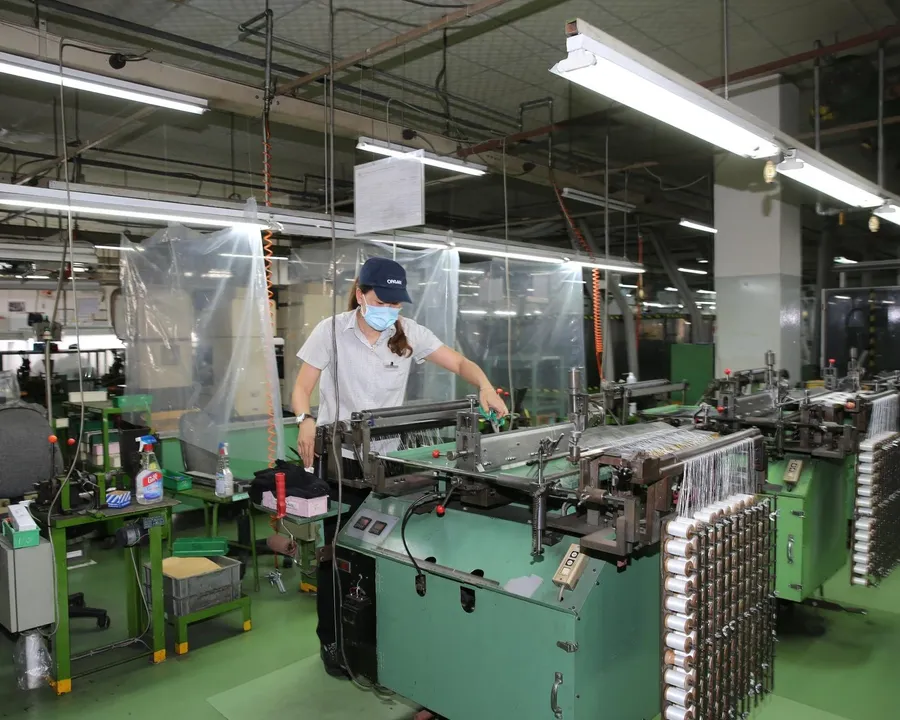
On why IFC joined, Mr. Forlemu said SME funding needs in Vietnam are far greater than any single institution can meet.CafeF A syndicated structure lets IFC use its own capital to draw private banks into the same deal.
Why the 7-Year Tenor Stands Out
Most of the money a commercial bank raises is savings from households and companies. These deposits typically run from a few months to a year, and depositors can withdraw at maturity. A business buying machinery or expanding a plant, meanwhile, needs funding for years. When a bank funds long loans with short deposits, it has to keep raising money each time deposits mature, and it bears the risk that funding rates move in the meantime. The State Bank of Vietnam also caps the share of short-term funds that can be used for medium- and long-term lending.
A 5- or 7-year loan is different. It is money the bank holds for just as long, a closer match to the maturity of its investment loans to businesses. According to the statement republished by CafeF, VPBank says this tenor structure gives it more room to balance funding as it carries out its 2026-2030 five-year strategy.
The downside is just as clear. This is a US-dollar loan, so VPBank must repay principal and interest in dollars over the next 3 to 7 years, while most of its domestic corporate lending is denominated in dong. The real cost of the loan therefore depends both on the agreed interest rate and on how the bank manages currency risk.
A Steady Run of Overseas Borrowing
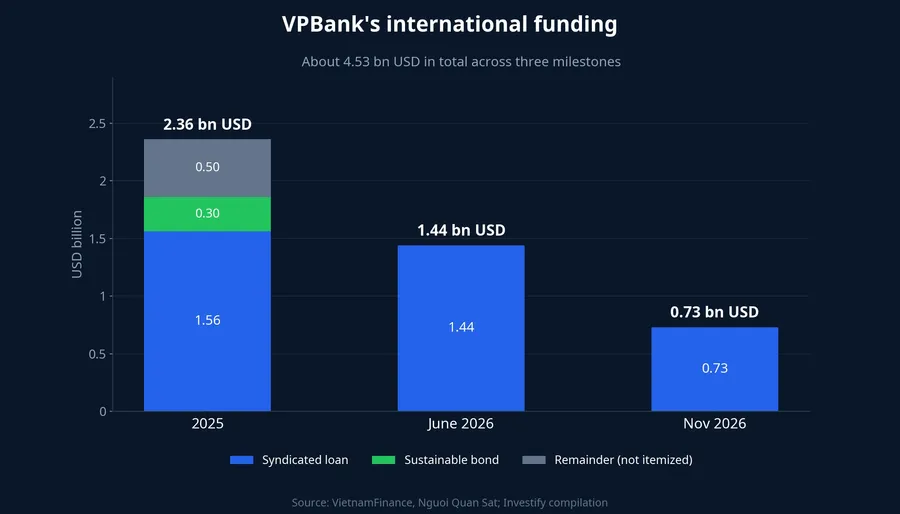
The USD 730 million is not VPBank's first foray into foreign funding. In June 2026, the bank signed a USD 1.44 billion sustainability-linked syndicated loan with 15 international financial institutions.Người Quan Sát In 2025, VPBank raised a total of USD 2.36 billion from international markets, made up of a USD 1.56 billion syndicated loan and a USD 300 million international sustainability bond.VietnamFinance
Adding the three milestones together, VPBank has raised about USD 4.53 billion of international funding since the start of 2025 (2.36 + 1.44 + 0.73 billion). The November loan is smaller than June's. What sets it apart is its longest tenor of 7 years.
SMBC: From Lender to a Larger Shareholder
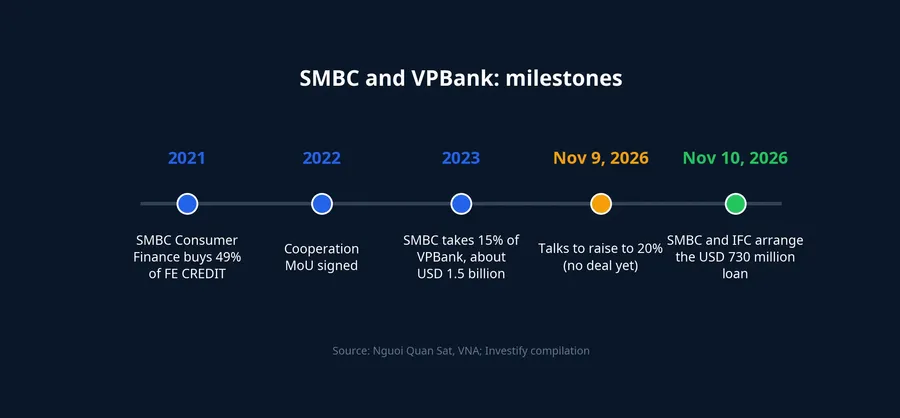
SMBC came into VPBank step by step. In 2021, SMBC Consumer Finance, a member of SMBC Group, bought 49% of the charter capital of FE CREDIT, VPBank's consumer finance company. In 2022, the two sides signed a memorandum of understanding on business cooperation. In 2023, VPBank privately placed shares with SMBC worth about USD 1.5 billion, making the Japanese bank a strategic shareholder with a 15% stake.Người Quan Sát
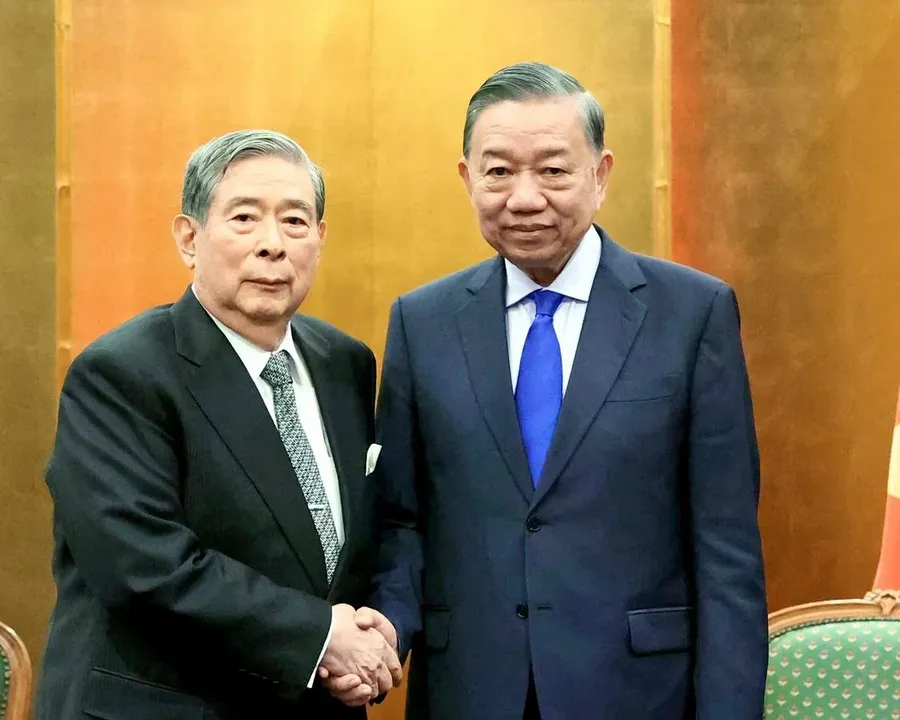
On November 9 in Tokyo, General Secretary and State President Tô Lâm received Toru Nakashima, Chairman and CEO of Sumitomo Mitsui Financial Group (SMBC Group). At the meeting, Ngô Chí Dũng said VPBank and SMBC are negotiating to raise SMBC's stake in VPBank from 15% to 20%. According to the state news agency VNA, the General Secretary and State President welcomed SMBC's continued capital increase in VPBank.VNA This is still a negotiation, and no transaction has been signed or announced.
The next day, at the loan ceremony, Reiko Mori, Managing Director and Deputy Head of Asia-Pacific at SMBC, opened her remarks in that very role: "As a strategic shareholder and long-standing partner of VPBank."CafeF A bank that both helps assemble the lenders and wants more shares shows SMBC tied to VPBank on both the debt and the equity side.
For scale: at the VPB share price of VND 22,300 as of the morning session on November 11, VPBank's market capitalization is around VND 223,000 billion. Five percentage points of equity would be worth roughly VND 11,150 billion at market prices, before any premium or discount the two sides might agree.
What VPB Shareholders Should Watch
How existing shareholders' ownership changes depends on how SMBC gets from 15% to 20%.
If VPBank issues new shares to SMBC, the total share count rises. The money SMBC pays goes straight into the bank and thickens its equity, but every other shareholder's percentage stake shrinks. Profit is also divided across more shares. In a November 9 report, Mirae Asset Securities (MAS) named possible ROE dilution if the bank raises capital as a risk for VPB, along with higher funding costs pressuring net interest margin.MAS
If SMBC buys existing shares, the total share count is unchanged. The money flows from SMBC to the selling shareholders, the bank gets no new capital, and the stake of anyone who does not sell stays the same.
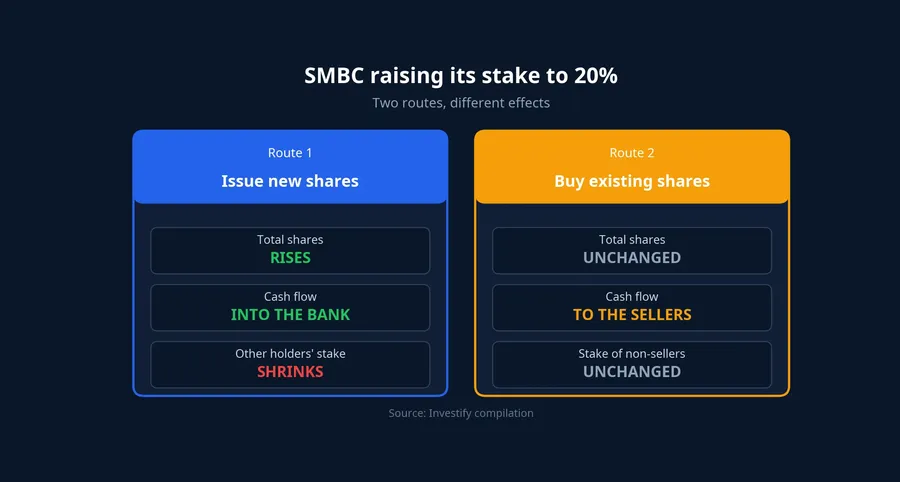
The two routes give different outcomes for the same shareholder. The document VPBank publishes on SMBC's plan, once it exists, will answer the question.
Bottom Line
The USD 730 million loan gives VPBank nearly VND 19,000 billion of funding with tenors of up to 7 years, the kind of money savings deposits can hardly replace when a bank lends to businesses for long-term investment. In return, it is dollar debt that must be repaid in dollars. For SME owners, it is one more source of medium- and long-term capital at a large bank.
The arranger is the more interesting part to follow: SMBC is widening its relationship with VPBank from lending to equity. For VPB shareholders, the signal to wait for is the structure of SMBC's transaction. The first number to check in that document is whether the total share count rises after the deal, because it determines whether the stake of existing VPB holders shrinks.