
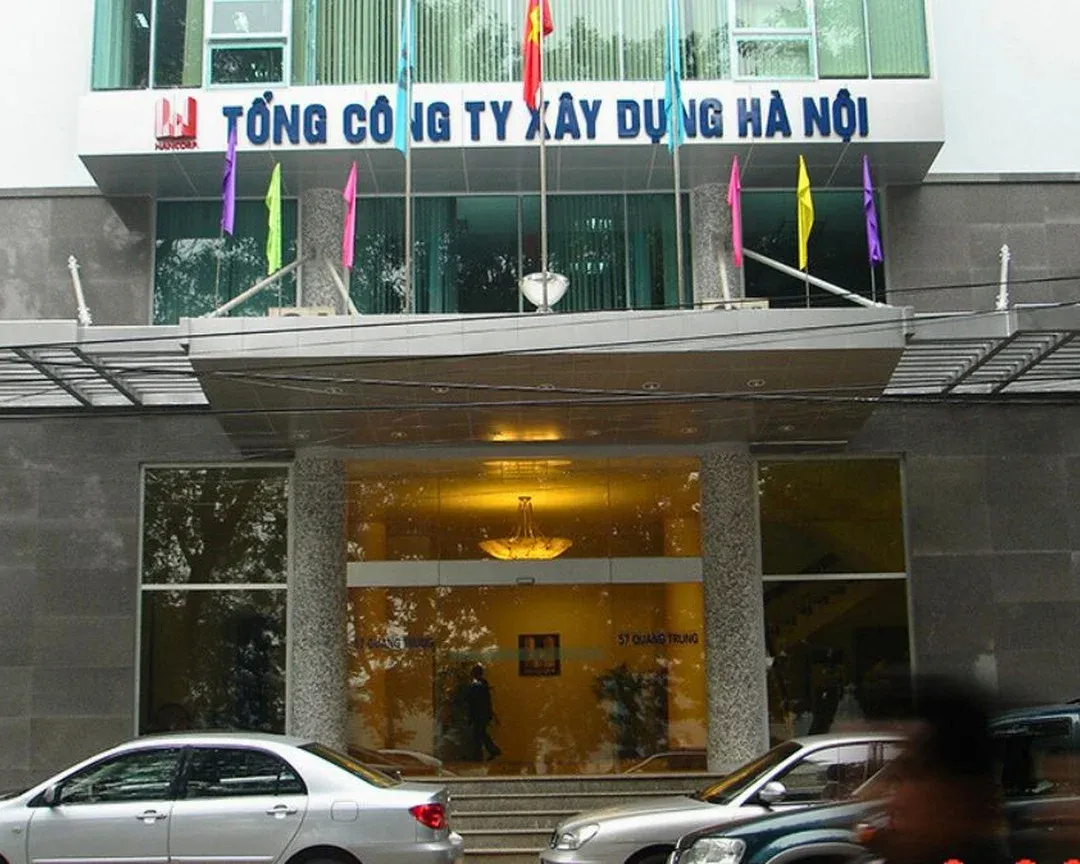

Hanoi Construction Corporation (Hancorp, ticker HAN, registered for trading on UPCoM) has disclosed that it no longer meets the conditions of a public company. The news first appeared in the press on the afternoon of 6 November 2026Kinh tế Chứng khoán and was picked up by several outlets afterwards.Tin nhanh Chứng khoán
The cause is a number that has barely moved since the company was equitized: the Ministry of Construction owns 98.83% of the capital. To see why that figure has never come down, you have to go back to 2014.
2014: The IPO sold just over 1.5 million shares
In March 2014, Hancorp held its first public share auction. According to VietnamFinance, the Ministry of Construction offered 49.74 million shares at a starting price of VND 10,200. 203 investors took part, but total bids came to only 1,575,700 shares, raising a little over VND 16 billion.VietnamFinance
The company began operating as a joint-stock company in August 2014 with charter capital of more than VND 1,410 billion, and it has not raised capital since. In October 2016, 141 million HAN shares were listed on UPCoM at a first-day reference price of VND 12,500.VietnamFinance The shares left unsold at the IPO stayed with the State, which is the origin of today's 98.83%.
December 2020: The whole stake offered, no one registered
The only time the State's stake was put up for sale was late 2020. According to information from HNX, the Ministry of Construction registered to auction all of its more than 139 million shares, equal to 98.83% of capital, at a starting price of VND 19,930, roughly 20% above the market price of HAN at the time. The auction was scheduled for 16 December 2020 at HNX.VietnamFinance
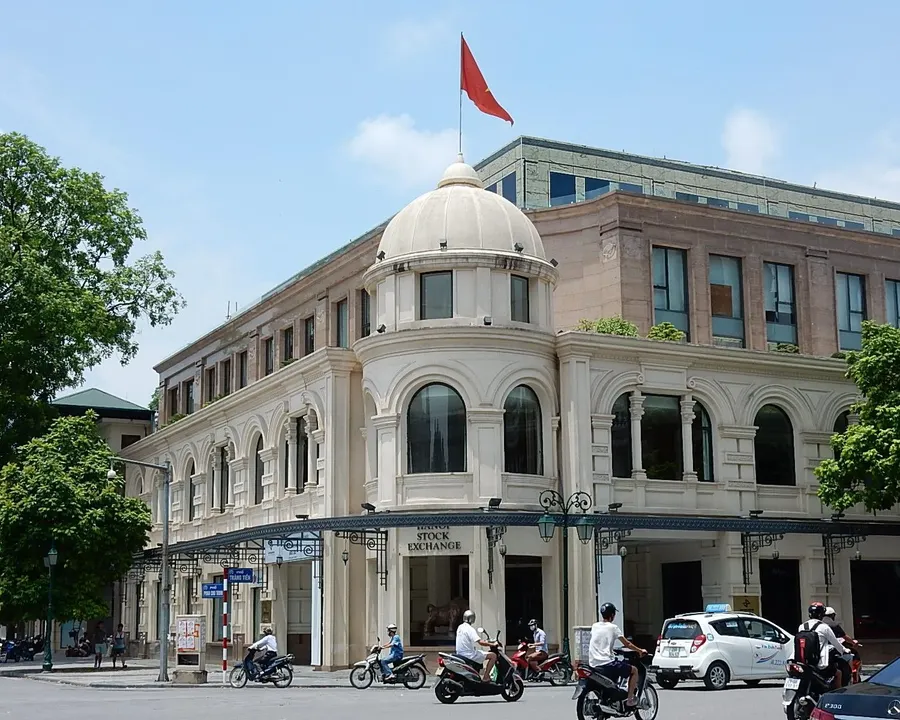
The auction never took place, because no investor registered. While news of the sale circulated, HAN briefly rose to VND 26,000, then fell back to VND 20,100 after the cancellation.VietnamFinance The article of the time set the story beside Hancorp's results: net profit for the first nine months of 2020 was VND 5.1 billion, while profit after tax was VND 37 billion in 2019, down from VND 134 billion in 2017. It also argued that Hancorp, like many peers in the sector, carried large outstanding debts. That was the outlet's reading at the time. The failed auction itself establishes only one thing: at that starting price, no investor signed up to buy.
2026: The Ministry plans to hold 98.83% through 2030
After 2020, the ownership structure did not change. According to the notes to the Q3 2026 consolidated financial statements, Hancorp's charter capital is still about VND 1,410.5 billion, of which the State's portion, represented by the Ministry of Construction, is nearly VND 1,394 billion, unchanged from the start of the year.Người đưa tin
What is new is the plan. Per Kinh tế Chứng khoán, the decision on State capital structure across enterprises where the Ministry of Construction acts as owner representative for 2026-2030 states that the Ministry plans to keep its 98.83% stake in Hancorp.Kinh tế Chứng khoán In other words, under the current plan, the stake that was offered for sale in 2020 will not be reduced over the next five years.
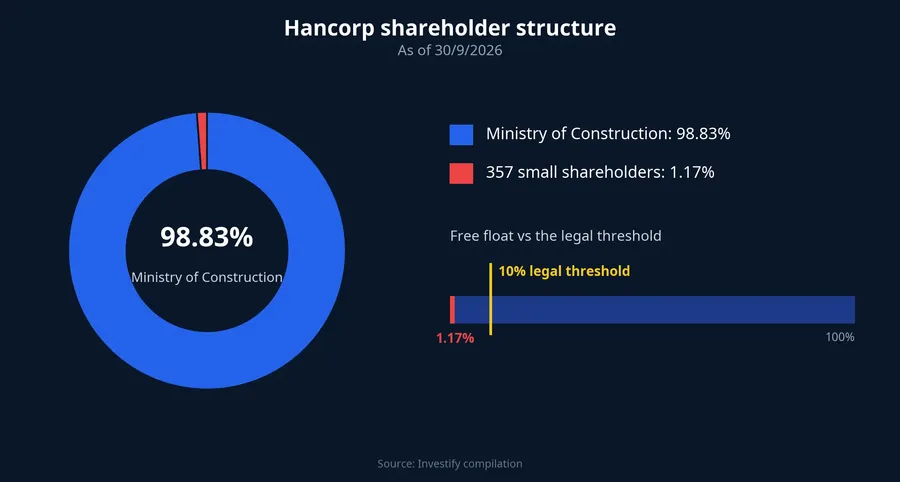
30 September 2026: 357 shareholders, 1.17%
Hancorp's disclosure relies on the shareholder list supplied by the Vietnam Securities Depository and Clearing Corporation (VSDC). As of 30 September 2026, besides the Ministry of Construction as the sole major shareholder, 357 shareholders who are not major shareholders together held 1,648,392 shares, equal to 1.17% of voting shares.Tin nhanh Chứng khoán
Hancorp cited point a, clause 1, Article 32 of Securities Law 54/2019/QH15, as amended by Law 56/2024/QH15: a public company must have at least 10% of its voting shares held by at least 100 investors who are not major shareholders. Hancorp has enough holders (357 against 100) but falls well short on the share (1.17% against 10%).
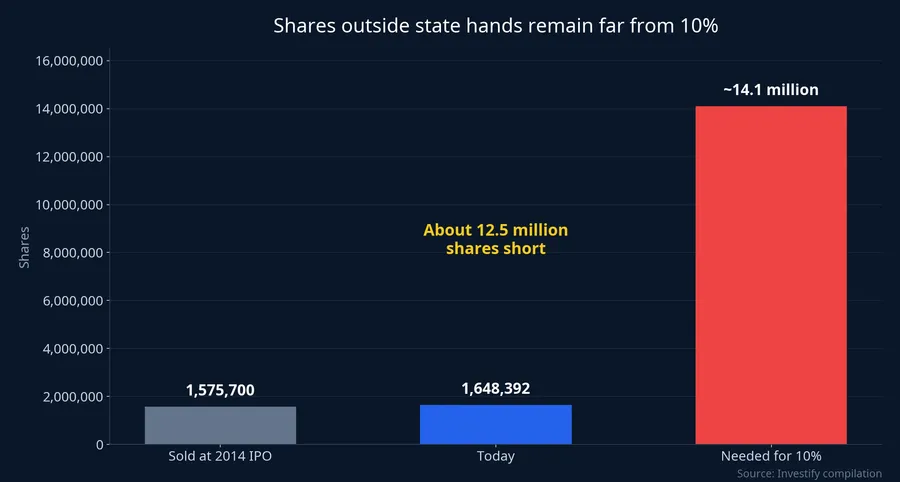
Putting the two dates side by side, the roughly 1.65 million shares outside the Ministry's hands today are only slightly more than the 1,575,700 shares sold at the 2014 IPO. After twelve years, the stake in outside investors' hands has barely grown.
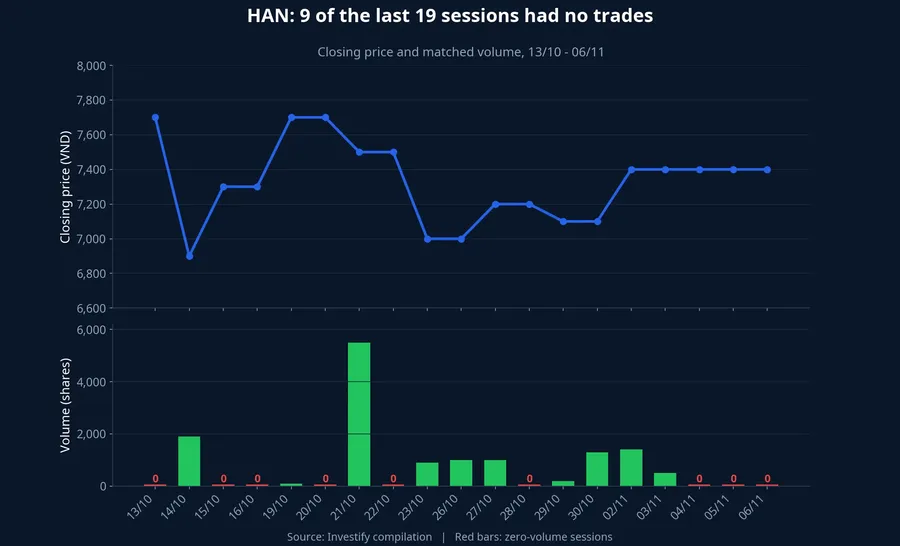
At the 6 November 2026 closing price of around VND 7,400, the small shareholders' stake is worth about VND 12.2 billion. Trading on UPCoM was already thin: over the nine sessions from 27 October to 6 November 2026, total matched volume was just 4,400 shares, and none of the last three sessions had any trades.
The next steps under the law
Hancorp's disclosure is not a decision to cancel its public company status. The procedure is set out in Circular 80/2026/TT-BTC, effective 15 August 2026.FireAnt
- Within 15 days of ceasing to meet the conditions, the company reports to the State Securities Commission with supporting documents and discloses the information. For the shareholder-structure condition, the date is set by the last registration date in the VSDC shareholder list.
- Within one year, the company must keep meeting all public company obligations and may cure the shortfall. If it succeeds, it files a report confirming it meets the conditions again, and keeps its status.
- After one year, if the shortfall persists, the company must apply to cancel its public company status. The State Securities Commission has 15 days from receiving a valid file to review and issue a cancellation notice, after which the company completes the procedure to deregister its shares from trading.
If the reference date is the 30 September 2026 shareholder list that Hancorp cited, the one-year period would run to the end of September 2027. The exact date will be set by a document from the State Securities Commission or HNX.
Business results over the same period
Operating results are not the axis of the public-status story, but shareholders should see both sides. According to the Q3 2026 consolidated financial statements as compiled by Tin nhanh Chứng khoán, Q3 revenue was VND 494.3 billion, down 18.4% year on year, while gross margin rose from 5.6% to 10.3% and profit after tax reached VND 6.06 billion, up 8.6%.Tin nhanh Chứng khoán
For the first nine months, revenue was VND 2,139.7 billion, down 9.4% per Tin nhanh Chứng khoán (Người đưa tin reports a 7.6% decline). Profit after tax was VND 27.9 billion, down 2.8% from the first nine months of 2025. Operating cash flow was negative VND 615.2 billion, against negative VND 360.04 billion a year earlier, and borrowings at the end of Q3 stood at VND 1,366.7 billion, up 36.1% from the start of the year.Tin nhanh Chứng khoán
Two paths over the next year or so
To reach 10%, roughly another 8.8 percentage points of capital, or about 12.5 million of the more than 141 million shares, would have to move into outside investors' hands.Người đưa tin Hancorp has never raised capital since equitization, the one time the State's stake was offered no one registered, and the 2026-2030 plan reported by the press has the Ministry keeping 98.83%.
Both paths below are measured by the same yardstick: the share of stock held by outside shareholders.
- If that share reaches 10% before the cure period ends, through a sale or capital increase different from the plan now reported, Hancorp files a report confirming it meets the conditions and the stock stays on UPCoM.
- If it stays around 1.17% when the period ends, the company must file to cancel its public company status and the stock moves toward deregistration from trading. Shareholders still own their shares, but they can no longer trade HAN on the UPCoM board and would have to negotiate transfers directly with buyers off-exchange.
Until then, Hancorp remains bound by public company disclosure obligations. The next document worth watching is a notice from the State Securities Commission or HNX on Hancorp's status, along with any change to the Ministry of Construction's 2026-2030 State capital plan.