

It sounds backwards, but for Vietnam's 2026 average inflation to land on target, prices don't just have to stand still. They have to fall. On the morning of November 3, the General Statistics Office (Ministry of Finance) released October CPI: the ten-month average is up 4.57% year over year.Vietnam Financial Times The National Assembly's target is average CPI growth of about 4.5%,Tap chi Cong Thuong so with two months left the average already sits roughly 0.07 percentage points above it.
Put simply: by Investify's rough calculation, even if prices stay flat through November and December, the full-year average still lands near 4.56%. To get back to 4.5%, the price level in the last two months has to be lower than the month before. This piece walks through that arithmetic and checks how much the price cuts effective November 1 can contribute.
From 4.52% to 4.57%: each new month pulls the average up
On October 3, the statistics office reported September CPI up 0.62% from August and 5.08% year over year, which put the nine-month average at 4.52%.Tap chi Cong Thuong In October, the month-on-month rise slowed to 0.2%, about a third of September's pace. Even so, October CPI was still up 5.09% from a year earlier, almost unchanged from September, and prices were 4.41% higher than in December 2025.Vietnam Financial Times
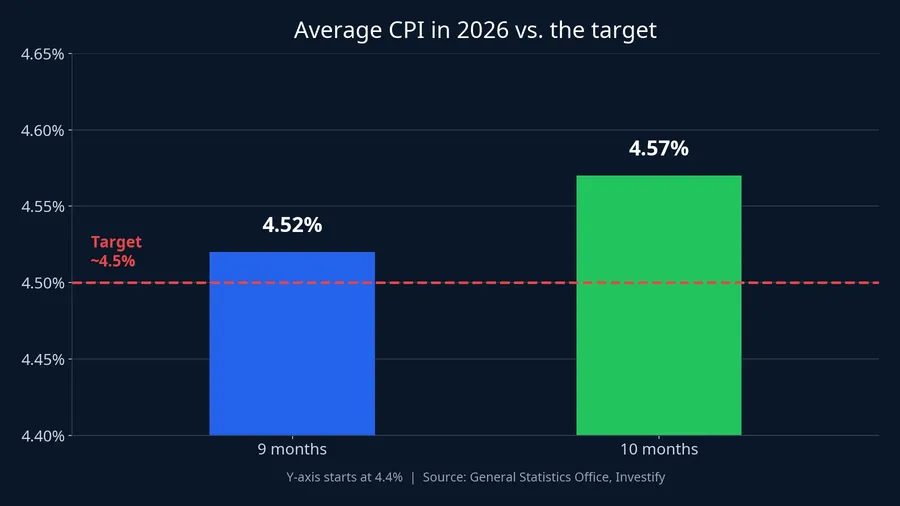
The mechanism is simple. When a month's year-over-year rate sits above 5%, adding it to the running tally pulls the annual average up. That is why the average edged from 4.52% to 4.57% even though October prices rose only slightly from September.
October: gasoline and LPG push up, rice and pork pull down
According to the statistics office's report, published by Vietnam Financial Times on November 3, the transport group rose 2.66% from the previous month and added 0.27 percentage points to headline CPI. The main cause was gasoline up 6.86% and diesel up 0.75% across domestic price adjustments.Vietnam Financial Times Transport alone contributed more than the 0.2% headline increase, which means the other groups combined were pulling the index down.
In the housing, electricity, water and fuels group, cooking gas rose 10.35% from October 1 in line with world prices, while household electricity fell 1.99%. The statistics office explained that the drop in electricity did not come from the tariff but from cooler weather and lower household usage. The whole group ended up just 0.04% higher.Vietnam Financial Times
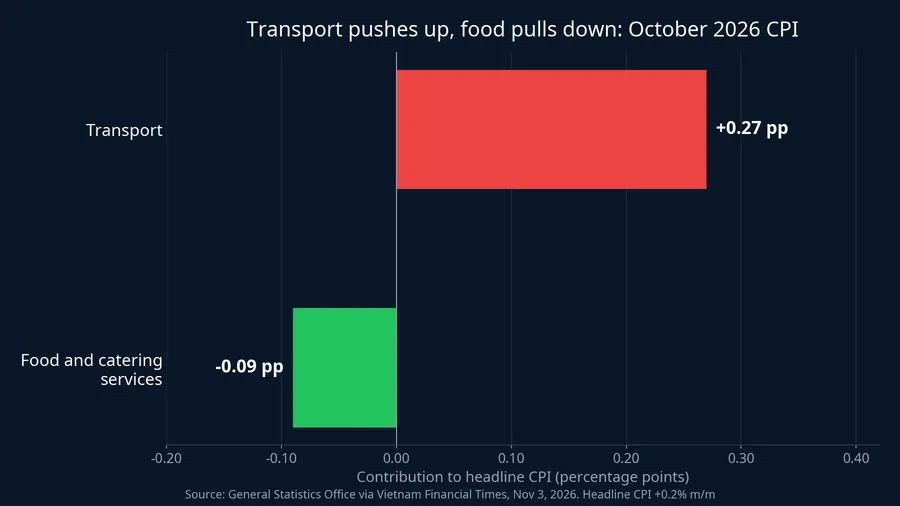
The biggest drag came from the dinner table. Food and catering services fell 0.24%, lowering headline CPI by 0.09 percentage points. Per the statistics office, rice fell 0.92% on ample domestic supply, and pork fell 2.33% as supply rose while demand lagged. In the other direction, fresh, dried and processed vegetables rose 1.62% because of bad weather in some localities.Vietnam Financial Times
Another drag is seasonal: airfares fell 10.58% as travel demand entered its low season and airlines ran promotions, and the culture, entertainment and travel group fell 0.87%.Vietnam Financial Times These declines kept October CPI to a 0.2% rise, but they are unlikely to last, since airfares usually climb again as the year-end peak approaches.
Headline inflation runs ahead of core inflation
Core inflation averaged 4.24% over ten months, about 0.33 percentage points below headline CPI.Vietnam Financial Times Core inflation strips out volatile items such as food, fresh produce, energy and goods with state-administered prices. The gap suggests this year's pressure comes more from energy and administered-price goods than from the broad price level.
The upside is that administrative tools such as fuel taxes and electricity tariffs hit exactly where it is hottest. The difficulty is that global energy prices remain high: on the morning of November 2, Brent crude stood at USD 111.6 a barrel,VietNamNet so the relief from tax cuts could be eroded in later adjustment rounds.
Why the last two months are hard: last year's base
The year-over-year rate for November and December depends on two things: how much prices change this year from the previous month, and how much they changed in the same month last year. In 2025, November CPI rose 0.45% from October as food prices climbed after storms,VnEconomy and December CPI rose 0.19% from November.Vietnam Financial Times
That base works in this year's favor. If November 2026 prices stay flat against October, the year-over-year rate drops from 5.09% to around 4.62%; if December is flat too, it falls to around 4.42%. This is Investify's rough calculation based on the published readings of 5.09%, 0.45% and 0.19%.
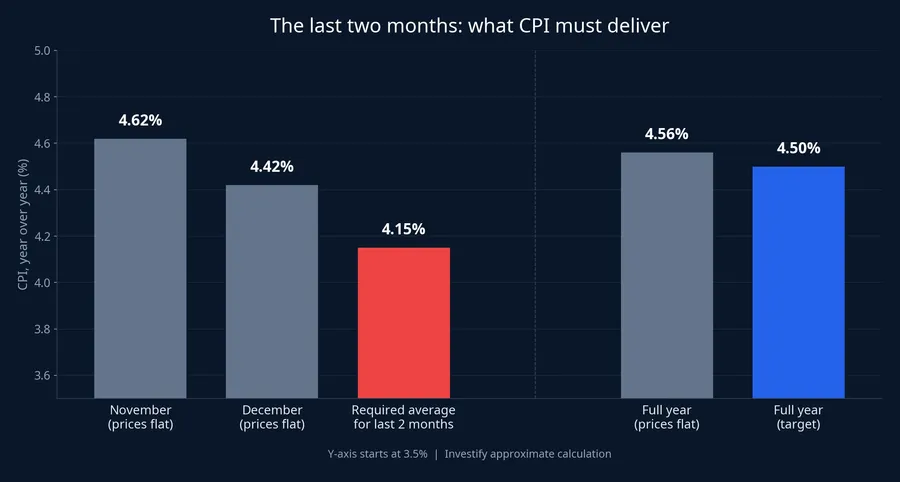
A favorable base is still not enough. A target of about 4.5% times 12 months is 54, while 4.57% times 10 months is 45.7. That leaves roughly 8.3 for the final two months, an average year-over-year rate near 4.15% a month. Under the flat-price scenario, the last two months add up to about 9.04, which lifts the full-year average to around 4.56%. To reach 4.5%, monthly CPI would need to fall about 0.25% from the prior month, in both November and December.
To be clear, this is a reference calculation only. The statistics office computes the annual average on the price index, not as a simple mean of year-over-year rates, so the official result could differ by a few hundredths of a point.
From November 1: electricity and gasoline cheaper, diesel left out
Two price cuts taking effect on the same day, November 1, will go straight into the November basket. The average retail electricity price falls 2%, from VND 2,204.0655 per kWh to VND 2,159.9037 per kWh (before value-added tax), under a decision by EVN and the Ministry of Industry and Trade. In an assessment by the statistics office relayed by FireAnt on November 2, the cut helps lower CPI by about 0.08 percentage points.FireAnt
The special consumption tax on gasoline drops to 0% from November 1, 2026 through March 31, 2027 under the government's Resolution 45/2026/NQ-CP.FireAnt From midnight on November 1, E5 RON92 gasoline fell VND 1,804 a liter, to no more than VND 24,223 a liter; E10 RON95-III went to VND 24,159 a liter.VietNamNet
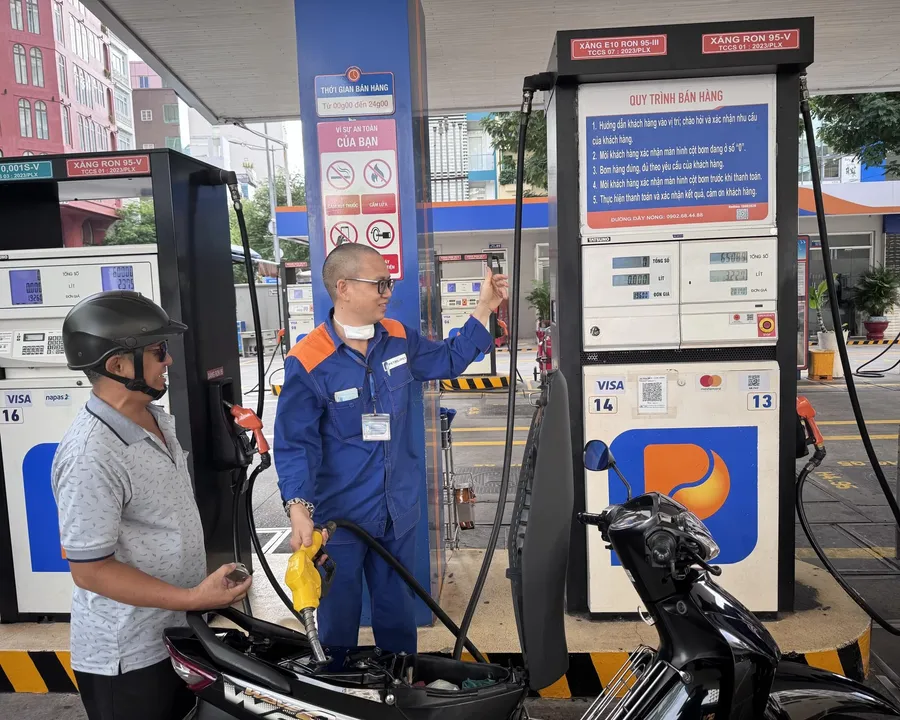
Diesel is not part of the cut. In the October 29 adjustment, 0.05S diesel rose VND 696 a liter to VND 30,246 a liter and stays there from November 1.VietNamNet Diesel fuels trucks, fishing boats and machinery, so the increase could feed into freight costs with some delay.
Against the required fall of about 0.25% a month, electricity alone covers roughly a third. The rest has to come from gasoline, food prices and other groups not rising again. Year-end shopping usually lifts demand while world oil prices remain high, so the November picture is not settled.
What this means for your wallet
A 5.09% reading means the same basket of fuel, gas and groceries cost about 5% more in October this year than in October last year. The cuts to gasoline and electricity from November 1 will show up on bills right away, but the overall price level stays above last year's at least until the November figures arrive. For savers, the interest left after inflation depends on whether the year-over-year rate moves out of the 5% zone in the last two months.
Next checkpoint: November CPI, early December
2026 has passed through three checkpoints: 4.52% after nine months, 4.57% after ten, and the November figures the statistics office will release in early December. The number to watch in that report is CPI's change from October.
The conclusion is fairly clear: at today's price level the full-year average is more likely to finish above target, though by only a few hundredths of a point. The trigger for a reversal is specific: November CPI has to fall around 0.25% from October, followed by another decline in December. If November comes in near 0% or positive, the roughly 4.5% target has almost no room left. For household budgets, that small overshoot matters less than whether the year-over-year rate leaves the 5% zone.