

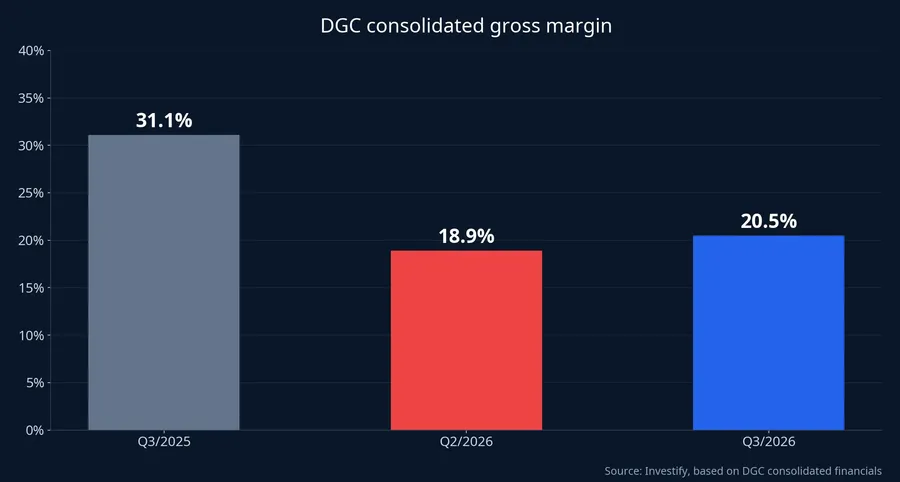
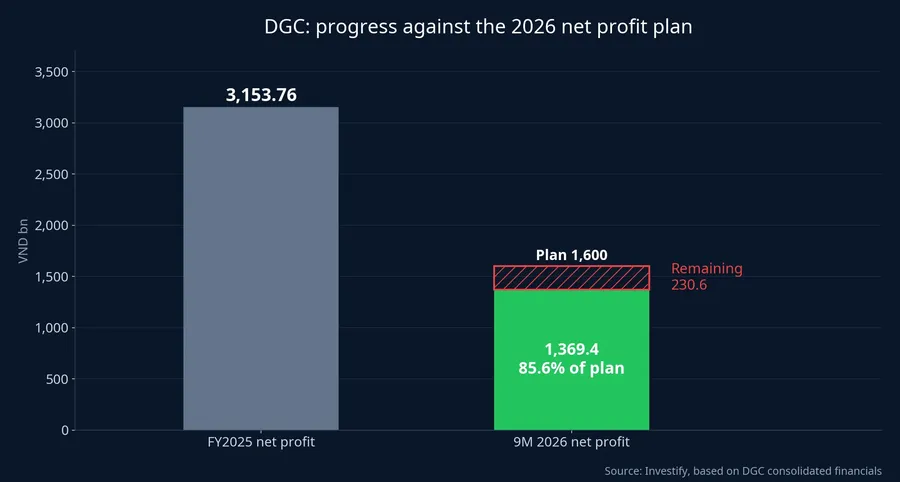
In Q3 2026, Duc Giang Chemicals Group (DGC, HoSE) reported consolidated net profit of VND 506.7 billion, down 37% year on year. For the first nine months, net profit reached VND 1,369.4 billion, or 85.6% of the full-year plan of VND 1,600 billion. The number worth a closer look is the gross margin, which fell from 31.1% in Q3 2025 to 20.5%.Tinnhanhchungkhoan
According to DGC's own explanation, Mine 25 was suspended to support an investigation, so the company used only imported and externally purchased apatite ore for the whole quarter. Prices of sulfur, electricity, coking coal and ammonia also rose sharply. So did the lost gross profit come from industry-wide input costs or from losing the advantage of owned ore? By DGC's account, both.
Revenue down 12%, gross profit down 42%
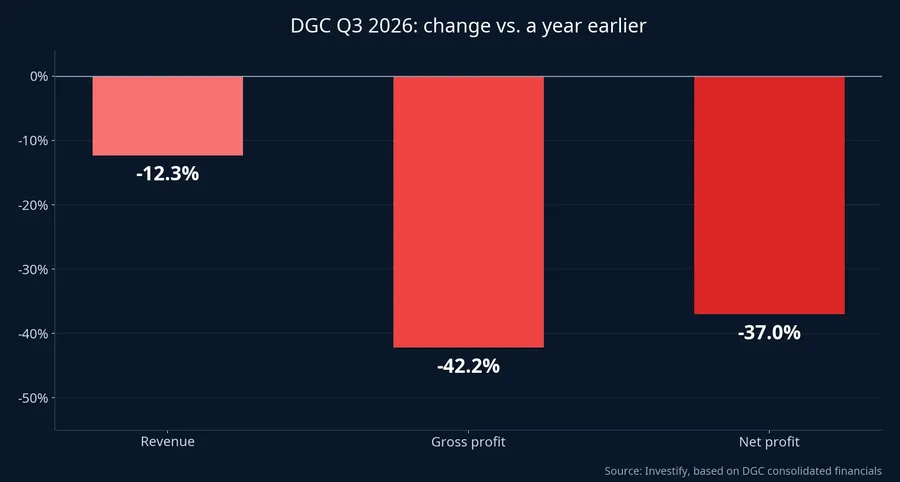
In the Q3 2026 consolidated income statement, DGC booked net revenue of VND 2,469.5 billion, against VND 2,816.7 billion in Q3 2025, a fall of about 12%.Người Quan Sát On revenue alone, this is a moderate step down.
Gross profit fell much harder: to VND 506.35 billion, down 42.2%, or VND 369.16 billion lost.Tinnhanhchungkhoan Because gross profit dropped more than three times as fast as revenue, the gap sits in cost of goods sold: each dong of revenue this year carried more production cost than last year.
DGC points to two groups of causes.Tinnhanhchungkhoan The first is sharply higher input prices. The second is ore: Mine 25 stopped, the company used only purchased ore, and the cost of yellow phosphorus rose against the prior-year quarter. The two differ in nature. Higher electricity, coking coal or sulfur prices hit other yellow phosphorus producers too. Losing owned ore is specific to DGC. Because DGC does not say how much of the VND 369 billion each group explains, this article does not pin the whole decline on Mine 25.
Owned ore used to be a cost advantage
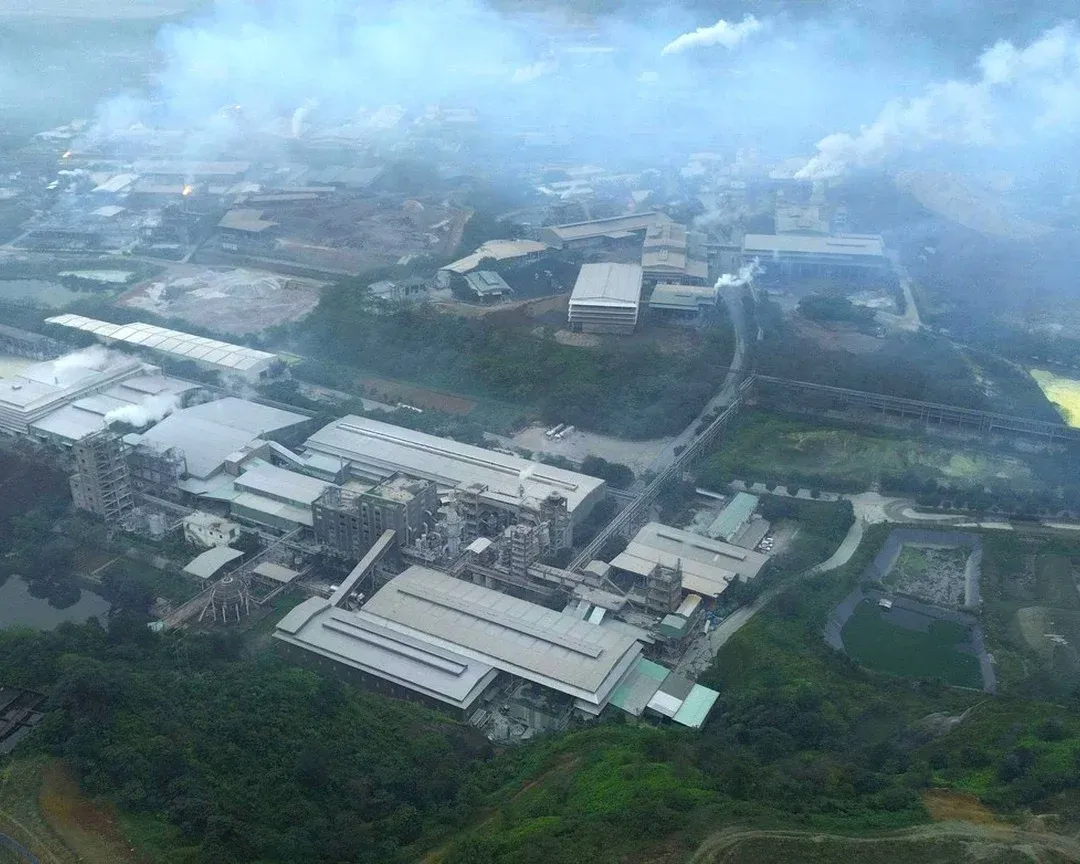
Apatite ore is one of the main inputs for yellow phosphorus, DGC's most important product line. Beyond ore, production consumes large amounts of electricity, coking coal and some other chemicals.
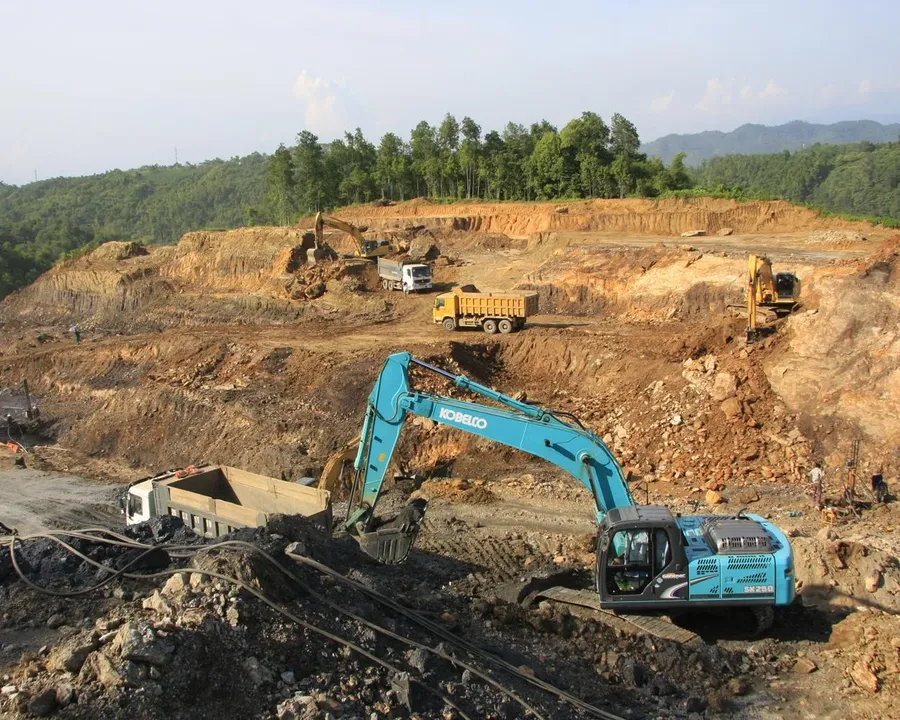
According to a Vietcap Securities report, DGC supplies its own ore from two mines, 25 and 19B, at a cost well below market ore prices. Mine 25 has operated since 2022, with approved reserves of about 2 million tonnes in grade-1 ore equivalent. Mine 19B has operated since 2023, with reserves of about 1.6 million tonnes. Vietcap estimates each mine can support roughly five years of extraction at current licensed capacity.Tinnhanhchungkhoan
The mechanism is simple. When DGC mines its own ore, it pays only for digging and hauling. When it buys ore, it pays the market price, which includes the seller's margin and import costs. For the same tonne of yellow phosphorus sold, cost of goods is higher. That advantage helped keep gross margin above 30% in Q3 2025, and it narrows when the in-house supply is gone.
The suspension is tied to a legal event. DGC disclosed on 17 March and 23 July 2026 that several key members of its leadership had been prosecuted and were under investigation over resource extraction, environment and accounting. UHY Auditing issued a qualified opinion on DGC's 2026 half-year financial statements because of this matter.Tinnhanhchungkhoan
Q3 is above Q2
Against a year earlier, results fell sharply. Against the previous quarter, the picture differs. DGC's Q2 2026 gross margin was only about 18.9%, with gross profit of VND 456.18 billion on revenue of VND 2,415.41 billion. In Q3 the margin rose to 20.5% and gross profit to VND 506.35 billion.
That small gain is not enough to say the old advantage is back, since Q3 still ran entirely on purchased ore. It does show that gross margin stopped falling last quarter, even with the same ore supply.
Net profit fell less than gross profit
Consolidated Q3 net profit was VND 506.7 billion, down 37% from VND 804.4 billion a year earlier.Người Quan Sát That is milder than the 42.2% fall in gross profit, thanks to two items moving the other way.
The first is financial revenue of VND 209.64 billion, up 9.1% year on year, mainly from bank deposit interest. The second is selling and administrative expenses, down 13.3% to VND 125.14 billion. Financial expenses rose 32.3% to VND 24.89 billion, but the amount is small and does not change the overall direction.Tinnhanhchungkhoan
For the nine months, consolidated revenue was VND 7,009.5 billion, down 17.7%. Net profit was VND 1,369.4 billion, down 45.9% from VND 2,532 billion a year earlier.Người Quan Sát
A full-year plan set low in August
The full-year net profit plan is VND 1,600 billion,Tinnhanhchungkhoan approved at the annual general meeting on 13 August.Người Quan Sát That is about 49% below 2025 net profit of VND 3,153.76 billion, which is why DGC had completed 85.6% of it after nine months.
The Q4 arithmetic is light. DGC needs about VND 230.6 billion more in net profit, less than half of Q3's profit. For comparison, Q4 2025 net profit was about VND 621.8 billion. A high completion rate reflects a target that was set low, not a return to 2025 earnings.
Cash and deposits below the start of the year
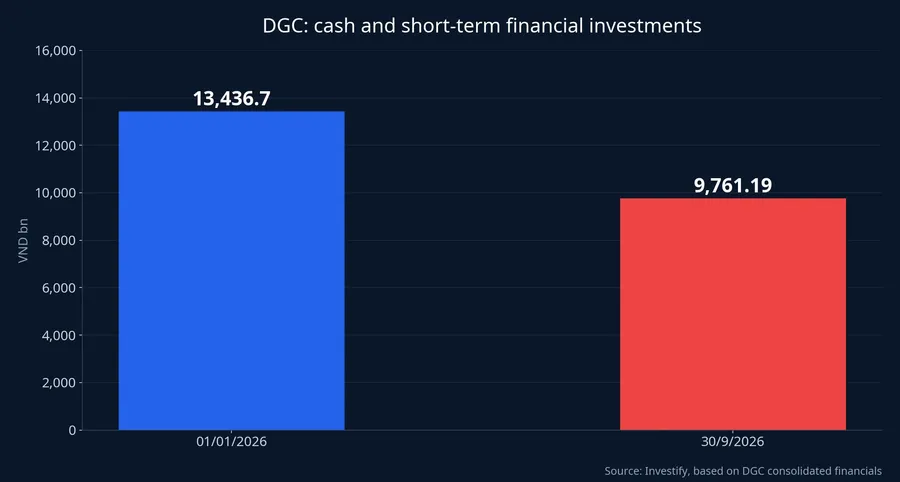
As of 30 September 2026, DGC's cash and short-term financial investments were VND 9,761.19 billion, or 59.1% of total assets, down VND 3,675.51 billion from the start of the year. Total assets fell 15.5% to VND 16,513.9 billion.Tinnhanhchungkhoan
Term deposits fell from VND 12,396.2 billion to VND 9,531 billion. Over the same period the balance sheet shows three other movements. Undistributed after-tax profit fell from VND 8,490.3 billion to VND 6,252.6 billion after DGC finished paying dividends. Construction in progress rose from VND 804.8 billion to VND 1,452.8 billion, of which the Duc Giang Nghi Son Chemical Complex accounts for VND 1,408.8 billion. Total liabilities fell from VND 4,167.3 billion to VND 3,039.2 billion.Người Quan Sát
The deposit pile is still large, and deposit interest helps net profit fall more slowly than gross profit. With balances lower than at the start of the year, that contribution has a limit. The gross margin of the manufacturing business remains the variable that decides profit in coming quarters.
Q4: read the explanatory letter first
DGC shares closed on 29 October at VND 33,300, up 1.22%.
Two forces are pushing DGC's cost of goods up together: industry-wide input prices and the loss of owned ore. The first follows commodity markets. The second depends on when Mine 25 resumes extraction.
When the Q4 2026 financial statements come out, the first line to read is the accompanying explanation. If it says the company is back on its own ore and gross margin is clearly above 20.5%, the cost advantage is returning. If it still says all ore is purchased and margin sits around 20%, then 20.5% is DGC's current baseline for as long as the mine stays shut.