
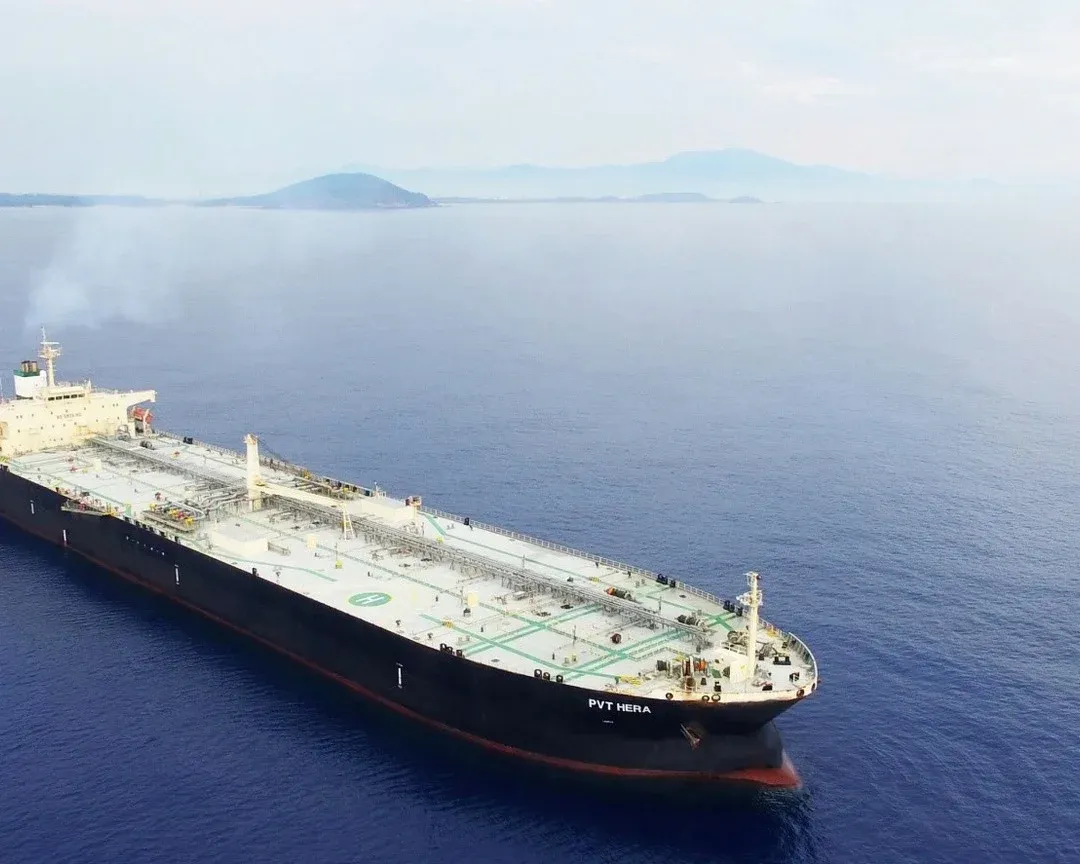

On October 29, PetroVietnam Transportation Corporation (PVTrans, ticker PVT on HoSE) released its Q3 2026 consolidated financial statements. Consolidated net profit for the quarter was VND 489 billion, up 40%. For the first nine months, it reached VND 1,582 billion, up 61% year on year and already above the full-year profit plan of VND 1,200 billion.MarketTimes The numbers raise two questions: where the extra profit came from, and how durable it is.
What the Q3 report says
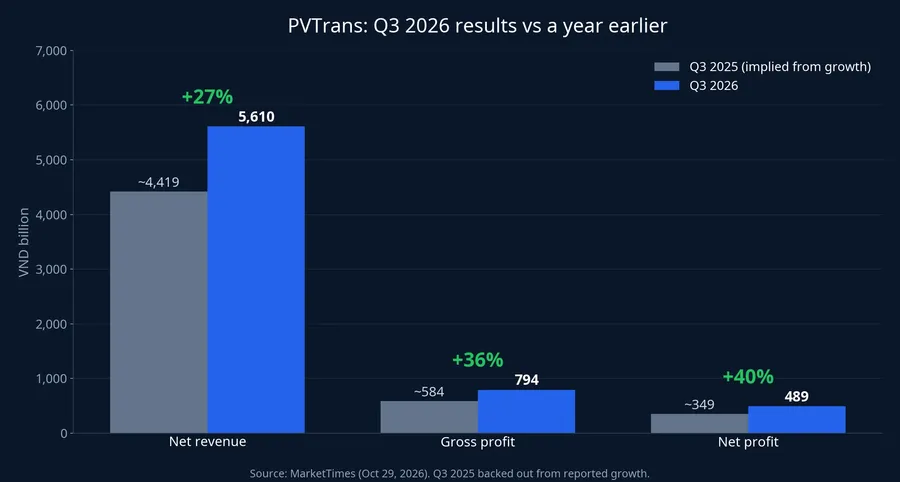
Net revenue came in at VND 5,610 billion, up 27% from Q3 2025. Cost of goods sold grew a little slower, 26% to VND 4,816 billion, so gross profit reached VND 794 billion, up 36%. Gross margin edged up from 13.22% to 14.15%.MarketTimes
After expenses, pre-tax profit was VND 613 billion, up 41%. Profit attributable to PVTrans shareholders, meaning what is left after minority holders in subsidiaries take their share, was VND 375 billion, up more than 42%.Vietstock
One detail makes the increase more credible than the headline. According to Vietstock, PVTrans did not book a large other-income item this quarter like the one in the same period last year.Vietstock Financial income was only VND 105 billion, up VND 15 billion.MarketTimes In other words, the extra profit did not come from one-offs or interest on deposits. It came from the core business.
Where the extra profit came from
In the explanatory letter filed with the report, PVTrans said Q3 and nine-month profit rose mainly because of added profit from new vessels invested in during 2025 and 2026, together with better fleet operating efficiency.MarketTimes
The segment figures fit that explanation. Transport services generated revenue of more than VND 3,500 billion, 40% above a year earlier and well ahead of the 27% growth in total revenue. This segment alone delivered gross profit of VND 728 billion, up 38%, roughly 92% of the company's gross profit.Vietstock The other segments, such as floating storage, trading and services, account for a small share.
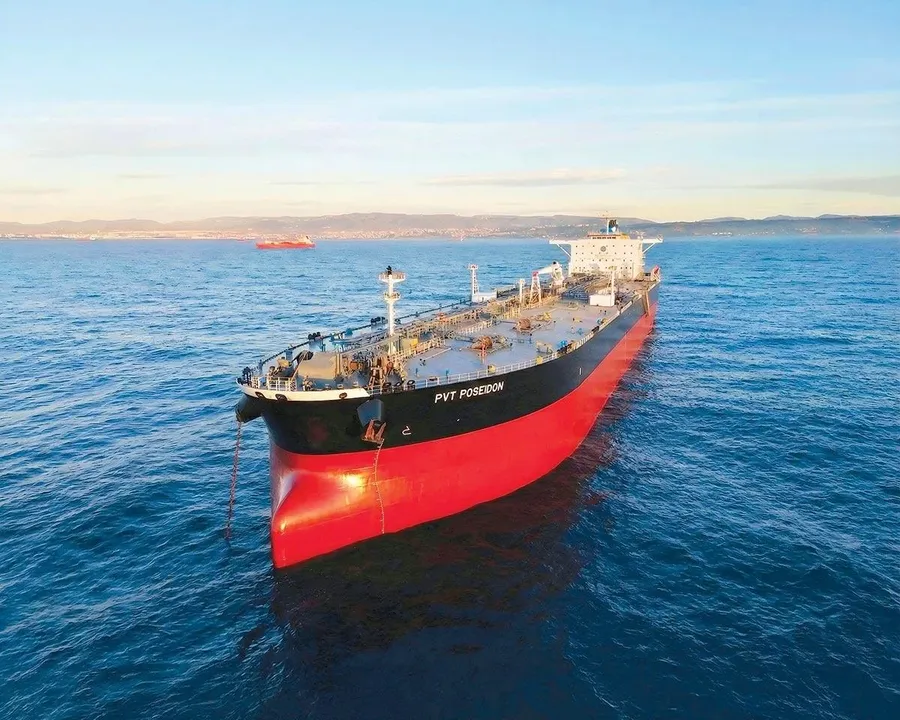
The fleet is what has changed. According to a Vietcap Securities report carried by Doanh nhân Pháp luật on October 29, PVTrans added 7 vessels in 2025, lifting total tonnage by 22%. By the end of September 2026 the fleet stood at 59 vessels with 1,802 thousand DWT.Doanh nhân Pháp luật One example is PVT Poseidon, an Aframax crude tanker delivered in November 2025 and now chartered out on the international market.Vietstock
New ships are not the only factor. The explanatory letter mentions "operating efficiency," and Vietstock spells out that efficiency improved when freight rates were favorable.Vietstock According to Vietcap, average time-charter rates for Aframax crude tankers reached USD 57.7 thousand per day, up 89% year on year.Doanh nhân Pháp luật More ships to charter out, each at a higher rate: both forces act on profit, but the report does not split the contribution between them, so no share should be assigned to either. What is certain is that the gain came from shipping operations, as PVTrans explains.
Nine months against the plan
For the first nine months PVTrans reported net revenue of VND 15,525 billion, up 34%, and consolidated net profit of VND 1,582 billion, up 61%.MarketTimes According to Vietstock, the company has achieved 94% of its revenue plan and exceeded its full-year consolidated profit target by 32%.Vietstock The full-year profit plan is VND 1,200 billion.Mekong ASEAN
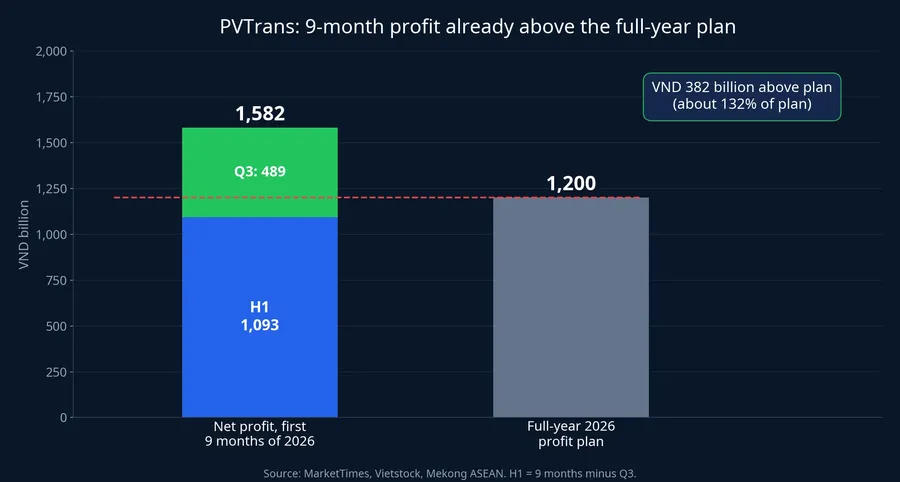
One subtraction deserves a read. Take VND 1,582 billion for nine months and subtract VND 489 billion for Q3: the first half came to about VND 1,093 billion, over VND 540 billion a quarter on average. Q3 still grew strongly year on year, but it was below the average of the previous two quarters. So the nine-month result does not mean profit has risen steadily quarter by quarter, and that is worth keeping in mind for PVT holders waiting on Q4.
The balance sheet at the end of Q3
As of September 30, 2026, total assets stood at VND 23,681 billion, up 6% from the start of the year. Cash, cash equivalents and short-term deposits were VND 6,345 billion, up 28%. Borrowings were VND 6,964 billion, down VND 675 billion, or 9%, from end-2025, while equity rose to VND 12,863 billion.MarketTimes
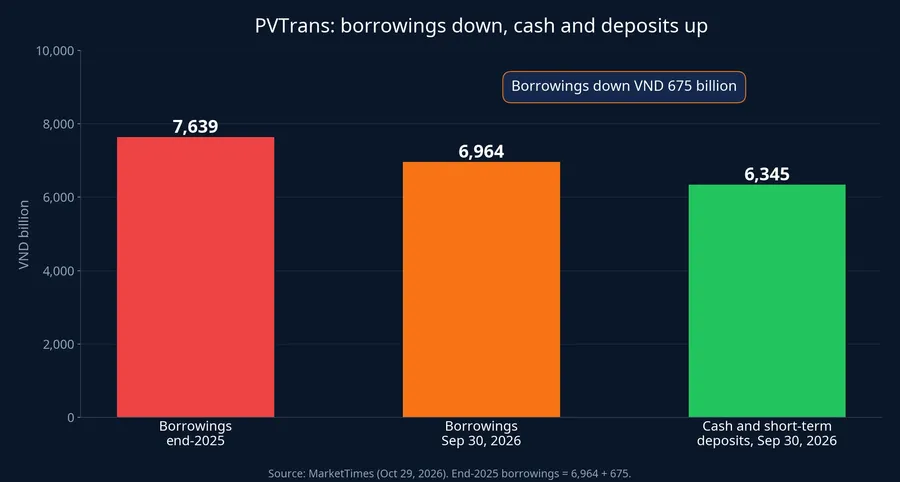
Side by side, borrowings equal about 54% of equity, down from about 66% at the start of the year (computed from opening borrowings of VND 7,639 billion and opening equity of VND 11,490 billion).MarketTimes Cash and deposits are close to the full amount of borrowings. For a company that has just added ships, this is a lighter balance sheet than at the start of the year: new vessels in service, debt paid down and more cash on hand. Q3 interest expense was VND 117 billion, less than one-sixth of gross profit.
The October 29 limit-down next to the oil and gas group
On the day of the report, PVT closed at its floor, down VND 1,550 or 6.78%, at VND 21,300. More than 21 million shares changed hands, roughly four times the October 28 session. Market capitalization fell by more than VND 800 billion in one session.MarketTimes
PVT did not fall alone. In the same session PVP, of Pacific Petroleum Transportation, also hit its floor with a 6.95% drop, and BSR, of Binh Son Refining and Petrochemical, fell 3.83%. The VN-Index fell just 0.62% to 1,755.61 points. Brent crude slipped 0.75% to USD 114.45 a barrel on October 29, still about 19% above a month earlier.
What can be observed is that PVT and PVP both closed at the floor while the broad index slipped only slightly, so the pressure was concentrated in oil and gas shipping. The available data is not enough to say whether the drop came from the report, from oil prices or from short-term flows, so this post assigns no cause. For a PVT holder, the session cut account value by almost 7%, but it did not change a single number in the report: Q3 profit still rose 40%, borrowings still fell, and cash still rose.
Signals to watch
The thesis is straightforward: PVTrans' extra profit comes from shipping operations, where it has more vessels and higher freight rates. What remains open is whether the gain from the new fleet is mostly in, or still building, and two dates will answer it. The Q4 2026 report, due in early 2027, will show whether gross margin holds the Q3 level of 14.15%. The 2027 plan put to shareholders will show what profit target management sets if freight rates cool.
On rates, the start of Q4 remains favorable: Vietcap recorded average Aframax rates at USD 90 thousand per day as of October 8, 152% higher than a year earlier. Vietcap also expects 2027 rates to fall around 15% but stay 1.7 to 2.3 times pre-conflict levels.Doanh nhân Pháp luật That is a brokerage forecast, not a company commitment.
The simplest way to read it: if Q4 gross margin holds above 14%, the new fleet and freight rates are still turning into profit. If margin slips back toward the 13.22% of Q3 2025, this year's added cushion has thinned, and the 2027 plan will lean more on ships yet to be bought.