
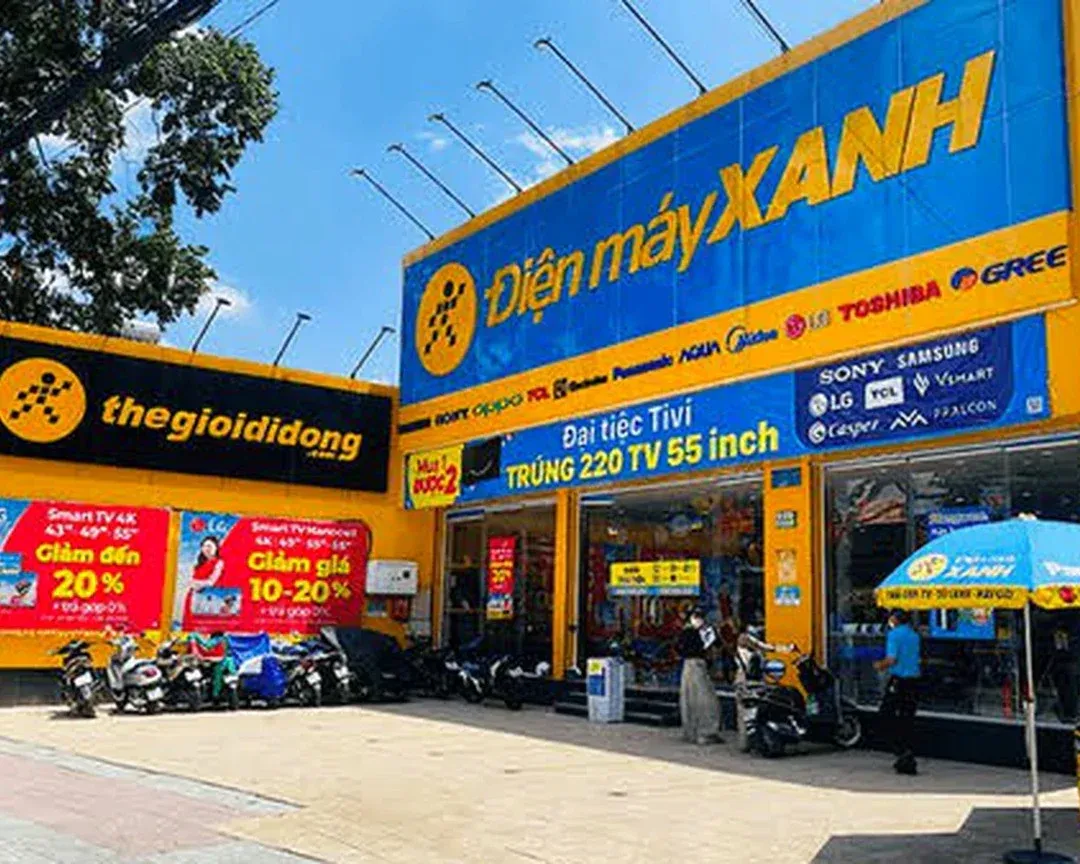

On October 28, Mobile World Investment Corporation (MWG) released its third-quarter 2026 financial statements. Consolidated net profit for the first nine months came to VND 9,633.6 billion, up 93% from VND 4,989 billion a year earlier. That is above the company's full-year after-tax profit plan of VND 9,200 billion, or about 104.7% of target. According to VnExpress, the plan was also the highest profit target the company has ever set.
For MWG shareholders, the milestone raises three questions: where the profit came from, how much of it actually belongs to MWG shareholders, and what to watch in the fourth quarter. This post takes them in turn.
Q3 sets a new profit high
In Q3 alone, MWG booked net revenue of VND 52,614 billion, up 32% year on year. Consolidated net profit was VND 3,521.1 billion, up 97% from VND 1,783.7 billion in Q3 2025 and above Q2's VND 3,355 billion. It is the company's highest quarterly profit to date.

Over nine months, net revenue reached VND 147,827 billion, up 30% and about 79.9% of the VND 185,000 billion plan. The profit plan is done; the revenue plan needs roughly VND 37,173 billion more in Q4, less than Q3's revenue. The result also matches what Mr. Vu Dang Linh, General Director of Mobile World Investment Corporation (MWG), told investors in August: the company could finish its plan two to three months early.
Profit grew nearly three times as fast as revenue
Q3 revenue rose 32% while net profit rose 97%. The gap has more than one source.
Dien May Xanh stores sold more. The group under Dien May Xanh Investment JSC, which includes The Gioi Di Dong, Dien May Xanh, TopZone, EraBlue and Tho Dien May Xanh, generated nearly VND 99,200 billion in nine-month revenue, up 29% after eliminating intra-group sales. MWG says revenue per existing store rose 30%, with growth coming mainly from the existing network rather than new openings. Put simply, with the same premises and the same staff, each store sold nearly a third more than last year. That kind of growth lets profit outrun revenue, because rent and depreciation do not rise with the volume sold.

Installment buying carries a large share of that growth. Installment-purchase revenue at Dien May Xanh rose 50% year on year and makes up about 38% of the group's revenue. That is well ahead of the 29% growth for the group overall, so a meaningful part of the extra same-store sales came from customers paying in installments or buying now and paying later.
Bach Hoa Xanh has become a profit contributor. The grocery chain's nine-month revenue was about VND 45,900 billion, up nearly 34%, driven mainly by fresh food and fast-moving consumer goods. According to the notes to the financial statements, Bach Hoa Xanh Trading JSC earned VND 1,469 billion over nine months, including VND 536 billion in Q3 alone. Unlike Dien May Xanh, the chain is still adding stores, with 3,904 outlets at the end of September.

Wider margins, plus income on idle cash. In Q3, cost of goods sold grew 27%, slower than revenue, lifting gross margin to 21.7% from 18.8% a year earlier. Costs did not stand still: Q3 selling expenses reached VND 6,887 billion, up 50.7%, close to the growth in gross profit. The offset came from general and administrative expenses, down 11.4% to VND 992 billion, and from income on deposits, loans and investments of nearly VND 2,615 billion over nine months, up 77.3%.
MWG itself points to higher revenue enlarging gross profit, together with a lean operating model. The numbers support that reading: a gross margin about 3 percentage points wider on more than VND 52,000 billion of quarterly revenue weighs more than the financial income. Income on idle cash is a meaningful extra, but not the main driver.
What belongs to MWG shareholders
The VND 9,633.6 billion figure is consolidated net profit, the same measure the VND 9,200 billion plan uses. Of that, the share attributable to MWG shareholders was VND 9,111 billion, up 83.5%. The remaining VND 520 billion or so belongs to non-controlling shareholders, the other investors in MWG's subsidiaries, including Dien May Xanh, which has listed on HOSE.

That explains why the profit attributable to MWG shareholders grew 83.5%, slower than the 93% for consolidated profit. The two growth rates do not conflict; they measure different things. For someone holding MWG shares, the closest measure is the attributable profit and earnings per share. Nine-month EPS was VND 6,196, up 83.6% from VND 3,374. The attributable profit already equals about 99% of the VND 9,200 billion mark, so any positive Q4 profit pushes it over.
Why MWG's standalone Q3 profit exceeds the consolidated figure
On its standalone statements, MWG reported Q3 net profit of VND 4,452.5 billion, up 118% from VND 2,044.5 billion a year earlier. By its own explanation, MWG received dividend income in the quarter. The standalone accounts cover only the MWG legal entity: when subsidiaries pay dividends, the cash moves up to MWG and is booked as income. That is why standalone Q3 profit exceeds even the group's consolidated VND 3,521.1 billion.

The dividend does not add to consolidated profit. On consolidation, transactions within the group are eliminated, so VND 9,633.6 billion remains profit from the whole group's business. What the dividend does show is that profit generated by the chains has partly turned into cash at the listed entity. That is the source MWG uses to pay dividends to its own shareholders. The company has spent about VND 1,476 billion on the second 2025 cash dividend payment, at 10%, with payment scheduled for October 16, 2026.
Three things to watch
Installment sales. With about 38% of Dien May Xanh revenue going through installment plans, and that share growing 50%, same-store sales depend partly on finance partners continuing to lend to buyers. If consumer lending tightens, this part of growth would feel it first.
Bach Hoa Xanh's September pause. September revenue for the chain was an estimated VND 5,800 billion, slightly below the August peak. One month is not a trend. But the chain is still opening stores, and flat revenue alongside a growing store count would pull average revenue per store down.
Cash flow and inventory. Net operating cash flow for nine months was about VND 3,044 billion, down from VND 6,708 billion a year earlier, while inventory rose roughly VND 7,953 billion from the start of the year to VND 35,829 billion. The company is stocking up for the year-end shopping season and expects new Apple products to support sales. Whether that stock sells through in Q4 will decide the full-year cash flow.
Conclusion
At Dien May Xanh, this year's growth rests on the sales of existing stores rather than new openings, which is why profit is running faster than revenue. Bach Hoa Xanh is both adding stores and selling more, and it is now profitable. The profit plan has been met, and the share attributable to MWG shareholders is already about 99% of the VND 9,200 billion mark. The thesis here: the quality of this year's profit is good, but cash flow has not caught up.
The first data point for Q4 is the October revenue update: whether Bach Hoa Xanh revenue returns to its August level, and whether Dien May Xanh holds growth near 30%. The second is the board's decision on the plan now that it has been exceeded. The third sits in the Q4 report: whether inventory comes down and operating cash flow catches up with profit.