
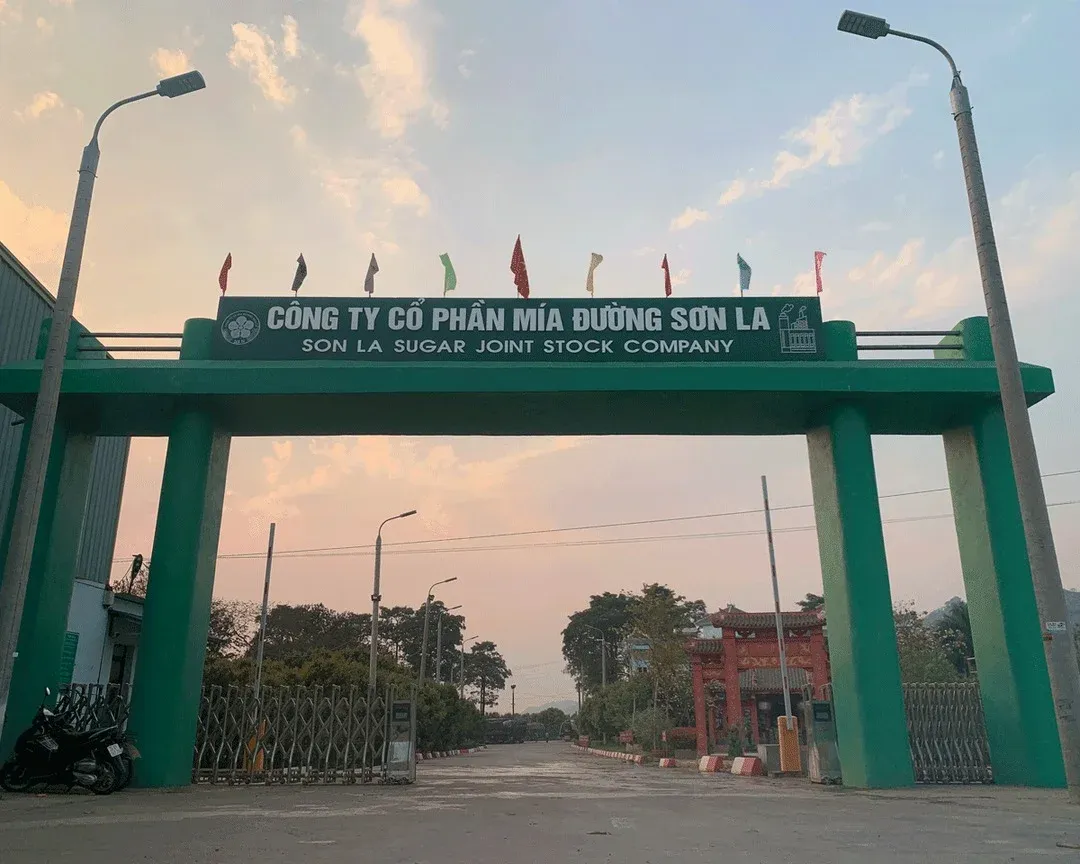

Holders of SLS shares in Son La Sugar JSC will receive VND 10,000 in cash per share, 100% of par value, for fiscal 2025-2026 (July 1 to June 30). With almost 9.8 million shares outstanding, the company will pay out roughly VND 98 billion.Người Quan Sát
Most coverage stops at the 100% figure. The more useful question is where the money comes from: how VND 98 billion compares with the profit of the year just ended, with payouts in earlier years, and with the pile of accumulated earnings behind it. Those comparisons show what the dividend actually rests on.
The payment calendar and what changes in your account
According to the announcement reported by Tin nhanh chứng khoán on October 25 and the board resolution cited by CafeF, the schedule has three dates: ex-dividend on November 2, 2026, record date on November 3, 2026, and expected payment on November 25, 2026.Tin nhanh chứng khoán CafeF
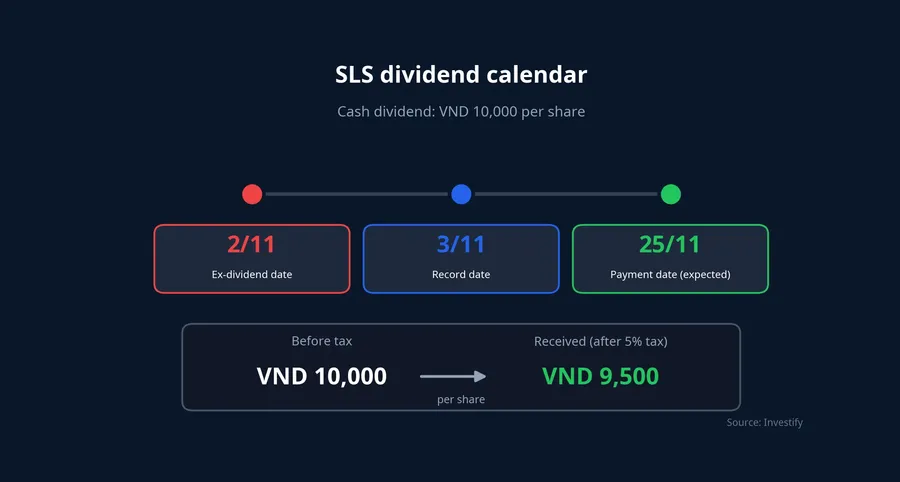
Anyone who buys from the November 2 session onward will not be on the list. To qualify, the purchase must settle in the session just before, Friday, October 30. On November 2 the reference price is adjusted to the October 30 close minus VND 10,000. On your screen the position falls by VND 10,000 per share that morning, while the cash arrives about three weeks later. Holders are neither richer nor poorer for it: part of the share's value simply turns into cash.
Individuals receive less than VND 10,000. Cash dividends carry a 5% personal income tax, withheld before payment, leaving VND 9,500 per share.A holder of 1,000 shares receives VND 9.5 million.
At the October 23 close of VND 141,500, VND 10,000 is a dividend yield of about 7.1% before tax.CafeF The stock trades thinly: only 6,000 shares changed hands on October 23.
VND 98 billion against the year's own profit
In fiscal 2025-2026 the company posted net revenue of nearly VND 1,080 billion, down 6.97%, and net profit of VND 191.2 billion, down 48.9% from the prior year.Tin nhanh chứng khoán The VND 98 billion payout equals about 51% of that profit, with the rest retained in the business.
Fiscal 2024-2025 looked different. Net profit was around VND 374 billion, and the 150% payout of about VND 146.9 billion took roughly 39% of it. In fiscal 2023-2024 the rate reached 200%, nearly VND 195.84 billion, the highest since listing.CafeF
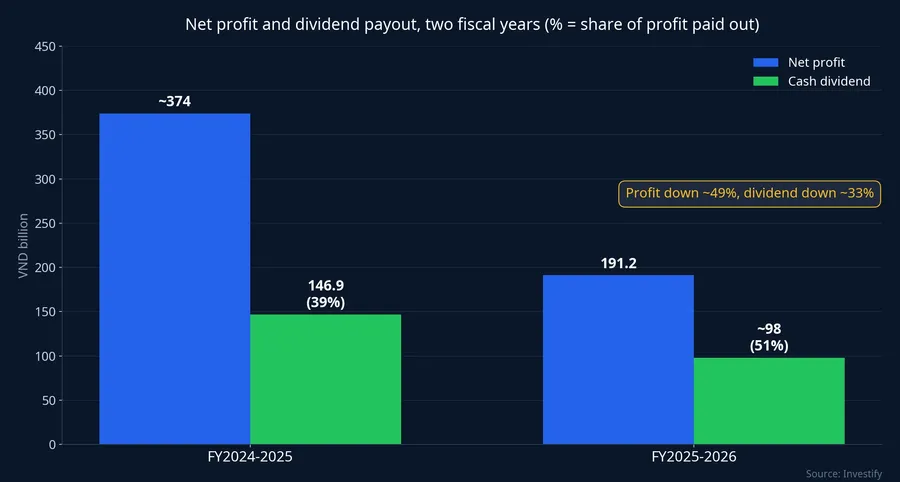
The chart shows the dividend falling more slowly than profit. Profit dropped nearly half, the payout about a third, so the share of profit paid out rose from roughly 39% to roughly 51%. The company held the payout at a round 100%, a level it kept in fiscal 2021-2022, instead of cutting it in step with earnings. For holders, the point to note is that this payout still sits inside the profit of fiscal 2025-2026. The company did not have to draw on earlier years' profit to fund it.
The VND 1,558 billion behind it
At June 30, 2026, Son La Sugar held VND 1,558 billion in undistributed after-tax profit, plus VND 96 billion in its investment and development fund.Người Quan Sát That is almost 16 times this dividend. After deducting the VND 98 billion, about VND 1,460 billion remains. It is years of profit never paid out, and it explains why a company with falling earnings can still keep a high dividend.
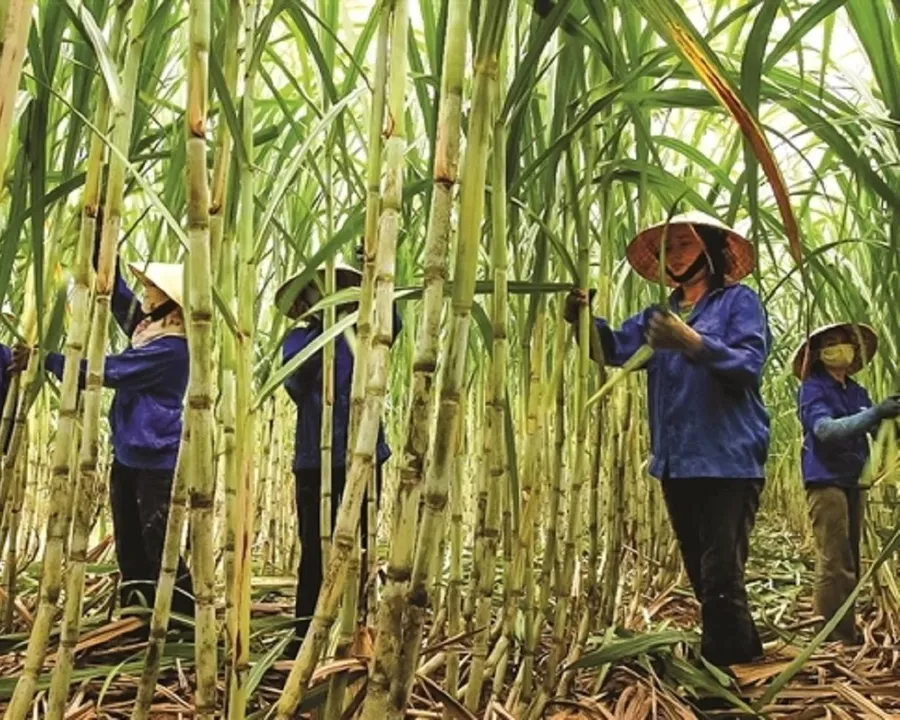
Read the number carefully. Undistributed profit is a line in equity, not a cash balance. Much of it may already sit in plant, inventory or investments. It tells you the company has the accounting room to pay; how much it can pay in actual cash depends on the cash it holds. Sugar producers also advance money to cane farmers every season. SLS's supply zone is now 8,170 hectares, including 1,737 hectares newly planted in the past fiscal year.Người Quan Sát
The retained pile only has to carry the dividend when a year's profit falls short of the payout the company wants to keep. This year is not that case. Next year is the question.
First quarter of the new fiscal year: profit down, world sugar up
The first-quarter report for fiscal 2026-2027 (July 1 to September 30) shows revenue of VND 268.5 billion, down 10.2%, and net profit of VND 22.56 billion, down 72.3% year on year.Tin nhanh chứng khoán A 72.3% drop implies the same quarter a year earlier earned about VND 81 billion, over 40% of fiscal 2025-2026's full-year profit. A quarter that carried two-fifths of last year's profit now earns less than a quarter of its old level.
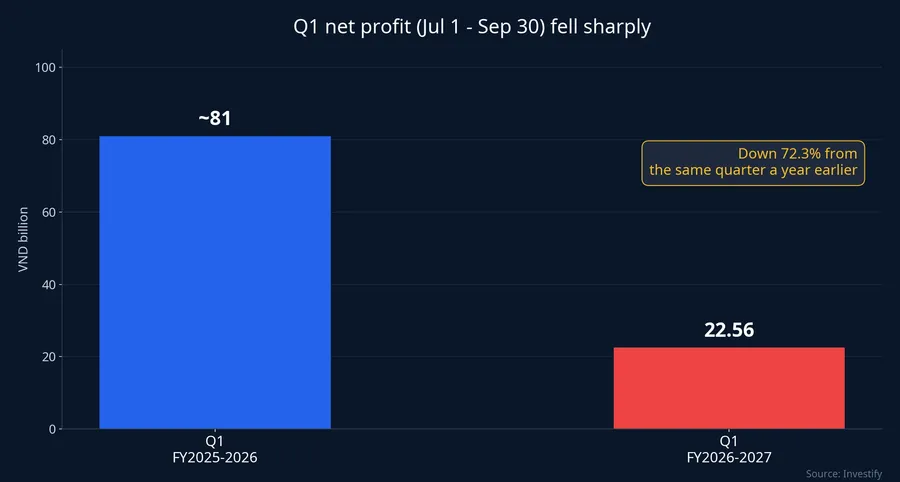
The company explains that the domestic sugar market is oversupplied, hit by smuggled sugar, trade fraud and rising imports of high-fructose corn syrup (HFCS). Selling prices fell sharply and pulled gross margin down.
What stands out is that world sugar moved the other way in the same quarter. Raw sugar futures rose from 14.82 US cents per pound on June 30 to 18.61 on September 30, about 25.6%. On October 23 the price stood at 20.37 US cents per pound.
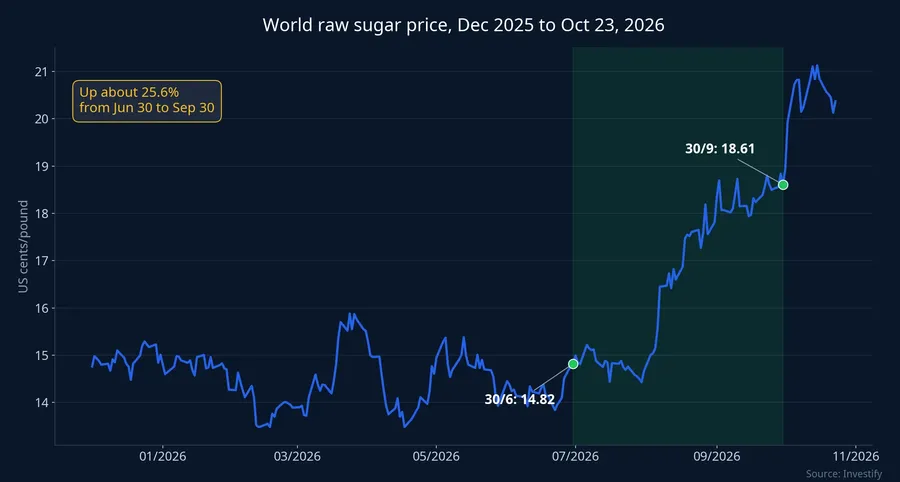
Why did the higher world price not reach SLS's selling prices? There are at least two explanations. One is that smuggled sugar and cheap syrup are displacing domestic cane sugar, especially among beverage and food buyers. The other is lag: sugar sold in the first quarter may have been priced earlier, when world prices were lower. The company's own explanation leans toward the first. Later quarterly reports will show which carries more weight, since a meaningful lag would let selling prices absorb the world rally over time.
Who receives most of the VND 98 billion
Older coverage cites a 58.68% state stake, but that figure dates from the 2007 equitization. In the shareholder structure updated on October 23, 2026, state ownership in SLS is 0% and foreign investors hold 1.57%.
Ownership is fairly concentrated: one individual holds 27.43% (about VND 26.9 billion before tax), Thai Lien Co., Ltd. holds 15% (about VND 14.7 billion), and another individual holds 9.84% (about VND 9.6 billion). Together they hold about 52.3% of the shares and would receive about VND 51 billion of the VND 98 billion.
The arithmetic for fiscal 2026-2027
To pay 100% again for fiscal 2026-2027 and still stay within that year's own profit, the company needs about VND 98 billion in net profit. The first quarter delivered VND 22.56 billion, so the remaining three quarters must add about VND 75 billion. In fiscal 2025-2026 those three quarters earned about VND 110 billion, which is VND 191.2 billion minus roughly VND 81 billion for the first quarter.
If the next three quarters stay near last year's level, a 100% payout can still be covered by current earnings. If profit keeps falling at the first quarter's pace, the company must choose between cutting the rate or tapping the VND 1,558 billion. With a cushion that large, the second option can last for years, but it would mean paying out of the past rather than out of current earnings.
The conclusion: this dividend rests on solid ground, since it sits inside the year's profit and a large reserve stands behind it. How long the payout lasts is undecided, and the deciding signals are selling prices and gross margin in the quarters of the new crushing season. World prices are high. What to watch is whether domestic sugar follows them or stays pinned down by smuggled sugar and syrup.