

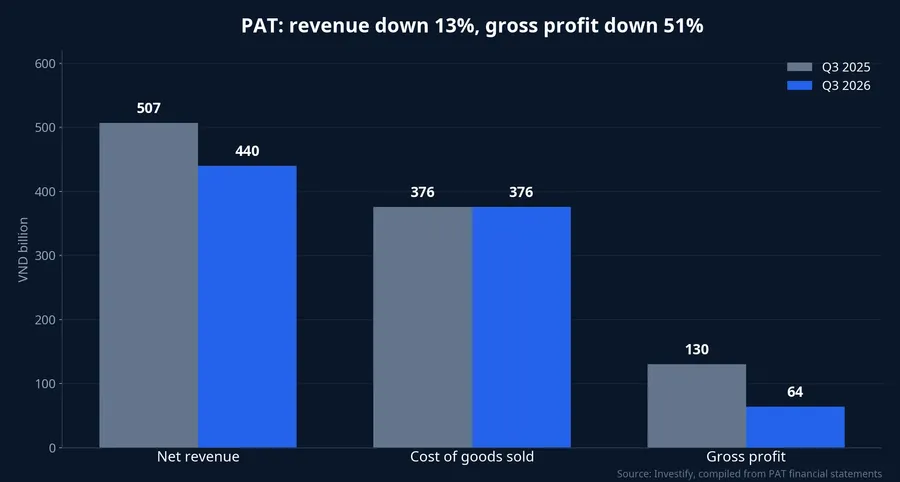
Revenue at Vietnam Apatit Phosphorus JSC (PAT, UPCoM) fell by about VND 67 billion in Q3 2026 from a year earlier, and gross profit fell by almost exactly the same amount. That near-match is the key to reading the quarter at this subsidiary of Duc Giang Chemicals (DGC): nearly all the lost revenue dropped straight through to profit, because the cost of goods sold did not shrink.
Revenue down 13%, gross profit down 51%
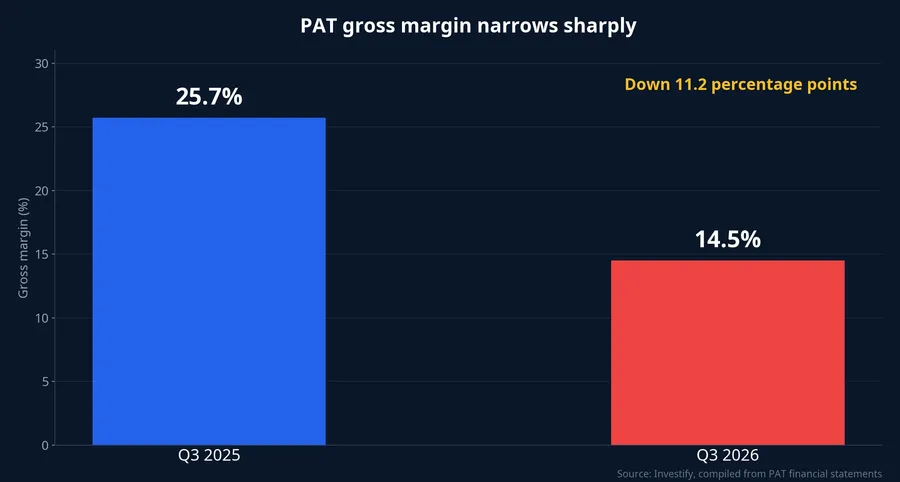
PAT reported Q3 revenue of VND 440.03 billion, down 13.2% year on year. Gross profit fell 51.3%, or VND 66.87 billion, to VND 63.6 billion. Gross margin narrowed from 25.7% to 14.5%. Net profit came in at VND 59.32 billion, down 46.1%.Tin nhanh Chứng khoán CafeF puts pre-tax profit at about VND 64 billion, down 45%.CafeF
In percentage terms, gross profit fell almost four times as fast as revenue. In absolute terms the picture is clearer. Q3 2025 revenue was about VND 507 billion, so this quarter's shortfall is about VND 67 billion, against a gross profit shortfall of VND 66.87 billion. The two nearly coincide.
Cost of goods sold stays at about VND 376 billion
The reason sits in the cost line. PAT's Q3 cost of goods sold was about VND 376 billion, roughly the same as Q3 2025.CafeF Revenue went down while the cost of producing the goods did not, so the gap between the two lines, which is gross profit, was squeezed by almost half.
Put differently, in Q3 last year every VND 100 of revenue carried about VND 74 of cost. This quarter it carried about VND 85.5, consistent with the reported 14.5% gross margin.
PAT attributes the result to two factors: lower yellow phosphorus output and higher input material prices.CafeF Both push cost per tonne up, through different mechanisms.
The first is volume. A yellow phosphorus line carries costs that barely move whether it runs hard or not: equipment depreciation, payroll, furnace upkeep. PAT still held VND 216.9 billion of fixed assets at 30 September,Tin nhanh Chứng khoán so depreciation keeps flowing into cost of goods. When output falls, those costs are spread over fewer tonnes and each tonne becomes heavier.
The second is input prices. When raw materials get more expensive, the part of cost that should shrink with volume does not. A plant making less but paying more per unit of input can end the quarter with the same total cost as last year.
To be clear, the available sources do not let us separate the two. The summary of the report gives no output in tonnes, no size of the volume decline, no average selling price, and no names or price increases for individual materials. We know cost of goods stood still while revenue fell, but not whether volume or input prices weighed more. Part of the revenue decline could also come from selling prices, which the report does not address.
Lower costs below the gross line were not enough
Net profit fell less than gross profit because expenses further down the income statement shrank. Selling and administrative expenses combined fell 60.5%, or VND 14.92 billion, to VND 9.76 billion. Financial expenses fell 55.9% to VND 1.47 billion. Pulling the other way, financial revenue fell 17.7% to VND 11.37 billion.Tin nhanh Chứng khoán Selling expenses alone fell 75% to about VND 5 billion.CafeF That line usually tracks goods shipped, so the sharp drop fits with PAT selling less.
In total, savings below the gross line recovered only about VND 14 billion, while gross profit lost nearly VND 67 billion. Gross profit still decides the quarter for PAT.
Nine-month profit down 21%, 77% of the plan done
For the first nine months of 2026, PAT posted revenue of VND 1,379.3 billion, down 2.9%, and net profit of VND 215.71 billion, down 20.8%. Revenue was nearly flat while profit fell by a fifth: margins have thinned across the year, not just in one quarter.
PAT's 2026 plan calls for net profit of VND 280 billion, and it has completed 77% of it.Tin nhanh Chứng khoán To get there, Q4 needs about VND 64 billion, slightly above Q3. The plan therefore does not require a margin recovery, only that Q4 is no worse than Q3.
A thinner balance sheet: where the cash went
At 30 September 2026, PAT's total assets stood at VND 942.2 billion, down 34.8%, or VND 502.1 billion, from the start of the year. The two biggest declines were on the asset side:
- Cash and short-term financial investments fell VND 292.25 billion to VND 559.32 billion, still nearly 60% of total assets.
- Short-term receivables fell 92.7%, or VND 231.11 billion, to VND 18.23 billion. PAT collected almost everything customers and others owed it.Tin nhanh Chứng khoán
The company collected more than VND 230 billion in receivables, yet its cash still fell by almost VND 300 billion. The money left the business, and the liabilities side shows part of where it went.
Liabilities fell 73% to about VND 234 billion, all short-term. Short-term borrowings stand at about VND 67 billion, down 62%.CafeF Working back from those percentages, liabilities were roughly VND 870 billion at the start of the year and short-term borrowings about VND 175 billion. So the loan repayment is only a small part of a decline of more than VND 600 billion. Most of the rest is non-borrowing payables, and the report summary does not say whether that was supplier payments, dividends declared earlier or other obligations.
Equity rose 21% to VND 708 billion, made up of VND 250 billion of contributed capital and VND 216 billion of retained earnings.CafeF Retained earnings are close to nine-month profit, which suggests earnings accumulated in earlier years have largely been distributed. Equity grew only about VND 120 billion, less than nine-month profit, so part of this year's profit has also left the company.
The overall picture is fairly clear: the data show no expansion drive. PAT collected receivables, repaid some borrowings, settled short-term obligations and distributed profit. The result is a leaner balance sheet with less debt, but also less cash than at the start of the year.
Where PAT sits in the Duc Giang group
DGC does not hold PAT directly. PAT's major shareholder is Duc Giang Lao Cai Chemicals Co., Ltd., which owns 51% of capital, or 12,750,422 shares,Vietbao and that company is wholly owned by DGC. DGC therefore controls PAT indirectly, and PAT's results are consolidated into the group's.
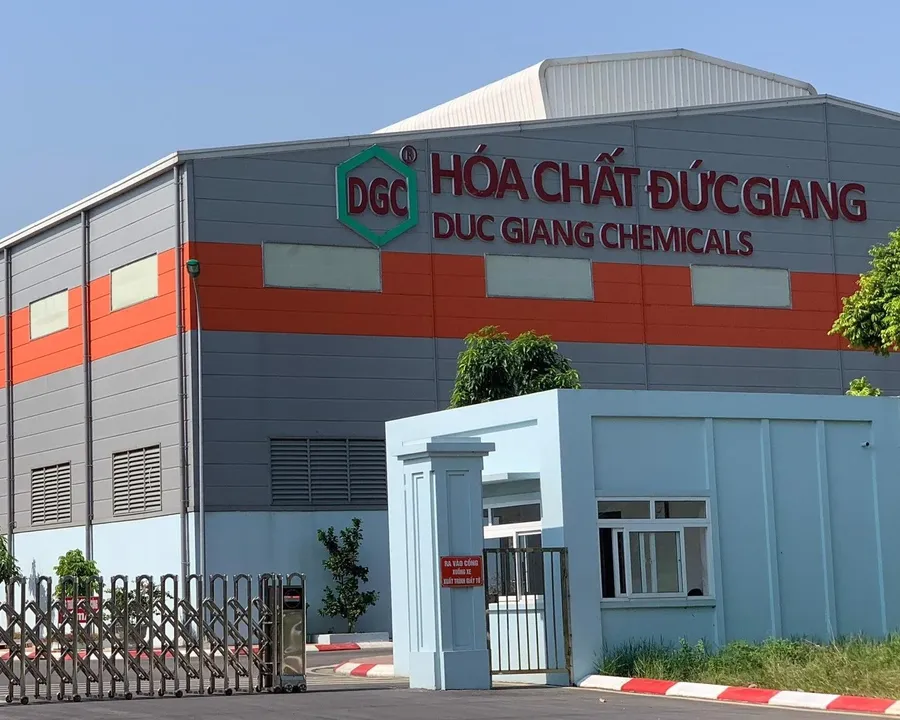
PAT is the yellow phosphorus producer at the Tang Loong industrial park in Lao Cai, with a nominal line capacity of about 20,000 tonnes a year. Yellow phosphorus is the group's core product, so PAT's Q3 is the first number to emerge from this segment while DGC's consolidated Q3 2026 statements were still unpublished as of 25 October.
The scope of the number matters. PAT is one subsidiary, and the available data do not say how much yellow phosphorus PAT sells to DGC itself versus outside buyers. The 14.5% gross margin is a signal about PAT's production cost in the quarter, not a DGC figure.
What to watch
For PAT, Q3 shows that profit is highly sensitive to volume: when output drops, costs do not follow and gross profit falls several times faster than revenue. Nine-month profit is down 21%, cash is thinner than at the start of the year, and accumulated profit has largely been paid out. Future dividends therefore depend directly on what the company earns in the year.
The thesis here is that PAT's Q3 gross profit fell because cost of goods did not shrink with revenue, while whether volume or input prices weighed more is something the sources cannot answer. The test is Q4 gross margin. If it returns above 20%, Q3 may have been just a low-volume quarter. If it stays around 14 to 15%, higher input costs are becoming the new baseline and the VND 280 billion plan will rest entirely on volume.
For DGC, the consolidated Q3 2026 report is the real answer. When it comes out, the line to set beside PAT's is the consolidated gross margin: if the group's margin also narrows sharply, cost pressure in yellow phosphorus is not confined to one plant.