
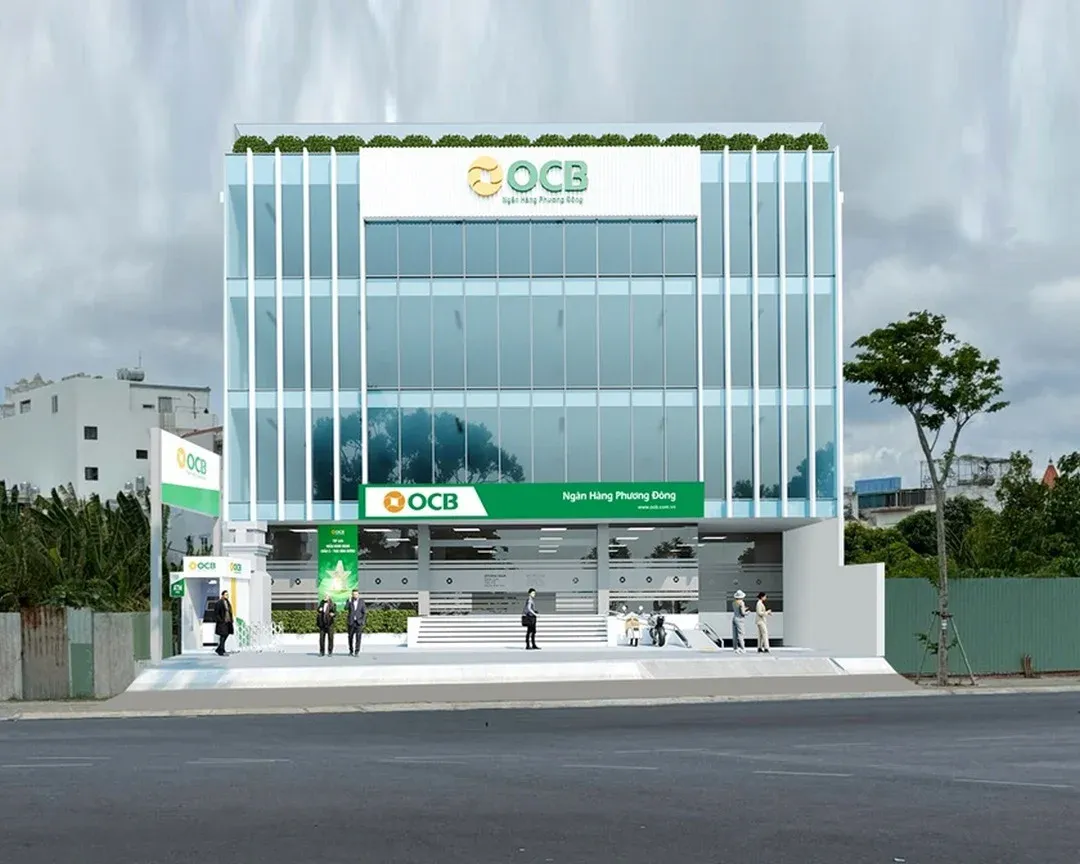

On October 21, Orient Commercial Bank (OCB) announced that Dương Đức Hùng will become Chief Executive Officer, effective October 26, 2026.Tin nhanh Chứng khoán Chris Shayan, who has served as acting CEO since June 1, moves to a role as executive director in charge of transformation, digitalization and retail business development.
Leadership changes tend to be read as personnel news and skimmed. For anyone holding OCB shares, the more useful question is what kind of bank Hùng is taking over. The numbers say profit has covered just over a third of the annual plan, bad debt has edged up, and an inspection conclusion still needs to be worked through.
Nearly five months without a permanent CEO
In May 2026, OCB disclosed that Phạm Hồng Hải, the former CEO, had submitted his resignation after two years in the job.Thời báo Tài chính From June 1, Shayan, a specialist in artificial intelligence and technology, served as acting CEO. At the time of his appointment, OCB said the choice fit its long-term strategy on data and digital banking.VietnamFinance
The October 21 decision splits the two roles. Shayan returns to technology and retail, while the CEO seat goes to Hùng, who has more than 20 years in banking and finance. Trịnh Văn Tuấn, chairman of OCB's board, described the move as strengthening management capacity for the next phase. The announcement does not name the institutions where Hùng previously worked, nor does it say what he will prioritize. This article therefore attributes no strategy to the new CEO. It only reads the numbers he will inherit.
The second half must deliver nearly twice the first
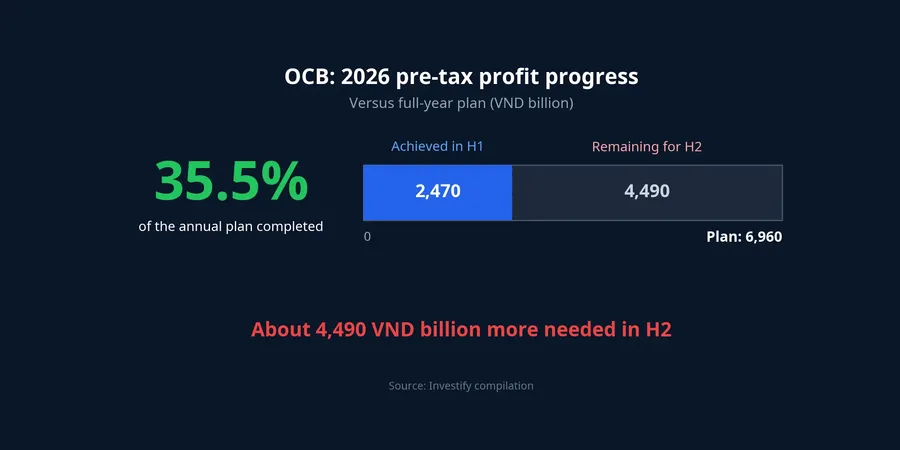
OCB set its 2026 pre-tax profit plan at VND 6,960 billion, up 39% from 2025.Thời báo Tài chính According to its reviewed consolidated financial statements, pre-tax profit for the first six months was VND 2,470 billion, up 30.5% year on year and equal to 35.5% of the plan.Tạp chí Kinh tế Tài chính
Simple subtraction shows what is left. In the second half OCB needs roughly VND 4,490 billion more in pre-tax profit, about 1.8 times what it earned in the first half. From October 26, Hùng has just over two months of the fiscal year to contribute to that.
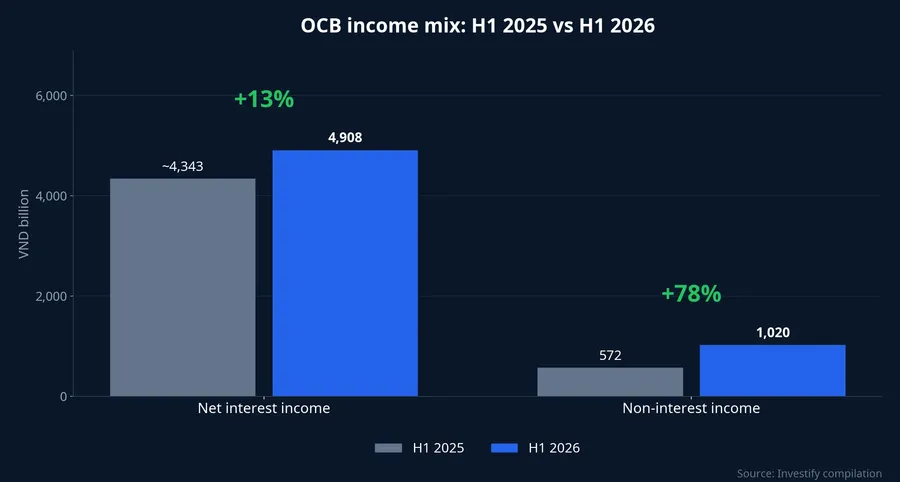
The first-half income mix shows that profit growth did not come mainly from lending. Net interest income rose 13% to about VND 4,908 billion. Non-interest income grew much faster, from about VND 572 billion to VND 1,020 billion, roughly 78%. The cost-to-income ratio fell from 38.2% to 32.9%.
At the end of June, customer loans stood at VND 220,345 billion, up 10.9% from the start of the year. According to MBS Research, OCB's credit growth at the end of Q2 had nearly used up the 12% growth quota it was granted.Tạp chí Kinh tế Tài chính If the quota is not raised, the missing profit is hard to expect from more lending. It would have to come from margins, non-interest income, or lighter provisioning. The last of these is the hardest.
Bad debt and Group 2 debt are both rising
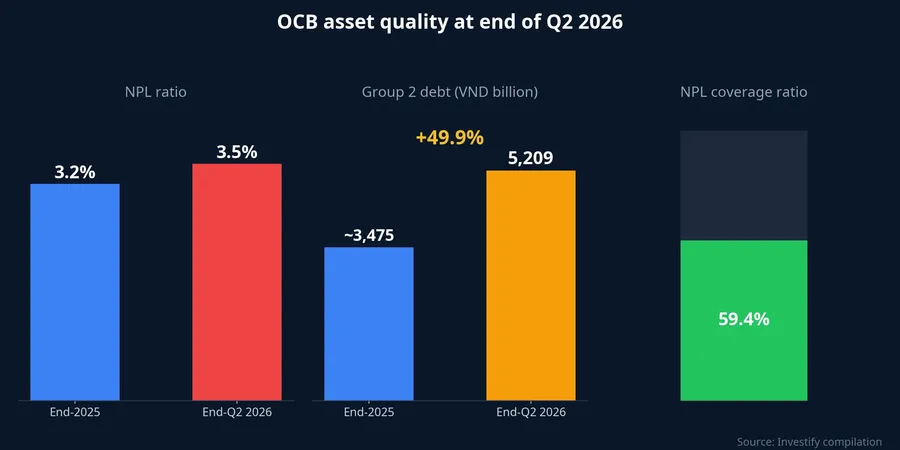
At the end of Q2 2026, OCB's NPL ratio was 3.5%, up from 3.2% at the end of 2025. In value terms, NPLs were about VND 7,681 billion. The more telling figure is Group 2 debt: loans that are overdue but not yet classified as bad. That category rose 49.9% from the start of the year to VND 5,209 billion.Tạp chí Kinh tế Tài chính
Group 2 debt is the doorway to bad debt. A loan the borrower fails to repay in time slides down a category, and the bank must set aside more provisions. The bank has already provisioned more heavily: credit risk provisioning expenses for the first half were about VND 1,394 billion, up roughly 38% year on year. As a result, the NPL coverage ratio rose to 59.4% from about 40.5% at the end of Q2 2025. The buffer is thicker than a year ago, but it covers only about six-tenths of the bad debt on the books.
There are two ways to read this. In the first, the bank is deliberately cleaning up its legacy portfolio, so high provisioning is a one-time price. In the second, fast-rising Group 2 debt signals a newer layer of loans weakening, and provisioning pressure will last. First-half data cannot tell the two apart. The trend in Group 2 debt over the coming quarters will.
The inspection conclusion and what must be fixed
According to Tạp chí Kinh tế Tài chính, the State Bank of Vietnam's inspectorate has announced its inspection conclusion at OCB. The conclusion acknowledges that the bank has a sense of regulatory compliance and has grown year after year, while also pointing to a number of violations and shortcomings.Tạp chí Kinh tế Tài chính
The inspectorate issued an administrative penalty decision covering conduct related to credit extension, asset classification, late transaction reporting, foreign-exchange transactions and the issuance of internal rules. On August 18, 2026, OCB paid the fine in full. The shortcomings lie in internal controls, loan appraisal and approval, post-disbursement monitoring, repayment-term restructuring, foreign-exchange trading and compliance with deposit-rate policy.
The inspectorate required the board, the Supervisory Board and the executive management to review and correct governance, handle the responsibility of the collectives and individuals involved, and draw up a remediation plan. Carrying out that plan now falls to the executive team led by Hùng.
Many items on the list sit in the lending chain: appraisal, post-disbursement monitoring, asset classification and repayment-term restructuring. These are also the steps that decide which debt category a loan falls into. The conclusion does not say these shortcomings distorted reported bad debt, and this article does not infer that. But as the remediation plan is carried out, NPLs and Group 2 debt in coming quarters are best read with that context in mind.
The Q3 report will show the starting point
As of October 21, 2026, OCB had not published its Q3 financial statements. That will be the first data set showing how far from the plan Hùng is taking over the bank. The profit, NPL and Group 2 figures in this article are all end-Q2 numbers, so they should be read as a mid-year marker rather than a picture of October.
Shareholders should also note a change in capital size. OCB issued bonus shares at a 15% ratio, listing about 399.5 million additional shares from July 30 and lifting charter capital to about VND 30,625 billion. The same profit is now spread over more shares, so 2026 earnings per share must be compared on the new share count.
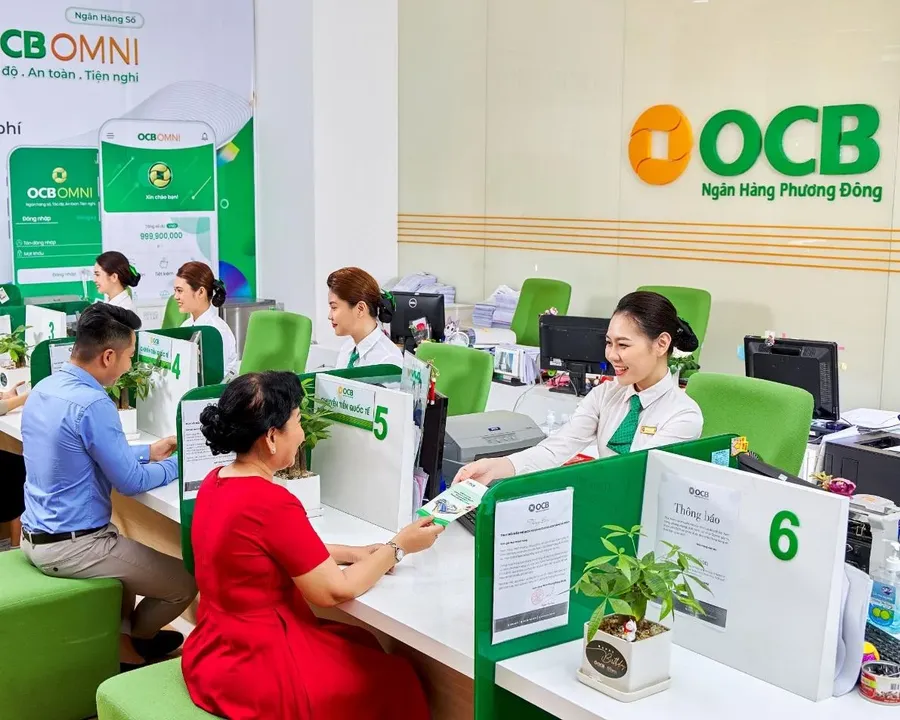
On the market, OCB shares closed the October 21 session at VND 10,250, up 1.99%, in a session where the VN-Index rose 2.76%. The gain was smaller than the index's, and a single session is not enough to say how the market judges the new CEO.
The thesis is simple. The VND 6,960 billion plan demands a much stronger second half than the first, while lending has nearly used up its growth quota and asset quality has weakened. Two signals deserve watching: Q3 profit, and Group 2 debt against the VND 5,209 billion marker. If Group 2 debt falls while profit keeps rising, the provisions already booked are doing their job. If it keeps rising, provisioning costs are likely to weigh on profit into 2027, and the VND 6,960 billion plan will be harder to reach, no matter who sits in the CEO chair.