

On the afternoon of October 20, Minister of Industry and Trade Lê Mạnh Hùng, acting on the Prime Minister's authorization, presented the Government's submission on the draft law amending and supplementing a number of articles of the Electricity Law to the National Assembly. Within a long draft, two provisions reach straight into the monthly power bill of Vietnamese households.
The first is how the bill is calculated. The draft adds a provision for retail electricity prices that differ between peak, off-peak and normal hours when technical conditions allow, together with a roadmap for applying this to residential customers.Thanh Niên The second is how the burden is shared between customer groups. The draft calls for "a reasonable retail tariff structure" and for "gradually eliminating cross-subsidies in electricity prices between customer groups not yet participating in the competitive retail electricity market".VietNamNet
A note on where this stands: it is a draft that has been submitted, and the National Assembly is still discussing it. The law has not been passed, is not in force, and no tariff for any time band exists yet. This piece moves from those two provisions down to the mechanics beneath the bill, to show what could change, who could feel it, and what remains open.
Today's bill asks one question: how much did you use
Households currently pay under a tiered tariff. Under the schedule in effect since May 10, 2025 (Decision 1279/QĐ-BCT), residential electricity has six tiers, from VND 1,984 per kWh for the first 50 kWh to VND 3,460 per kWh for consumption from 401 kWh upward, before value-added tax.Techcombank The top tier therefore costs about 1.74 times the bottom one.

The logic resembles a postpaid phone plan: the more you use in a month, the pricier the extra units. The hour of use plays no role. A kilowatt-hour spent on air conditioning at 8 p.m. and one spent on a washing machine at 2 a.m. cost the same, as long as the monthly total lands in the same tier.
This tier ladder is not settled either. Decision 14/2025/QĐ-TTg set a five-tier structure and raised tier 1 to 100 kWh. Yet at its morning session on October 17, the National Assembly Standing Committee noted that the reply to voters gave no specific date for applying it, and asked the Ministry of Industry and Trade to clarify.Người Quan Sát Even the question "how much you use, how much you pay" is waiting on a separate decision, apart from this draft law.
Time-of-use pricing adds a second question: when did you use it
Time-based pricing is not new to the wider economy. Industrial and commercial customers have paid by three time bands for a long time. Under Decision 963/QĐ-BCT, peak hours on the national grid run from 5:30 p.m. to 10:30 p.m., Monday to Saturday; off-peak hours run from midnight to 6 a.m. every day; and Sunday has no peak hours.Báo Xây dựng

What the draft does is open the way for that method to reach households. A month's consumption would then be split into three parts by hour of use, each multiplied by its own unit price. Two homes using the same amount of electricity could receive different bills, because one piles its usage into the evening while the other shifts some of it to late night.
The mechanism cuts both ways. Appliances that can run on a timer, such as washing machines, water heaters or EV chargers, are the load a household can move to off-peak hours. Needs tied to daily routine are much harder to move.

At the afternoon group discussion on October 20, Tạ Thị Yên, Vice Chair of the National Assembly's Committee on Delegate Affairs (Điện Biên delegation), put it bluntly: "A factory can rearrange its production shifts, but a family will find it very hard to move dinner to 11 p.m. or tell small children to wait until peak hours end before studying or bathing."Báo Xây dựng She warned that a poorly designed policy meant to change behavior could raise costs for people who cannot change theirs, and urged against applying it broadly to all households at once. Trần Vũ Khiêm, Standing Deputy Secretary of the Quảng Trị Provincial Party Committee, agreed and said time-based pricing for households should only be piloted, with an impact assessment on low-income families.Báo Xây dựng
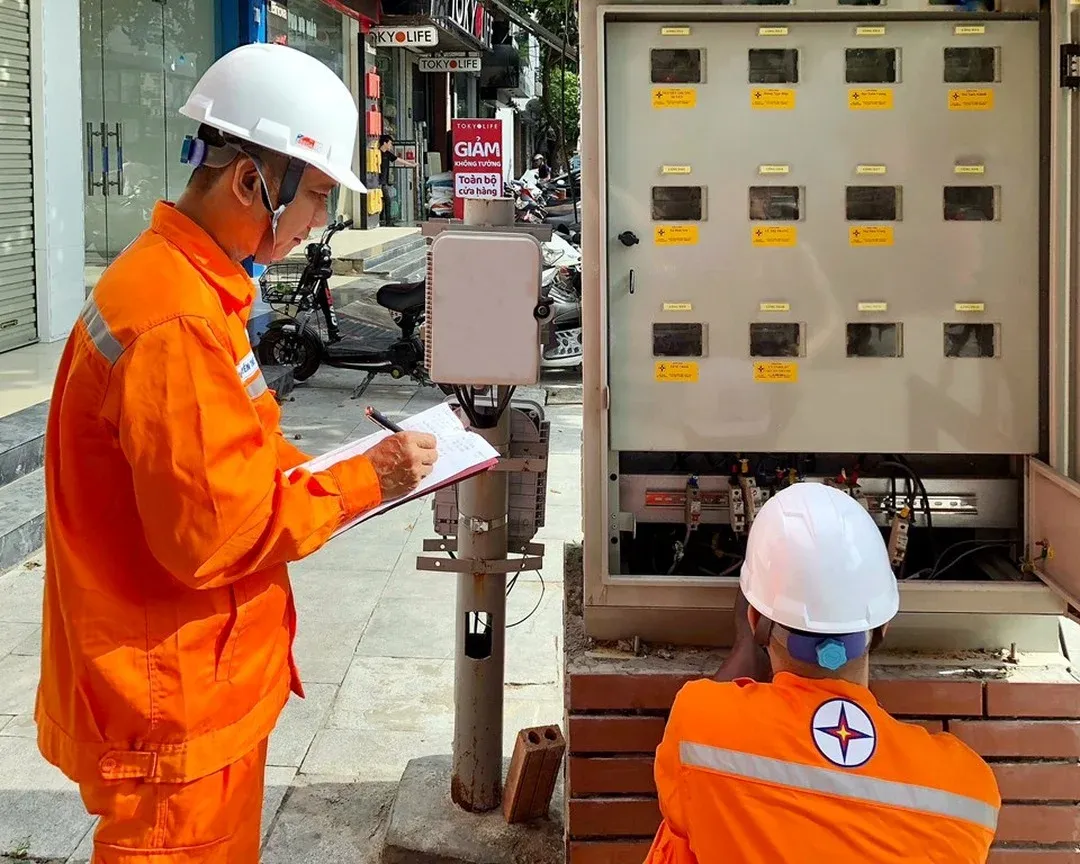
The draft's phrase "when technical conditions allow" has a concrete meaning: the meter must record electricity use separately for each time band, and the metering infrastructure must send that data back for billing. In Ms. Yên's proposal, application should also depend on customer group, consumption level, ability to shift load, meter conditions and technical infrastructure.
The most important point is that nobody yet knows whether a given household would pay more or less. The outcome hinges on things not yet published. The gap between peak and off-peak prices for households has not been set. It is unclear whether time-based prices would run alongside the tier ladder or replace it. Which households would be covered first is also unanswered. Without those parameters, any "before and after" bill calculation is only an assumption.
Cross-subsidy: the part of the price one group carries for another
The second thread is harder to see on a bill. A cross-subsidy occurs when one customer group pays more than the cost of serving it so that another group can pay less than the cost of serving it. The draft sets a goal of gradually removing this between customer groups not yet in the competitive retail market.
In principle, the group being carried would see its price change once the cross-subsidy is removed, while the group doing the carrying could pay less. But which group carries which, and by how many dong per kWh, is not stated in the documents reported by the press on October 20. That is also why the reviewing body is demanding quantification.
What does have numbers is the direct support that exists today. Under Decision 14, poor households receive a monthly subsidy equal to the electricity bill for 30 kWh at the tier 1 price. Social-policy households using no more than 50 kWh a month also receive support equal to 30 kWh at the tier 1 price.Thanh Niên At the current tier 1 price of VND 1,984 per kWh, that is roughly VND 59,520 a month before tax.
When prices move closer to cost, support for vulnerable people can no longer stay buried in the tariff. Nguyễn Thanh Hải, Chair of the National Assembly's Committee on Science, Technology and Environment, presenting the review report, proposed a clear distinction between removing cross-subsidies in electricity prices and direct support for poor households, policy households and people in especially disadvantaged areas.FireAnt Mr. Hải stressed that support needs clear criteria, resources and accountability, so that moving electricity prices toward market principles does not hurt access to power for groups who need state help.
At Group 13's discussion that afternoon, National Assembly Vice Chairman Nguyễn Hồng Diên asked the Government to define the scope, coverage and roadmap for removing cross-subsidies, and to separate this from direct support from the budget or other lawful sources for poor households, policy households and people in remote areas, border regions, islands and ethnic minority regions.Đại biểu Nhân dân The two views point the same way: support would move from being hidden inside the price to appearing as a named expense with a named source of funds.
What the reviewing body wants settled before this becomes law
The reviewing body broadly agrees with the principle that prices should reflect reasonable, valid costs and that cross-subsidies should be removed step by step. A series of requirements comes with that, and three of them sit closest to the person paying the bill.
The impact numbers. The review report says the effects of the new pricing mechanisms, especially time-of-use pricing and the roadmap for ending cross-subsidies, need to be assessed for the bills of each group of households and for business electricity costs.CAND In other words, even the National Assembly's own body does not yet hold a before-and-after bill calculation.
Who bears the risk. The draft says power purchase contract prices must "ensure full recovery" of costs, invested capital and a reasonable profit. The reviewing body noted that this wording could be read as the state guaranteeing investors' financial results, and asked for explicit language that investment and business risk is not shifted wholesale onto the state, the power buyer or electricity users.VietNamNet For a household, this wording bears on which power plant costs can flow into the retail price.
The source of compensation. The draft says that when electricity prices have not been adjusted in time to protect macroeconomic stability and social security, the state has a mechanism to compensate reasonable costs. The reviewing body asked for clarity on the source, method, timing for recognizing and handling these costs, to avoid an assumption that obligations automatically fall on the state budget.VietNamNet Mr. Diên also asked for clarity on who bears the cost, how it is booked, audited and repaid. The backdrop is the early-October instruction not to raise power prices, to protect the inflation target: who pays for the costs not yet in today's price, and when.
The scope of the amendment is also large. According to Mr. Diên, the draft affects 49 of the 81 articles in the current Electricity Law, or 60.5%, even though the law the National Assembly passed on November 30, 2024 has been in force for less than two years.Đại biểu Nhân dân
What will change the bill: more than one cause
When a household's power bill shifts over the next few years, several forces will be at work, and it is easy to pin all of them on this draft. The average retail price is adjusted through separate decisions and is being held steady under the early-October instruction. The tier ladder, six tiers or five, still has no date. The two structural changes in the draft, time-based pricing and unwinding cross-subsidies, are only the third layer.
Of those layers, the draft law only sets a frame. It does not write any number onto a bill. The numbers will come from a detailed tariff issued by the competent authority after the law takes effect, and from how fast meters are replaced.
The steps left before a bill actually changes
Between today and the day a household receives a time-of-use bill, these stages remain:
- The National Assembly keeps discussing, and the Government absorbs feedback and revises the draft.
- The National Assembly votes on the law. The sources reviewed do not give a voting date.
- The competent authority issues the roadmap and time-of-use tariff for households, with a price for each band.
- Households' meters must be able to record by time band.

On the data available, the most reasonable reading is that the draft does not yet answer whether power bills will rise or fall. It changes the question. If the law passes in this direction, a household's bill will depend on how much electricity it uses, when it uses it, and whether the household sits on the receiving or the carrying side of the tariff.
The first signal to watch is the version of the draft that goes to a vote. If it keeps the phrase "when technical conditions allow" and the word "roadmap", time-based pricing would reach households group by group, possibly starting with a pilot as some delegates proposed. The second signal is the quantified impact on each group of households that the reviewing body has requested. Once that table is published, each family will have a basis to know which side it is on.