
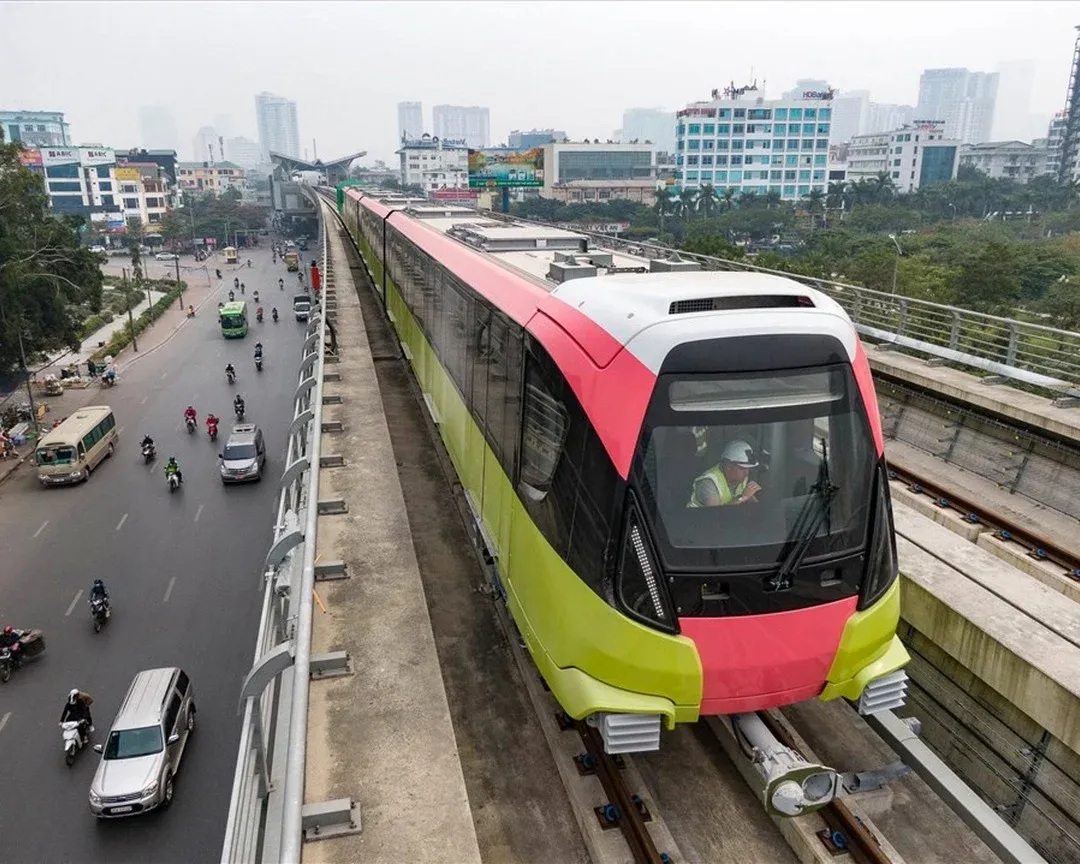

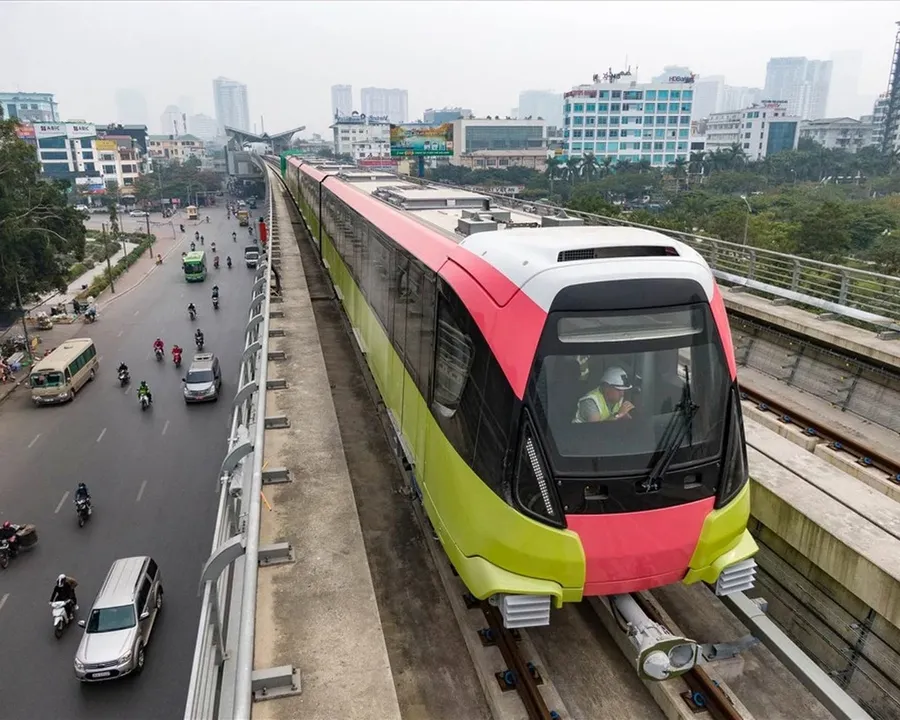
Since the October 6 signing, the Hanoi metro train deal has had no price tag. The first number came from Alstom, the seller, not from Vingroup. On October 19 the French rail group said it had received a first-phase order worth about EUR 800 million, roughly VND 23,300 billion at CafeF's conversion, to supply Metropolis trains for urban rail projects in Hanoi.CafeF
Looking at the figure, EUR 800 million answers the question left open at signing: how big is the train purchase? It answers only part of it. To read it correctly, shareholders need to know why the number came from the seller, how large it is next to figures already disclosed, and which parts of the deal still have no price.
What Alstom said and did not say
According to CafeF, the EUR 800 million order falls under the agreement between Alstom and Vingroup announced on October 6. The trains will be designed and built at the Valenciennes Petite-Forêt plant in France. Alstom expects to book the order in the third quarter of fiscal 2026-27, which is October to December 2026, because its fiscal year ends on March 31.Người Quan Sát
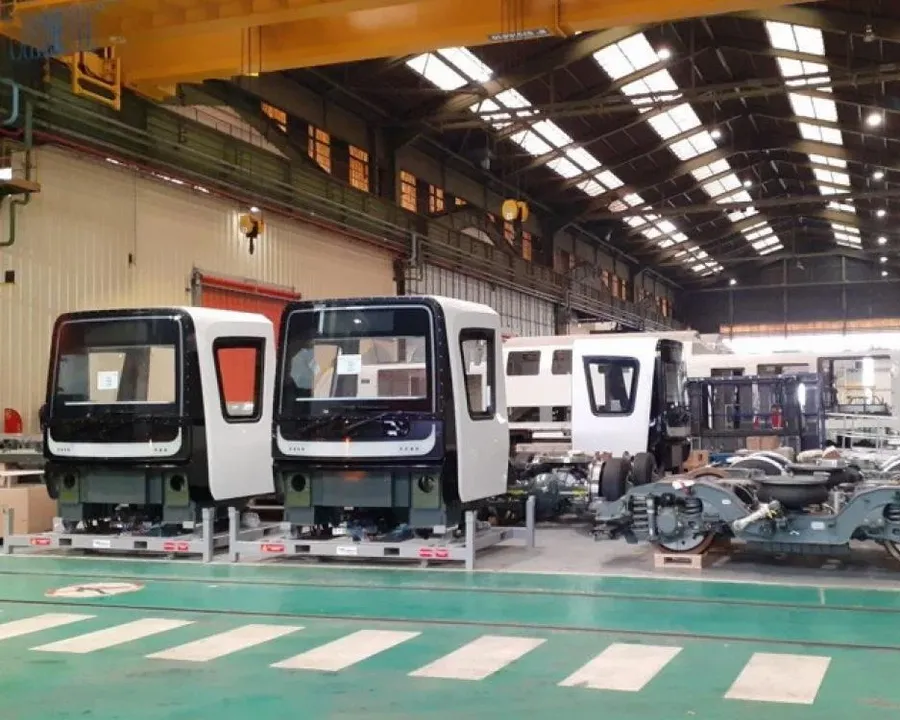
The announcement leaves out two important things. Alstom has not said how many trainsets the EUR 800 million covers. It also stated that this is the value of the first-phase order only, not the total value of the agreement with Vingroup.CafeF
The safe reading, then, is that EUR 800 million is the known minimum for the train purchase. A headline such as "VND 23,300 billion order from Vingroup" can easily lead a skimming reader to take it as the price of all the trains.
Why the first number came from the seller
When the two sides signed on October 6, no contract value was disclosed. The information at the time covered scale only: 200 Metropolis trainsets of five cars each. Alstom builds up to 83 in France, and Vingroup assembles 117 in Vietnam from Alstom components.CafeF
The price surfaced on Alstom's side first largely because of how a Paris-listed company reports to its shareholders. Orders received in the quarter tell investors where future revenue will come from, so a large order is usually announced with its value. That is a reasonable explanation of market practice, not something Alstom or Vingroup has said. Vingroup has not yet disclosed the value of its train purchase.
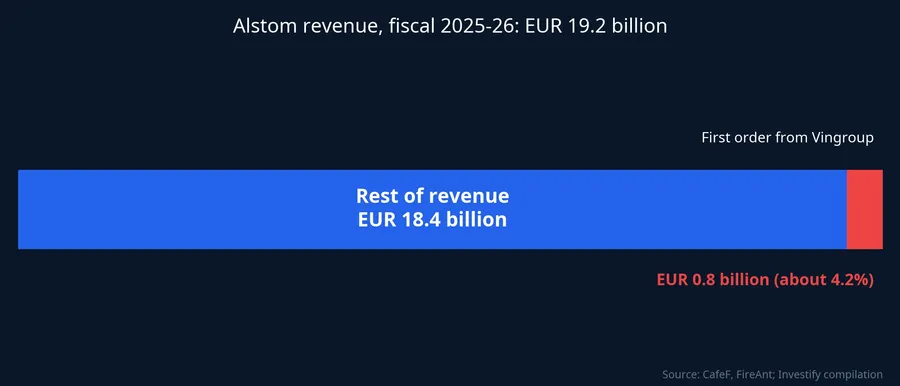
The size of the order relative to Alstom itself also shows why the group singled it out. In the fiscal year ended March 31, 2026, Alstom booked revenue of EUR 19.2 billion. The first Vietnam order therefore equals about 4.2% of the group's annual revenue (calculated from two CafeF figures). That is large enough for Alstom shareholders to need to know.
As a result, a VIC shareholder learned the first-phase price from a French company's announcement, before seeing it in any Vingroup document.
How big is about VND 23,300 billion?
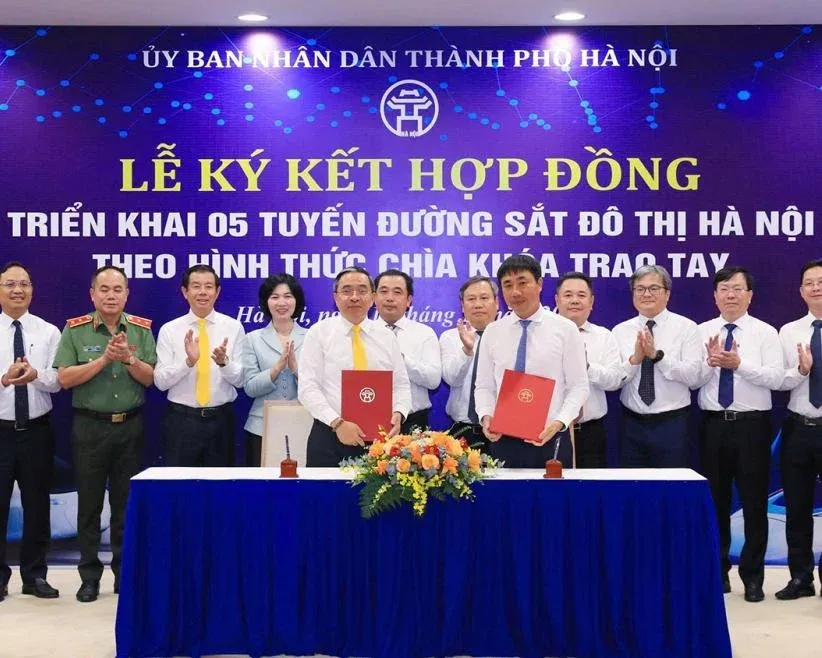
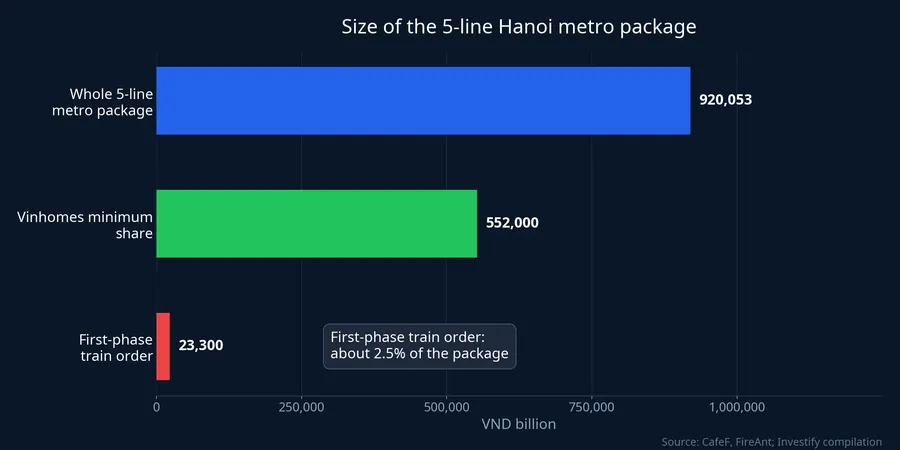
The nearest yardstick is the five-line Hanoi metro package. On October 15, the Hanoi Urban Railway Management Board signed a turnkey contract with the Vinhomes - SGC consortium for lines 1, 2, 8, 10 and 14.VOV The same day, Vinhomes' board approved joining the consortium, with an expected contract value of VND 920,053 billion, of which Vinhomes takes at least 60%.FireAnt
Side by side, the first-phase train order is about 2.5% of the whole package. Against Vinhomes' minimum share of about VND 552,000 billion, it is about 4.2%. In a package close to VND 1 million billion, the portion of trains with a known price is only a small slice.
Nor can the figure simply be scaled up. The first-phase trains are built at Valenciennes, so they belong to the France-built portion. The 117 trainsets assembled domestically follow a different arrangement: Vingroup assembles them from Alstom components under a technology-licensing agreement. The two portions are priced differently, and the number of trainsets in the first phase is unknown. Multiplying EUR 800 million across 200 trainsets would produce a number with no basis.
The open gap: whose books carry this
The hardest question for shareholders is which company's cash flow and debt the train purchase touches. According to information Vingroup disclosed earlier, the group takes part in Hanoi's urban rail projects through its subsidiary Vinhomes.Người Quan Sát Under the turnkey contract, the consortium handles design, equipment supply, installation and construction through to handover.
That allows for several ways to book the purchase, and no document says which is right:
- Vinhomes buys the trains as general contractor: the payment to Alstom is a cost of performing the contract, and Vinhomes recovers it through the city's payments to the consortium. VHM shareholders would then carry the working-capital outlay directly.
- Vingroup buys the trains and supplies the consortium: plausible for the 117 trainsets Vingroup assembles itself, with the debt or cash outlay sitting at the parent.
- A split between the two: trains imported from France go through the general-contractor contract, while the domestic assembly line sits with Vingroup.
The available information leans toward the first option for the France-built trains, because Vinhomes is the named participant and the contract covers equipment supply. But this is inference, not confirmation. For VIC shareholders, the consolidated accounts will reflect the purchase whichever company in the group holds it. The bigger difference falls on VHM shareholders: whether the outlay sits at Vinhomes will determine the pressure on the cash flow of the company they own.
The source of funds is also open. How the city pays the consortium, the payment schedule and how much the contractor must advance have not been disclosed in detail.
Signals that will answer the remaining questions
The Vingroup group's rail investment now has a minimum size: about VND 23,300 billion for the first phase. Against a VND 920,053 billion package that is a small share, and not enough to conclude anything about the group's financial pressure. What shareholders need is to know who pays and from which funds.
Three sources will gradually fill the gap. The first is Alstom's third-quarter report, the period in which the order is booked, October to December 2026; last year the group published results for the equivalent quarter in January. The second is any disclosure from Vingroup or Vinhomes on the train purchase contract. The third is the two companies' Q4 2026 financial statements, the first period covering the contract signing. If a prepayment to Alstom or a purchase commitment appears in Vinhomes' notes, the burden sits with VHM. If it appears in Vingroup's own statements, the parent is the one advancing funds.
Until one of those documents appears, EUR 800 million should be read as Alstom announced it: the value of the first-phase order, from the seller, for the France-built trains.