
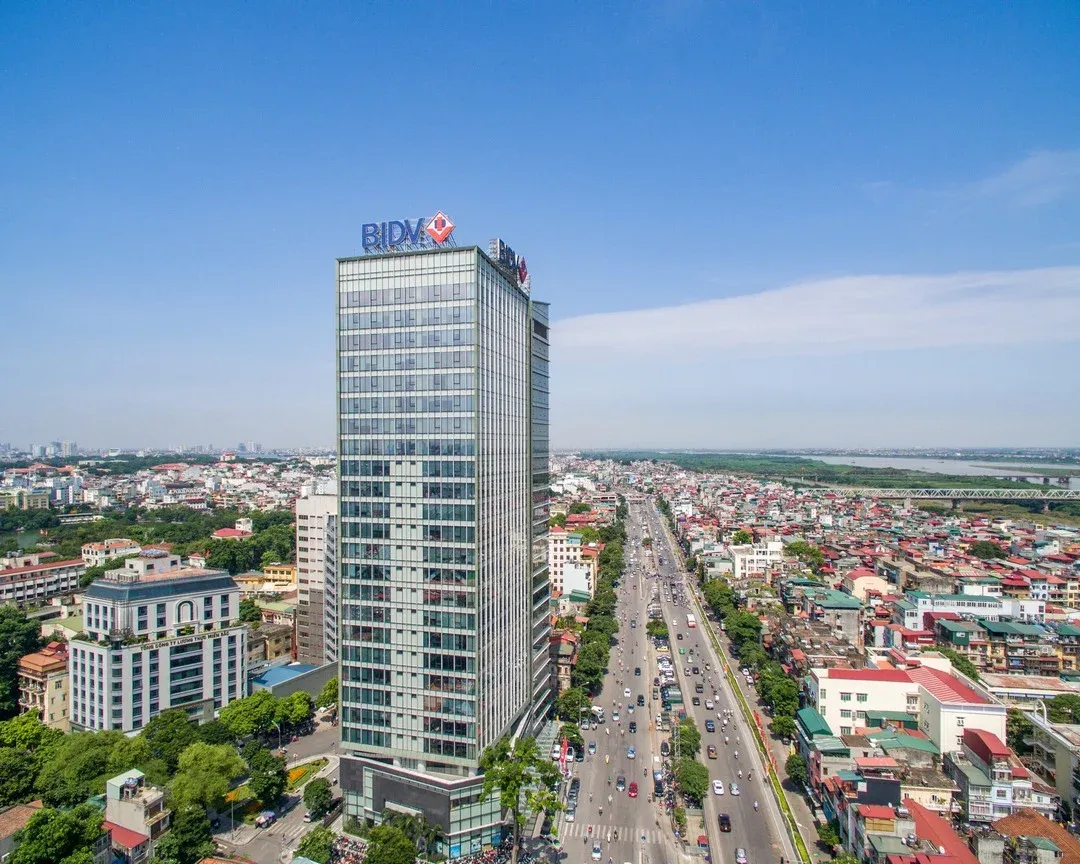

Between October 15 and 17, Vietnam's two largest banks each put forward a lending-rate cut of about 2%. The numbers match, but their status does not. At BIDV, short-term VND loans for production and business have carried a preferential rate since October 15. At Vietcombank, the figure is a pledge made by its board chairman during a National Assembly group discussion on the afternoon of October 17, with no borrower criteria, tenor or start date attached.
For anyone borrowing or about to borrow, that difference decides who already has an answer and who still has to wait. Put simply, you need to check two things: what the number is, and what stage it is at. This article lays the two banks side by side on the same criteria, then points to the borrowers who appear in neither.

BIDV: the programme is running and the terms are clear
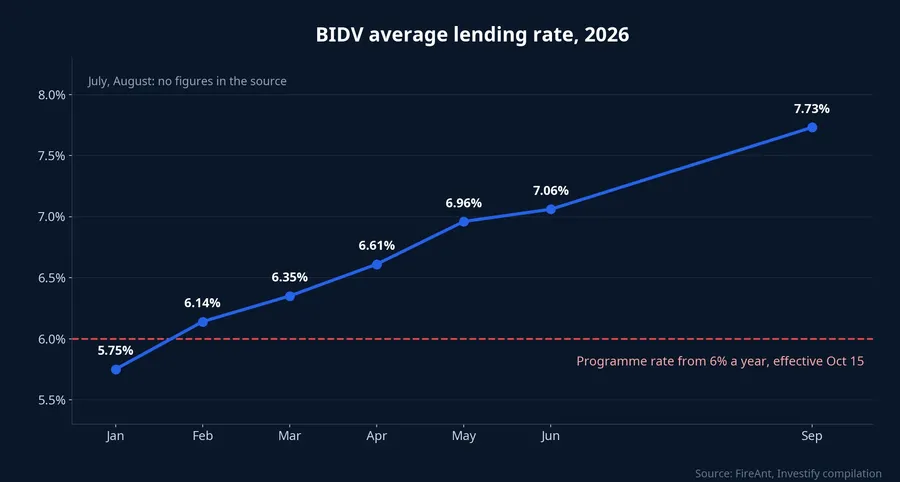
According to Dân trí and BNews on October 17, BIDV launched a preferential credit programme across its network from October 15, 2026.Dân trí Lending rates start from 6% a year, up to 2 percentage points below the usual rate, depending on tenor and sector.BNews
The scope is fairly well defined. The programme covers short-term VND loans in sectors aligned with the government's priorities, for customers who meet the programme's criteria and BIDV's lending rules. The bank says the aim is to give businesses capital at reasonable cost during the year-end peak.
The reports leave two questions open. One is when the programme ends. The other is whether existing loan balances get the new rate or only new disbursements. For someone with a working-capital loan at BIDV, only the branch can answer the second. The bank itself asks customers to contact a branch or transaction office for details.Dân trí
On timing, BIDV's programme started on October 15, a day before the afternoon meeting of October 16 at the Government headquarters. At that meeting, Deputy Prime Minister Nguyễn Văn Thắng asked for lending rates to fall by 1.5 to 2% for production, business and priority sectors.BNews So the programme cannot be a reaction to that meeting; the press describes it as getting ahead of the policy direction.
To see how low 6% is, compare it with the average lending rate BIDV publishes itself. For the September 2026 period it was 7.73% a year (data to August 31), after eight consecutive increases from 5.75% in January.FireAnt The two figures are not like for like. 7.73% is an average across all loans, including medium and long term, while 6% is the floor of a short-term programme. The comparison shows direction, not how much any individual borrower will save.
Vietcombank: a number, but no conditions yet
According to CafeF, citing the National Assembly's portal, on the afternoon of October 17, during a group discussion of the draft Law on Small and Medium Enterprise Development, Nguyễn Thanh Tùng, Chairman of the Board of Joint Stock Commercial Bank for Foreign Trade of Vietnam (Vietcombank) and a National Assembly deputy for Ho Chi Minh City, said the bank pledges to cut lending rates by at least 2% from now until year-end to help businesses access capital.CafeF

This is a deputy's remark at a discussion session, relayed by the press. As of the evening of October 17, the sources we checked showed no formal Vietcombank announcement of such a programme. "Pledge" is therefore the accurate word, not "announced" or "applied".
In the same session, Mr. Tùng gave a figure to explain why small firms need priority: small and medium enterprises make up about 98% of all businesses but only about 20% of total credit outstanding. He argued that a support scheme applied across the board would be spread too thin, so the sectors and groups of firms to prioritize should be defined.CafeF One could guess that a later announcement will come with eligibility conditions, but that is our inference, not anything announced.
Vietcombank's "2%" can be read two ways
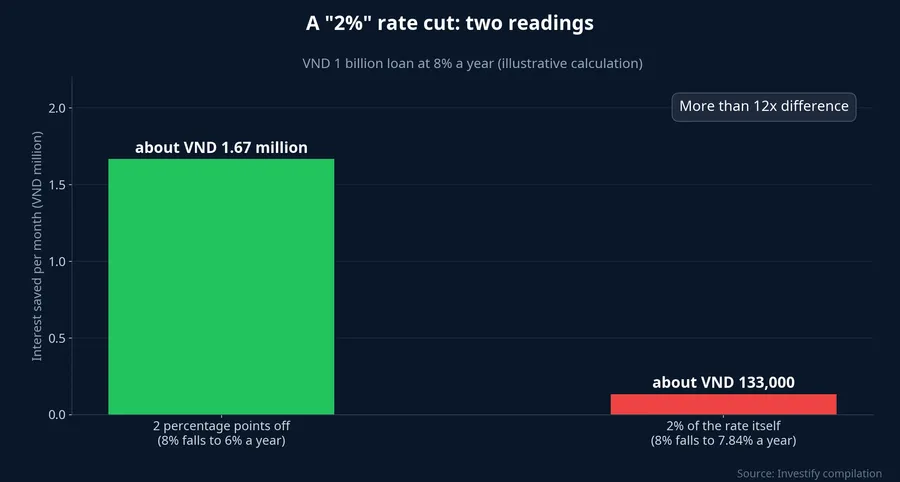
At BIDV the cut is stated as "2% a year", meaning 2 percentage points off the annual rate. The report of Mr. Tùng's remarks says only "at least 2% of lending rates". The most natural reading is 2 percentage points, like BIDV and like the 1.5 to 2% mentioned at the October 16 meeting. But literally, it could also mean cutting 2% of the current rate itself.
The two readings give results that are far apart. Suppose a VND 1 billion loan at 8% a year:
- A cut of 2 percentage points brings the rate to 6%. Interest falls by VND 20 million a year, about VND 1.67 million a month.
- A cut of 2% of the 8% rate brings it to 7.84%. Interest falls by VND 1.6 million a year, about VND 133,000 a month.
The gap between the two readings is more than 12 times. That is why Vietcombank's formal announcement matters more than the pledge itself: only that document will say how the cut is calculated.
Side by side
| Criterion | BIDV | Vietcombank |
|---|---|---|
| Size of cut | Up to 2 pts a year below the usual rate, rates from 6% | At least 2%, calculation not stated |
| Who qualifies | Short-term VND loans, government priority sectors | Not stated; remarks refer to helping businesses access capital |
| Start date | From Oct 15, 2026 | Not stated; "from now until year-end" |
| End date | Not stated | Year-end, per the remarks |
| Existing loans | Not stated | Not stated |
| Form | Network-wide programme, reported by the press | Remarks by the board chairman at a National Assembly group discussion |
Read across the rows, borrowers taking short-term loans for business get answers first. At BIDV they know the floor rate, the loan type and the start date. At Vietcombank they know the deadline is year-end and the minimum cut, but not whether they qualify.
Home-loan and medium- and long-term borrowers are missing
Neither plan mentions home buyers. BIDV's programme is limited to short-term loans, while mortgages are almost always medium or long term. Vietcombank's pledge was made in the context of helping businesses access capital and says nothing about mortgages.
This group's rates follow a different path. BIDV's personal home-loan package listed on its website carries a preferential rate from 9% a year for the first 12 months (updated September 17), after which the rate floats under the bank's policy of the time.FireAnt So a mortgage instalment does not fall automatically under either plan. It changes only at the next floating-rate reset in the contract, at whatever level the bank's policy sets then.
That does not mean mortgage rates will certainly stand still. If lending rates drift lower in line with the government's direction, floating rates could also ease at later resets. But no bank has yet pledged that for mortgage borrowers.
For holders of VCB and BID shares
In the October 16 session, VCB closed at VND 56,900, up 0.71%, and BID closed at VND 33,950, up 2.26%. The press reported BIDV's programme on October 17, after that session, so the October 16 price moves cannot be read as a reaction to the news.
The practical question for shareholders is how much a lower lending rate takes out of the spread banks earn. BIDV's gap between average lending and average deposit rates in the September period was 2.75 percentage points.FireAnt A cut of up to 2 points looks large next to that gap. However, the programme covers only part of the book, short-term loans in priority sectors, so the effect on bank-wide NIM depends on actual disbursement, which no source has published. For Vietcombank, with neither eligibility nor calculation known, there is no basis for an estimate.
Conclusion: who has answers, and what will fill in the rest
Borrowers taking short-term VND loans for production and business in priority sectors are the only group with a concrete reference point: rates from 6% at BIDV, effective October 15. That is a reasonable yardstick against any rate their own bank offers in the fourth quarter. For an existing loan, the thing to ask the branch is whether the new rate applies to the current balance or only to new disbursements.
Vietcombank borrowers need to wait for the bank's formal announcement. That document has to say who gets the cut, whether "2%" means percentage points or a percentage of the rate, and from what date. Alongside it, the lending-rate schedules other banks publish in the coming weeks will show whether the 1.5 to 2% range spreads beyond these two banks.
Home-loan and medium- and long-term borrowers are on neither list. For them, the date to watch remains the next floating-rate reset in their contract.