
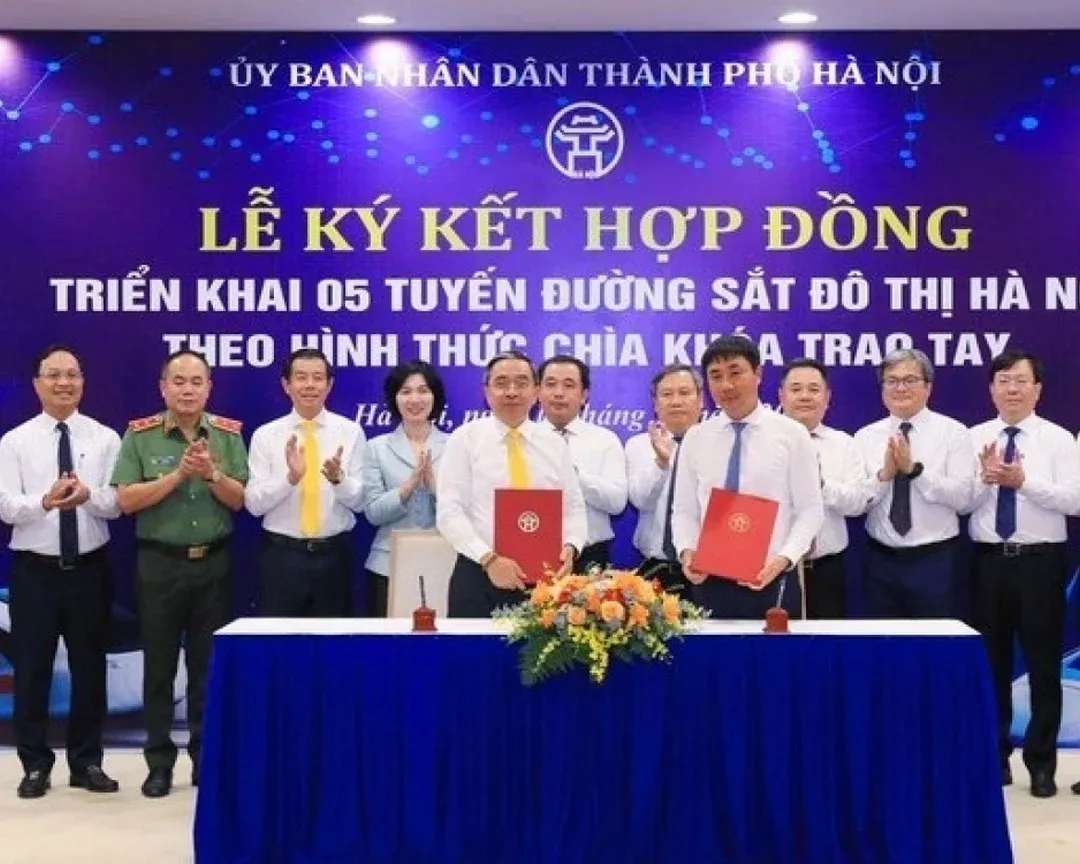

On the afternoon of October 15, the Hanoi Urban Railway Management Board and a joint venture of Vinhomes JSC and SGC Investment and Construction JSC signed a turnkey contract for urban rail lines 1, 2, 8, 10 and 14. Under this format the contractor does more than build. It handles the whole chain from surveying, design and equipment procurement to construction, installation, systems integration, trial runs and handover, and it answers for the quality, schedule and cost of the entire project.
For anyone holding VHM shares, this is a new role for the company. Vinhomes is best known as an urban-area developer that sells and hands over homes. Since that afternoon it is also a contractor, accountable to the city for price and deadline. This article walks back through each milestone since June to see what Vinhomes committed to at each step and what is still blank. The biggest blank is cash flow: who advances the money, how much, and when.
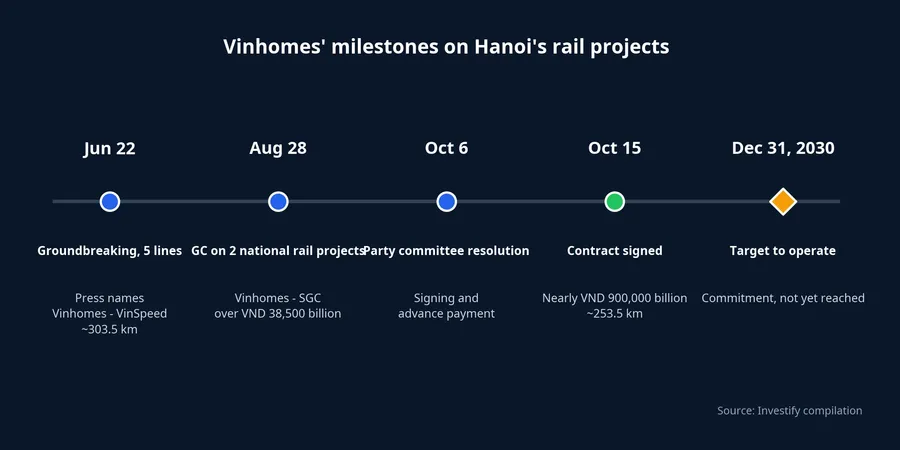
June 22: Groundbreaking, With a Different Partner and Different Numbers
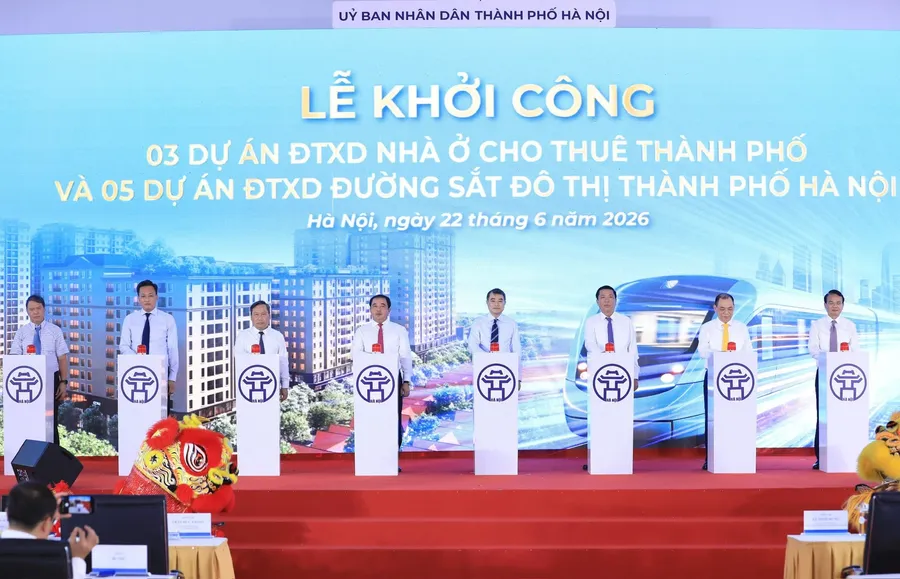
On the morning of June 22, Hanoi broke ground on five urban rail lines at once. According to Người Quan Sát's report that day, the five lines had a combined length of about 303.5 km and a preliminary total investment of more than VND 1.3 quadrillion.Người Quan Sát The general contractor role was attributed in the press to a joint venture of Vinhomes and VinSpeed High-Speed Railway Investment and Development JSC.CafeF
At that point there was no contract, no package value, and no clause on who would bear cost overruns.
August 28: The Vinhomes - SGC Pair Becomes Rail Contractor for the Same Owner
Two months later, on August 28, Hanoi broke ground on two national rail projects: the realigned Hanoi - Ho Chi Minh City line between Phu Xuyen and Ngoc Hoi, and the Eastern Ring Railway between Ngoc Hoi and Kim Son. The two projects have a preliminary total investment of more than VND 38,500 billion. The Hanoi Urban Railway Management Board is the project owner, and the Vinhomes - SGC joint venture serves as general contractor.CafeF
So the pair that signed on October 15 had already been general contractor for this same owner since late August. One note for anyone scanning price boards: the SGC ticker on HNX belongs to Sa Giang Import-Export Corporation and has nothing to do with this joint venture. Why Vinhomes' partner on the five-line package changed from VinSpeed to SGC is not explained in the press coverage available, and this article does not speculate.
Early October: The City Settles Its Position on Signing and Advances
On October 6, VietnamNet reported that the Standing Committee of the Hanoi Party Committee had issued a resolution on the policy to sign and make advance payments under the turnkey contract for the five lines.VietnamNet
On contractor selection, the report cited in the resolution says the Vinhomes - SGC joint venture was the only group of companies, at the time of the report, ready to commit maximum resources to finish the project in 2030, so it was being considered as a designated contractor to negotiate and sign the contract. On funding, the city agreed in principle to prioritize enough capital for advances, including 2026 city budget capital. Advances and payments must be tied to contract terms, progress and the city's ability to balance its budget, with an advance guarantee and recovery mechanism.
The funding gap is also spelled out: the resolution calls for a full review of resources so that central government support or advances can be proposed. In other words, the city's own policy document suggests Hanoi's budget may not cover the whole package.
October 15: The Contract, and Two Figures for the Same Package
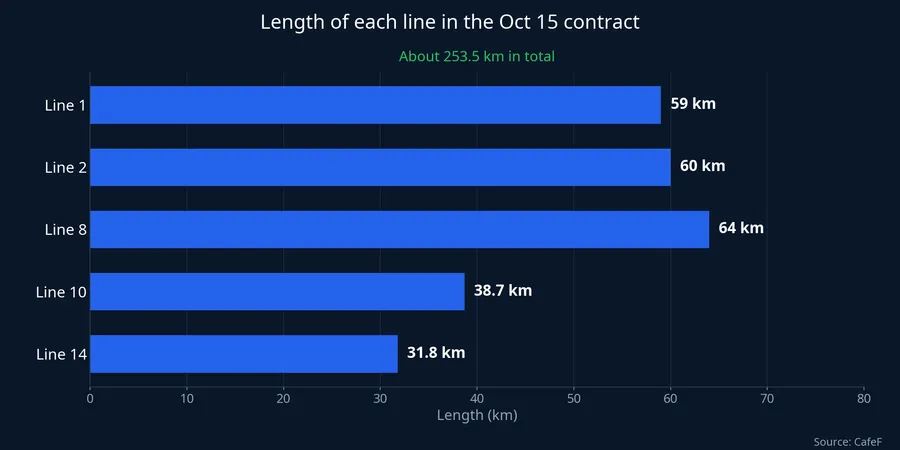
According to CafeF, the contract signed that afternoon uses the FIDIC template adapted to Vietnamese law. Its scope covers five lines with a combined length of about 253.5 km, plus depots for train maintenance and repair.CafeF Compared with the 303.5 km reported in June, the scope is now about 50 km shorter. The sources available do not explain the gap.
On value, two figures were given the same day. CafeF reported that the joint venture takes on items with total investment of nearly VND 900,000 billion, excluding site clearance costs.CafeF Meanwhile Vu Dai Thang, Chairman of the Hanoi People's Committee, said at the ceremony that the preliminary capital need for the package was more than VND 1 quadrillion.Thời báo Tài chính Việt Nam The two may be measuring different things, and no source has set them side by side to explain. Shareholders should keep both in mind until an official document appears.
Also according to Mr. Thang, the city chose the turnkey format so the contractor can mobilize resources proactively and run many tasks in parallel. In return, the contractor carries high responsibility for quality, schedule, cost and the consistency of the whole project. He asked that cost control follow the commitments and contract conditions, and tasked the Urban Railway Management Board with monitoring the use of advances and payments.Thời báo Tài chính Việt Nam
On the contractor's side, Pham Thieu Hoa, Chairman of the Board of Vinhomes JSC, spoke for the joint venture, pledging to mobilize resources and to aim to put the lines into operation before December 31, 2030.CafeF That date is now a public commitment by Vinhomes' leadership, tied to a contract in which the city says plainly that the contractor answers for the schedule.
What the Joint Venture Lined Up Before Signing
The joint venture did not wait for signing day. According to CafeF, Vinhomes - SGC has ordered more than 100 tunnel boring machine lines and over 50 diaphragm-wall excavation equipment lines, and is working on detailed design with consultants from Europe, Japan, South Korea and China. Earlier, Vinhomes also signed with Alstom to buy 200 five-car Metropolis trains for the five lines.CafeF
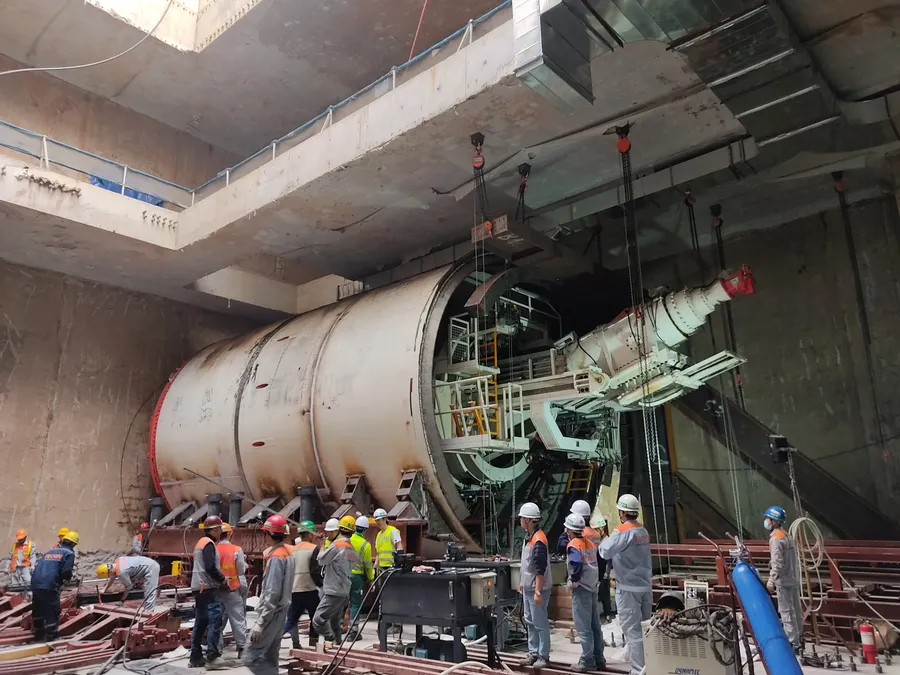
Ordering machines and buying trains are the two costliest early stages of a rail project. Equipment must be deposited for, built and shipped before the site reaches full capacity. The question for shareholders is whether those deposits are being paid with Vinhomes' money, SGC's money, or advances from the city. The sources available do not answer.
Vinhomes' Balance Sheet Before the New Role
To gauge the size of the package, it helps to set it beside the latest consolidated financial statements, for Q2 2026, compiled by Nhà Đầu tư. Vinhomes already has a revenue line called construction contracting, design consulting and supervision services. In Q2 2026 this line brought in VND 8,704 billion, up 113.23% year on year.Nhà Đầu tư The metro package, at nearly VND 900,000 billion, would still be many times the current size of this line even if spread evenly over the roughly four years to 2030 and before deducting SGC's share. How Vinhomes books the contract will therefore shape what its revenue looks like in the coming years.
On cash and debt, as of June 30, 2026 Vinhomes held VND 53,179 billion in cash and cash equivalents. Short- and long-term borrowings stood at about VND 215,453 billion, up more than 47% from the start of the year. In the first six months the company raised VND 100,993 billion from borrowing. The anchor is operating cash flow: net cash from operations in the first half reached VND 89,468 billion, mainly from home sale collections and handovers.Nhà Đầu tư
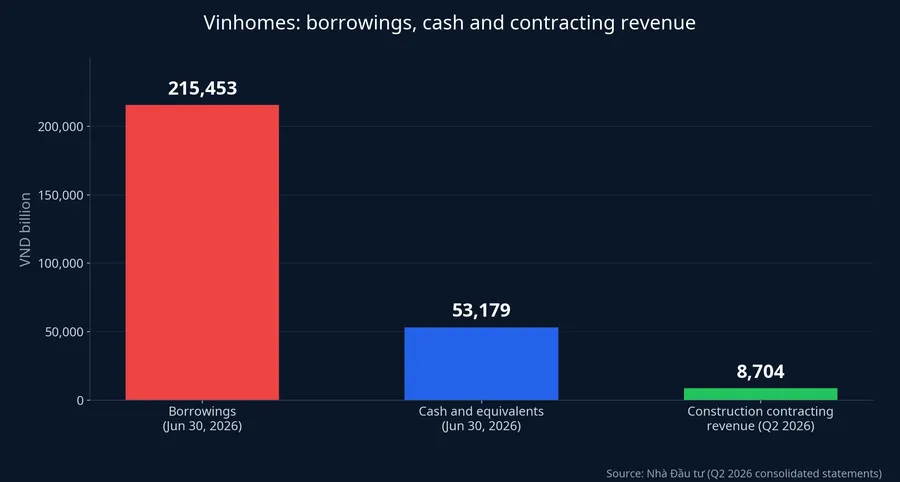
These figures suggest Vinhomes has little room to pre-fund a large share of the nearly VND 900,000 billion package from cash on hand. That is why the city's advance mechanism matters so much to shareholders: if advances arrive early, the company builds with the owner's money; if they arrive late, it has to borrow more to build first.
What Is Still Blank: How the City Pays the Contractor
Put the milestones together and scope, schedule target and responsibility are clear. The city has an advance-payment policy, 2026 budget capital and a guarantee mechanism. What no source has disclosed: the advance rate, the acceptance milestones that trigger payment, the annual disbursement schedule, the price adjustment mechanism if costs change, and how Vinhomes and SGC split the work and the contract value.
As of the evening of October 15, we found no disclosure from Vinhomes on the HOSE exchange about this contract.
In the market, VHM shares closed on October 15 at VND 58,900, down 3.44%. No source ties this decline to the contract, and the signing took place the same afternoon, so this article does not treat the two as cause and effect.
Signals to Watch
The thesis here is simple: the turnkey format puts cost and schedule risk on the joint venture's shoulders, and the current balance sheet suggests the pace of the city's advances will decide whose money Vinhomes builds with. That view changes only if advance terms large enough and early enough are disclosed.
Shareholders will learn how the contract flows into Vinhomes' revenue, cash flow and debt from two kinds of documents. The first is Vinhomes' official disclosure on the contract, if any: the value of Vinhomes' share of the work, the advance terms and the guarantee obligations. The second is the financial statements. The Q3 2026 report closed on September 30, before the signing, but may show what Vinhomes has already prepaid to equipment and train suppliers. The Q4 2026 report will be the first to reflect the contract after signing. If advances received from the owner rise in step with equipment spending, Vinhomes is building with the city's advance money. If borrowings keep climbing fast while receivables from the owner swell, Vinhomes is fronting the capital, and the cost risk of the turnkey format will show up on the balance sheet well before 2030.