
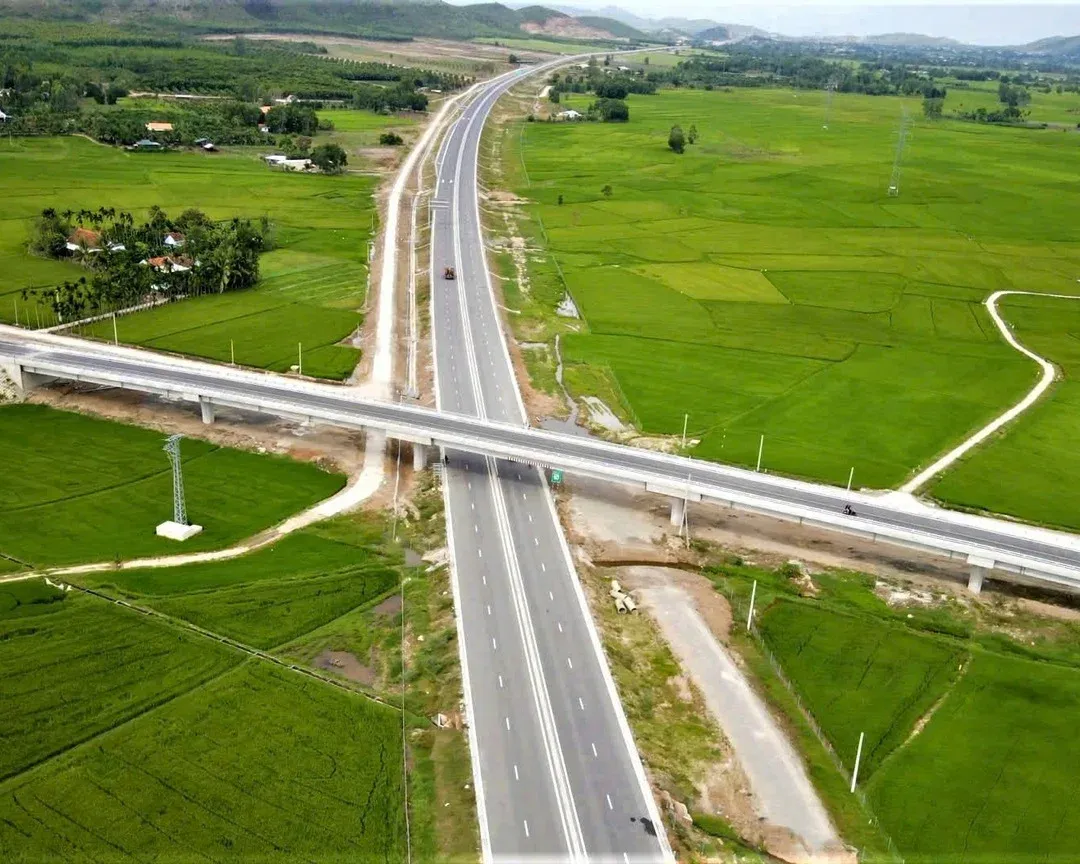

Construction Minister Tran Hong Minh has submitted a report to the Government on widening the eastern North-South expressway through public-private partnerships (PPP).Government Portal The scope covers 18 sections from Hanoi to Ho Chi Minh City, 1,144 km in total, to be widened from 4 to 6 lanes per the master plan, with preliminary total investment of about VND 178,357 billion. Fifteen of those sections were built with state money and are already tolled by the state. The ministry proposes bundling them into two PPP projects that need no budget support. Investors would fund the widening and collect tolls once each section is finished, which is how they would recoup their money.CafeF
The plan changes two things at once. The party funding the widening becomes the investor rather than the budget, and the party collecting tolls on the widened sections also becomes the investor, for the whole payback period. Drivers and truck owners still pay. What changes is where the money goes and for how long. Looking closely at the preliminary figures, the two projects are not alike, and the gap between them matters to investors and road users alike.
Where toll revenue goes today
The 15 state-funded sections began tolling in three waves: 5 sections from March 2, 2026, 5 sections from Bai Vot to Cam Lo from July 15, 2026, and 5 sections from Quang Ngai to Nha Trang from August 14, 2026. Through the end of September 15, 2026, the system recorded more than 28.8 million vehicle trips and collected and remitted more than VND 2,685 billion in tolls to the budget.Vietnam+ Most sections have only been tolled for one to two months, so this figure does not reflect a full year of revenue.
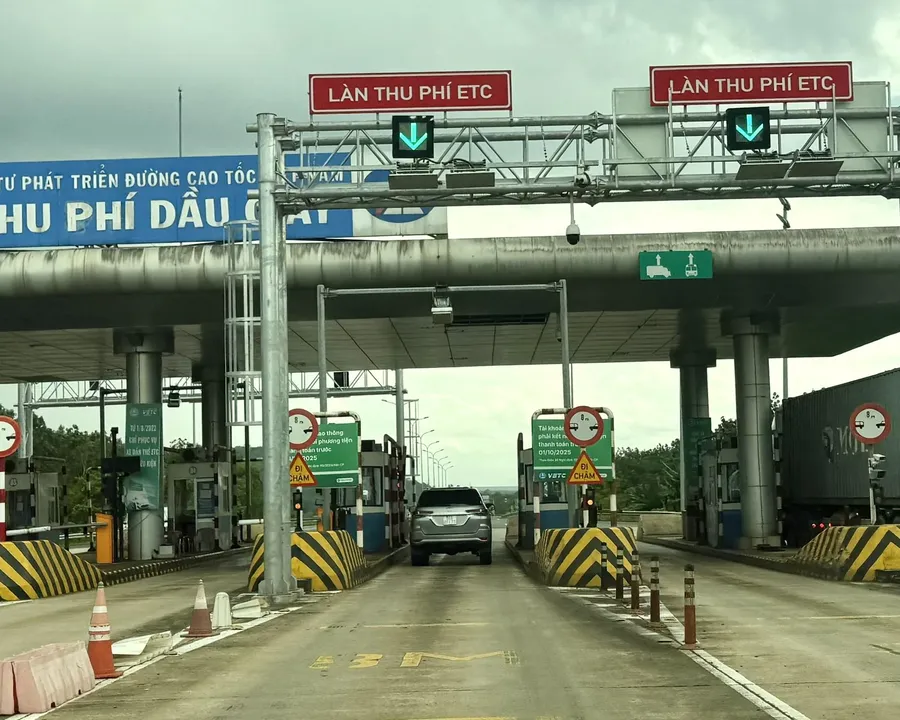
If the PPP plan is approved, that cash flow would no longer go to the budget on the widened sections but to investors. That is why how the sections are grouped matters more than the VND 178,357 billion headline.
Three groups of sections, three different situations
The October 14 document splits the 18 sections into three groups according to how they are tolled today.
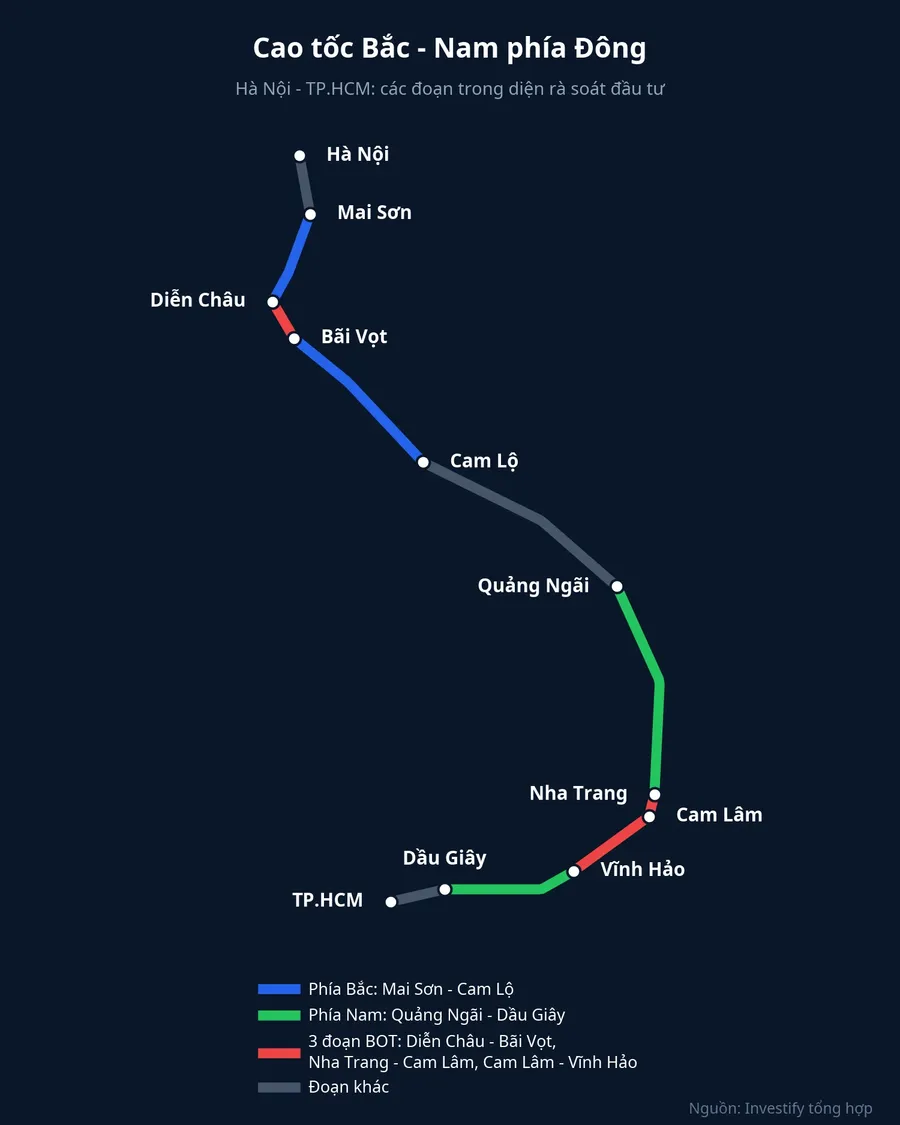
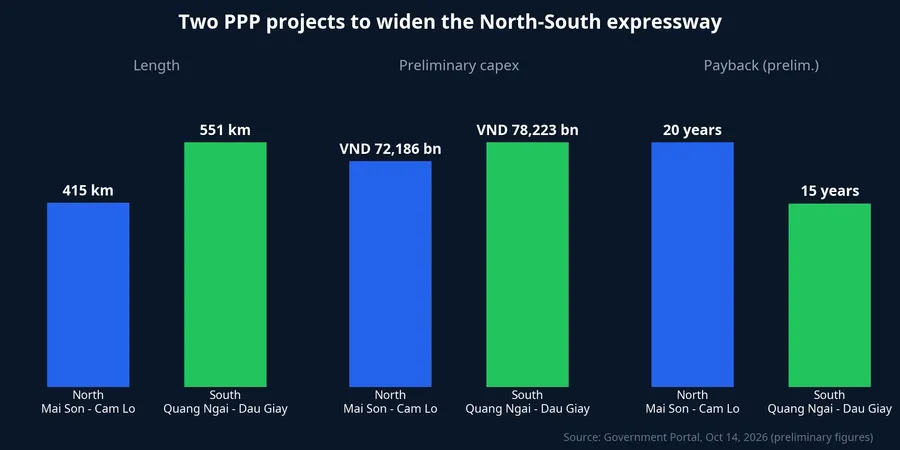
Northern group, Mai Son - Cam Lo. About 415 km long, with preliminary investment of about VND 72,186 billion and a preliminary payback period of about 20 years.Government Portal The state collects tolls today and no budget support is needed. That works out to about VND 174 billion per km.
Southern group, Quang Ngai - Dau Giay. About 551 km long, with a preliminary figure of about VND 78,223 billion and payback of about 15 years. The state also collects tolls here and no budget support is needed. Cost per km is about VND 142 billion.
Three sections currently tolled by BOT investors. These are Dien Chau - Bai Vot, Nha Trang - Cam Lam and Cam Lam - Vinh Hao, about 178 km in total, with a preliminary figure of about VND 27,948 billion, expected to be split into three separate projects. The document gives no payback period for this group. Any budget support depends on the PPP contracts already signed, traffic volumes and a detailed financial analysis, so this is the only group that may need public money.
Put the two state-funded groups side by side and the southern one is about 136 km longer, yet costs only about VND 6,000 billion more and pays back about 5 years sooner. On the ministry's preliminary numbers, the south is cheaper per km and recovers its capital faster.
Why about 5 years apart: not enough data to separate the causes
Payback depends on two things: what has to be spent and what tolls bring in each year. On the first, the figures show the south is cheaper per km. On the second, detailed traffic volumes for each section have not been published, so it is not possible to say whether the gap comes from traffic or from cost.
How the ministry paired the sections is part of the story too. According to Vietnam+, Project Management Board 2 under the Ministry of Construction, the unit assigned to the study, explained that mixing high-traffic sections with lower-traffic ones makes the financing plan more attractive to investors and banks.Vietnam+ Ho Minh Hoang, Chairman of Deo Ca Group, also said that sections with good traffic and revenue can pay for themselves, while lower-traffic ones need the state to take part at a suitable share.
In other words, each large project is a package of sections that can carry themselves and sections that need support. The 15-year and 20-year figures are the result of that packaging under preliminary calculations. Minister Minh also stressed that preliminary investment totals and the split into projects will be refined in later steps.Government Portal The roughly 5-year gap could therefore change once detailed financial analysis is done.
Who is interested, and how scale compares with listed companies
According to the Ministry of Construction, the parties that have expressed interest and proposed investing without budget funds include Vietnam Expressway Corporation (VEC), Deo Ca Group, Ho Chi Minh City Infrastructure Investment (CII) and Xuan Truong Construction.Dan Viet
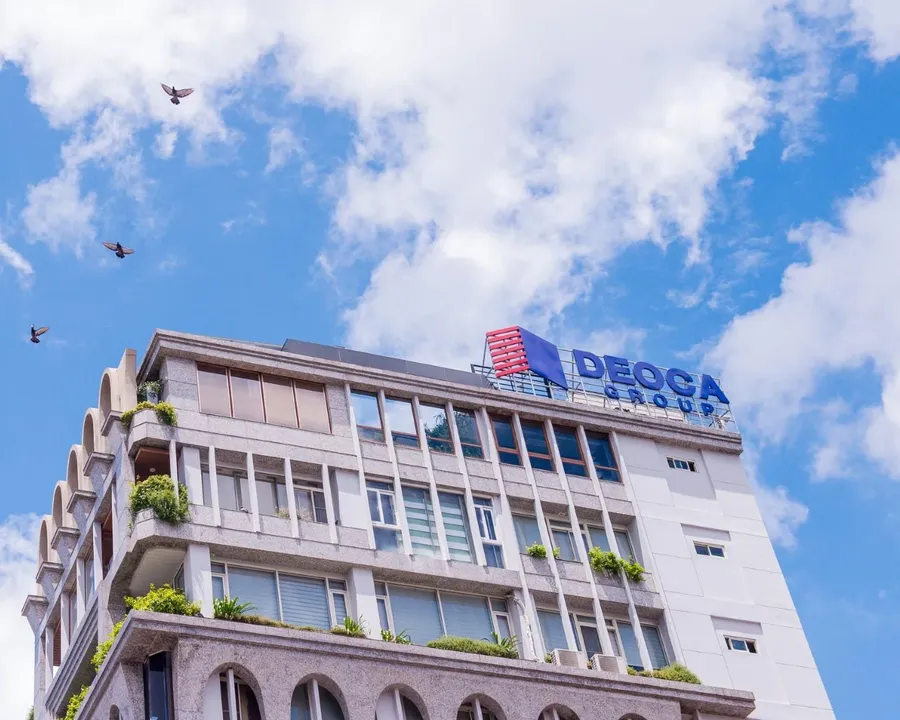
The slower-payback project is not short of interest. Both Deo Ca Group and Xuan Truong have proposed the northern project. In the south, a consortium of CII, IMIC Infrastructure Construction and CII PPP Co. asked to study investing in two sections, Quang Ngai - Nha Trang and Vinh Hao - Dau Giay, without budget funds.Vietnam+ A shorter payback does not necessarily mean a more crowded race. Construction capacity, each company's existing road network and access to bank loans may all weigh on their choices.
Shareholders need to separate the legal entities. The party proposing the northern project is Deo Ca Group, not Deo Ca Transport Infrastructure Investment (HHV), the listed company in that ecosystem. How much HHV would benefit if Deo Ca is chosen has not been disclosed. CII, by contrast, is named directly in the southern consortium.
Set project scale against company scale and the funding burden is clear. CII's market capitalization at the October 14 close was about VND 8,200 billion, while the southern project is preliminarily about VND 78,223 billion, nearly 10 times larger. HHV's market cap in the same session was about VND 4,900 billion. Project Management Board 2 itself acknowledged that large projects mean investors must raise large total capital and equity.Vietnam+ Minister Minh asked credit institutions to design medium- and long-term loan packages suited to PPP projects. That suggests most of the widening money would likely come from debt, a risk that comes with the long-term toll opportunity.
On the exchange, the reaction through the October 14 session was small: HHV closed at VND 9,040, up 1.01%, and CII at VND 12,200, up 0.41%. That margin is not enough to say the market has bet on who will be chosen.
Remaining steps before toll rates and investors are known
This is still a proposal. When the National Assembly approved the investment policy for these sections earlier, the Government reported that widening would be needed by 2040 - 2045. To move sooner, the Government must report to the National Assembly to adjust that content.Government Portal
The Ministry of Construction therefore asks the Prime Minister to consider submitting three items to the National Assembly. First, assign the Government to keep studying and invest in widening in a suitable form. Second, if off-budget capital is attracted, allow investors to collect tolls once each section's widening is complete. Third, allow the Government to prepare and approve the feasibility study report right away, without a separate investment-policy approval, by including this in the joint resolution of the second session of the 16th National Assembly.
If approved, the northern and southern projects go straight to preparing and approving the feasibility study, after which the Ministry of Construction organizes investor selection. The three BOT sections take a longer road: preparing and approving a pre-feasibility study after any budget support is identified, if needed.
What to watch
The post-widening toll rate, the date investors start collecting and the names of selected companies are all still unknown. Those three facts decide how much road users pay over the next 15 to 20 years, and what CII or HHV shareholders get from the project.
The current conclusion fits in one sentence: on preliminary numbers, the south has an edge in capital per km and payback, but that edge has not been tested against traffic data. Two milestones will settle it. The first is the joint resolution of the second session: if language allowing an immediate feasibility study is included, the investor-selection timeline shortens considerably; if not, the projects go back to the investment-policy approval round. The second is the feasibility study report, which will show forecast traffic for each section, expected toll rates and whether the 15-versus-20-year gap holds. When the investor tender documents are published, the clause on when tolling starts is the first detail to read: after each section's widening is finished as the ministry proposes, or sooner.