
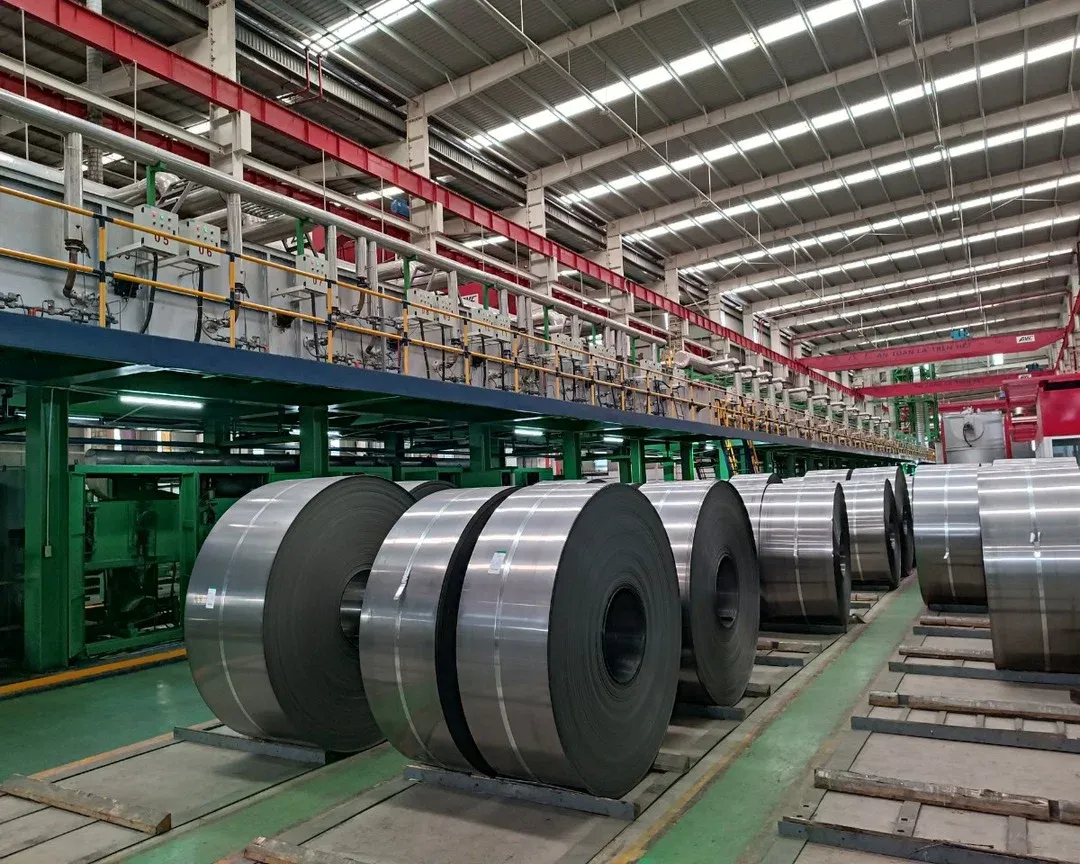

Thong Nhat Flat Steel JSC (UPCoM: TNS) is the first Vietnamese steel company to report Q3 2026 results. According to its financial statements, as relayed by CafeF on October 14, net profit came to nearly VND 9.95 billion, about ten times the VND 985 million of Q3 2025.CafeF Nguoi Quan Sat puts the figure at just over VND 9.5 billion.Người Quan Sát Either way, profit is close to VND 10 billion.
Three numbers from the same quarter point in different directions. Volume sold rose 96% year on year, nearly double. Net revenue fell 31.4% to just under VND 125 billion.CafeF And profit grew roughly tenfold. The answer lies in how TNS earned its money this quarter.
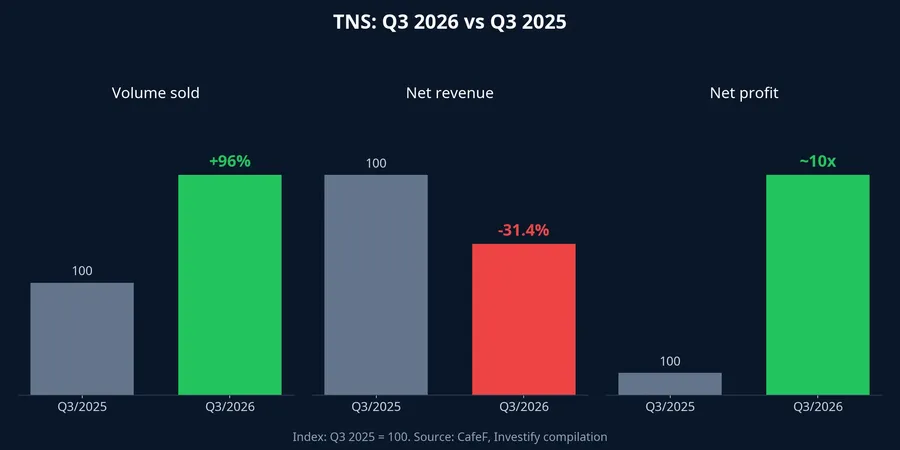
Nearly double the steel, less money in
TNS revenue comes from three sources, and each moved in its own direction.
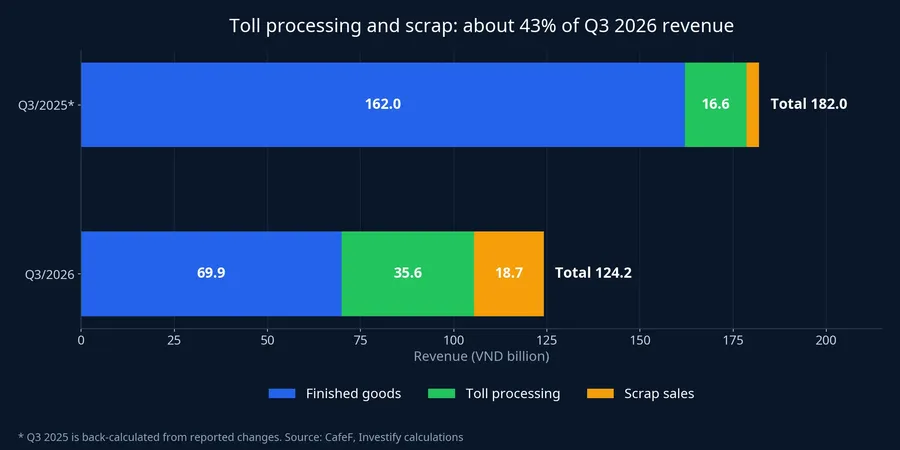
Sales of goods and finished products is the traditional line: the plant buys raw material, rolls it into cold-rolled coil and sells it at the full value of the coil. This line fell almost 57% to VND 69.9 billion.CafeF Working back from that decline, the same line brought in about VND 162 billion a year earlier.
Toll processing rose about 114% to VND 35.6 billion. Toll processing means rolling steel to a customer's order: the customer usually supplies the raw material, and the plant charges a fee. Revenue recorded is only that fee, not the value of the coil. A tonne of toll-processed steel therefore counts as a tonne of volume, just like a tonne the company sells itself, but it earns far less revenue.
Scrap sales reached VND 18.7 billion, 5.5 times the prior-year level.CafeF This income follows output: the more the plant runs, the more offcuts and coil ends it produces. The company says production volume in Q3 rose 95%.
Together, toll processing and scrap made up about 43% of Q3 revenue, against roughly one-ninth in the same quarter last year. This is Investify's own calculation from the figures CafeF reported. It resolves the first puzzle: volume nearly doubled, but the growth landed mostly in the type of business that books little revenue, while the high-revenue line shrank by more than half. Press reports do not break volume down by line, so it is not possible to say exactly how many tonnes were toll-processed.
Cost of goods fell faster than revenue
The second puzzle is profit. Cost of goods sold dropped almost 40% to VND 106.5 billion, faster than the 31.4% fall in revenue. Gross profit rose from VND 4.9 billion to VND 18.5 billion, and gross margin from 2.7% to 14.8%.CafeF Put simply, each VND 100 of revenue left under VND 3 of gross profit a year ago; this quarter it left almost VND 15.
In its explanatory statement, TNS said it changed its product mix toward higher-margin products, and that higher volume improved how well it uses production capacity. That is the company's account. It fits the revenue mix above: toll work usually requires no purchase of raw material, so cost of goods is mainly power, labor and depreciation, while scrap arises from production itself.
However, the disclosure does not split gross profit by line, so how much each factor contributed remains inference. At least two other explanations belong next to the company's:
- Fixed costs spread thinner. With nearly twice the volume, depreciation and operating cost per tonne fall. This is the "capacity utilization" point the company makes, and it applies to every line, not only toll processing.
- Raw material prices. If hot-rolled coil, the feedstock for cold-rolled steel, was cheaper than a year earlier, the finished-goods line would also earn a better margin. The reported figures do not mention this, so it can be neither confirmed nor ruled out.
The available data leans toward the mix explanation, because it is the only change backed by specific numbers: the share of toll processing and scrap rose from about one-ninth to about 43% of revenue. How much the other two explanations contribute will only become clear with more detailed notes.
Costs also grew with activity. Selling expenses rose 155% to VND 1.3 billion. General and administrative expenses nearly doubled to VND 4.4 billion, mainly on labor cost. That increase is small against the extra VND 13.6 billion of gross profit, so pre-tax profit reached more than VND 12 billion, up 824%.CafeF
Why almost VND 10 billion becomes "10x"
Most of the tenfold figure comes from the base. In Q3 2025, TNS earned just VND 985 million after tax. On a denominator below VND 1 billion, a gain of a few billion is enough to multiply the growth rate.
Over nine months the picture is much more ordinary. Cumulative net revenue was VND 794.3 billion, down 13.6%. Net profit was VND 13.3 billion, up only 3.6% year on year.CafeF Q3 alone supplied almost 75% of nine-month profit, which means the company earned only about VND 3.4 billion in the entire first half.
The annual plan shows how low initial expectations were. TNS targeted 100,000 tonnes of sales and VND 1 billion in pre-tax profit for 2026, while nine-month pre-tax profit has already reached VND 16.8 billion.Người Quan Sát Beating a VND 1 billion target mostly shows the target was set very conservatively. It says little about the plant's durable earning power.
What the balance sheet tells a TNS shareholder
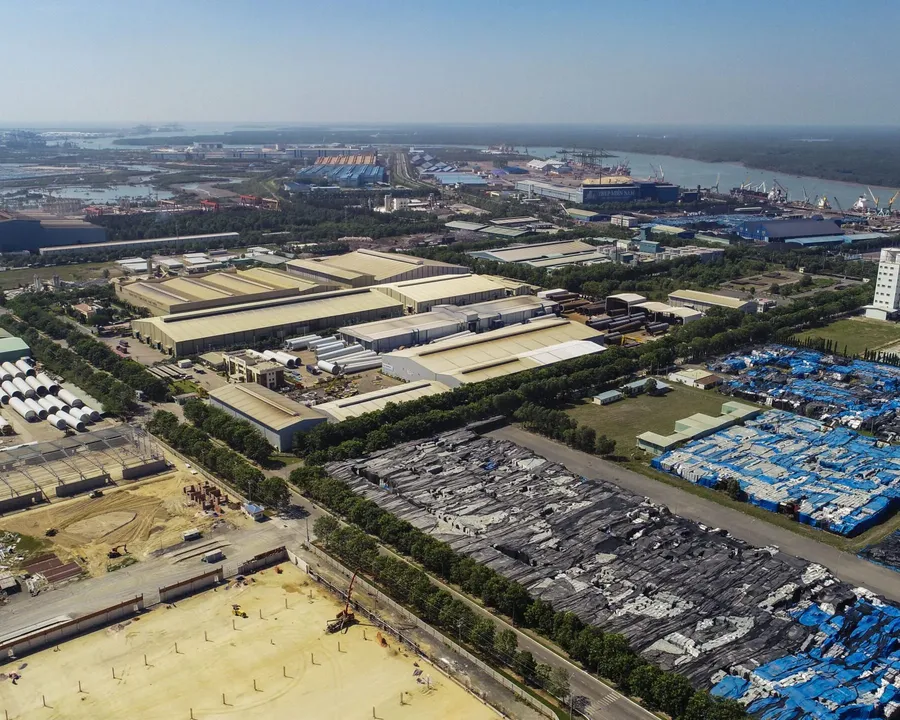
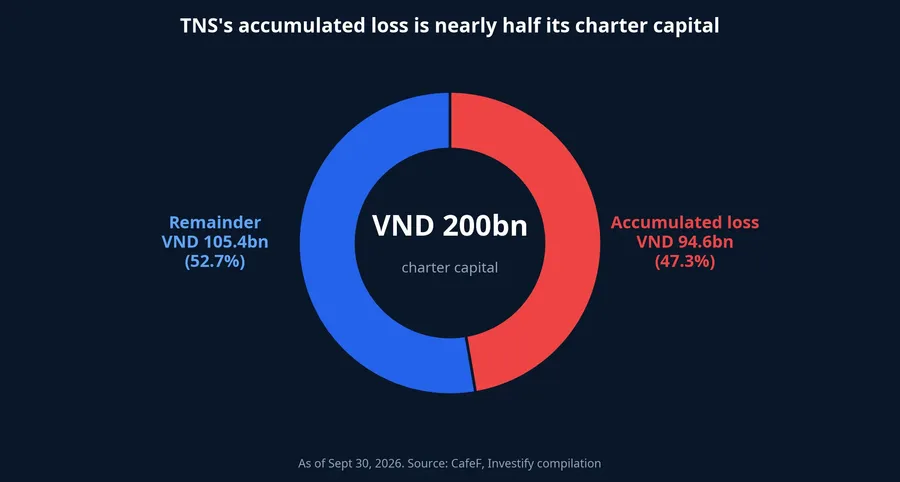
As of September 30, 2026, TNS equity rose from VND 92.9 billion to VND 106.2 billion. Even so, the company still carries accumulated losses of nearly VND 94.6 billion, more than 47% of its VND 200 billion charter capital.CafeF Q3 profit of almost VND 10 billion covers only about a tenth of that loss. The largest shareholder is Vietnam Steel Corporation, with 31.25%.
Two other line items moved sharply over nine months, in the same direction as the mix story:
- Inventory fell from VND 170 billion to VND 86.7 billion, down 49%. That fits a plant leaning more on toll processing, which needs little raw material stock of its own.
- Trade receivables rose from VND 989 million to nearly VND 33.9 billion, more than 34 times, and now make up almost 10% of total assets. Much of the extra revenue still sits on the books as money customers owe.CafeF
Cash and equivalents at quarter-end were VND 8.7 billion, against borrowings and finance lease liabilities of VND 32.8 billion. The scale confirms TNS is a very small company, with total assets of VND 344.2 billion and 93 employees.CafeF
How to read this number in Q3 earnings season
TNS's roughly tenfold profit is the sum of three things: a revenue mix shifting toward toll processing and scrap, a plant running at nearly double the volume, and a comparison base under VND 1 billion. All three are specific to one small cold-rolling plant working through accumulated losses of almost half its charter capital. None of them measures the margins of large steel producers, which mostly sell finished products of their own.
So this number is not yet a signal about the health of the steel sector. The answer for the sector will come from the Q3 reports of the large steelmakers in the coming weeks, when their gross margins show whether the spread between selling prices and raw material costs has really widened.
For TNS itself, the Q3 profit is confirmed only if the nearly VND 33.9 billion in receivables turns into cash in coming quarters and the toll-processing share stays high. If receivables keep swelling in the Q4 report, the book profit should be read with more caution.