

Five years of anti-dumping duties cut polyester yarn imports from India, Indonesia and Malaysia sharply. Yarn of Chinese origin, where the lowest duty is just 3.36%, kept rising.Tạp chí Thuế Hải quan From Friday, October 16, that layer of duty stays in place for another five years.
On October 13, 2026, the Ministry of Industry and Trade signed and issued Decision 2652/QĐ-BCT, the result of the expiry review in case ER01.AD10.Báo Chính phủ The measure covers certain filament yarns made from polyester originating in the four countries, and applies from October 16, 2026 through October 15, 2031.Doanh nhân This piece follows three questions: why the duties were kept, why two groups of countries diverged, and who gains and who pays.
What the Decision Covers and the Duty Rates
The scope spans three familiar types of textile yarn: partially oriented yarn (POY), draw-textured yarn (DTY) and fully drawn yarn (FDY), under six HS codes from 5402.33.10 to 5402.47.90.Tạp chí Thuế Hải quan These synthetic yarns are woven into fabric for sportswear, swimwear and linings.
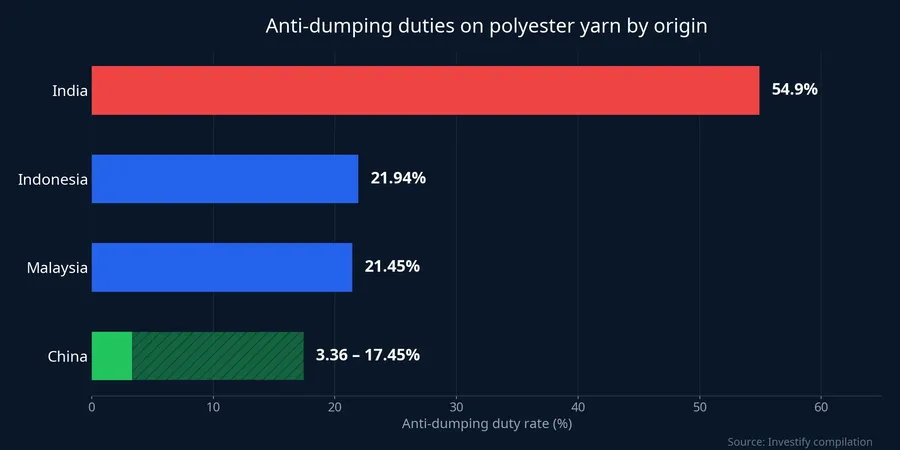
Rates differ widely across the four countries. India faces 54.9%, the highest of the four. Indonesia faces 21.94% and Malaysia 21.45%.Doanh nhân For China, the duty is set producer by producer and ranges from 3.36% to 17.45%. Toray Fibers (Nantong) and its affiliated trading companies pay 3.36%, the group of producers listed at item 14 of the duty table pays 3.57%, and every other Chinese company pays 17.45%.Tạp chí Thuế Hải quan
The rate for each individual exporter sits in the decision's annex. For that reason, this article does not estimate the profit impact on any specific company.
The measure is not new. The duties were first imposed under Decision 2302/QĐ-BCT of October 13, 2021, with a five-year term.Báo Chính phủ On October 16, 2025, the ministry opened an expiry review under Decision 3013/QĐ-BCT to decide whether to extend them. Decision 2652 is the answer.
The First Five Years: Three Countries Fell, China Did Not
According to the investigating authority's assessment as relayed by Báo Chính phủ, imports of the products under investigation fell markedly during the period of application compared with the start of the review period. The clearest declines came from India, Indonesia and Malaysia.Doanh nhân Over the same period, domestic output of finished yarn rose, giving producers room to invest and expand capacity.
One part of the picture ran the other way. The review's conclusions also say imports from the countries under investigation kept rising during the review period, particularly goods of Chinese origin.Báo Chính phủ Official sources do not publish import volumes by country, so we can describe the direction but not the scale.
Why would one measure produce two outcomes? There are at least three plausible explanations.
The first comes from the duty table itself. Indian yarn carries 54.9%, enough to push its landed price well above domestically made yarn. Meanwhile some Chinese mills pay only 3.36% or 3.57%, a level that cost differences may already offset. The lower the duty, the thinner the barrier.
The second is scale. Báo Chính phủ cites the assessment that China has large capacity to produce and export polyester yarn.Báo Chính phủ A large supply will find its way into any market that remains open, even after paying extra duty.
The third is the needs of Vietnam's own textile sector. When weaving and dyeing mills need yarn types that domestic producers cannot yet supply in full, imports still have to arrive, and China is the nearest source.
Public data are not enough to weigh which explanation matters most. Still, the duty table makes the first one credible: countries facing high rates all fell, while the country with some exporters facing very low rates kept rising. That is the limit of firm-by-firm duties: they bite hard where rates are high and leave a gap where rates are low.
Why the Ministry Kept the Duties for Five More Years
The review's conclusion rests on three groups of reasons, all relayed by Báo Chính phủ from the Trade Remedies Authority.
First, dumping behavior. The investigating authority found that goods from the four countries were still being dumped into Vietnam during the review period, and that dumping was likely to continue or recur if the duties ended.Báo Chính phủ
Second, the health of the domestic industry. Although some indicators improved, the yarn sector still showed adverse trends in output, capacity utilization, market share, inventories, profit, labor productivity, investment and cash flow.
Third, the risk of trade diversion. Some third-country markets maintain trade remedies on the same yarn. If Vietnam dropped its duties, yarn blocked elsewhere could shift here. The official source calls this a risk, not conduct that has already happened.
Who Keeps the Shield, Who Keeps Paying
An anti-dumping duty does not make costs disappear. It moves them between links in the textile chain.
The protected side is domestic producers spinning POY, DTY and FDY. The duty keeps the price of yarn imported from the four countries from falling too low, so local yarn holds its ground on price. Sợi Thế Kỷ (STK) is a listed company making exactly these three types.
Even so, price protection does not fix every problem a yarn maker has. STK posted net losses in both Q1 and Q2 2026, with Q2 interest expense of about VND 53.2 billion, and operating profit that quarter equal to just 0.61 times interest expense. The stock closed on October 14, 2026 at VND 7,810, against VND 15,674 on the same day a year earlier, a fall of about 50%. On October 13, the day the decision was signed, only 4,200 shares changed hands, and the close was still VND 7,810. The market has barely reacted.
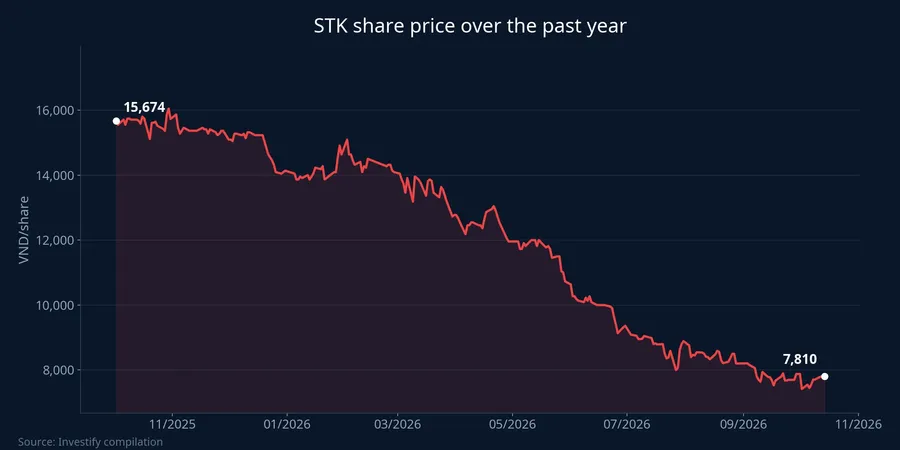
This shows the duty relieves only one pressure: price pressure from imports. Raw material costs, the interest burden and demand for output are things tax policy does not touch.
The side paying extra is weaving and dyeing companies that use yarn imported from the four countries. The duty goes straight into their raw material cost through 2031. For Chinese supply, what they pay depends on the specific mill: buying from a producer at 3.36% is very different from buying from one at 17.45%. That is why Tạp chí Thuế Hải quan notes that customs will check three layers of documents: the certificate of origin, the producer certificate and the name of the exporting entity.Tạp chí Thuế Hải quan If the paperwork does not match, the lower company-specific rate does not apply.
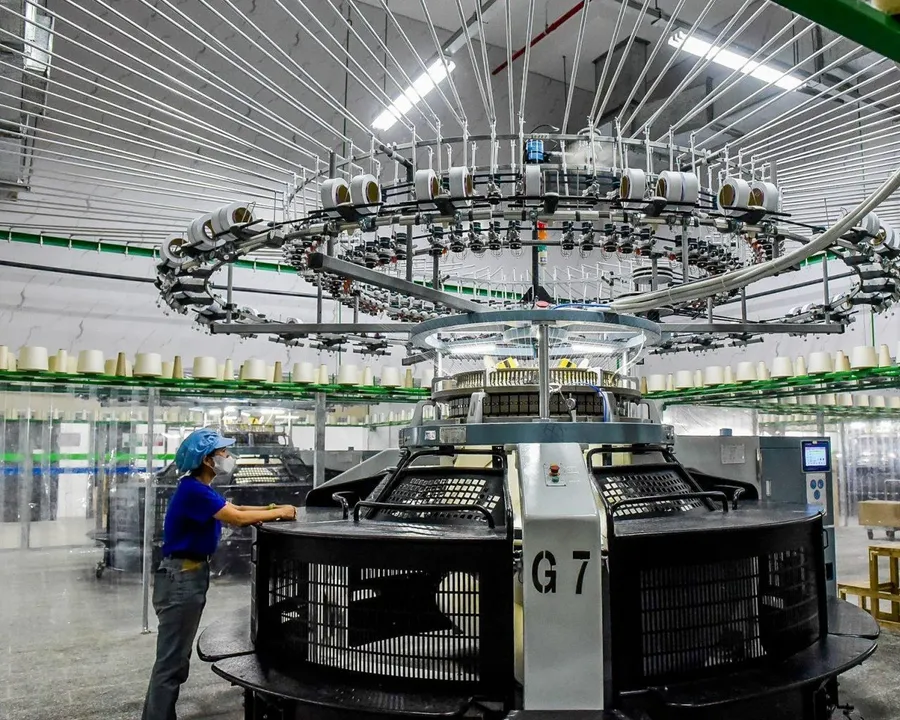
Textile companies also have a release valve: exemption decisions issued before Decision 2652 takes effect remain in force until each decision expires.Tạp chí Thuế Hải quan Exemptions typically go to yarn types that cannot be made domestically.
Companies that both spin yarn and weave or dye sit in the middle: the spinning arm is protected, while the weaving and dyeing arm pays more if it has to buy imported yarn. Pure garment makers, who buy fabric rather than yarn, feel an indirect effect that is harder to measure.
Signals to Watch
Five more years of duties is a decision already issued. What remains open is whether it changes the results of the protected side. Under the decision's timetable the duties run to October 15, 2031, so the answer will emerge gradually through each reporting period.
For yarn makers, the upcoming Q3 2026 financial statements are the first signal. If gross margin improves, the price shield is working. If margins stay thin and interest still eats all operating profit, the company's main burden is costs and debt, not imports.
For the industry as a whole, the signal to watch is customs data on polyester yarn from China. If goods from low-duty mills keep climbing, price pressure on domestic yarn will persist even with duties extended to 2031.