

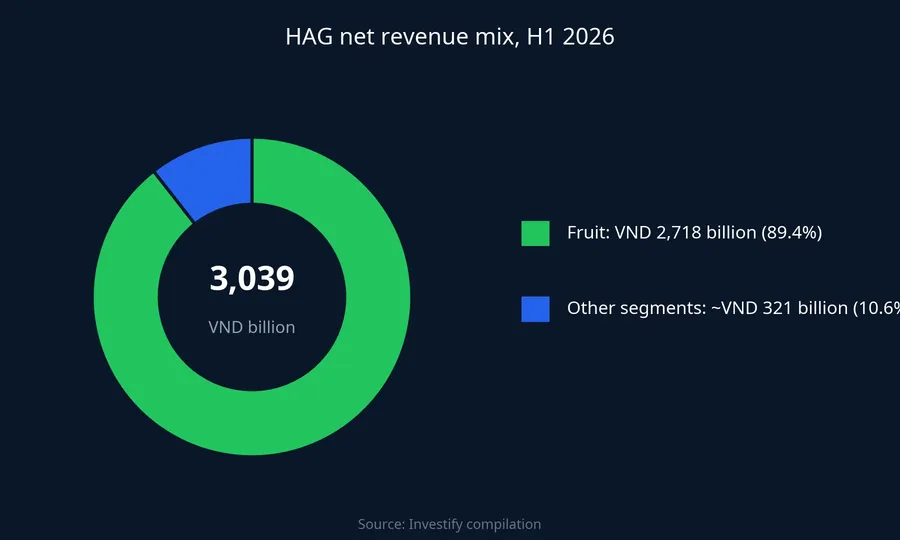
In the first half of 2026, Hoang Anh Gia Lai (HAG) booked VND 3,039 billion in net revenue, of which fruit accounted for more than VND 2,718 billion.Người Quan Sát Meanwhile, most of the group's new capital is going into coffee. The investment certificate for a 2,083 ha project in Savannakhet province, Laos, is the latest piece of that plan, and it highlights something HAG shareholders need to grasp: between the moment money goes out and the moment it returns as revenue sits a gap of several years, set by the trees and the processing plant rather than by management.
The Savannakhet project and who owns it
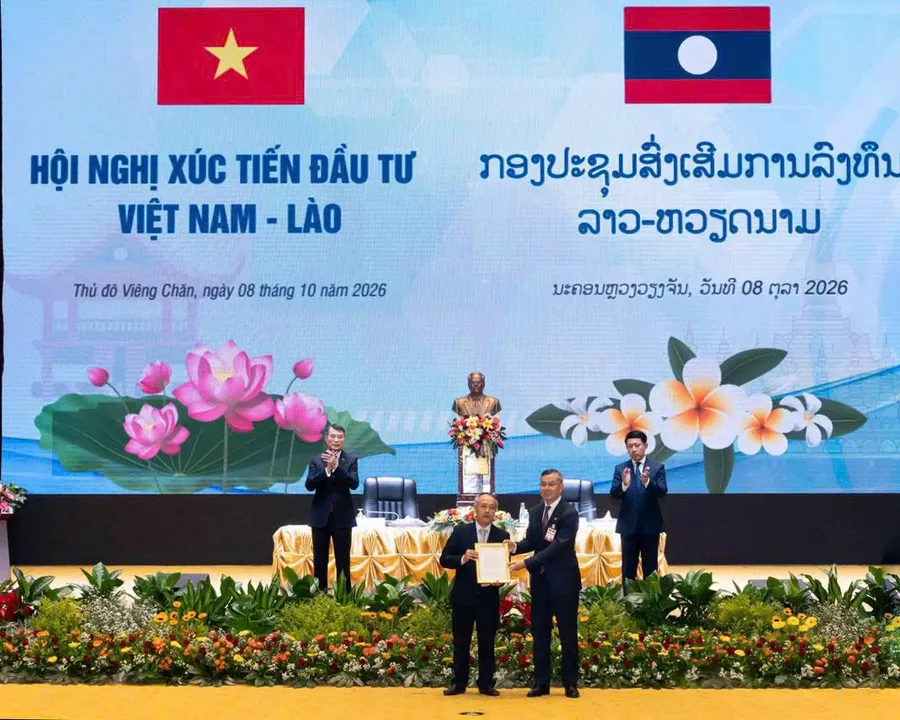
At the Vietnam–Laos Investment Promotion Conference 2026 in Vientiane on October 8, Ngô Văn Tuấn, Minister of Finance, handed over the Certificate of Outward Investment Registration for a coffee growing and processing project in Savannakhet. The recipient was Nguyễn Xuân Thắng, General Director of Hoang Anh Gia Lai JSC (HAG).CafeF The project was one of 17 investment and cooperation documents presented at the conference.
The project has two components: a 2,083 ha plantation in Nong district and a processing plant with a design capacity of 9,470 tonnes a year.Người Quan Sát Total investment is more than USD 29.2 million, with about 30 months needed to build and commission it.CafeF
One detail deserves a careful read: HAG is not the named investor. The investor on the certificate is Savannakhet Investment JSC, a company that already partners with Hoang Anh Gia Lai on coffee projects in Laos. It contributes capital to South Laos High-Tech Agriculture Co., Ltd., the entity that actually runs the project.Người Quan Sát Press reports do not say what share HAG holds in Savannakhet Investment JSC. Until that stake is disclosed, readers cannot work out how much of the project's revenue or profit will be consolidated into HAG.
One piece of a 20,000 ha plan
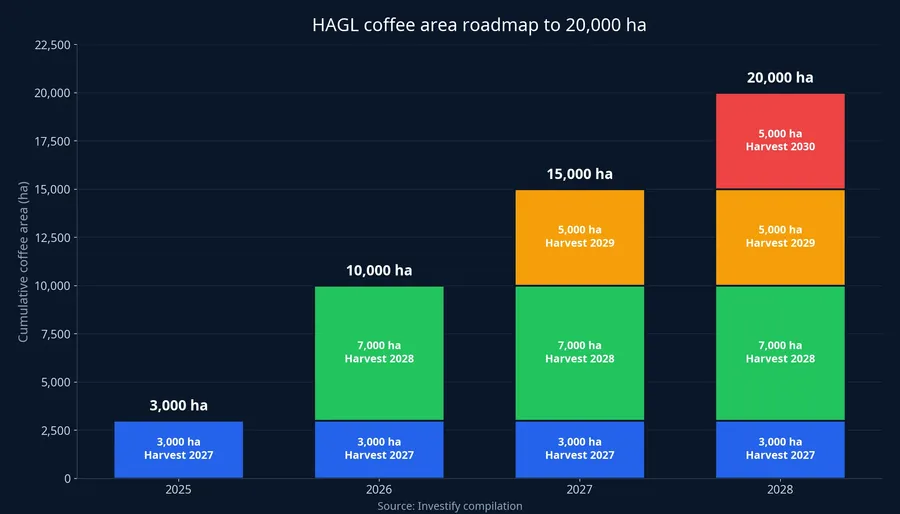
Hoang Anh Gia Lai aims to have 20,000 ha of coffee across Vietnam, Laos and Cambodia by 2028. Under the company's published roadmap, about 3,000 ha were planted in 2025, another 7,000 ha go in during 2026, then roughly 5,000 ha a year for the following two years.Người Quan Sát Against that target, the 2,083 ha in Savannakhet equal about 10.4% of the plan. Because the project comes with a plant, beans from this plantation will be processed on site once the plant is finished.
Đoàn Nguyên Đức (known as "bầu Đức"), Chairman of Hoang Anh Gia Lai, told shareholders at the 2026 AGM that for Arabica the key constraint is land rather than money, because "having money without land, you cannot proceed."Người Quan Sát The Savannakhet certificate settles the land question for just over two thousand hectares. The rest of the problem only time can solve.
The planting lag: money out now, fruit two years later
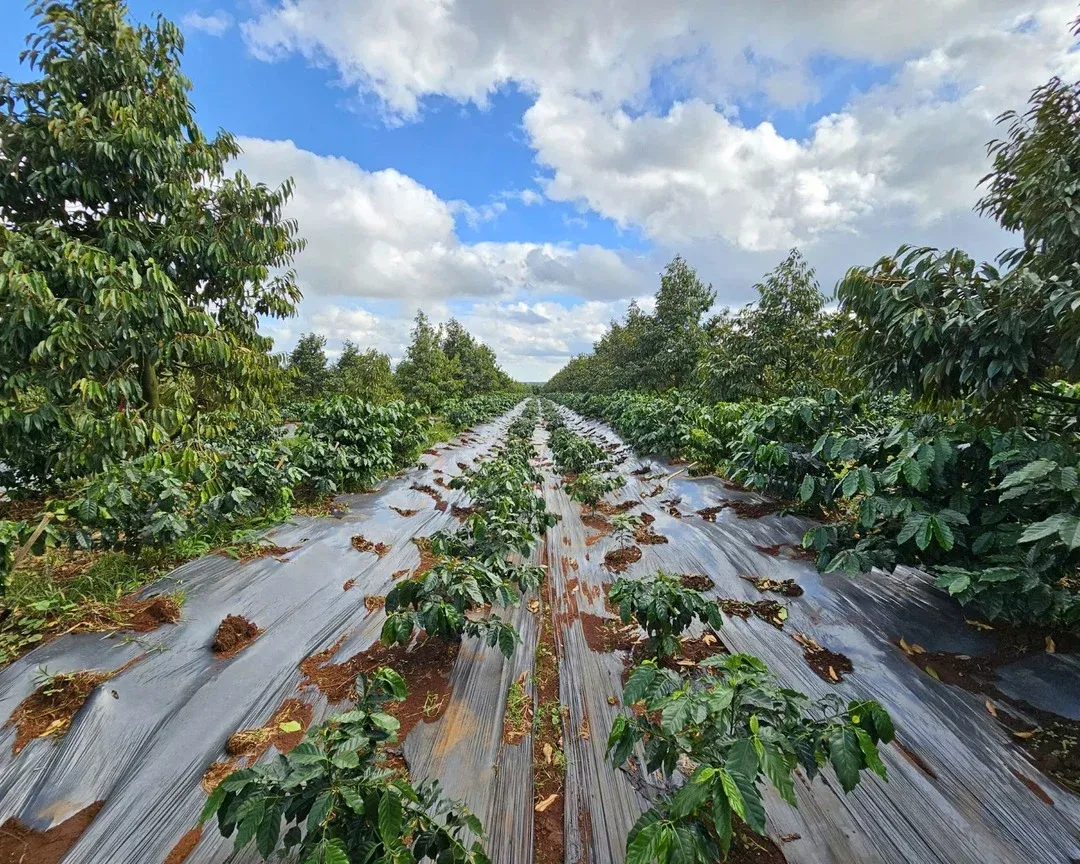
Coffee trees do not yield in the year they are planted. According to an August 2026 survey by the Western Highlands Agriculture and Forestry Science Institute, HAGL's Arabica gardens planted in 2025 in Gia Lai and Paksong (Laos) are growing relatively well. The Institute forecasts yields could reach about 7.2 kg of cherries per tree in the 2027 crop.CafeF In other words, the first batch of trees needs roughly two years to reach a meaningful harvest.
Apply that lag to the 20,000 ha roadmap and the picture sharpens. The 3,000 ha planted in 2025 enter the 2027 crop at the earliest. The 7,000 ha planted in 2026 wait until around 2028. The two 5,000 ha batches planted in 2027 and 2028 arrive in 2029 and 2030. This is an inference from the first batch's lag; actual yields depend on variety, altitude and local weather.
The Savannakhet plant runs on its own clock. Counting 30 months from the certificate in October 2026, construction and commissioning would finish around mid-2029. So 2026–2028 is, in essence, a spending phase: cash goes out for land, seedlings, upkeep and factory buildings, while output large enough to register as meaningful revenue only starts to appear at the end of the period.
Where the money for the orchards comes from
According to Người Quan Sát, total capital needs for the 2026–2028 coffee plan are estimated at about VND 14,220 billion. The company expects to raise funds from bond issuance, retained earnings, medium-term loans and the initial public offering (IPO) of Hoang Anh Gia Lai International Investment JSC (HGI).Người Quan Sát
The one channel with concrete disbursement data is bond HAG12601. In late September, HAG reported having disbursed nearly VND 791.8 billion of the VND 2,000 billion raised through this issue, about 39.6%.Người Quan Sát The money has gone into three projects: about VND 164.2 billion for a joint coffee-growing project in Gia Lai via Gia Lai Livestock JSC, nearly VND 264.6 billion for another Gia Lai project, and nearly VND 363 billion for a project in Cambodia via Stung Treng Agricultural Development JSC.
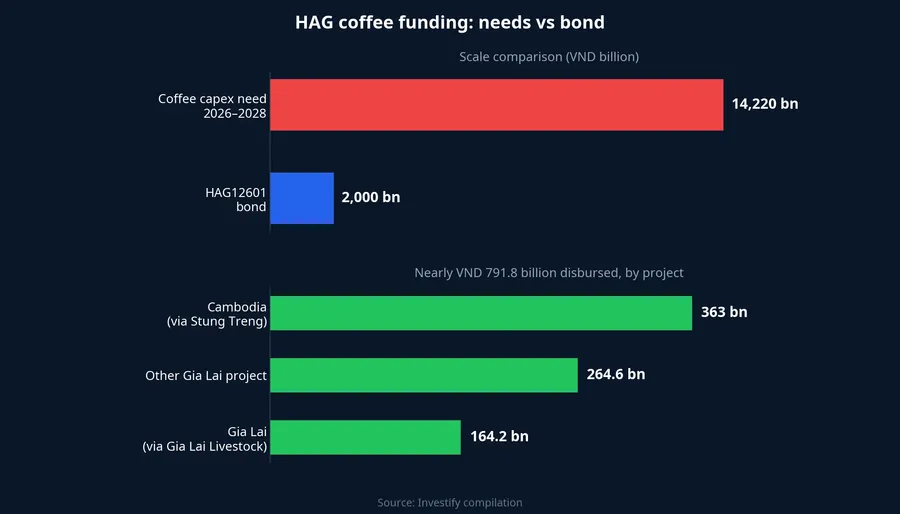
Nothing in this disbursement list is earmarked for Laos. Even if the rest of the bond were fully released, VND 2,000 billion would cover only about 14% of the three-year capital need. Most of the remainder has to come from retained earnings, loans and proceeds from selling HGI shares. For HAG shareholders, that means part of the profit earned in the next few years will go into the orchards instead of being paid out or used to reduce debt.
Meanwhile, fruit carries the revenue
The reviewed H1 2026 financial statements show net revenue of VND 3,039 billion for the first six months, with fruit alone contributing more than VND 2,718 billion.Người Quan Sát That is about 89.4%, nearly 90% of revenue, coming from fruit. Coffee, livestock and other segments together make up only the small remainder.
On the sales side, HAGL has lined up a buyer in advance. In late September, HGI signed a long-term memorandum of understanding with MQ Coffee, a Shanghai-based company. Under its terms, HGI aims to supply 1,000 tonnes of green Arabica beans in 2026, later rising to 5,000 tonnes a year, sourced from HAGL's plantations in Laos.CafeF
The commitment level of this document needs to be read correctly. A memorandum of understanding signals intent to cooperate; it is not a sales contract with a set price and delivery schedule, and the press reports give no price. The 1,000-tonne figure is therefore a target. Actual deliveries will show how much the Laos orchards have produced.
World coffee prices stand at 288.62 US cents per pound (October 9). Price helps decide what each tonne sold is worth, but it does not make trees fruit sooner. When coffee turns into revenue is still set by the age of the orchards; price only decides whether that revenue is large or small.
What HAG shareholders should watch
2026–2028 is the period in which Hoang Anh Gia Lai puts capital into coffee, and during it HAG's results depend more on fruit than on coffee. If fruit revenue holds at its current scale, the group has internal cash to nurture the orchards. If fruit stalls, pressure shifts to borrowing and outside fundraising.
Three signals will show how much the coffee segment contributes. First, the 2027 crop, when the 3,000 ha planted in 2025 reach their first meaningful harvest and actual yields can be set against the 7.2 kg per tree forecast. Second, actual tonnage delivered to MQ Coffee versus the 1,000-tonne target. Third, HAG's ownership stake in Savannakhet Investment JSC, once disclosed, since that figure will show how much of the 2,083 ha Laos project truly belongs to HAG shareholders.