
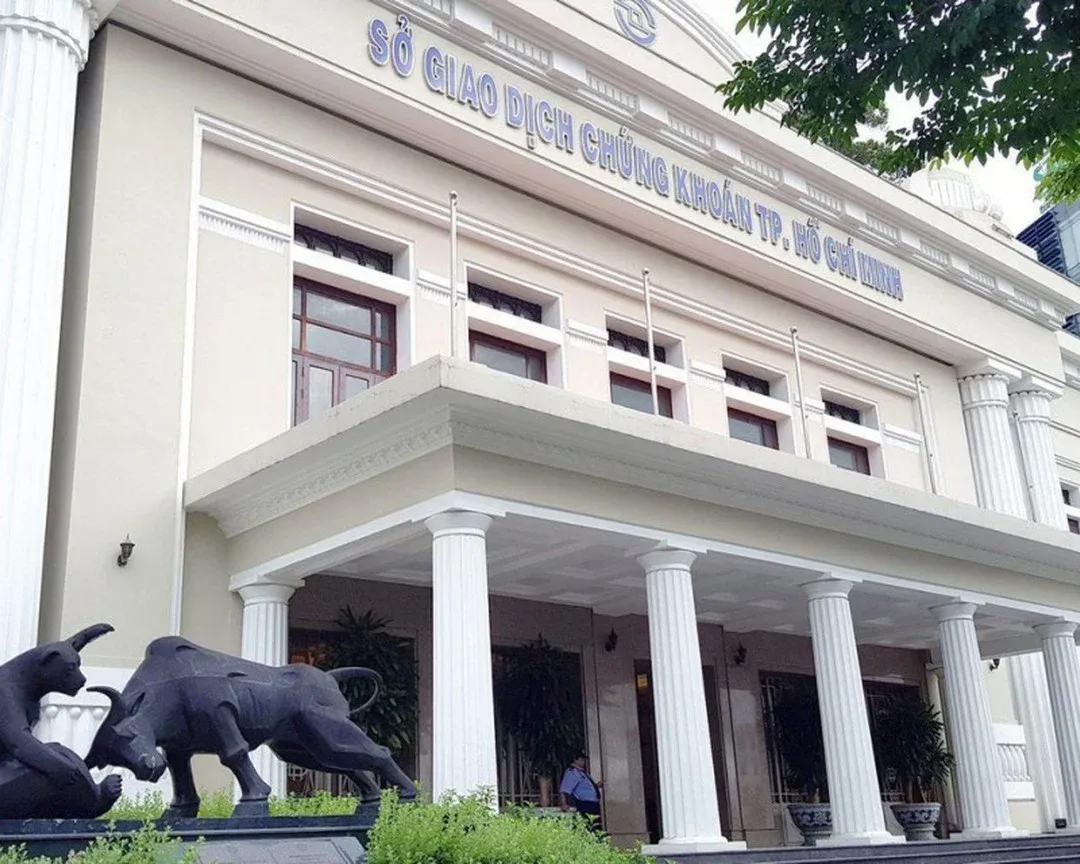

Every day from 11:30 to 13:00, the exchange stops matching orders. The news does not stop: corporate reports, macro data and overseas market moves keep coming through the break, and every reaction has to queue up until the afternoon session. That pause, together with the daily price limits and the periodic call-auction sessions, is the frame every stock order in Vietnam currently passes through.
At the Ministry of Finance's third-quarter press briefing on the afternoon of October 6, Hoang Van Thu, Vice Chairman of the State Securities Commission, said the regulator is studying changes to trading hours and methods. The items include midday trading, wider daily price limits, and dropping some periodic trading and call-auction sessions.CafeF The commission has told the exchanges to assess the impact. Only after those results will new options be drawn up on a roadmap and announced so the market can prepare.
One point needs to be clear from the start: this is a study. There is no draft, no new price limit and no start date. Orders placed today still follow the existing rules. What follows is a look at where each idea under study touches today's trading rules, and why a conclusion many investors are using, that HNX stocks will face a narrower limit once they move to HoSE, cannot yet be treated as settled.
The lunch break: news keeps moving, orders wait
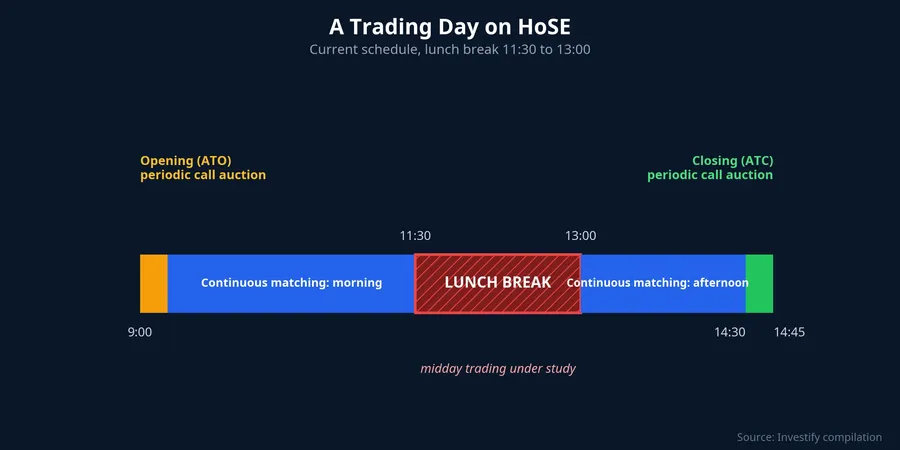
According to CafeF on October 7, HNX stocks currently trade from 9:00 to 11:30, break from 11:30 to 13:00, and have a closing call-auction session from 14:30 to 14:45. HoSE breaks for lunch over the same hours.CafeF
The mechanics are simple. A headline at noon cannot show up in prices until the afternoon session opens, so every order meant to react to it piles into the first minutes after 13:00. If midday trading is adopted, an expert quoted by CafeF said, traders would no longer wait for the afternoon session to react to information that arrives during the break, and liquidity could be spread more evenly across the day.
The cost of that change lies in infrastructure. The exchanges' systems and those of every brokerage would have to run longer without interruption. That is why Mr. Thu put system safety first: whether or not a new policy delivers the intended effect, the commission still prioritizes a safe system with smooth, stable trading.CafeF
Price limits: how far a stock may move in one session
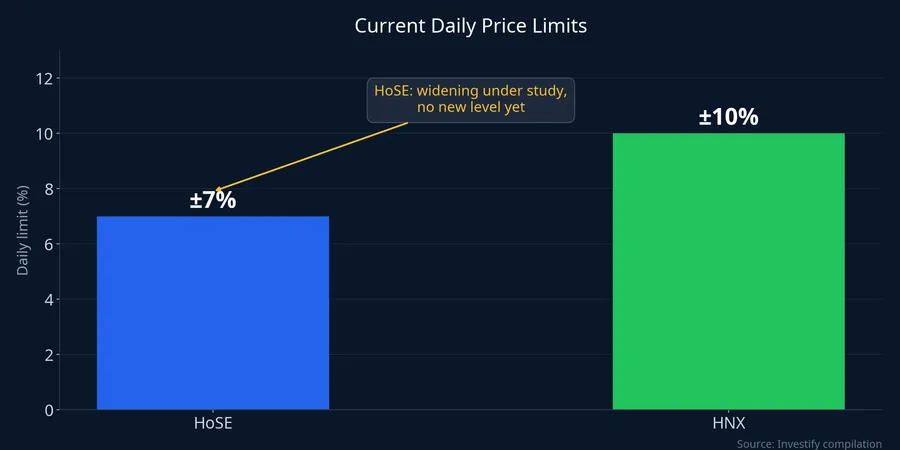
The daily limit sets the ceiling and floor price for each stock in each session. According to Tuoi Tre on October 3, HNX stocks currently have a 10% limit per session, while HoSE applies 7%.Tuổi Trẻ
A narrow limit works like a brake. When big news lands, a price can hit the ceiling or floor before supply and demand have met. The excess buy or sell orders wait for the next session, and it takes several sessions for the price to reach a level the market truly accepts. A wider limit lets the price get there faster. The downside comes with it: bigger moves within one session, larger one-day losses for anyone who misjudges, and faster collateral pressure for margin borrowers.CafeF Mr. Thu did not name a new limit at the briefing.
At the same briefing, Deputy Finance Minister Nguyen Duc Chi said regulators need to pin down what the market actually needs, including issues such as price limits and a shorter settlement time.CafeF Price limits came up at both commission and ministry level, but both stopped at raising the question.
Where this meets the exchange transfer
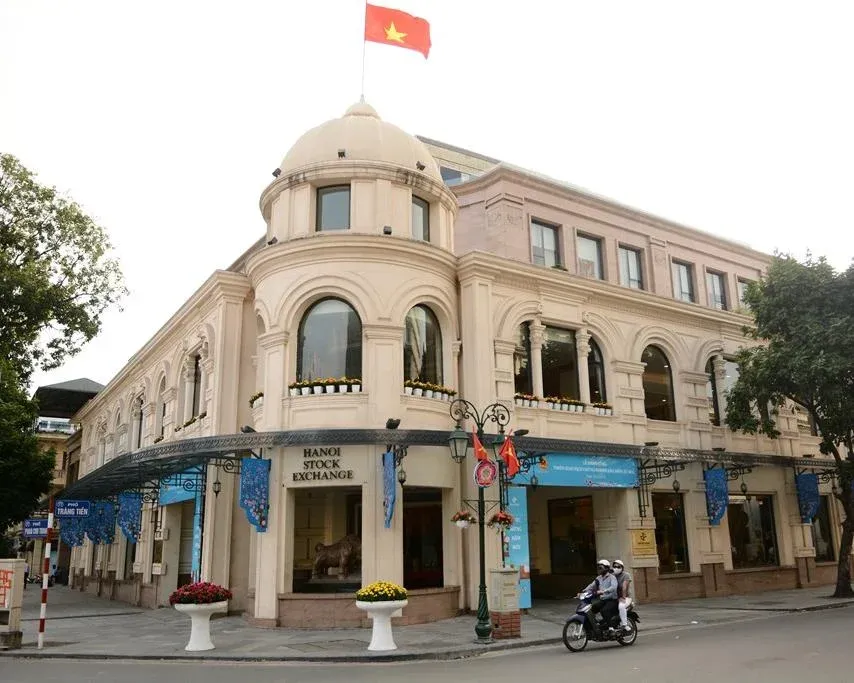
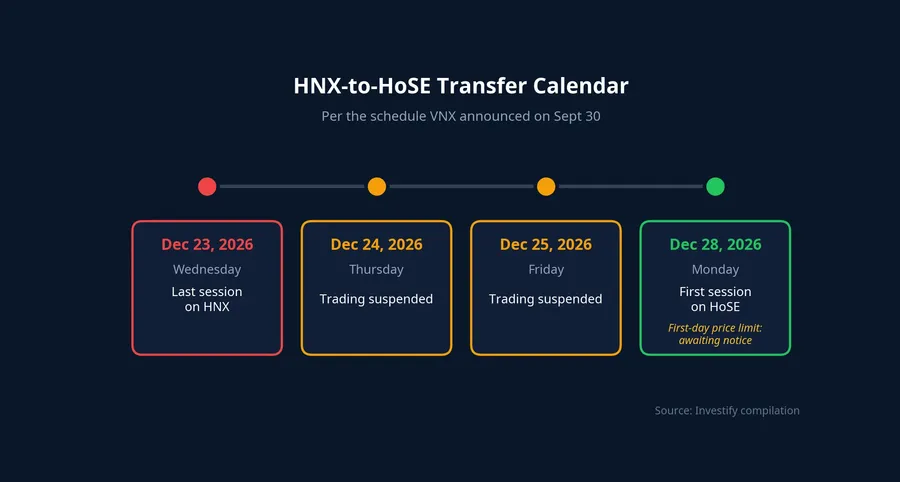
This part reaches anyone holding HNX stocks. Under the schedule the Vietnam Exchange (VNX) released on September 30, December 23, 2026 is the last trading day for every stock listed on HNX, trading is suspended on December 24 and 25, and the stocks begin trading on HoSE on December 28, 2026.Tin nhanh chứng khoán
Coverage of the transfer over recent weeks tends to treat HoSE's rules as fixed: move from HNX to HoSE and the limit narrows from 10% to 7%. That conclusion has two gaps.
The first concerns the very first session on HoSE. According to Tuoi Tre, regulators have not announced a specific limit for after the transfer. An expert at DNSE Securities told Vietstock that traders should not assume these are newly listed shares carrying a 20% limit, nor assert that 7% will apply before guidance for the transfer exists.Vietstock
The second gap is wider. HoSE's own 7% figure is now among the items under study for widening. If the market-wide limit changes, comparing 10% with 7% stops being the right comparison. Still, it is not possible to say which change arrives first. The transfer has a specific date, while any widening awaits the impact assessment and has no date at all. The most careful reading today is this: 7% is HoSE's current rule, but it is not yet the final number for HNX stocks after December 28.
Periodic call auctions: how opening and closing prices are set
In a call-auction session, an order does not match the moment it is placed. The system collects all orders over a window and then picks a single price that matches the largest volume. The opening and closing prices of many stocks are set this way. The closing price in turn anchors the next session's reference price and end-of-day portfolio valuation, so the final minutes of a session are often when large orders pile in.
The briefing's wording was "dropping some periodic trading and call-auction sessions", meaning not all of them, and no session was named. If one call auction is dropped, the price at that moment would be set by continuous matching, in which each order matches by price and time priority. Which session goes, and how the closing price would then be computed, must wait for the exchanges' proposals.
Settlement: T+2 and a move toward T+0
The fourth item is not among the changes Mr. Thu listed. It came from Deputy Minister Chi: shortening settlement time, moving toward T+0 or studying an even shorter cycle.CafeF According to his remarks as relayed by VTV, shortening today's T+2 cycle is one of the mechanisms under study.VTV
Under T+2, shares bought today arrive in the account two business days later before they can be sold, and sale proceeds follow the same rhythm. Moving toward T+0 would shorten that wait and let traders' capital turn over faster. No roadmap or milestone has been given. Mr. Chi stressed that new policy must start from real needs, and that once it is judged suitable, regulators and market institutions must take the initiative to upgrade infrastructure and technical systems.
Stock tiering: another piece from the same briefing
At the same briefing, Mr. Thu said the commission is studying a tiering plan for stocks based on charter capital, accessibility for foreign investors, free-float ratio and stock status.CafeF Status here covers warning, control, restriction, suspension or halt. This plan also has no specific threshold for any criterion yet.
What will answer "what changes, and from when"
Put together, only the HNX-to-HoSE transfer has a date. Midday trading, wider limits, dropping some periodic sessions and shorter settlement are all at the study stage. Until a document is issued, the rules in force are the only rules to plan an order around.
Three milestones are worth watching, in order. First is the exchanges' impact assessment, the precondition for the commission to draw up options. Next is a draft released for public comment, which is when a concrete limit and the sessions to be dropped would emerge. Last is a published roadmap, with an effective date and time for brokerages and traders to prepare.
For anyone holding HNX stocks, the nearest milestone is already on the calendar: before the December 28 session, HoSE and VNX will need to announce reference prices and first-day limits for the transferred stocks. That notice, not the 10% versus 7% comparison, will show which framework their shares trade under.