
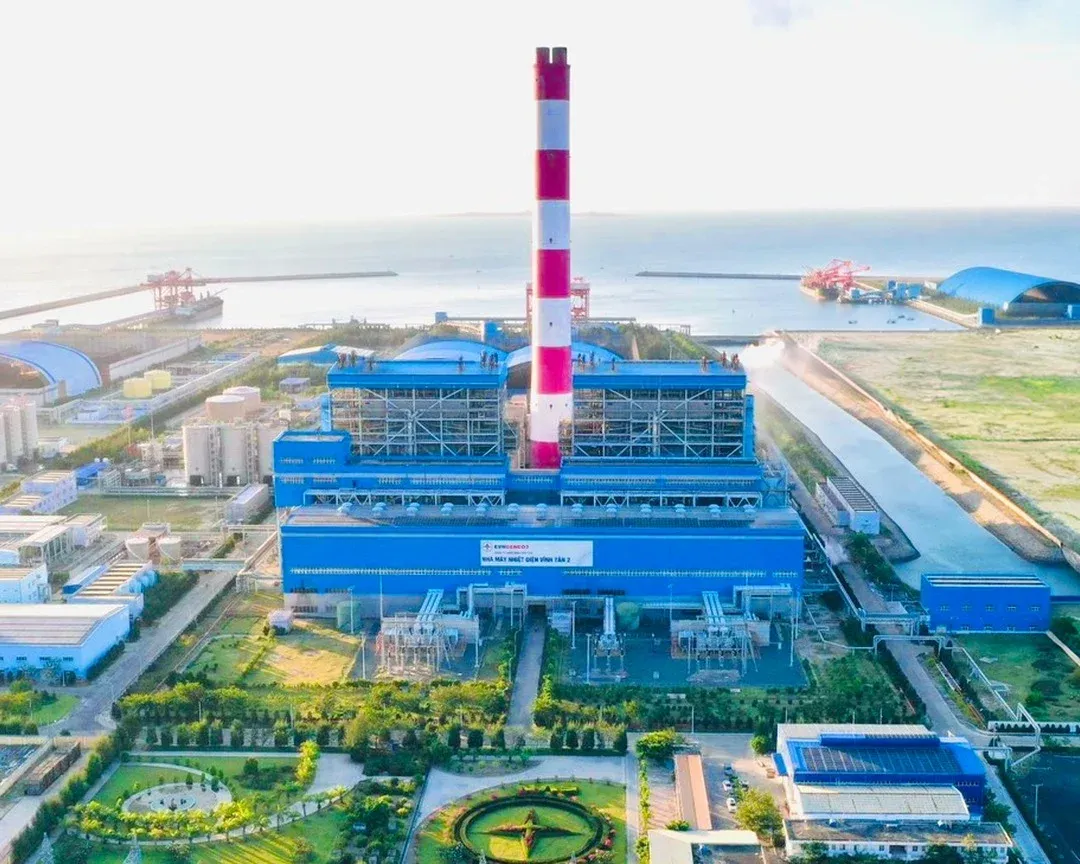

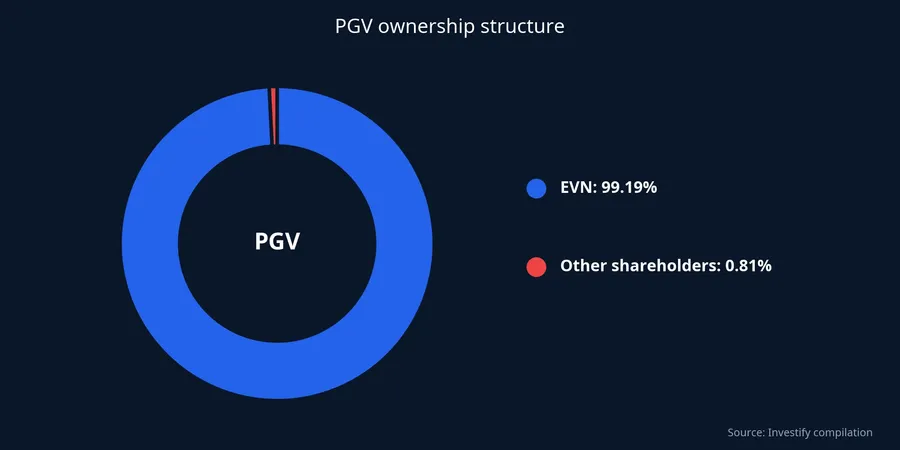
EVN owns 99.19% of Power Generation Corporation 3 (ticker PGV on HoSE). On the afternoon of October 7, at the Ministry of Industry and Trade's regular press briefing, a representative of the Electricity Regulatory Authority described a direction of continued state divestment in the power generation companies under EVN. For anyone holding PGV or GE2, this goes straight to the shareholder structure: the party that owns almost the entire company is being steered toward reducing its stake.
One point first: this is a direction, not a decision. This article walks through what has been said about each segment of EVN, which segments have listed shares, and the questions nobody has answered yet.
The plan is submitted, not approved
According to CafeF, citing Tien Phong, Mr. Bui Quoc Hung, Deputy Director of the Electricity Regulatory Authority (Ministry of Industry and Trade), said the government has commissioned two plans: restructuring the power sector for a competitive electricity market, and restructuring Vietnam Electricity (EVN).CafeF The EVN plan is prepared by the Ministry of Finance together with the Ministry of Industry and Trade, and was submitted to the government on September 15.VietNamNet
None of the October 7 reports say the plan has been approved. Everything below is therefore a direction stated by Authority officials at the briefing. The remarks gave no divestment percentage and no specific timeline.
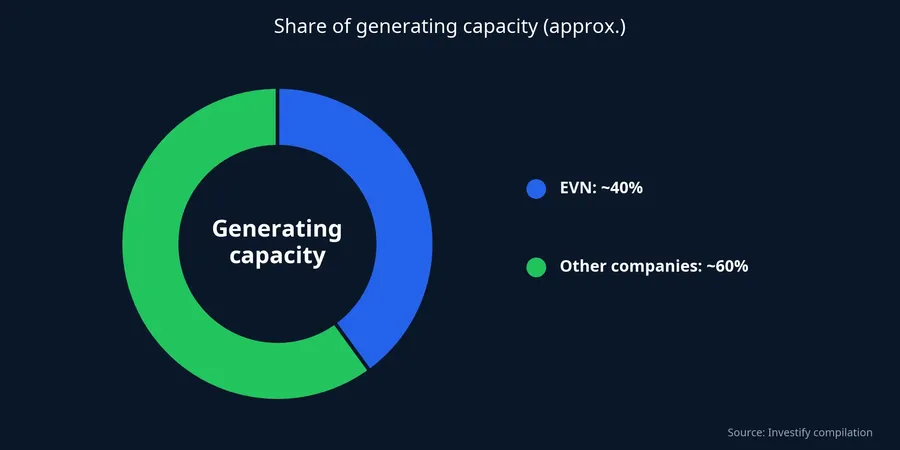
One detail explains why EVN is being reshaped now. According to Mr. Hung, EVN owns approximately 40% of the system's generating capacity, with the rest held by private and foreign-invested companies.CafeF The group is no longer the only generator, but it still controls the transmission lines and the retail network that reaches every household.
What each segment is steered toward
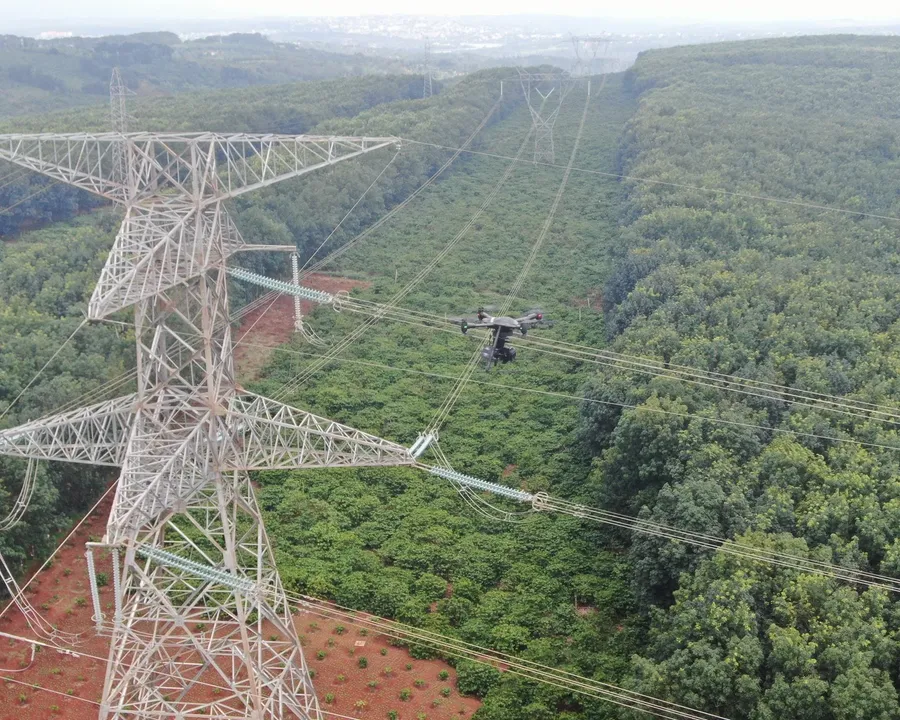
Transmission. The National Power Transmission Corporation (EVNNPT) is slated to separate from EVN early and move under a ministry or sector body.VietNamNet The stated reason is that transmission is a natural monopoly: you cannot run several parallel lines just to create competition. Earlier, the national system dispatch unit was already split from EVN and moved to the Ministry of Industry and Trade. EVNNPT has no listed shares, so separating this segment mainly changes how the sector is organized and does not directly touch retail investors' portfolios.
Generation. This is the segment with the clearest divestment direction. Regulators are steering toward continued equitization and state divestment in EVN's generation companies.VietNamNet In parallel, the Ministry of Industry and Trade is studying a national strategic generation corporation to manage strategic sources such as the multipurpose Son La and Hoa Binh hydropower plants and nuclear projects. In the initial period it may stay under EVN, and over the long term its separation will be considered.
Distribution and retail. At EVN's 5 power corporations, distribution and retail costs will first be separated. Separation of organization and ownership comes afterward, in line with the roadmap for a competitive retail market.CafeF For households this is only a bookkeeping separation, and electricity bills do not change because of this direction.
Mr. Hung stressed that the segments will be separated step by step, tied to the levels of the competitive electricity market. The ministry is also drafting an amended Electricity Law, expected to go to the National Assembly at its second session.CafeF
PGV: profitable, but almost no free float
Among EVN's generation companies, EVNGENCO3 is listed on HoSE under PGV. EVNGENCO2 has traded on UPCoM as GE2 since May 7, 2021,EVN and according to the company's own profile, EVN holds a controlling stake there.EVNGENCO2 EVNGENCO1 is not yet listed.
PGV has the most complete data. After a bonus share issue, HoSE added more PGV shares to trading from September 30, lifting total listed shares to 1,213,344,881.Thị trường Tài chính Tiền tệ EVN holds 99.19%, so the portion not owned by EVN is only about 0.81%, or fewer than 10 million shares.
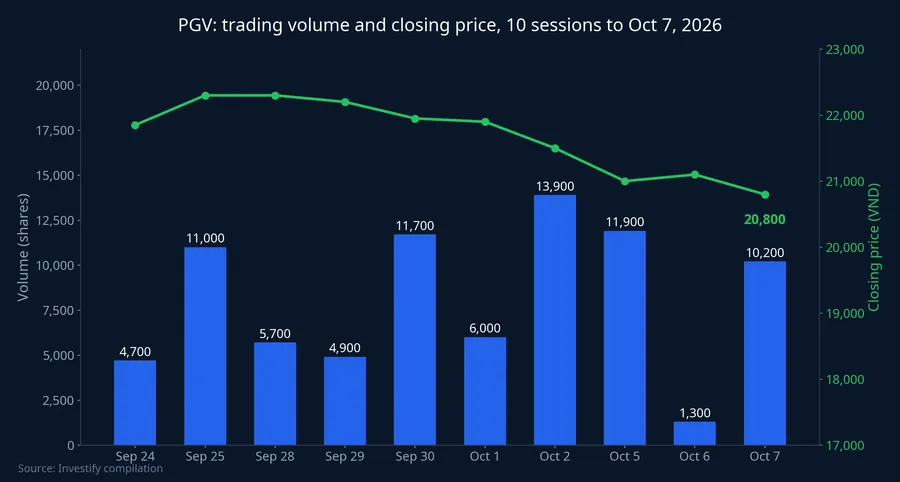
Liquidity reflects that structure. Over the last 10 sessions, only about 1,300 to 13,900 PGV shares changed hands per session. On October 7, PGV closed at VND 20,800 per share, down 1.42%, on 10,200 shares traded. At that price, EVN's stake in PGV is worth roughly VND 25,000 billion.
On the operating side, PGV is having a good stretch. In the first half of 2026, net revenue reached VND 25,326.9 billion, up 12.37% year on year, and net profit was VND 2,174.6 billion, more than double the VND 978.1 billion of the first half of 2025. Net margin rose to 8.59% from 4.34%.
So PGV's story today has two separate layers. The first is operating results, already reported and measurable. The second is ownership, where the October 7 direction could change the picture more than any profit figure: if the state truly sells down, PGV's free float could grow many times over from today's level of under 10 million shares.
This divestment roadmap is not new
The idea of the state pulling capital out of EVN's generation companies is long-standing. Decision 168/QD-TTg of February 7, 2017 approved the power sector restructuring plan for 2016-2020. According to EVN's explanation in April 2017, the generation corporations would stay under EVN in 2016-2018 with EVN holding at least 51%, and in 2019-2020 divestment below the controlling level and separation from EVN would be considered.EVN
Reality moved far more slowly. The generation corporations became joint-stock companies and listed, but the portion sold to outside investors is tiny. Six years past the 2020 milestone, EVN still holds 99.19% of PGV, far above the 51% that the old roadmap set as a floor.
Put side by side, the October 7 direction is no different in substance from the old roadmap: it is still state divestment in the generation corporations. What is new is the context. EVN now holds only approximately 40% of generating capacity, dispatch has been separated, and transmission is steered toward separation too. The missing piece, and the one that matters most for PGV and GE2 shareholders, is the stake the state retains and the timing of any sale.
What remains unknown
The October 7 remarks leave three issues open, and each would send PGV and GE2 in a different direction.
The first is the percentage. Divesting down to 51% versus below the controlling level are very different scenarios. In the first, EVN still decides everything at the subsidiary. In the second, the generation corporations would truly leave EVN, as the 2017 roadmap described.
The second is scope. The direction mentions a national strategic generation corporation managing multipurpose hydropower and nuclear power, but there is no information on whether any plants of the existing generation companies would move into it. If so, the assets remaining in a divested company could differ from today's.
The third is the method. The state could sell a large block by negotiation to a strategic investor, or sell gradually on the market. A negotiated sale changes the controlling owner, but the free float on the exchange could stay almost the same. A gradual sale through the exchange raises the free float, along with selling pressure while it lasts.
What can be said with confidence, and what to wait for
This article does not forecast PGV or GE2 prices, nor does it argue that divestment is good or bad for share prices. What can be said with confidence is that, within the October 7 direction, EVN's generation companies are where a change of ownership is most directly in view. Holders of PGV or GE2 should know that their largest shareholder is being steered toward a smaller stake, even though how much and when remain unclear.
Two documents will answer what is still open: the decision approving the EVN restructuring plan submitted to the government on September 15, and the amended Electricity Law going to the National Assembly. When the approval decision is published, the stake the state retains in each generation corporation and the method of sale are the first two details to look for. For electricity users, changes on the bill will come only when the retail segment is separated in both organization and ownership, a step the current direction places in the long term.