

Every time VietinBank cuts the starting price on the Tanifood plant in Tay Ninh, the bank is not the first to lose. The reason is the payout order. The secured lender is repaid first, while the judgment obligations of Truong My Lan, former Chairwoman of the Board of Van Thinh Phat Group who is now serving her sentence, only get what is left over. How much will be left over is something nobody can yet calculate.
The next auction is set for 9:30 a.m. on October 15, 2026, with a combined starting price of VND 702.8 billion.Người Quan Sát That is the lowest price since the plant was first put up for sale in mid-March. This post works through three questions: what exactly is being sold, where the money goes, and which numbers are still missing before anyone can measure the real loss.
What VietinBank is selling
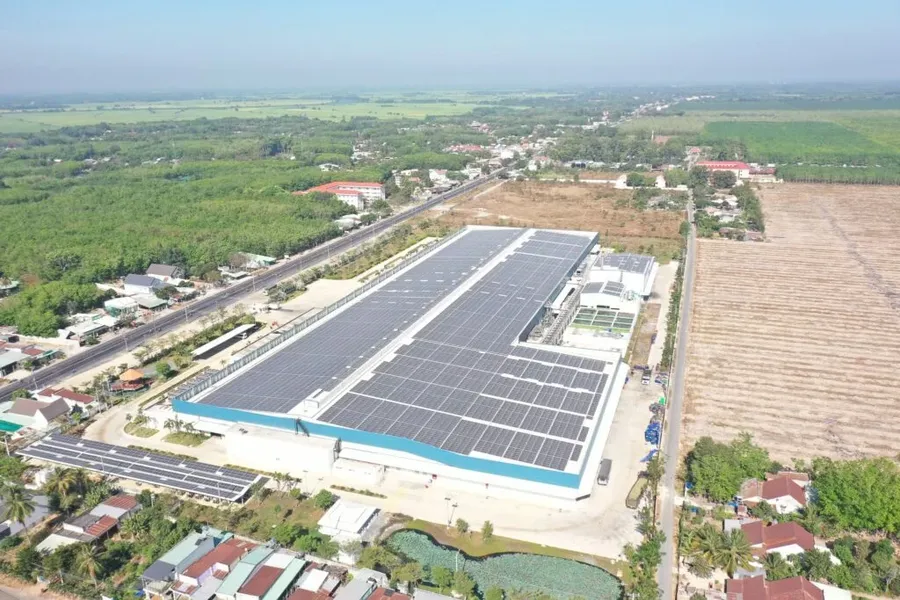
According to the notice issued by VietinBank's Tay Ninh branch together with the Ho Chi Minh City Asset Auction Service Center, the October 15 session covers two pieces of collateral belonging to Lavifood JSC. Each has its own starting price, so the results should be read separately.
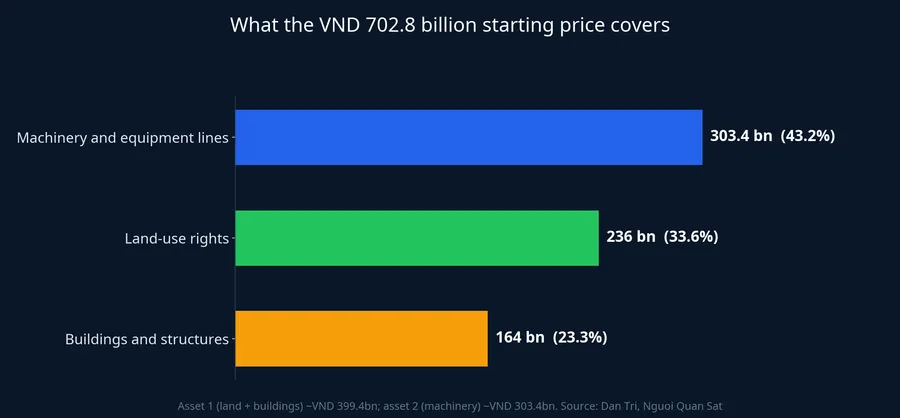
The first asset is the land-use right to a site of about 142,914 m² in Thanh Duc commune, Tay Ninh province, along with the buildings on it.CafeF Its starting price is about VND 399.4 billion, of which the land-use right is valued at VND 236 billion and the structures at VND 164 billion.Dân trí Of the buildings on site, 16 have been granted ownership certificates and 9 have not.Người Quan Sát
The second asset is the plant's entire stock of machinery and equipment: processing, canning, bottling, freezing, cold storage and wastewater treatment. It starts at about VND 303.4 billion, making machinery the largest single component of the total.Người Quan Sát
Bidders must post a deposit of more than VND 35.1 billion, or 5% of the starting price, with registration open from October 2 to October 13, 2026.Người Quan Sát The starting price excludes VAT and other transfer taxes and fees, all of which fall on the winning bidder.Dân trí
For scale, the plant opened in 2019 with total investment of about VND 1,780 billion and design capacity of 150,000 tonnes of raw produce a year.Dân trí Today's starting price is less than 40% of the roughly VND 1,780 billion that went into building it.
Five rounds, nearly half the price gone
The first round in mid-March 2026 asked about VND 1,350 billion. By May, the starting price was just over VND 1,216 billion.Dân trí The next steps were just over VND 1,094 billion in June, then VND 851.2 billion, and now VND 702.8 billion.Người Quan Sát
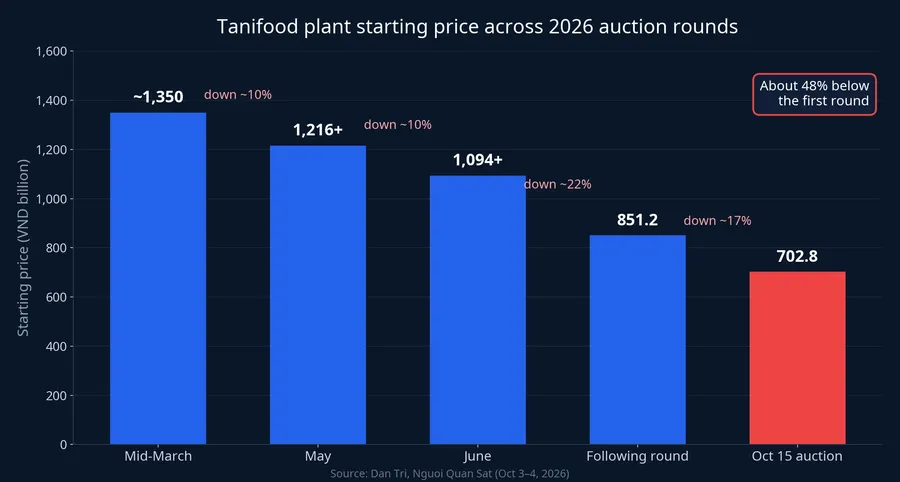
Line the numbers up and the pace of the cuts changes. The first two cuts were about 10% each. The next two went deeper: from VND 1,094 billion to VND 851.2 billion is a drop of about 22%, and from VND 851.2 billion to VND 702.8 billion is another 17% or so. Against the first round, the price is now about VND 647 billion lower, or nearly 48%.Dân trí
What the notices don't say is why each earlier round failed. It could have been a lack of registrants, or registrants who never bid, but the press has not reported a specific reason, so any claim that "the market rejected the plant" is unsupported. The only certain fact is that, ahead of October 15, the assets still have no winning bidder.
Where the money goes first
The assets secure Lavifood's borrowing from VietinBank under a project loan agreement signed on February 2, 2018, along with related mortgage contracts.Người Quan Sát In the first phase of the Van Thinh Phat case, the trial panel found that Lavifood was owned by Ms. Lan. That is why the company's assets were pulled into the process of remedying the damage from the case.

Under the asset-handling plan cited by Dân trí, VietinBank is working with the civil judgment enforcement agency to sell the assets, primarily to recover the loan secured by those same assets. Only the value remaining after the bank is repaid goes toward Ms. Lan's judgment obligations.Dân trí
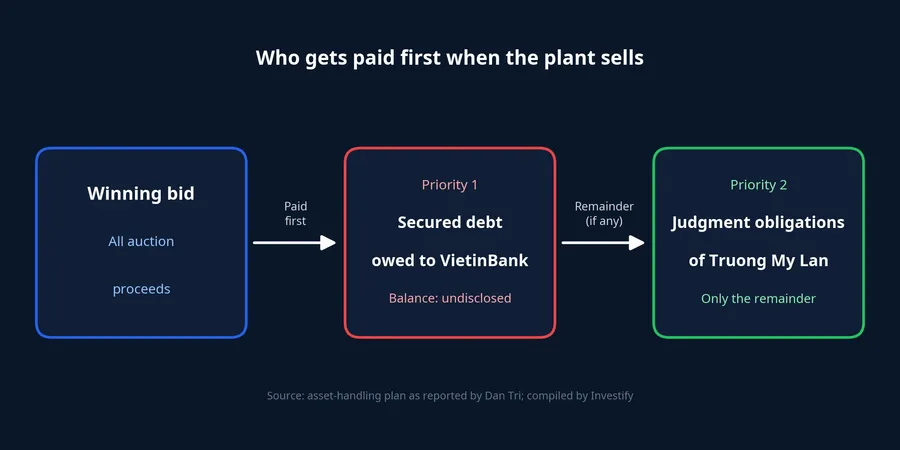
So who actually absorbs each price cut? Think of the winning bid as a pie sliced in a fixed order. If the bid exceeds the outstanding loan, the difference is the surplus that flows to judgment enforcement. As the price falls, that surplus shrinks first, while the bank still recovers in full. Only once the bid drops below the loan balance does VietinBank start to come up short, and by then the surplus from this asset is already zero.
The real risk is that no source has disclosed Lavifood's outstanding balance at VietinBank. Without that figure, nobody can say whether VND 702.8 billion still leaves anything for judgment enforcement. This post can speak with confidence about the mechanism; the size of the loss remains unknown.
Two scenarios after 5 p.m. on October 13
The first fork comes two days before the auction, at 5 p.m. on October 13, when registration and deposits close.
Scenario one: someone registers and bids VND 702.8 billion or more. The October 15 session produces a winning price. The proceeds go to VietinBank's secured loan first, and only the amount above the loan balance, if any, moves on to judgment enforcement. The winning price then becomes the first public number for measuring this story. Even with the loan balance undisclosed, the further the winning bid lands above the starting price, the better the odds that something is left over.
Scenario two: nobody registers, or registrants turn up but no one bids. The October 15 session fails. If past rounds are any guide, the assets go back on the block at a new, lower starting price. Each further cut again eats into the judgment-enforcement surplus first, if any surplus is left.
Because land and buildings are offered separately from machinery, there is also a middle outcome: only one of the two assets finds a buyer.
A lesson in collateral for new investors
Tanifood is a real-world example of how a secured loan is handled when the borrower cannot repay. Put simply, the bank holds priority over the very asset it took as collateral. The owner's other obligations, including judgment obligations from a major criminal case, reach only the value that remains.
For CTG shareholders, how much of the Lavifood loan is recovered depends on the winning price. But with the loan balance undisclosed, any estimate of the impact on VietinBank is missing its denominator. That calculation only becomes possible once the bank or the enforcement agency publishes the number.
What is still missing, and when we will know
The conclusion has two layers. The mechanism is clear: each price cut thins the judgment-enforcement surplus before it touches the bank's loan. The scale is not, and it depends on data nobody has yet:
- Number of registered bidders: locked in at 5 p.m. on October 13, though usually visible only through the auction result.
- Winning price: available after the 9:30 a.m. session on October 15, if the auction succeeds.
- Lavifood's outstanding loan at VietinBank: no disclosure date has been set.
If October 15 produces a winning bid, that number shows where the market values the Tanifood plant relative to VND 702.8 billion, and it is the first piece of the surplus calculation. If the auction fails again, the next notice with a new, lower starting price will be the clearest signal that the surplus for judgment enforcement is still thinning.