

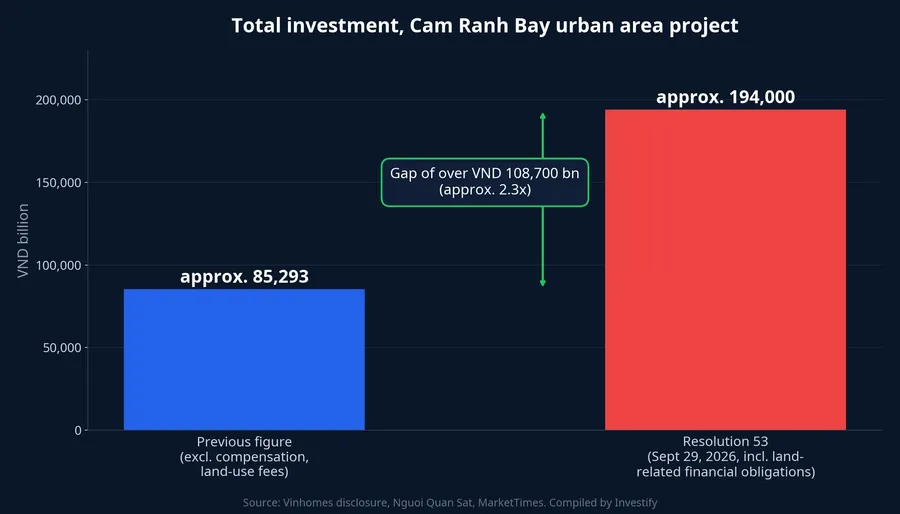
On September 29, 2026, the Board of Directors of Vinhomes (VHM) issued Resolution No. 53/2026/NQ-HĐQT-VH, raising the total investment for the Cam Ranh Bay urban area project in Khanh Hoa province to approximately VND 194,000 billion.FireAnt The previous figure was approximately VND 85,293 billion, which puts the gap at more than VND 108,700 billion. The new number is roughly 2.3 times the old one.Mekong ASEAN Construction only broke ground on December 19, 2025, less than ten months ago.Mekong ASEAN
Put the two numbers side by side and the obvious conclusion is that the project's cost has doubled. A closer read of the disclosure, however, shows that the two figures do not measure the same thing. This post walks through the old scope and the new scope, then separates what Vinhomes has explained from what it has not.
The project and Vinhomes' role
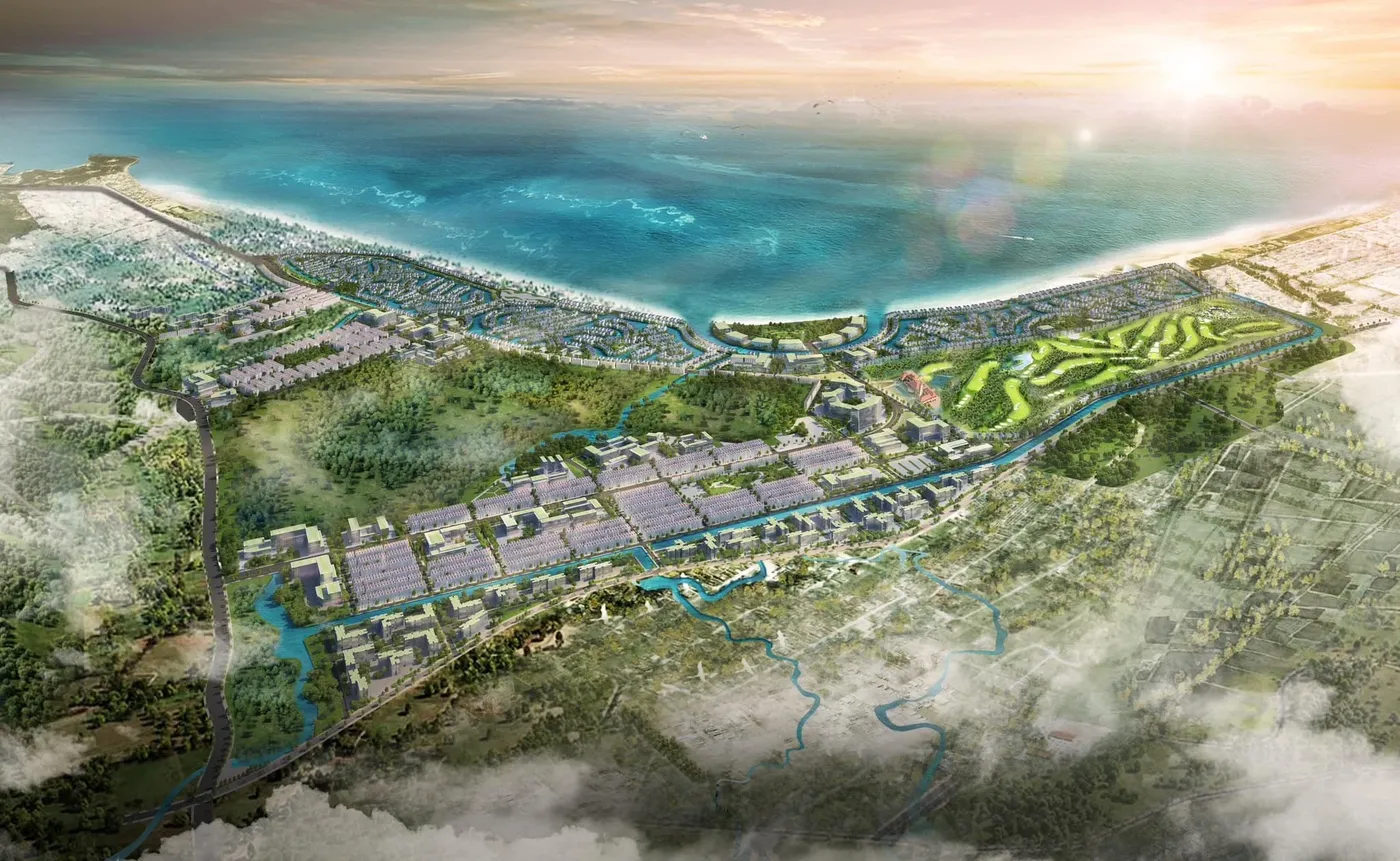
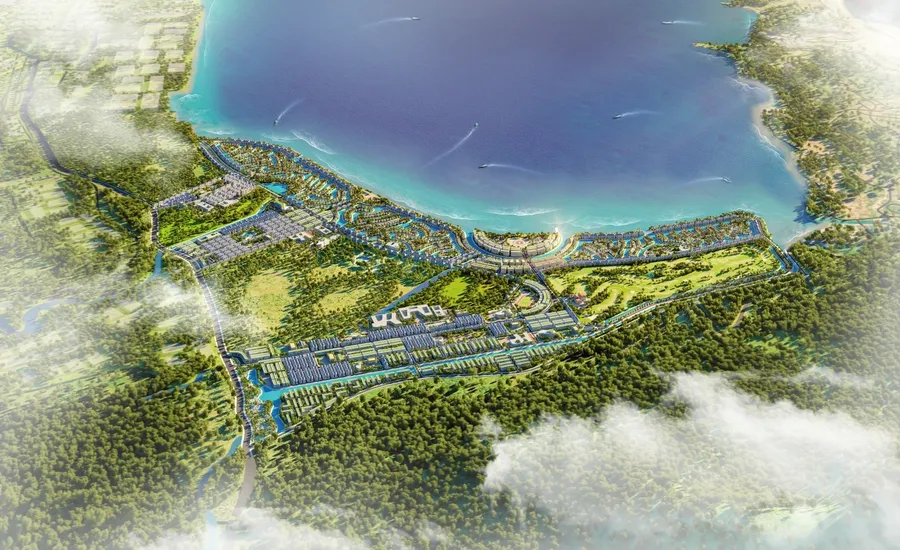
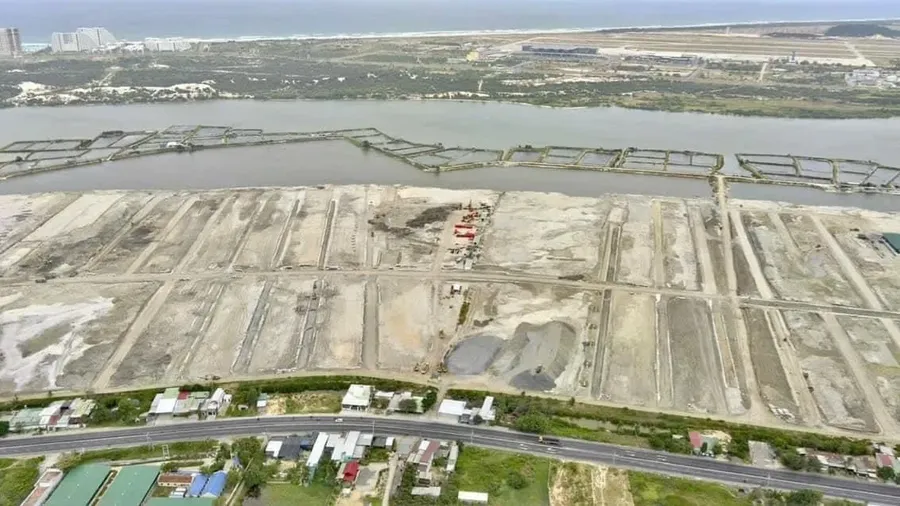
The Cam Ranh Bay urban area covers approximately 1,254 hectares across three subdivisions, with a planned population of approximately 230,779.Người Quan Sát The approved plan calls for more than 39,000 homes: 8,474 townhouses, 10,732 villas and 19,816 social housing units.Mekong ASEAN Social housing alone accounts for about half of all units, an unusual mix for a waterfront development.
The developer is a consortium of three companies: Vinhomes JSC, Cam Ranh Investment JSC and VinES Energy Solutions JSC, a Vingroup subsidiary.FireAnt How much each member contributes, including Vinhomes' own share, does not appear in any disclosure we could find.
Still, it was the Vinhomes board that passed the resolution, and it was Vinhomes that filed the disclosure with regulators and the stock exchanges. For VHM shareholders, this is very much their company's project, not a minor stake on the sidelines.
What the old figure left out
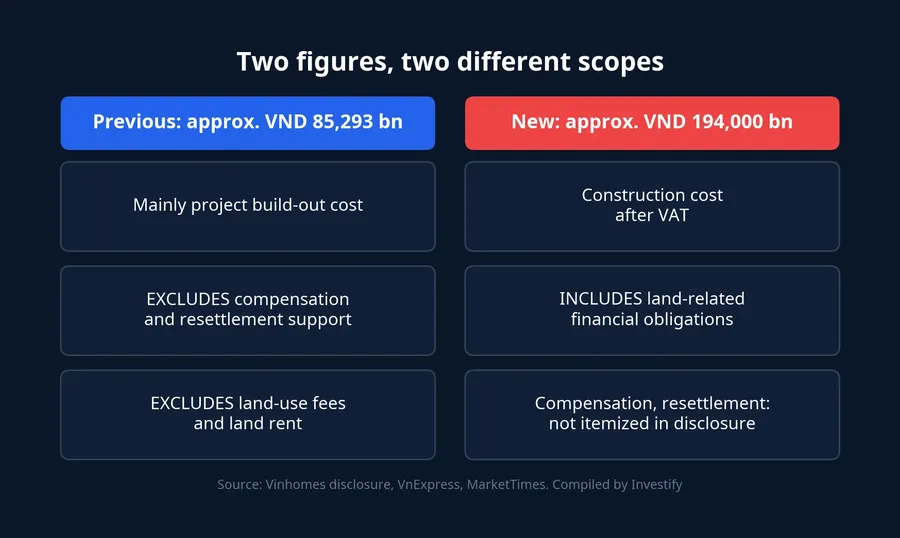
According to reports published on October 1, the figure of approximately VND 85,293 billion did not include compensation and resettlement costs.MarketTimes The project filing cited by VnExpress in October 2025 is more explicit: the total at the time excluded compensation, resettlement support, and the land-use fees and land rent the developer must pay to the state.VnExpress
In plain terms, the old number was mostly the cost of building the project on land treated as already available. Two items that tend to be very large for a coastal township sat outside it. One is the money paid to residents to clear the site. The other is what the developer pays the state for the right to use the land.
What the new figure adds
According to Vinhomes' disclosure, the figure of approximately VND 194,000 billion includes construction costs after value-added tax as well as land-related financial obligations.Người Quan Sát The company's stated reason is to record an investment value consistent with market conditions and actual implementation.FireAnt
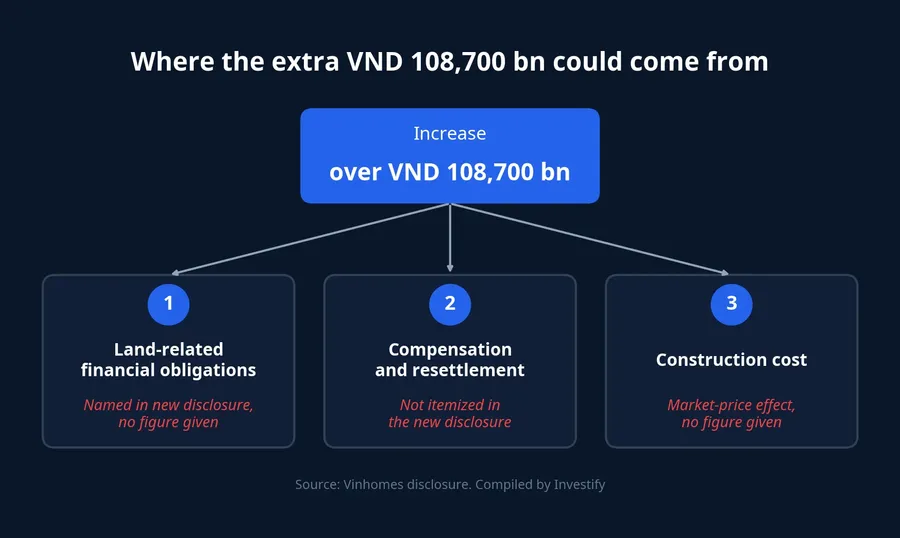
That leaves three possible sources for the extra VND 108,700 billion or more, and the current disclosure does not let us tell which one weighs most.
Land-related financial obligations. This is the only item named in the new disclosure that the old scope excluded. On roughly 1,254 hectares of bayfront, land-use fees and rent could be very large. But Vinhomes has not given a figure, nor said whether the amount has been set by the authorities or is still the company's own estimate.
Compensation and resettlement. The old scope excluded it, and the new disclosure does not mention it separately. So it is not yet clear whether "land-related financial obligations" covers payments to displaced residents or only what goes to the state budget.
Construction cost itself. The phrase "market conditions and actual implementation" suggests materials, labour or scope may have moved away from the original estimate. The new disclosure states that construction cost is counted after VAT. The available sources do not say whether the old number included that tax.
The point worth holding onto is that "the project cost has doubled" does not survive scrutiny. Part of the gap comes from widening the scope, pulling in costs that always had to be paid but were never in the published figure. Only the remainder is a genuine cost increase. How the gap splits between the two is a question the data cannot yet answer.
Funding the new figure
The October 1 disclosure says nothing about how the roughly VND 194,000 billion will be financed. There is no breakdown of equity, debt, or money raised from buyers and partners.
That gap matters. Land-use fees and compensation usually have to be paid early, before the project has sold much and before buyers' progress payments start coming in. Whatever funding mix applied to the old, mostly construction-based figure cannot simply be carried over to the new one. The amount the consortium must fund itself in the early phase may look quite different from what was previously assumed.
At the company level, Vinhomes issued bond VHML12618 on September 24, 2026, worth VND 8,000 billion with a 24-month tenor, to fund the issuer's investment projects.FireAnt The bond disclosure does not name the Cam Ranh project, so it cannot be treated as money earmarked for it.
How big this is for Vinhomes
For scale, Vinhomes reported after-tax profit of VND 52,091 billion in the first half of 2026.Mekong ASEAN The increase of more than VND 108,700 billion at Cam Ranh is roughly twice that profit.
The comparison is about magnitude only. It does not mean Vinhomes must fund the increase out of earnings right away. Total investment is disbursed over many years, part of it offset by customer deposits and sales, and Vinhomes' share within the consortium has not been disclosed. Even so, it shows that Cam Ranh is now a far larger capital commitment than the market assumed before September 29.
What will fill in the blanks
The cost story at Cam Ranh has two layers. The clear layer is that the scope has changed: the new figure adds land-related obligations the old one left out. The unclear layer is how the increase splits across land, compensation and construction, and which consortium member puts in how much.
The first possible source of answers is a more detailed disclosure from Vinhomes on Resolution 53, if the company publishes a breakdown by cost item.
The second is the Q3/2026 financial statements, expected in October. There, VHM shareholders can track construction in progress, real estate inventory and payables related to land-use fees. If those lines jump sharply from Q2, the land obligations have started to hit the books. If they barely move, the figure of approximately VND 194,000 billion is still mainly a planning envelope, and the actual cash will go out over the years ahead.
Until one of those sources speaks, the reading most consistent with the data is this: the Cam Ranh project has not necessarily become "twice as expensive" to build, but it has clearly become a much larger capital commitment within Vinhomes' project portfolio.