


This year has been drier than last, and hydropower reservoirs felt it first. Less water means less hydro output, so the grid has had to call on more gas-fired and coal-fired plants to fill the gap. A new report from MB Securities (MBS) suggests that Q3/2026 profits in Vietnam's power sector are following that same shift in dispatch.CafeF
One caveat up front: every profit figure below is an MBS forecast, not a reported result. Companies will start releasing Q3 financial statements in October. The useful thing to study right now is not the headline number but how each forecast is built: how much comes from selling electricity, and how much comes from items that can swing the other way.
A drier year reshuffles the supply mix
Demand is still growing steadily. According to MBS, power consumption rose 9.7% year on year in the first eight months of 2026. Growth slowed to about 7.7% in July and August as northern Vietnam entered its rainy season and temperatures eased.CafeF
The bigger change is on the supply side. Hydropower output in July and August fell by about 13% year on year as El Niño took hold and rainfall came in below last year's levels. Reservoir inflows picked up in September, but MBS describes the improvement as localized rather than a clear recovery.CafeF
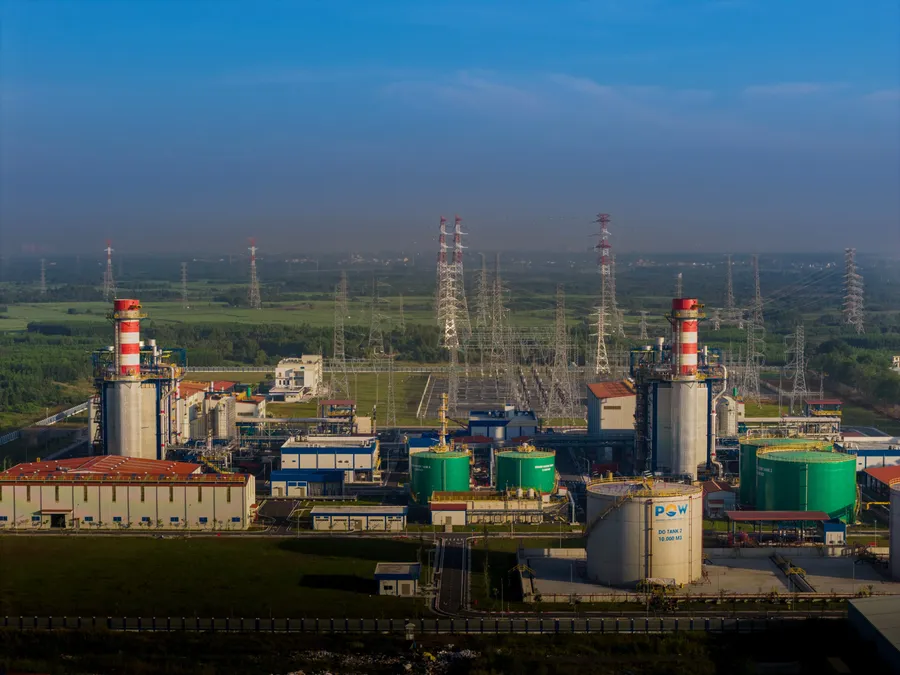
Thermal power has filled the shortfall. MBS estimates Q3 coal-fired output rose about 13% despite an already high base, while gas-fired output jumped about 37%. Gas grew almost three times as fast as coal because there is new capacity this year: the Nhon Trach 3 and Nhon Trach 4 plants of PetroVietnam Power Corporation (POW) account for most of the increase. In other words, gas output rose not only because the grid dispatched it more, but because the system now has more gas capacity to dispatch.CafeF
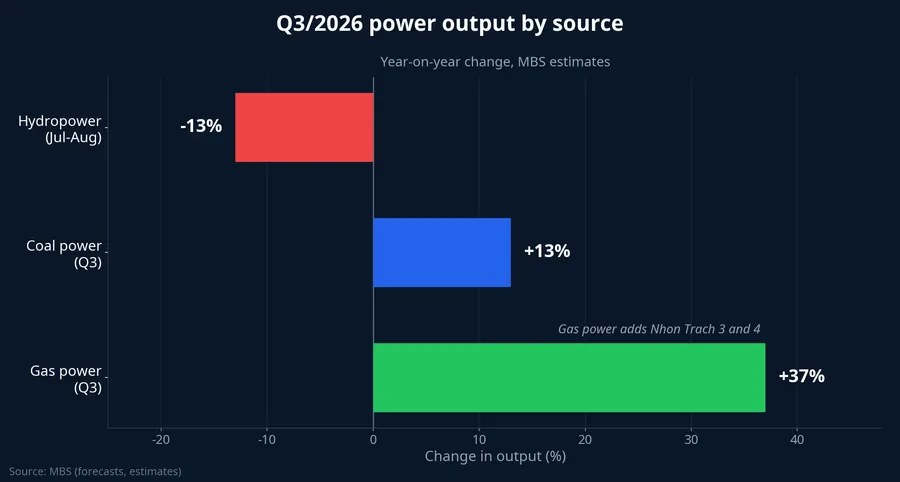
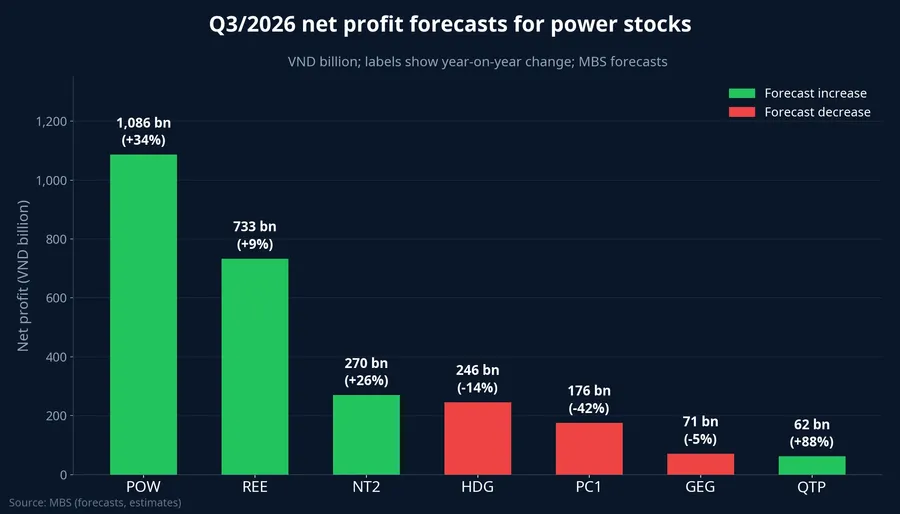
Across the power companies MBS covers, Q3 net profit is forecast to rise about 10%. That average hides a split: thermal producers POW, NT2 and QTP lead the group, while companies with hydropower assets drag the aggregate down.
More dispatch does not automatically mean more profit
Looking at output alone, it is tempting to conclude that the more a coal plant runs, the more it earns. Two other variables make the math less simple.
The first is the selling price on the power market. According to MBS, the average market price in July and August was only about VND 1,200/kWh, below the Q2 peak.CafeF Cooler weather softened demand and pulled prices lower at exactly the moment coal plants were being called on more.
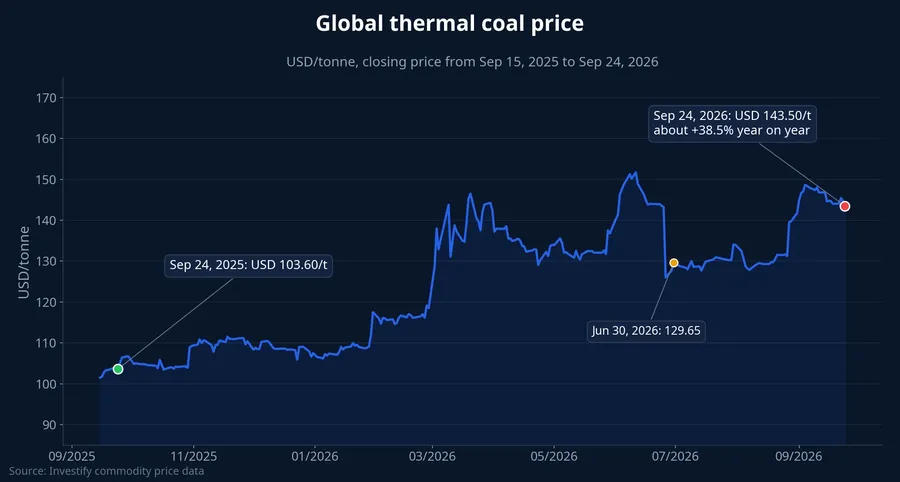
The second is fuel cost. Global thermal coal closed at USD 143.50/tonne on September 24, about 38.5% above the USD 103.60/tonne of the same day last year. Since the end of June, when it stood at USD 129.65/tonne, coal has gained roughly another 10.7%. MBS notes that higher coal prices could squeeze gross margins at coal-fired plants.
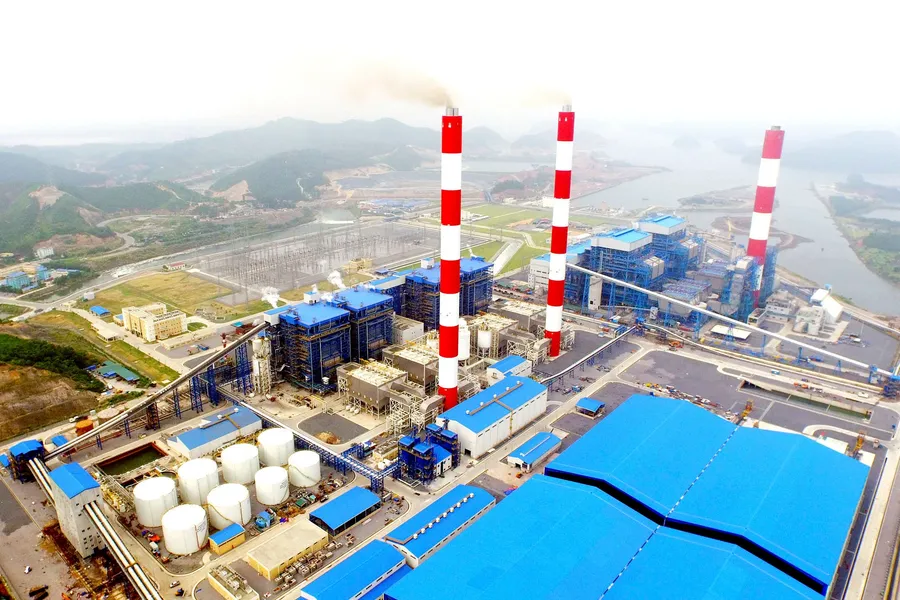
Quang Ninh Thermal Power (QTP) shows why the numbers need a closer look. MBS expects QTP's Q3 output to rise 18% to about 1.3 billion kWh, even though Q3 is its scheduled maintenance season. Net profit is forecast at VND 62 billion, up 88%.CafeF The percentage gain is large, but the absolute amount is small, and part of it comes from deposit income. QTP carries no interest expense, so MBS expects interest earned on its growing cash deposits to support profit. QTP's growth, then, does not come entirely from selling more power.
Contracted output: why running less can still pay
This is the link that newer investors often miss. Most of the electricity from thermal plants is not sold at the hourly market price. It is sold under contracted output (commonly called Qc) at a pre-agreed contract price.
As BSC Securities describes the contract-for-difference structure used for thermal plants, a plant earns market-price revenue plus the difference between the contract price and the market price, multiplied by the contracted output for that hour.BSC Think of it as a price cushion: when market prices fall, as they did in July and August, that difference grows. If a plant is dispatched below its contracted output, it still keeps most of its contract revenue without burning fuel for the power it did not generate. MBS calls this contracted-output compensation revenue.
That is why MBS puts POW at the top of the group. POW was allocated about 4 billion kWh of contracted output for Q3, while actual dispatch at some of its plants may come in below plan. According to MBS, this opens the door for POW to book compensation revenue and improve margins. Net profit attributable to POW's parent-company shareholders is forecast at about VND 1,086 billion, up 34% year on year.CafeF
That roughly VND 1,086 billion figure has more than one source, though. Besides compensation revenue and new output from Nhon Trach 3 and 4, MBS also factors in a possible foreign-exchange gain as the exchange rate cools, applied to about VND 17,000 billion of USD-denominated debt. That gain is financial income, not profit from selling power, and it can reverse if the dollar strengthens again. Of these sources, the contracted-output mechanism is tied to operations and is the more durable one. The FX gain is the piece most likely to change once actual results come out.
PetroVietnam Power Nhon Trach 2 (NT2) is moving in the same direction. MBS forecasts NT2's Q3 net profit at VND 270 billion, up 26%, on output growth of about 21%.CafeF The plant may book compensation revenue in September if actual output falls short of its contracted level, and financial income is also expected to rise on its large cash deposits.
Hydropower owners: not everyone goes backwards
Companies with hydropower assets faced the same weather. Their forecasts still diverge, depending on what else they own.
Refrigeration Electrical Engineering (REE) is still forecast to earn VND 733 billion in net profit, up 9%. MBS points to higher electricity tariffs, the contribution from the Duyen Hai wind farm and REE's non-power businesses. With several businesses to lean on, one weak water quarter does not drag the whole company down.
Ha Do Group (HDG) is the opposite case. Profit is forecast to fall 14% to VND 246 billion, mainly because hydro output is declining from last year's high base. Real estate could offset part of that, but MBS says Charm Villa sales remain slow, with only one more unit expected to be booked in Q3.
Gia Lai Electricity (GEG) owns solar assets, and its solar output is growing. According to MBS, that growth is not enough to offset weaker hydro, so Q3 profit is forecast to slip 5% to VND 71 billion.CafeF
PC1 needs to be read separately. Its Q3 net profit is forecast at VND 176 billion, down 42%, the steepest decline in the group. PC1 does own hydropower, but MBS attributes the drop mainly to its power construction business, where both margins and workload have weakened.CafeF Lumping PC1 into the "hydro drought" story would misread where the decline comes from, and point investors toward the wrong indicators to track in coming quarters.
Where the forecasts could miss
The MBS forecasts rest on assumptions that actual results may not confirm. Four are worth watching.
Contracted-output compensation. This is what sets POW and NT2 apart. If September market prices recover, or plants are dispatched close to their contracted levels, compensation will be smaller than assumed.
FX gains. With about VND 17,000 billion in USD debt, even a small move in the exchange rate at quarter-end could push POW's profit well away from the forecast, in either direction.
Coal prices. Coal is about 38.5% higher than a year ago. If gross margins at QTP and other coal plants shrink more than MBS expects, the 88% gain may not hold.
September inflows. Localized improvement in reservoir levels could give some hydropower companies a better final month than forecast, while also reducing the need to dispatch thermal plants.
Looking further out, MBS says the market is waiting for a concrete mechanism for liquefied natural gas (LNG) power, a resolution for renewable projects stuck in feed-in tariff disputes, and the 2026 electricity price framework. None of these will change Q3 results, but they will determine how Nhon Trach 3 and 4 are dispatched and paid in the years ahead.CafeF
Read Q3 results by power source
The takeaway from this set of forecasts is clear: in Q3, power-sector profits do not move under a single "power stocks" label. They follow the type of generation a company owns and the contract structure that protects its revenue. Gas and coal producers hold the advantage this quarter, while hydropower owners only hold up if they have other businesses large enough to carry them.
When gas and coal producers report, the lines to read before the bottom line are contracted-output compensation revenue and FX gains or losses. If most of POW's growth comes from the exchange rate, it is far less durable than growth driven by operations. For hydropower owners, separate power-segment profit from everything else to see what is holding the company up, or, as with PC1, what is pulling it down.