
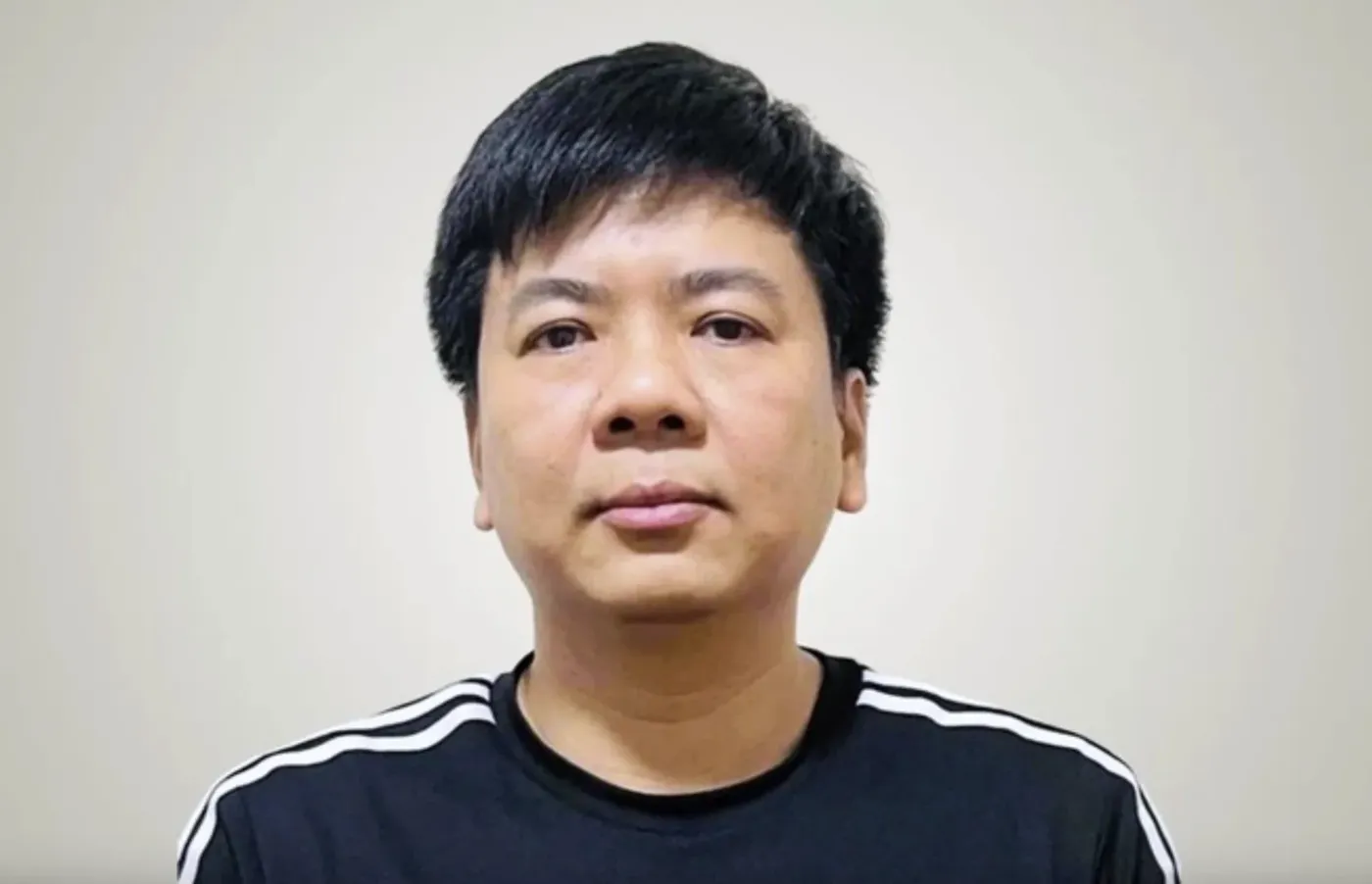

Sixty people paid real money for 3.2 million real shares of Egroup. Yet the earlier investigation conclusion did not treat them as victims. The problem was not their contracts or their bank transfer receipts. It was a ledger: their names had never been entered in the company's shareholder register.Công Luận
On September 22, 2026, the Police Investigation Agency of Vietnam's Ministry of Public Security issued supplementary investigation conclusion No. 88/QĐ-CSKT-P6 in the case involving Egroup Education Group, Egame, Nhất Trần and related entities. It recommends prosecuting 29 defendants on charges of fraudulent appropriation of property, giving bribes and taking bribes.CafeF The case has not gone to trial. Everything described below is an allegation in the investigation conclusion, not a court ruling.
The supplementary probe found that these 60 buyers were never registered as the law requires, and should therefore be recognized as victims. That lifted the total number of victims from 10,063 to 10,123.Vietstock The more useful question, though, is not about the headcount. It is this: how many people are holding contracts for off-exchange shares right now, convinced they are already shareholders?
Paying is necessary, not sufficient
Vietnam's Law on Enterprises 2020 is explicit about when someone becomes a shareholder. A person receiving transferred shares becomes a shareholder only once their details are fully recorded in the shareholder register.Hệ thống Pháp luật For newly issued shares, the law requires both conditions: payment, and entry in the register.LuatVietnam
When you buy listed stock, the Vietnam Securities Depository and Clearing Corporation records your ownership for you. With an unlisted company, there is no such intermediary. The register is kept by the company itself. A contract and a receipt prove you dealt with a seller. They do not, on their own, make you a part-owner of the business.
The practical consequences are concrete. Without your name in the register, you cannot vote, collect dividends or inspect company information. You can still demand your money back under the contract, but that is a creditor's claim, not an owner's.
The law also gives you a lever. A company must register a change of shareholder within 24 hours of receiving a request from the shareholder concerned.Hệ thống Pháp luật So after paying, send a written request and ask the company to confirm in writing the number of shares, the share class and the registration date. A company that stalls for weeks, or tells you "the contract is enough", is sending you a warning sign.
A buyback promise turns equity into a loan
According to the investigation conclusion, Nguyễn Ngọc Thủy, Chairman of the Board and CEO of Egroup Education Group JSC (now a defendant), personally signed share transfer contracts at VND 38,000 per share, promising to buy the shares back after one year at VND 42,000. Buyers were promised a spread of about 10.5% after a year, however the company performed.Công Luận
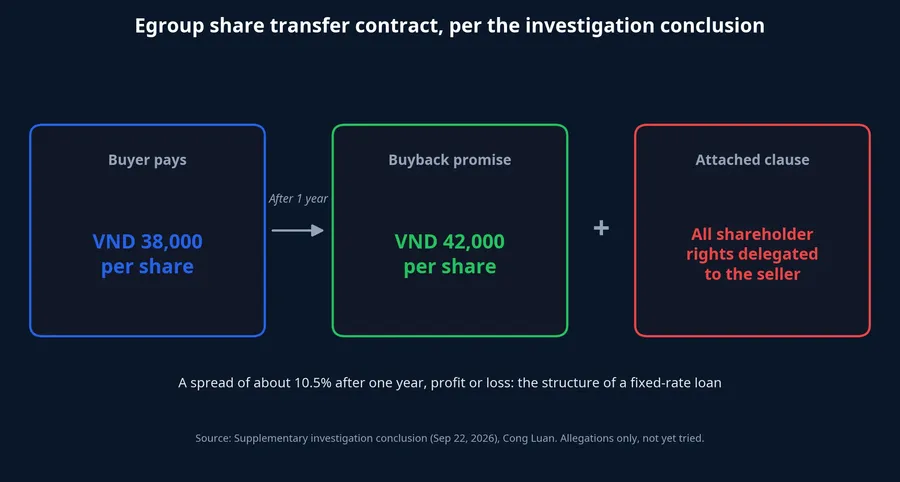
This is where the real risk sits. A genuine shareholder takes on business risk: shares gain value when the company earns money and lose value when it doesn't. A fixed-price buyback strips that risk away on paper. In exchange, the entire sum depends on one thing, whether the promisor can afford to buy back, with no collateral behind it.
The contracts carried another clause: investors delegated all their shareholder rights to Mr. Thủy. The buyer's name was on the contract, but voting and oversight stayed with the seller. Sales staff who brought in a client earned a 5% commission.Công Luận In other words, the person pitching you may be paid in proportion to what you put in.
Even the way investigators tallied the losses reads like a loan book. Of the victims, 8,938 still have outstanding principal. The remaining 1,185 have received principal and interest from other contracts exceeding what they are owed, so they are not being considered for civil compensation.Vietstock "Outstanding principal" and "principal and interest" are the vocabulary of lending, not of a shareholder register.
Charter capital on paper is not money paid in
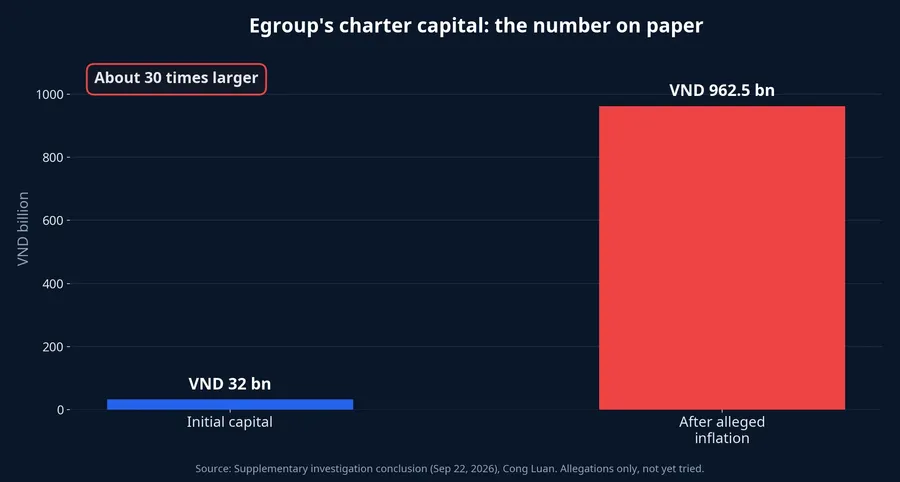
The next layer was the image of a large conglomerate. According to the investigation conclusion, starting in 2014 Mr. Thủy allegedly directed subordinates to inflate Egroup's charter capital from VND 32 billion to VND 962.5 billion, then transferred fictitious shares to investors.Công Luận A figure close to VND 1 trillion, about 30 times the original capital, was enough to reassure buyers.
Buyers can look up a company on the National Business Registration Portal by name or enterprise code. The free tier shows the name, operating status, legal form, founding date, legal representative, address and business lines.National Business Registration Portal Change history or the list of founding shareholders must be requested separately and may carry a fee.
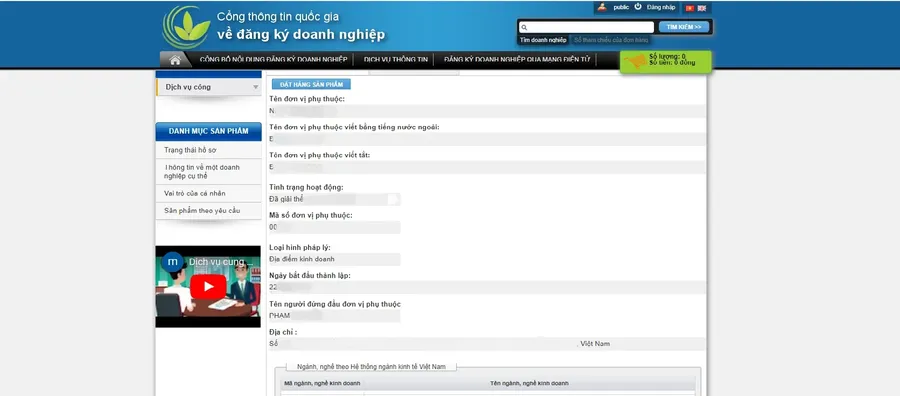
It is worth being clear about what that lookup can and cannot tell you. The portal shows how much capital a company has declared. It does not show whether that money ever reached the company's bank account. The thing to check is the capital history: who contributed, in cash or in assets, and how the audited financial statements for that year recorded it. If the seller cannot answer with documents, the charter capital figure guarantees nothing.
Another signal is the scale of the sale. A non-public joint stock company may only make private placements to fewer than 100 investors, excluding professional securities investors, and may not advertise through mass media.Luật Việt An A non-public company running a sales force that pitches shares to thousands of people should raise questions, whether the deal is labelled a "transfer" or a "partnership".
Big reported revenue is not real cash
According to the investigation conclusion, about 70% of Egroup's annual revenue was allegedly fabricated to project the image of a profitable, diversified group.Vietstock The method is described in detail. From 2016, Egroup signed 12 phone-card trading contracts with 6 companies, buying VND 2,347 billion worth and booking VND 2,327 billion in sales. Egroup took no delivery of goods and put up no capital. It simply signed contracts, moved money and issued invoices.CafeF
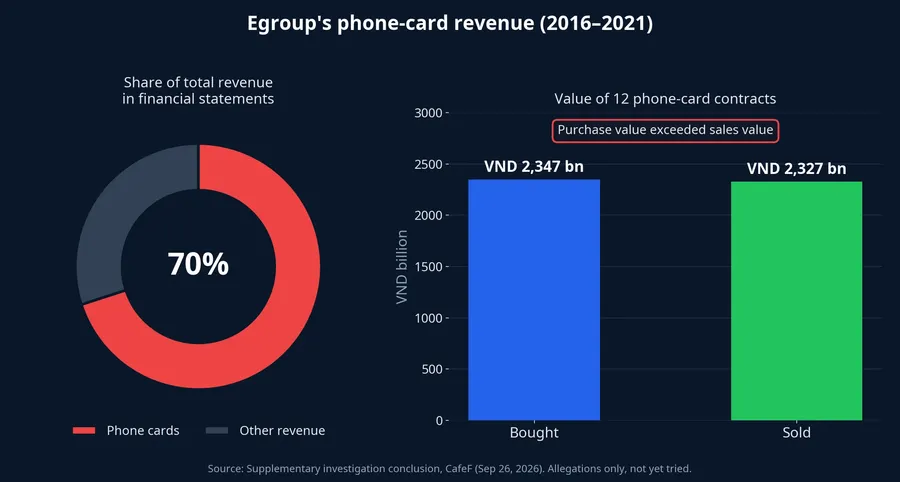
You don't need to be an accountant to spot the anomalies. An education group earned most of its revenue selling phone cards, a business with nothing to do with schools. The purchase value exceeded the sales value, and the margin used to "show a profitable operation" was only around 0.053% to 0.354% of revenue.CafeF
More troubling still: all the money raised from investors was managed and tracked separately, and never recorded in tax filings or financial statements.Vietstock The polished report handed to buyers did not reflect the debt the company owed to those very buyers.
When the core business shrinks but interest keeps coming
Any fixed-return promise lasts only as long as the business earns enough. Between 2021 and 2023, the English centers and kindergartens all closed, new clients dried up, and incoming cash no longer covered maturing contracts. At that point, Mr. Thủy allegedly instructed 23 managers and team leaders, overseeing 341 sales staff, to use 70% of each new client's money to pay existing clients, remitting the remaining 30% to the company.Vietstock

So who bears the loss while interest keeps arriving on time? From the buyer's side, the mechanism is almost invisible. Still, some signals can be observed. The facilities you were shown on a site visit close one by one, while the interest promise stays unchanged. At maturity, the other side pushes you to "roll into a new contract" rather than repay principal. Your payments are arranged by your sales contact rather than coming from a company account with proper paperwork. And you are constantly encouraged to bring in more people.
To be fair, a company closing some locations is not automatically committing fraud, and many unlisted companies raise capital entirely legally. None of these signals proves anything. They are reasons to demand documents before signing a second contract.
What to check before you sign
Before buying shares in an unlisted company, or signing any "investment partnership" contract with a guaranteed return, a buyer can do the following:
- Look up the legal entity on the business registration portal, matching the name, code, legal representative and operating status.
- Ask where the capital came from. A sharp capital increase over a short period should be backed by audited statements and contribution records.
- Read the contract for "buyback commitment", "fixed return" or "delegation of shareholder rights". If those clauses are there, you are lending, not owning.
- Pay into the company's account, or the transferor named in the contract, never a salesperson's personal account.
- Demand written confirmation of your entry in the shareholder register, and keep every contract and payment record.
- Break revenue down by segment. The largest segment should be the core business, and it should be profitable.
For newcomers, there is a simple test. Money promised a fixed extra amount after one year, regardless of whether the company makes or loses money, is essentially a savings deposit. The difference is that bank deposits carry deposit insurance and are supervised by the State Bank of Vietnam, while a buyback promise from an individual or an unlisted company rests only on their own ability to pay. The return above the savings rate is the price of that risk. When a pitch promises more than a bank while insisting there is "no risk", both halves of that sentence cannot be true.
The register confirmation is the dividing line
The 60 buyers in the Egroup case got part of it right: they bought real shares. What was missing was the final step, having their names in the register. For unlisted shares, a written confirmation of entry in the shareholder register is what separates an owner from someone who merely handed over money. Until you have it, your money is best treated as an unsecured loan, and its risk assessed accordingly.
The next stages of the case, from the procuracy's indictment decision to the trial, will clarify each defendant's responsibility and how victims may be compensated. For anyone holding a contract for off-exchange shares, the question to answer today is much simpler: is my name in the shareholder register yet?