
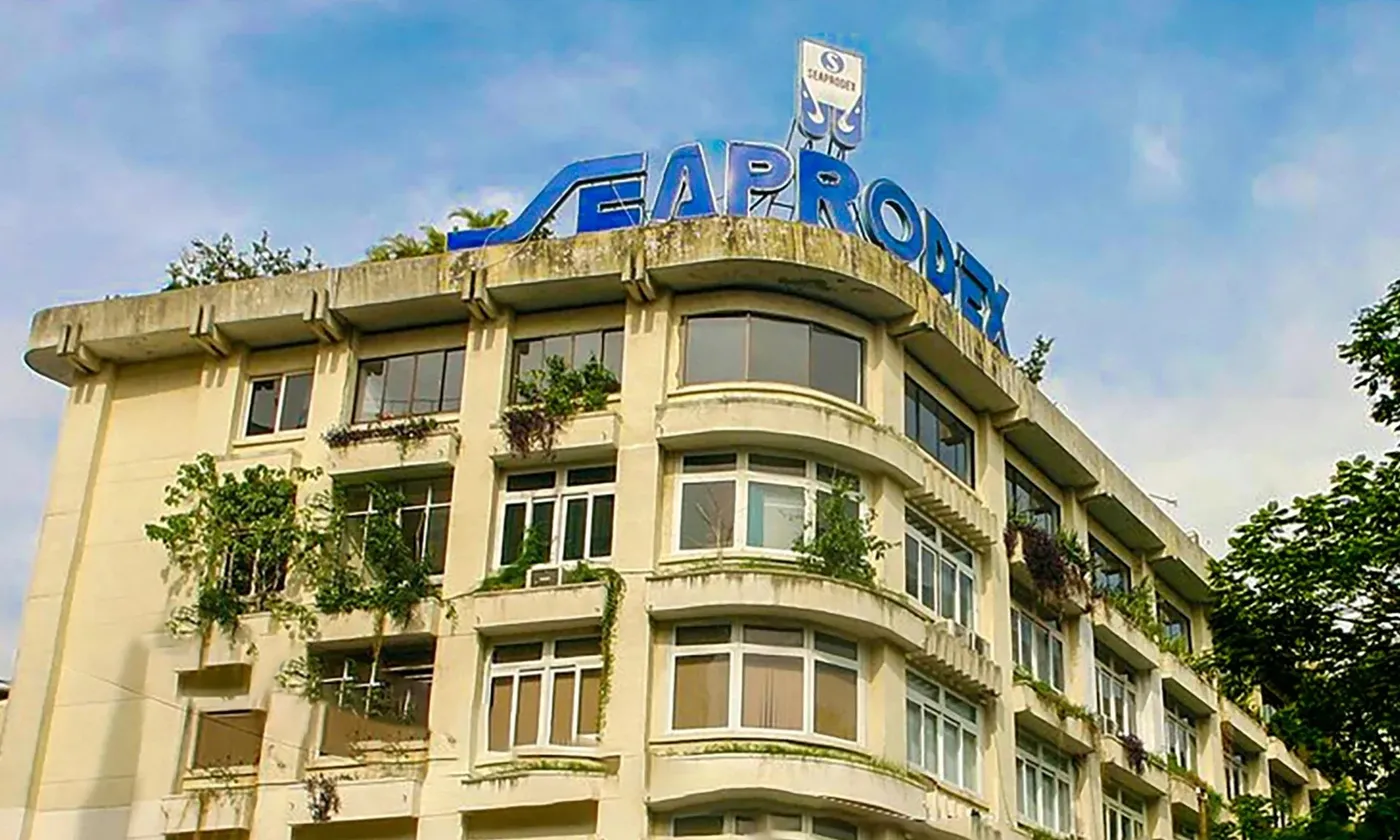

By 3:30 p.m. on September 22, the final deadline to register and put down a deposit, not a single investor had signed up for the 79.228 million SEA shares held by SCIC. The block equals 63.38% of Vietnam Seaproducts Corporation (Seaprodex), so the winner would take control of the company. According to an HNX notice reported by Người Quan sát on the afternoon of September 23, the auction scheduled for September 29 no longer qualifies to go ahead.Người Quan sát
What makes the outcome worth dissecting is the asset attached to it. Seaprodex manages a 1,522.2 m² plot at 2-4-6 Dong Khoi, at the head of one of Ho Chi Minh City's priciest streets, facing the Saigon River.Người Quan sát When a controlling stake tied to a location like that attracts no deposits, the real question is not whether the land is valuable. It is what a buyer actually gets for the money. The numbers point to one answer above the others: the legal status of the plot itself.
What buyers were asked to pay
The starting price for the whole block is VND 8,509.1 billion, or roughly VND 107,400 per share.Nhà Đầu tư That implies a valuation of about VND 13,400 billion for all of Seaprodex.Người Quan sát SEA shares, meanwhile, closed at VND 59,700 on September 23. At that price, the starting price sits roughly 80% above the market.
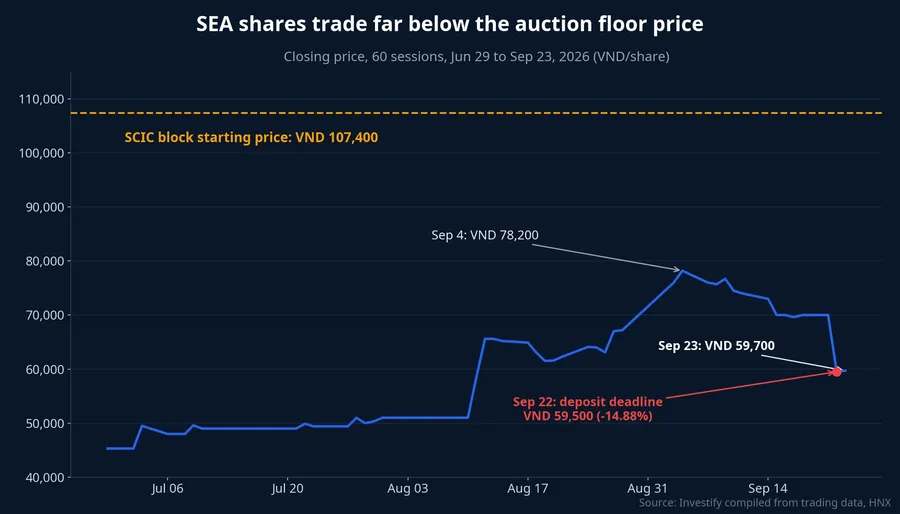
That gap alone does not prove the floor was unreasonable. Controlling blocks usually command more than odd-lot trades on the exchange. And SEA's market price is a weak yardstick: the three largest shareholders already hold 95.85% of the company, and average matched volume over the last 10 sessions was only about 2,600 shares a day.Nhà Đầu tư To judge the price, you have to ask which assets are supposed to support that VND 13,400 billion.
How much the seafood business contributes
The first thing that stands out in the financial statements is how thin the core business is. In the first half of 2026, Seaprodex booked net revenue of nearly VND 435 billion and after-tax profit of over VND 100 billion. Gross profit from sales was only about VND 72.9 billion, less than the VND 74.4 billion it earned as its share of profit from associates.Báo Pháp luật Put simply, this seafood company makes more from stakes in other businesses than from selling its own products.
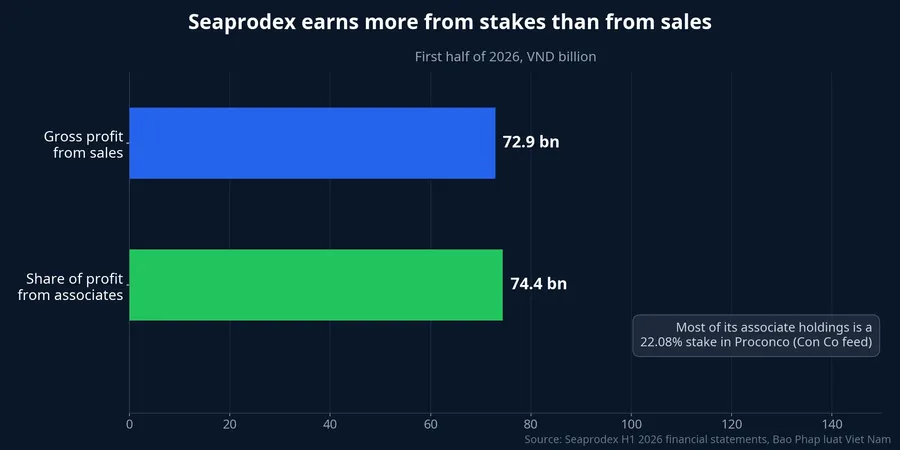
The main associate is Proconco, the animal-feed maker behind the Con Co brand. Seaprodex owns 22.08% of Proconco at an original cost of nearly VND 547 billion.Nhà Đầu tư By the end of June 2026, that stake was carried at nearly VND 1,143 billion, more than 90% of the company's total investment in associates. Cash dividends from Proconco alone came to almost VND 41.93 billion in the first half.Báo Pháp luật It is a real cash-generating asset, but its scale is nowhere near VND 13,400 billion.
Line up earnings against the valuation and the gap widens. In 2025, profit attributable to parent shareholders was close to VND 206 billion. At the starting price, that works out to a P/E of about 65 times and roughly 5 times book value.Nhà Đầu tư Total assets at the end of Q2 were just over VND 2,910.2 billion.Dân trí Neither earnings nor book assets can explain a valuation of about VND 13,400 billion. The difference has to come from assets not fully reflected on the balance sheet, and the biggest of those is the Dong Khoi plot.
Paid for in 2017, still no title
The Ho Chi Minh City People's Committee approved a market-based land price for 2-4-6 Dong Khoi in December 2015. To pay the land-use fee, Seaprodex borrowed VND 250 billion from Bac Nam 79 Company, pledging 22 million Proconco shares as collateral.Báo Pháp luật On January 27, 2017, the city's Department of Finance confirmed the company had met its financial obligations.Dân trí
Nearly ten years later, as of June 30, 2026, Seaprodex had still not received a land-use rights certificate. As a result, the planned complex of retail, offices and apartments on the site cannot break ground.Báo Pháp luật On the balance sheet, the plot sits under construction in progress at VND 692 billion.Người Quan sát The 2015 planning documents allow a complex of up to 20 floors, with the tower set back at least 15 m from Ton Duc Thang Street.Nhà Đầu tư
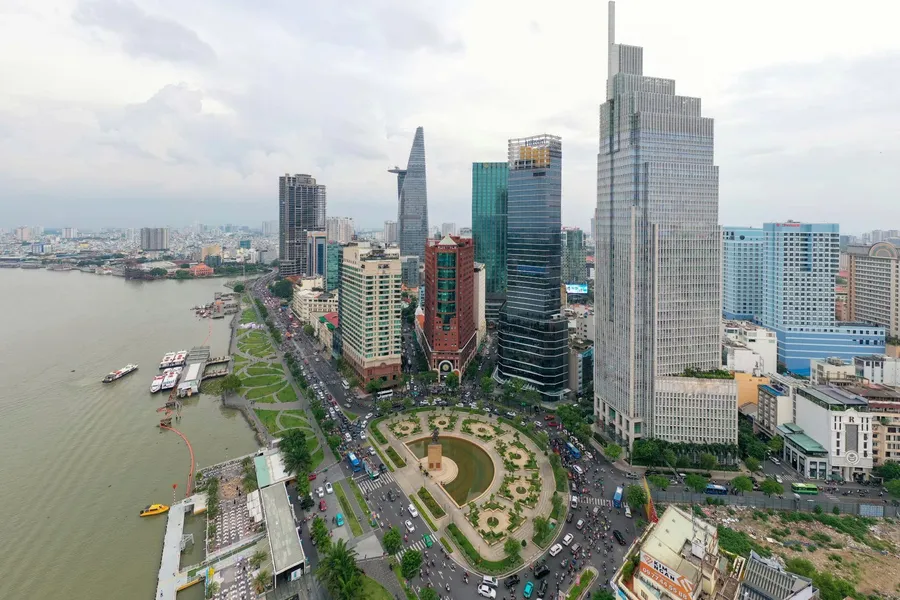
For a buyer, "no title" changes the whole calculation. Commercial land is worth the cash flow of whatever stands on it: office rent, apartment sales, hotel revenue. No certificate means no building permit, and no building means no cash flow. Whoever buys the 63.38% block pays today for cash flows nobody can date. As Nhà Đầu tư put it, you cannot multiply Dong Khoi land prices by the plot's area and call that the value Seaprodex can actually realize.Nhà Đầu tư
Valuation is harder still because the appraisal report behind the starting price was not published with the auction documents.Nhà Đầu tư Investors cannot see how much value the appraiser assigned to Dong Khoi, to Proconco or to the other assets. They must rebuild the model from scratch, while the biggest variable, the timing of the land title, is entirely out of their hands.
63.38% may not be enough to decide on the project
The next layer gets less attention, but it matters to anyone buying to develop the site. Besides SCIC, Ngan Hiep Real Estate owns 24.03% of Seaprodex and Redwood Investment owns 8.44%.Dân trí Ngan Hiep is a subsidiary 99.98% owned by Novaland, while Redwood's predecessor was a company in which Novaland was once a major shareholder.Người Quan sát Together, Novaland-linked entities hold about 32.47%.
Under Article 148 of the 2020 Enterprise Law, a shareholders' resolution on an investment project or asset sale worth 35% or more of total assets needs approval from shareholders representing at least 65% of the votes of those attending, unless the company charter says otherwise.Hệ thống Pháp luật With total assets of about VND 2,910 billion, the 35% line is just over VND 1,000 billion. A 20-floor complex on Dong Khoi would almost certainly clear it.
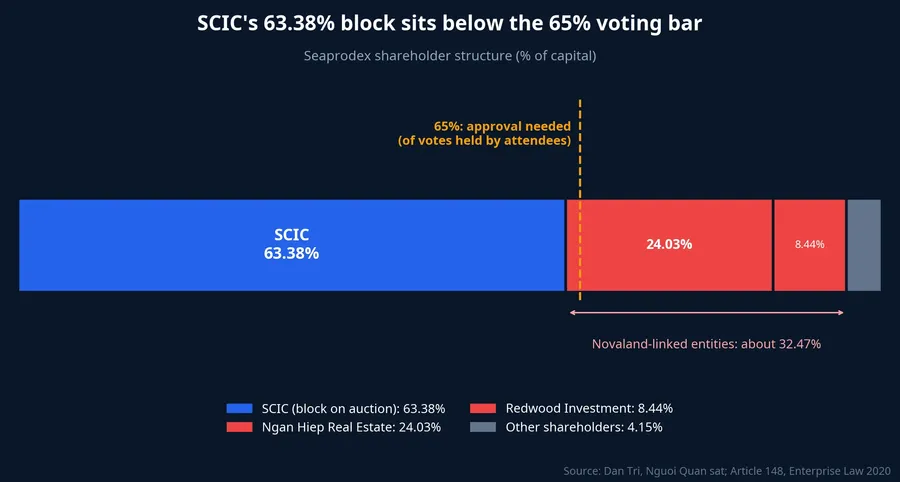
63.38% is below 65%. If every shareholder attends, the buyer of SCIC's block cannot pass such a resolution alone. If the Novaland group attends and votes against, the buyer reaches 65% only if minority holders who attend without approving account for about 1.66% of capital or less. Whether the project moves ahead therefore depends partly on the second-largest shareholder and on minority turnout. The buyer pays for control, yet does not fully control the very asset that makes the block expensive.
The Novaland group is also an unlikely taker at the starting price. In late 2025, large blocks of SEA changed hands at just over VND 34,000 per share, meaning the current starting price is more than three times higher.Nhà Đầu tư A shareholder already positioned to help block major resolutions has little reason to pay that much for the rest. Foreign investors were not allowed to take part, which narrows the pool of potential buyers even further.Nhà Đầu tư
Which layer weighs most
All three layers matter, but not equally. If the land had a title, a high valuation could be backed by a concrete project, and the 65% issue would become a negotiation between two major shareholders. Without a title, every other calculation hangs on it. The available data therefore points to the land's legal status as the deciding factor, with the shareholder structure and the price-to-earnings gap acting as amplifiers.
One detail deserves a careful read. On the deposit deadline of September 22, SEA fell 14.88% to VND 59,500 on volume of 76,700 shares, the highest since mid-August. The market may have anticipated the outcome. It may equally have been profit-taking after a run from around VND 51,000 in early August to VND 78,200 on September 4. With liquidity as thin as SEA's, a single session proves little.
Seaprodex is not the first case. VNPT previously put more than 188.7 million MSB shares, worth about VND 3,441 billion, up for auction and drew no registrations. A 23% stake in Central Hydropower (CHP), priced at roughly 2.2 times its market price, met the same fate.CafeF What these cases share is a starting price set by appraisal, while buyers pay for the cash flow they can see.
How to read divestment headlines
News that "the state is about to divest at a high price" often lifts a stock ahead of the auction, and SEA was no exception. But a starting price is only what the seller wants to receive, not what anyone is willing to pay. For SEA, VND 107,400 should be read as an appraisal figure rather than an anchor for the share price, until a real buyer shows up.
When reading a divestment, the most useful question is who could plausibly buy. A block tied to an asset with unfinished paperwork, and with a large second shareholder already in place, usually has very few realistic buyers, and each of them can afford to wait.
For SEA, the first signal to watch is SCIC's next move, including any new starting price and sale method. A much lower price, or a switch to a negotiated sale, would show how far the seller is willing to close the gap with the market. The more important signal is any news on a land-use certificate for 2-4-6 Dong Khoi. Until the plot has its title, the largest part of Seaprodex's value remains on paper.