
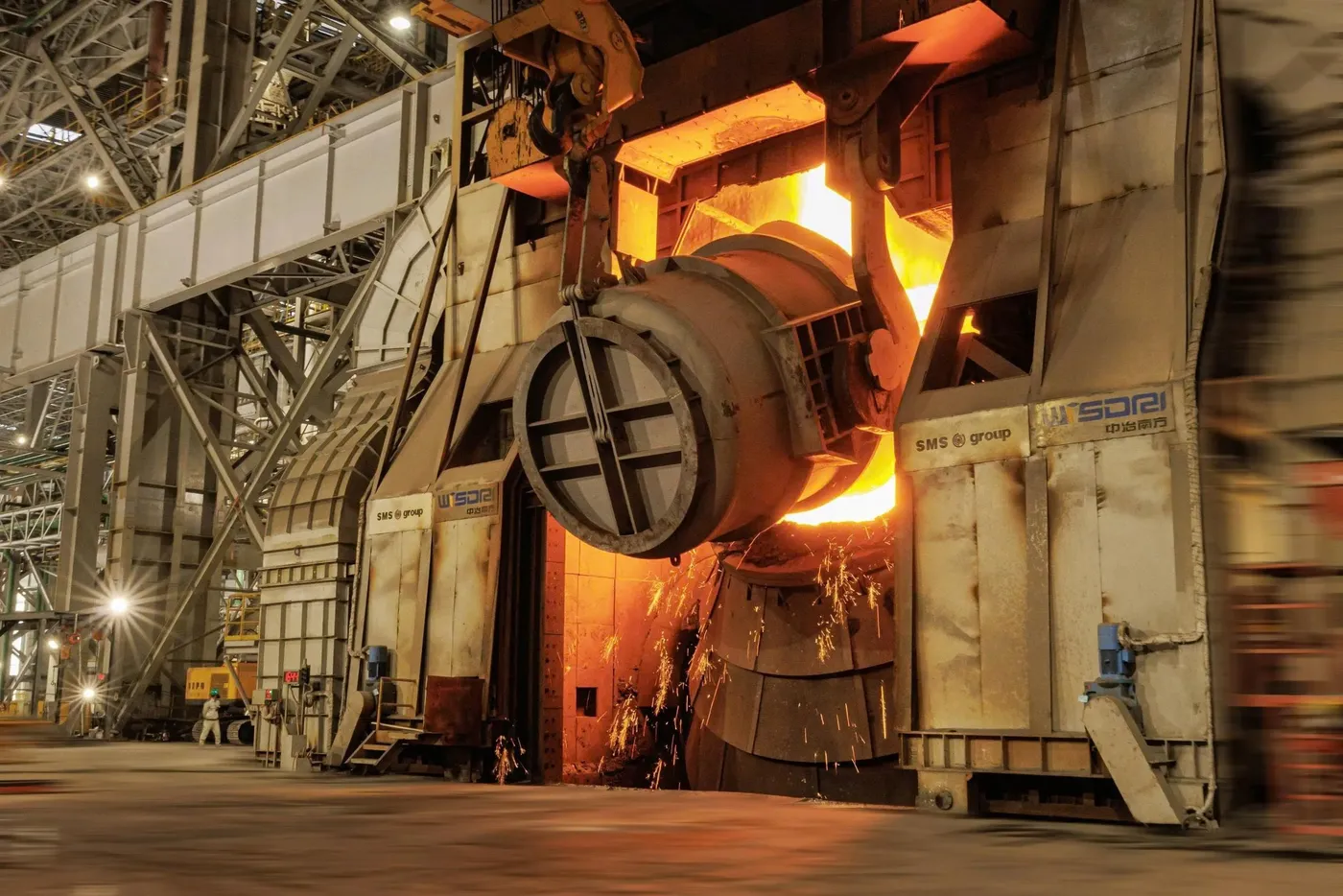

On the evening of September 23, after the market had closed, investors learned that Hoa Phat (HPG) has proposed not continuing with its VND 86,000 billion integrated iron and steel complex in the Nam Phu Yen Economic Zone, now part of Dak Lak province.Tuổi Trẻ The detail worth reading closely is the timeline. According to the company's report to the province, the review and change of direction began in June 2026. This was not a snap decision; it was several months of recalculation.
HPG closed the September 23 session at VND 21,050, down 0.47%, so the price has not yet absorbed the news. The September 24 session will be the market's first verdict. Before then, the numbers help separate what Hoa Phat actually said from what many investors are ready to believe.
Two readings already waiting
The first reading says that when the sector leader walks away from its third "steel fist" after four years of pursuit, it must be running out of steam. The argument has some basis, because the project is large: 6 million tonnes a year of design capacity, with 3 million tonnes in phase 1.Tuổi Trẻ That is slightly more than the 5.6 million tonne hot-rolled line at Dung Quat 2.Tạp chí Công Thương
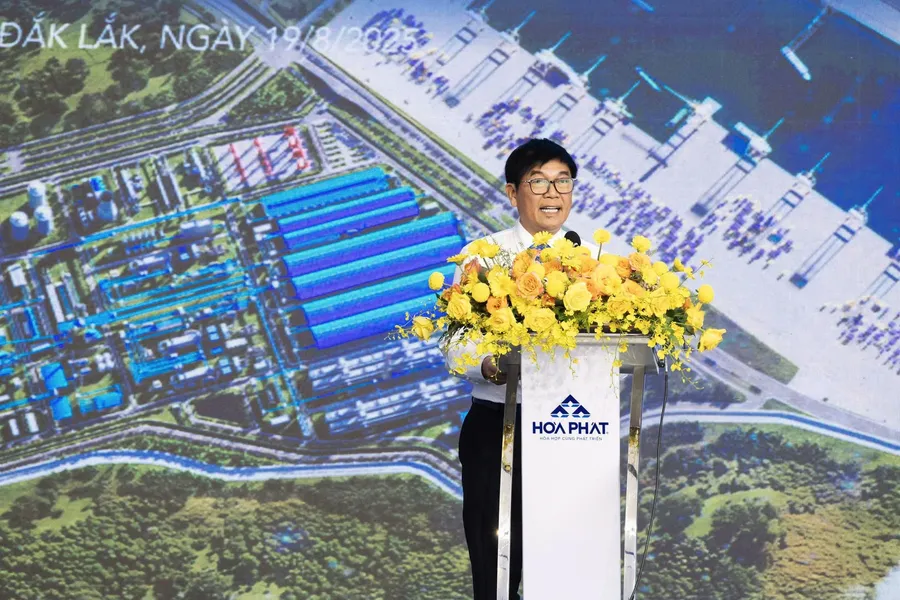
At the 2025 AGM, Tran Dinh Long, Chairman of the Board of Hoa Phat Group JSC, described the site as possibly one of the few remaining locations in Vietnam suitable for a large-scale steel plant.Người Quan Sát When the group's own chairman rated a site that highly and the company now steps back, shareholders have reason to be uneasy.
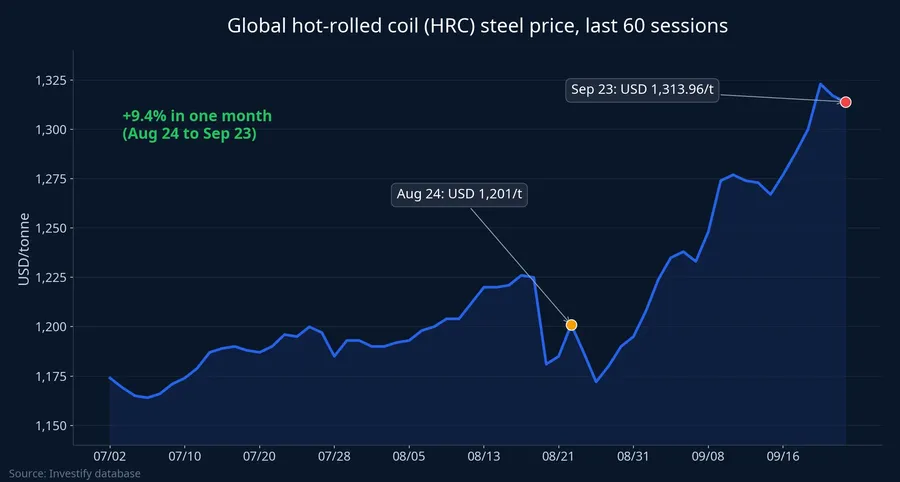
The second reading runs the other way: steel is recovering, prices are rising, so Hoa Phat will expand sooner or later. Short-term data supports it. Global hot-rolled coil (HRC) prices rose about 9.4% in a month, from USD 1,201 per tonne on August 24 to USD 1,313.96 on September 23, while iron ore stayed roughly flat around USD 97.32 per tonne. In a September 19 update, MBS Securities forecast Hoa Phat's third-quarter HRC output at 2.1 million tonnes, up 68% year on year, and total steel volume at 4.1 million tonnes, up 38%.Người Quan Sát
Both readings miss what Hoa Phat itself wrote in its report to the province.
What Hoa Phat said, and what it did not
Hoa Phat argued that pressing ahead while market conditions are not truly favourable could force changes to the project's scale, schedule or investment plan. That would mean higher costs and longer timelines, and would also affect land clearance and local residents. The group concluded that the complex, at its current scale and under current conditions, does not deliver investment returns commensurate with the capital it would need to raise and the risks it would have to manage.Tuổi Trẻ
Read it word by word and one thing stands out: Hoa Phat never says it lacks money. It says this plan, at this scale, does not earn enough for the capital involved. That is the language of a return-on-capital calculation, not of a company short of cash.
Procedurally, this is only a proposal. An official at Dak Lak's economic zones and industrial parks authority said the report had been received, and that the provincial People's Committee and relevant departments are studying it, with no decision or formal reply yet.Tuổi Trẻ Calling it a "cancelled project" goes further than the sources allow.
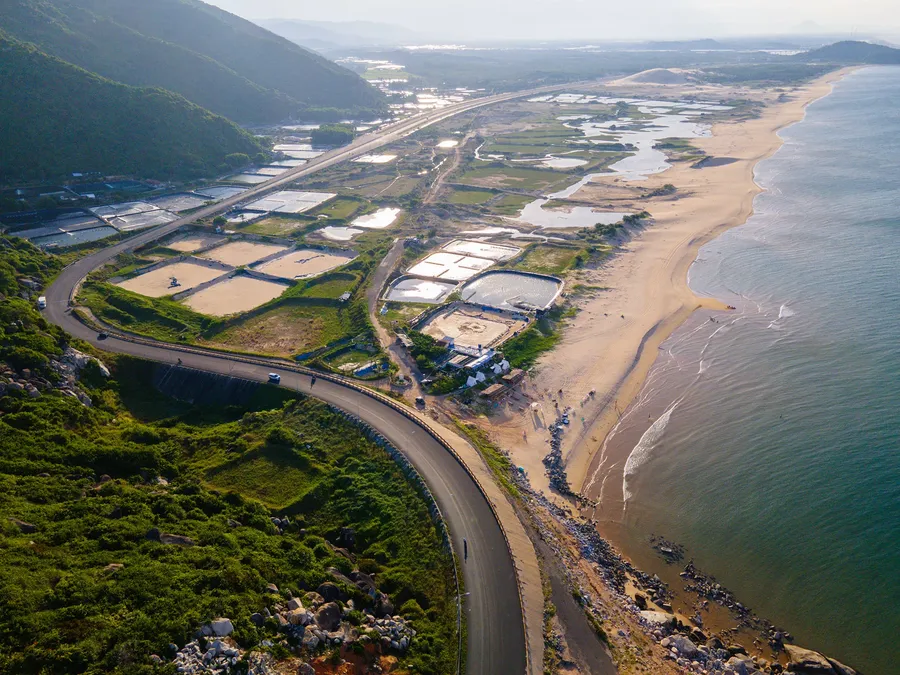
Nor did Hoa Phat say it is leaving Dak Lak. The two sides had previously signed memoranda for three projects worth more than VND 120,000 billion in total: the Hoa Tam industrial park (VND 13,300 billion), Bai Goc port (VND 24,000 billion) and the steel complex.Người Quan Sát Only the complex is being reconsidered. Hoa Phat has proposed prioritising the Hoa Tam industrial park, attracting secondary tenants and exploring partnerships with other industrial investors.
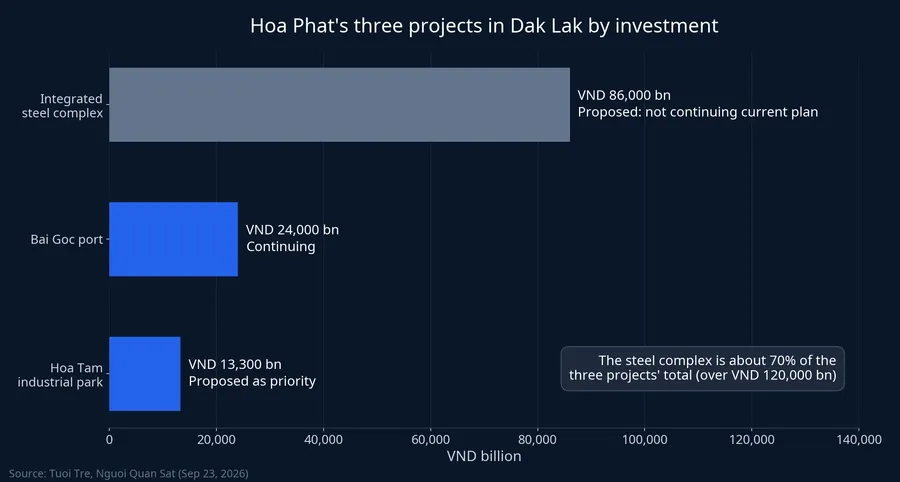
That infrastructure is already well advanced. Phase 1 of the industrial park covers about 491.87 hectares, of which 370.19 hectares, or 75.3%, has been cleared. The onshore section of Bai Goc port, about 64.9 hectares, is fully cleared.Tuổi Trẻ In other words, Hoa Phat is keeping the port and the industrial land, assets that do not depend directly on steel prices. What comes off the table is the most capital-hungry and riskiest piece: another 6 million tonnes of capacity.
The balance sheet shows no sign of a cash squeeze
If Hoa Phat were genuinely running out of steam, the balance sheet would show it. According to the reviewed consolidated half-year 2026 financial statements, total borrowings and finance leases stood at nearly VND 98,530 billion on June 30, about 35% of total capital and close to 0.7 times equity. The group also holds about VND 37,000 billion in cash.Doanh nhân A company whose debt is below its equity and which holds that much cash is not being forced out of a project by a lack of funds.
The same balance sheet, however, shows why another VND 86,000 billion is an expensive bet right now. Borrowings are already approaching VND 100,000 billion. MBS expects third-quarter financial expenses to rise 60% year on year because of higher interest rates.Người Quan Sát A new megaproject would almost certainly need more borrowing, just as cash from Dung Quat 2 is starting to flow in. The question is not whether the money exists, but whether each extra borrowed dong would earn enough to cover interest and risk.
Rising global prices are not enough to justify a new plant
A roughly 9.4% monthly rise in global HRC prices is real. But a 6 million tonne plant is not decided on one month of prices. It needs stable demand for twenty or thirty years.
At home, the picture is much quieter. Domestic D10 rebar has sat unchanged at VND 14,210 per kg from early August through September 23. Global prices are climbing while domestic prices have not moved, which suggests local demand is not yet strong enough for producers to push prices up.
What follows is Investify's analysis, not the company's. The biggest shield for domestic hot-rolled steel today is trade defence. The Ministry of Industry and Trade imposed official anti-dumping duties on hot-rolled steel from China in 2025,Dân trí and in April 2026 added a provisional 27.83% duty on wide hot-rolled coil.Tuổi Trẻ MBS also partly bases its third-quarter forecast on sharply reduced pressure from Chinese imports after those duties.
But tariffs only protect the home market. Once Dung Quat 2's output gradually fills the domestic share, the next 6 million tonnes would have to be sold elsewhere, most likely abroad. There, Vietnamese steel competes head-on with Chinese supply, with no tariff wall to shelter behind.
Other explanations deserve acknowledgement. The cost and risk of land clearance is a reason Hoa Phat itself cites. Capital needs in other business lines may also play a part. The available evidence leans towards "demand is not secure enough for another 6 million tonnes", because the company puts market conditions first among its reasons and keeps all the infrastructure that does not depend on steel prices. Even so, the sources do not allow us to say which factor weighs most.
Capital discipline, at the cost of a lower growth ceiling
Hoa Phat's proposal to step back from the Dak Lak complex is not a sign of exhaustion. It is a capital-allocation decision by the sector leader. What the decision implicitly says is that Hoa Phat is not yet confident enough that the steel price cycle will last to commit another VND 86,000 billion to new capacity.
For HPG shareholders, the consequences cut both ways. The first is cash flow: not funding a Dung Quat 2-sized project over the next few years means less pressure to borrow. Cash from Dung Quat 2 could go towards reducing debt, which would help contain fast-rising financial expenses.
The second is the growth ceiling. The third "steel fist" was part of the case for expecting Hoa Phat's output to keep growing strongly beyond 2027. With it removed, volume growth over the next few years depends mainly on Dung Quat 2 reaching full capacity. After that, earnings will track steel prices more than volumes.
The reading that fits the data best, then, is that Hoa Phat has just lowered its long-term growth expectations in exchange for a lighter balance sheet. That view would only flip if the markers below point the other way.
Signals to watch
Dak Lak's official response. If the province accepts the proposal, the land set aside for the complex will move to other uses and the door to a return narrows. If the province asks to keep the land reserved, a comeback when market conditions improve remains possible.
Third-quarter financial statements. Borrowings below the nearly VND 98,530 billion of June 30 would signal that cash is going to debt repayment rather than new projects. If debt keeps rising, the question becomes where the money is going.
The investment plan at the 2027 AGM. If Hoa Phat unveils a large-capacity project elsewhere, the story is relocation, not an end to expansion. If the plan focuses only on optimising existing capacity, the "not yet confident in the cycle" message will be confirmed a second time.