
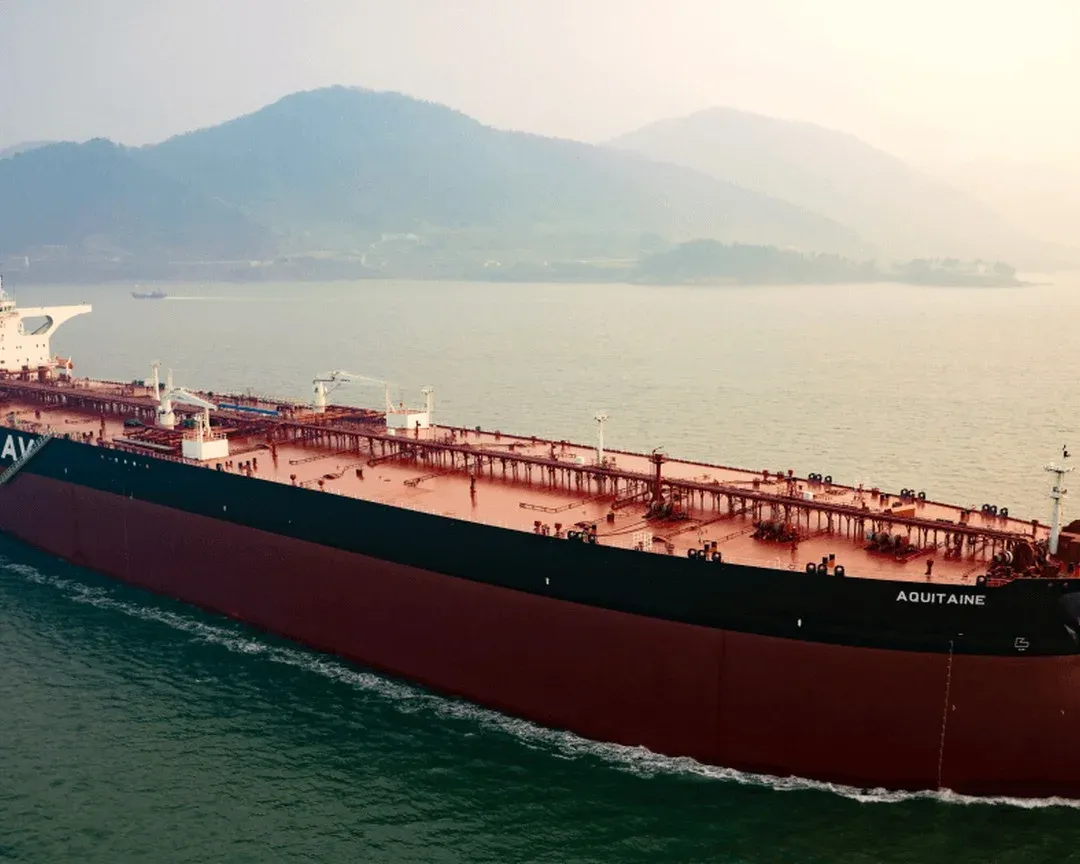

Investors tend to lump every oil and gas name into one basket and read the whole group off a single number: the Brent price. The week from September 15 to September 22 shows that reading only holds for half the group. The five largest names in the sector split into two clear camps, and the reason has nothing to do with luck. It comes down to how each business actually makes money.
A belief that's half right
In mid-September, Brent crude climbed to $108.75 a barrel on September 15, after tension around the Strait of Hormuz and a series of tanker attacks pushed the risk premium higher. That same day, Vietnam's oil and gas stocks surged together: BSR up 6.84%, GAS up 6.65%, PLX up 5.96%, PVS up 4.91% and PVP up 4.72%. Watching that session, it was easy to conclude the whole group moves in lockstep, and if that were true, a reversal in oil should send the whole group down together. This week told a different story.
Why crude reversed
Brent closed at $99.25 a barrel on the night of September 22, a fifth straight losing session and a two-week low, down almost 9% from the September 15 peak.VnEconomy The pressure came from the Middle East: US President Donald Trump said American officials had held "a very good meeting" lasting about three hours with Iranian officials.VnEconomy A senior Iranian official told Reuters that Iran could reopen the Strait of Hormuz within 7 days if the US eased military pressure; Saudi Arabia was also reported to be planning to restart its East-West pipeline within the week.
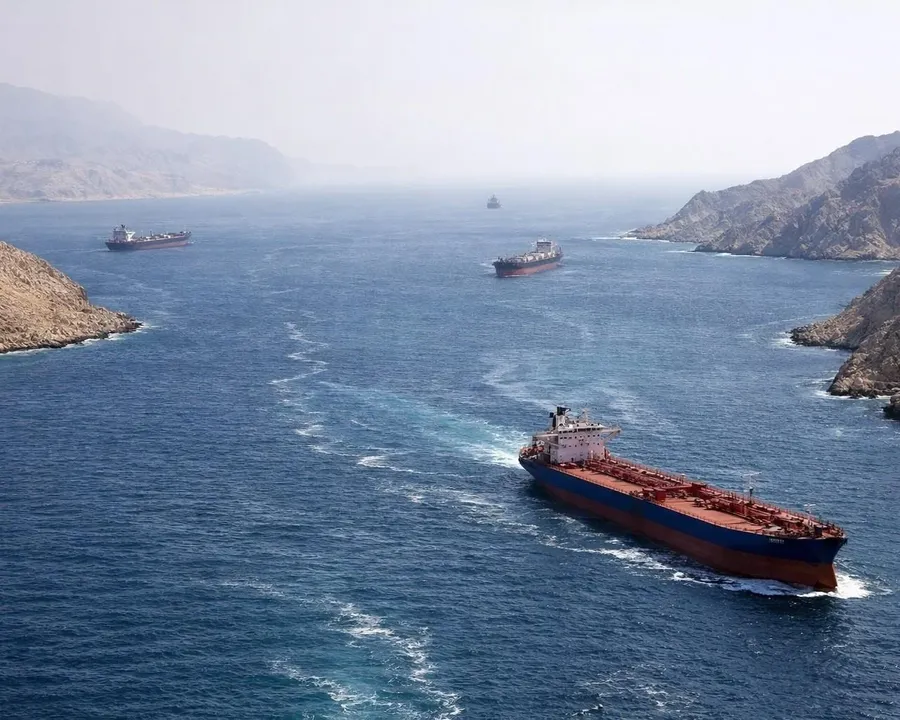
What stands out is that oil prices fell in the very week Russia's energy supply took another major hit. On September 21, Ukraine's General Staff said long-range strikes had cut Russia's total refining capacity by 45%, dragging down output of Euro-5/K5-grade gasoline and diesel; Russia has not commented on the figure.Dân Trí The refineries hit that week included Syzran, Slavneft-YANOS and a facility in Moscow.CafeF
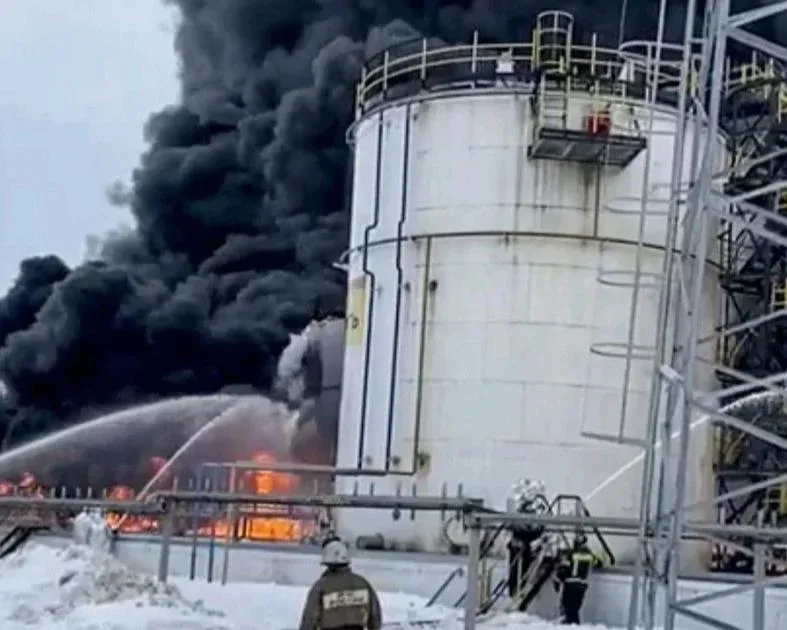
Why didn't a shock like that push Brent up? Because what Russia lost was refining capacity, not crude output. Brent prices crude oil, and this week crude was being priced off the Hormuz, Iran and Saudi pipeline story, not off Russia's refining capacity.
A split picture: who tracks crude, who doesn't
If the "whole group follows oil" theory held, every oil and gas stock should have fallen together as Brent lost almost 9% between September 15 and 22. The numbers tell a different story.
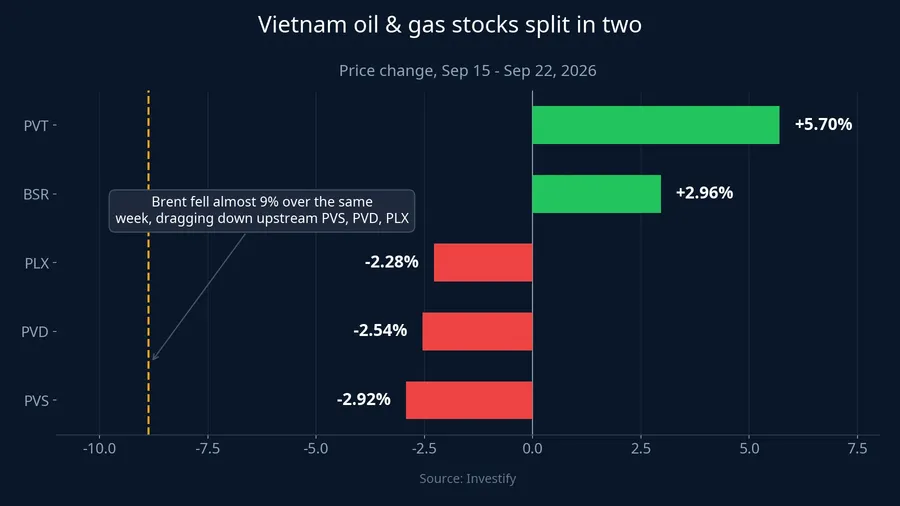
The group that tracked crude: PVD down 2.54%, PVS down 2.92%, PLX down 2.28%. These are businesses whose earnings are directly tied to crude prices: when crude is expensive, field operators spend more on drilling and services, while distributors absorb swings in the value of their inventory. The group that moved against crude: BSR up 2.96%, PVT up 5.70%. On September 22 alone, crude tanker operator PVP jumped 6.85% to VND 19,500, closing at the daily ceiling.Vietstock
GAS needs a closer read. On the price board, the stock fell from VND 91,400 to VND 86,000, but September 22 was also the ex-dividend date for a 25% cash dividend, worth VND 2,500 a share.Vietstock Strip out that technical adjustment and GAS's real decline for the week was closer to 3.3%, moving with crude but far more mildly than the price board suggests.
Each link in the chain makes money off a different price
The split isn't random. Each segment of the oil and gas value chain earns its margin off a different price, and only the first segment truly tracks crude.
Upstream drilling and services earn off crude prices, so when Brent falls, field operators tend to trim drilling budgets. That is why PVD and PVS moving with oil makes sense. Refining earns off the spread between finished-product prices and crude feedstock costs; when Russia's refining capacity drops sharply, what the market is short of is finished product, not crude.
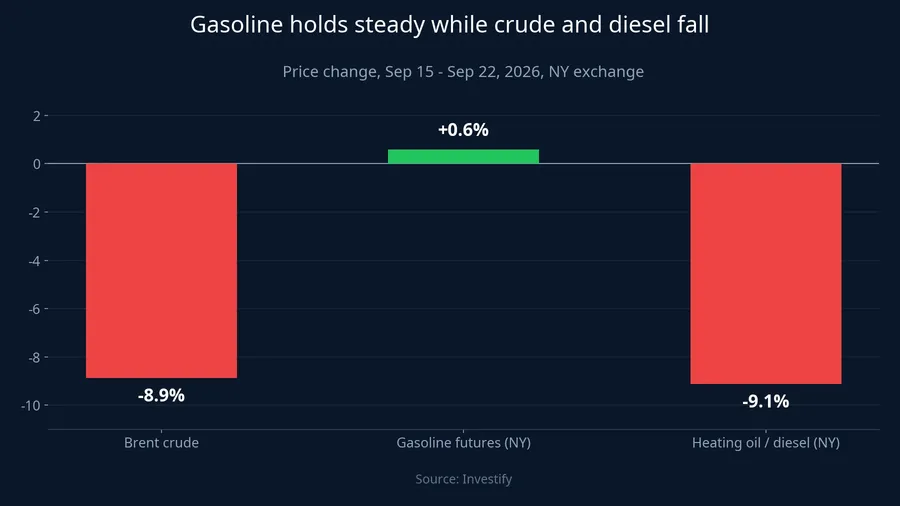
On the New York exchange, gasoline futures barely moved while Brent lost almost 9%, meaning refiners' margins widened. Still, it's worth being cautious about reading US prices straight into BSR's margin: the Dung Quất refinery sells at Asian regional prices, and heating oil on the same New York exchange, a proxy for diesel, fell nearly in step with crude. This week's refining tailwind was concentrated in gasoline, not diesel.
Shipping earns off charter rates, which depend on how far a tanker has to sail, not on the price of whatever is in its hold. The number of tankers transiting Hormuz fell from 48.2 a day in 2025 to just 1.2 a day over the first 13 days of September, forcing Atlantic crude onto longer routes to Asia.Thị trường Tài chính Tiền tệ By September 16, Aframax charter rates — the tanker class PVP operates — had reached about $69,000 a day, up $5,500 in a single week; one-year VLCC charter rates stood at about $160,000 a day.Thị trường Tài chính Tiền tệ
PVP's ceiling day: follow the money, not a single headline
No PVP-specific news was released on September 22, so it's worth weighing a few explanations rather than picking one. The first is fleet expansion hopes: PVP announced an extraordinary shareholder meeting for October 23, 2026 to consider buying a third Aframax crude tanker, with a record date of September 28.Doanh Nhân Pháp Luật But the plan itself was approved in principle back in June, and detailed documents haven't been released, so it's hard to call this fresh news for September 22 specifically.
The second is the underlying business. In the second quarter of 2026, PVP posted net revenue of VND 722.7 billion, up 29.7% year-on-year, and after-tax profit of VND 134.2 billion, up 198.1%, taking the company to 77.6% of its full-year profit target after six months.Doanh Nhân Pháp Luật That's a supportive backdrop, but it's also old news to the market by now. The third is flow: trading volume on September 22 hit 2.51 million shares, the highest in over a month, foreign investors bought a net VND 4.01 billion of the stock, and the broader VN-Index also rose 0.96% to 1,816.93 points.
The data leans toward a sector-wide explanation rather than a PVP-specific one. In the same session, PVT, PVP's parent company, also rose 4.56% on 11.6 million shares traded. When two stocks in the same shipping segment rally hard while extraction and distribution names fall, the most reasonable read is that money is betting on charter rates, with the Aframax-3 story and foreign buying simply amplifying the move in PVP specifically.
The one thing both camps are watching
The news that pulled oil prices down this week and the news that could pull charter rates down are, in fact, the same story: whether the Strait of Hormuz reopens. Under a scenario from TCBS, if Hormuz reopens, Gulf crude would shift back to shorter routes, freeing up tankers and potentially cutting charter rates by around 30% year-on-year; if the current disruption persists, freight rates stay elevated.Thị trường Tài chính Tiền tệ In other words, tanker stocks are rallying on exactly the factor that, if it reverses, is the biggest risk to their own revenue. Speaking at the UN General Assembly, Trump said he faced a "big decision" on a deal with Iran and expected the two sides to reach an agreement shortly after the US midterm elections in November.VnEconomy This week, the tanker trade is betting that a US-Iran deal isn't coming soon.
A more accurate picture for investors
Vietnam's oil and gas stocks don't move as one block against crude. Only upstream drilling and services truly track Brent; refining tracks the spread between finished product and crude; shipping tracks how far tankers are forced to sail. That's the core conclusion from this week, and the caveats below only add nuance: they don't overturn it unless Hormuz genuinely reopens.
For PVD and PVS, Brent remains the key signal to watch. For BSR, watch gasoline and diesel prices against crude: this week's tailwind was clear on gasoline but hadn't reached diesel. For PVP and PVT, watch weekly Hormuz tanker traffic and Aframax and VLCC charter rates, not Brent.
The nearest catalyst to watch is Iran's offer to reopen Hormuz within 7 days. If tanker traffic through the strait rebounds meaningfully, both crude and charter rates would fall together, and tanker stocks would lose the very reason they diverged from oil this week. If talks drag on, as Trump himself suggested, the current split is likely to persist.