
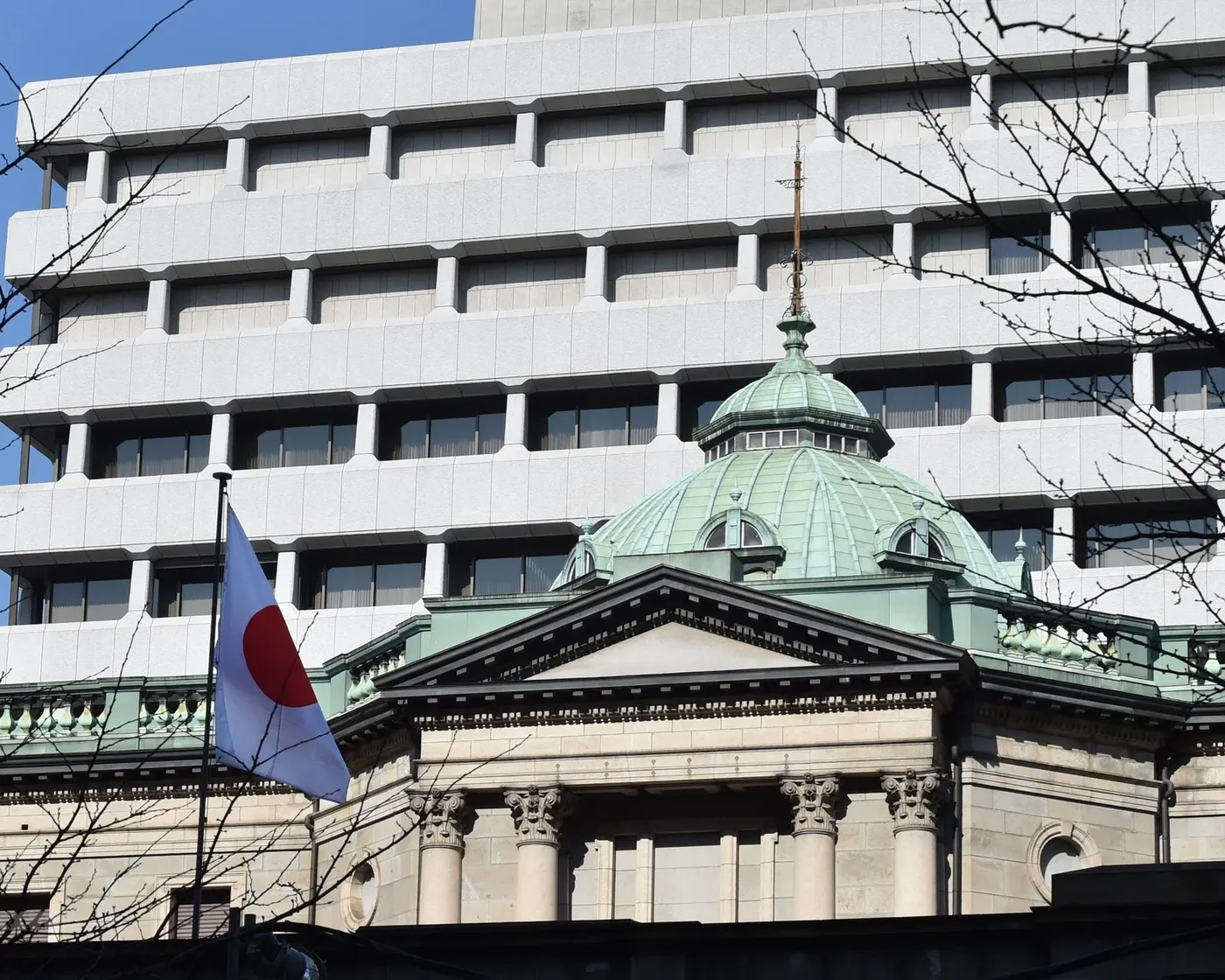

On September 18, the Bank of Japan (BOJ) raised its policy rate by 0.25 percentage points, from 1% to 1.25%, the highest level since 1995.CNBC It was also the shortest gap between two hikes since 1990, just three months after the previous increase instead of the usual six.Stockbiz
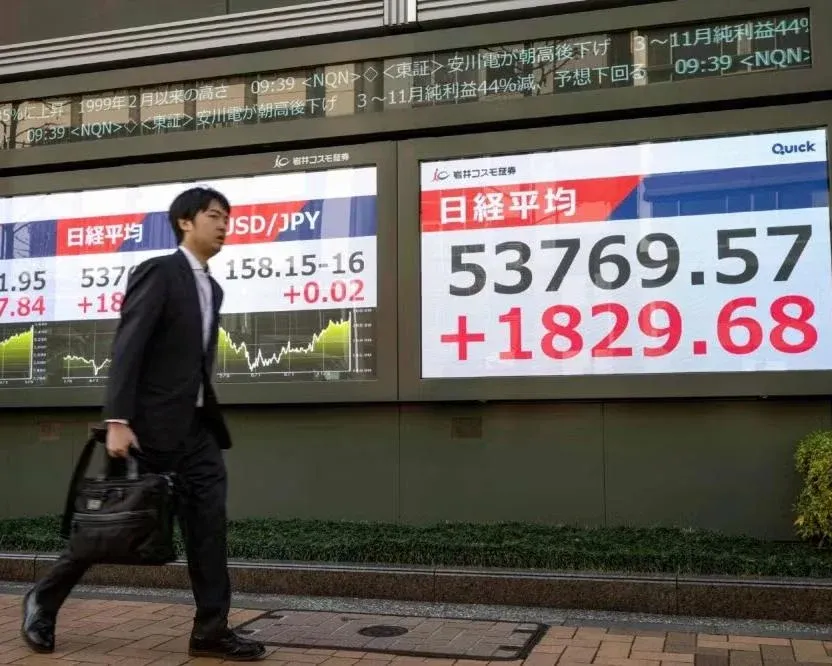
Textbook economics says that when a central bank raises rates, its currency strengthens, bond yields climb and stocks come under pressure. On September 18, all three of Japan's markets moved the opposite way. The dollar briefly jumped 1.3% to 158.05 yen, a two-week high, before closing the New York session at 156.725 yen, still up 0.5% on the day.Yahoo Finance Japan's 10-year government bond yield fell 4.9 basis points to 2.947%.CNBC And the Nikkei 225 rose 882.70 points, or 1.38%, to 65,018.95.NewsOnJapan
On the surface, that looks like the reaction to a rate cut, not a hike. But the bigger picture has nothing to do with the number 1.25% itself. It comes down to the gap between what the BOJ actually did and what investors had already bet on weeks earlier.
The 0.25-point hike was priced in weeks ago
To understand why the yen weakened on the very day the BOJ raised rates, rewind two weeks. In early September, the yen had already strengthened to its highest level since February, as traders bet the BOJ was about to embark on a series of rate hikes.Reuters via Yahoo Finance From 160.33 yen per dollar on September 2, the rate fell to 153.18 yen by September 8. In a single week, the yen clawed back more than 7 yen against the dollar.
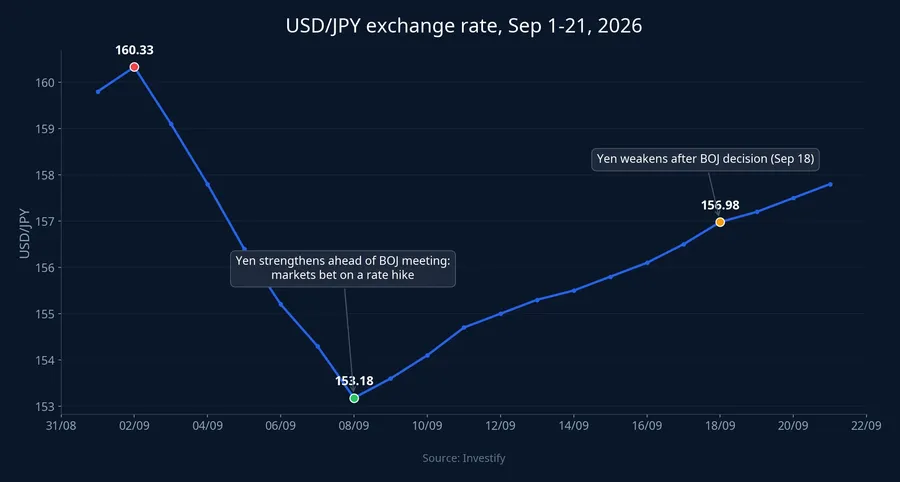
By the time the meeting arrived, almost nobody was surprised by the decision itself. Economists surveyed by Reuters had correctly forecast the 0.25-point hike.CNBC That's the classic priced-in mechanism at work: once news has already been bought into the price, its official confirmation carries no further push. What was left for the market to price was a harder question: how fast the BOJ would move from here. Stockbiz noted that the 25-basis-point hike itself was "no longer fresh enough information to push the yen and bond yields higher," and what investors really cared about was the pace of the tightening cycle ahead.Stockbiz
The signal markets wanted and didn't get
The question about future pace got answered with a package of signals that leaned dovish.
The clearest signal was the vote itself. The decision passed 7-2, with board members Toichiro Asada and Ayano Sato dissenting on the grounds that core inflation was still below 2% and the economy wasn't strong enough to justify the hike.CNBC Data released that same morning showed core inflation slowed to 1.7% in August from 1.8% in July, still below the 2% target. That gave the two dissenters fresh ammunition hours before the vote.CNBC
Hirofumi Suzuki, Chief FX Strategist at Sumitomo Mitsui Banking Corporation, told CNBC the two dissenting votes were "a surprise."CNBC Both dissenters lean dovish and were appointed earlier this year by Japanese Prime Minister Sanae Takaichi; an Oxford Economics analyst read the two votes as a sign Takaichi is not yet willing to bow to pressure from Washington for a faster pace of hikes.CNBC Reuters' pre-meeting survey had correctly named both dissenters, so the dissent itself wasn't entirely unexpected. What caught the market off guard was the full package of signals that came with it.
The second signal was what the BOJ didn't publish. Per State Street, this hike came without an updated economic outlook report, leaving the BOJ with no fresh forecasts to back up a hawkish message, and Oxford Economics noted the statement's language was nearly identical to July's outlook report.CNBC Ray Attrill, Head of FX Strategy at National Australia Bank, summed up the market's mood: the BOJ "clearly disappointed relative to expectations."Yahoo Finance
Put the two signals together and markets read one message: rates went up, but the fast tightening cycle investors had bet on since early September might not arrive as soon as expected. Those early-month yen bets lost part of their footing, and the yen sold off.
Bank stocks and 2-year yields show what markets are really pricing
Of the three reactions, the yen got the most attention. But two other gauges show more clearly what the market was repricing.
The first is the 2-year government bond yield, the maturity most sensitive to near-term policy rate expectations. After the decision, it fell to around 1.82%, meaning investors had trimmed their expectations for how many more hikes are coming.NewsOnJapan
The second is bank stocks, the group that benefits most directly from higher rates through wider lending margins. Yet on the afternoon of September 18, major banks including Mitsubishi UFJ, Sumitomo Mitsui, Mizuho and Resona all traded lower.NewsOnJapan The group with the most to gain from higher rates sold off on the very day rates went up. Japanese market sources attributed the move mainly to reduced expectations for a fast hiking path: investors are drawing a line between a single rate hike and an entire tightening cycle.
The yen faced an additional external pull. Two days before the BOJ meeting, the US Federal Reserve raised rates to a range of 3.75-4% and signaled more hikes ahead.Dân Trí Per CME's FedWatch tool, the probability of another 0.25-point Fed hike in October rose to roughly 55%, up from 27% a week earlier.Yahoo Finance
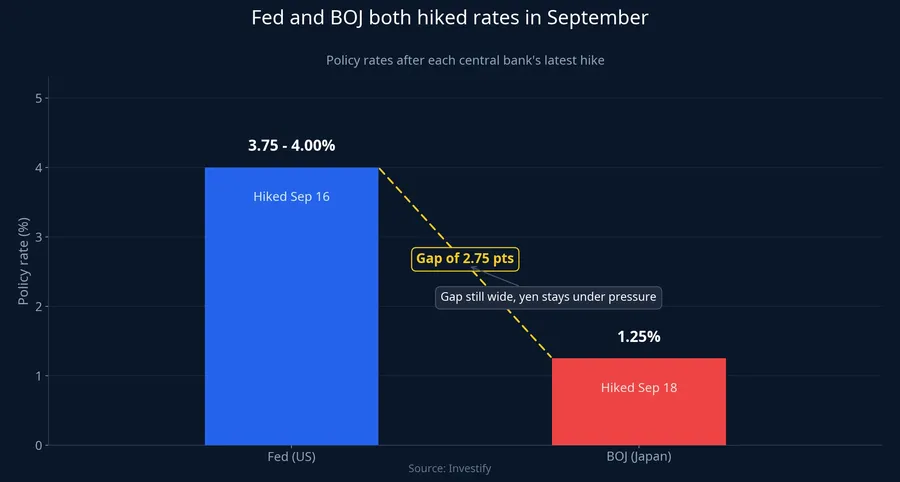
Per Stockbiz, the rate gap between the two countries continues to fuel carry trades — borrowing cheap yen to invest in higher-yielding assets — and that flow keeps pressuring the yen even after a BOJ hike.Stockbiz Pressure on the yen is therefore coming from two overlapping sources: a hawkish Fed on one side, a BOJ short on fast-hike signals on the other. It's the second factor that explains why the yen weakened on the very day the BOJ raised rates: the gap with the US had already existed well before that.
The Nikkei's gain owes only partly to the BOJ
Of the three reactions, the Nikkei's gain is the weakest evidence for the BOJ story. The index opened higher at the start of the session, after US tech stocks rallied overnight and the Philadelphia semiconductor index jumped more than 3%, while falling oil prices also helped sentiment.NewsOnJapan
The rally was also narrow. While the Nikkei rose 1.38%, the broader TOPIX index fell 0.07% to 4,091.14.NewsOnJapan The gain was concentrated in a handful of heavily weighted Nikkei names tied to AI and semiconductors, including Advantest, Tokyo Electron and SoftBank Group.
The BOJ's decision still played a role, since a weaker yen boosts the yen value of exporters' foreign-currency revenue, and lower yields eased some pressure on growth-stock valuations. But if you had to pick one gauge that best reflects the BOJ's actual message, bank stocks and 2-year yields give a much cleaner read than the Nikkei.
Governor Ueda leaves the door open for faster hikes
The market's reaction on September 18 doesn't mean the BOJ has turned dovish. At the post-meeting press conference, Bank of Japan Governor Kazuo Ueda said whether the BOJ hikes sharply or at consecutive meetings depends on whether Japan faces significant inflation risk, and that "nothing should be ruled out."AOL He also said the BOJ's goal has shifted from pushing inflation up to 2% toward keeping it stable around that level and preventing prices from overshooting the target.
The same day, per Nikkei newspaper cited by Reuters, Japanese officials checked exchange rates with banks, a move typically seen as a precursor to intervention.Yahoo Finance The dollar pared its gains after that report, but still closed the New York session up 0.5% against the yen. Japan had already intervened alongside the US to buy yen in late July, so markets aren't treating intervention risk as an empty threat.NewsOnJapan
What this means for Vietnamese investors
The USD/VND rate barely moved around this event: VND 26,012 on September 17, VND 25,999 on September 18, then VND 26,006.5 on September 21. The direct transmission channel from the BOJ's decision to Vietnam is therefore unclear in the near term. The bigger risk sits in the opposite scenario: if the BOJ speeds up its hiking path in the future and the yen strengthens quickly, unwinding cheap-yen carry positions could push global investors to cut risk assets, pressuring capital flows into emerging markets.Stockbiz
The biggest takeaway from Japan's story for Vietnamese investors is how to read a rate decision. A rate decision only moves prices by the gap between what happened and what the market had already priced in. When a decision is fully anticipated, price reacts to everything that comes with it: the voting split, the language of the statement, whether a new forecast accompanies it or not. In practice, when reading a Fed or State Bank of Vietnam decision, the first question to ask is what the market had already expected. Tools like FedWatch show how much probability is baked into price already; from there, the most rate-sensitive gauges — short-term yields or bank stocks — reveal whether the market is reading the decision as faster or slower than planned. The headline rate number is often the least new piece of information that day.
Dates to watch
Tokyo's stock market is closed from September 21 to 23 for a holiday. The reopening session on September 24 is also the day the 1.25% rate officially takes effect, and it will be the first session Japanese stocks trade after Governor Ueda's press conference.Stockbiz Stockbiz notes that if USD/JPY approaches the 160 level, the odds of Japanese government intervention in FX markets will move back into focus.Stockbiz
The most important date is the BOJ's October 29-30 meeting, when the economic outlook report missing from this round will finally be published; Ueda has said the BOJ will quantify the impact of its rate hikes in that quarterly report.StockbizAOL If that report raises inflation forecasts and the dissent count shrinks, markets will need to reprice toward a faster path, giving the yen room to strengthen and Japanese bank stocks a chance to recover. If the board stays split and forecasts hold steady, the rate gap with the US will remain the dominant force pulling the yen back toward the 160 level.
Whichever scenario plays out, the lesson from September 18 still holds: what drives a market's reaction is the path a decision reveals, not the headline rate number, which is usually priced in well before it's announced.