
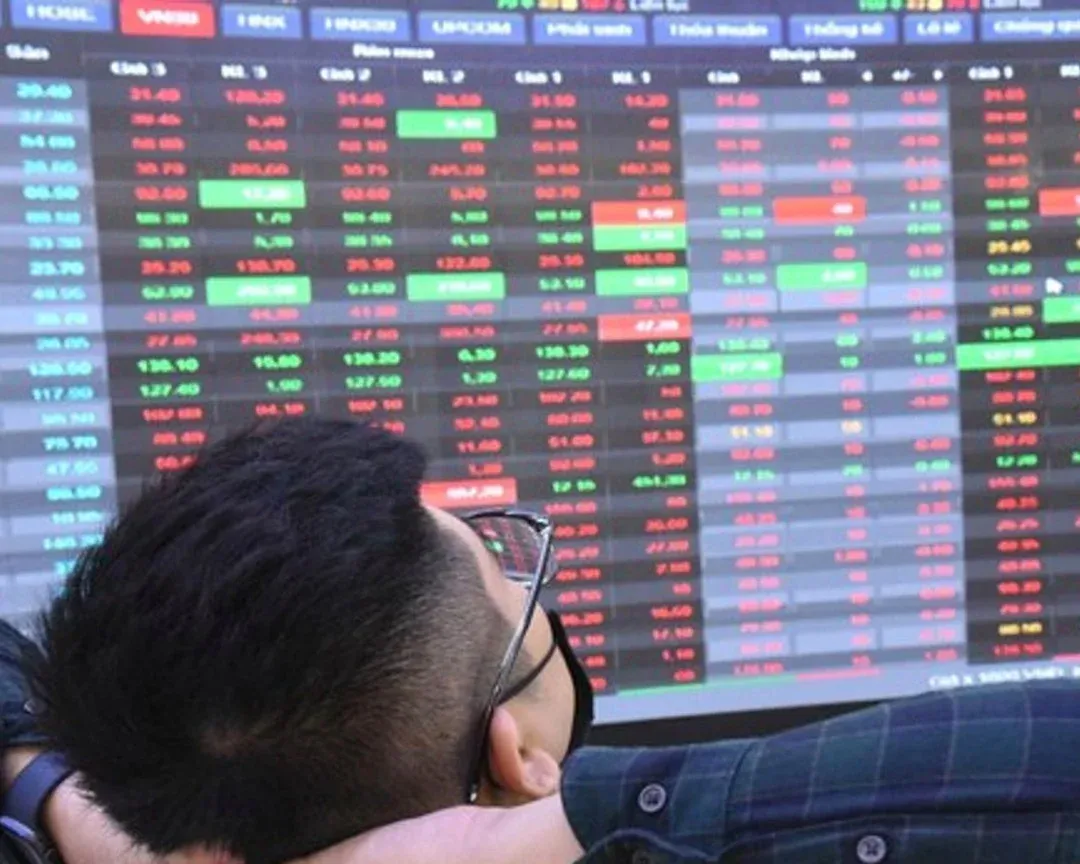

Starting today, Monday, September 21, 2026, FTSE Russell's decision to move Vietnam's stock market from Frontier to Secondary Emerging status officially takes effect.BNews But the most revealing swing in this story actually happened the previous Friday afternoon, packed into just fifteen minutes.
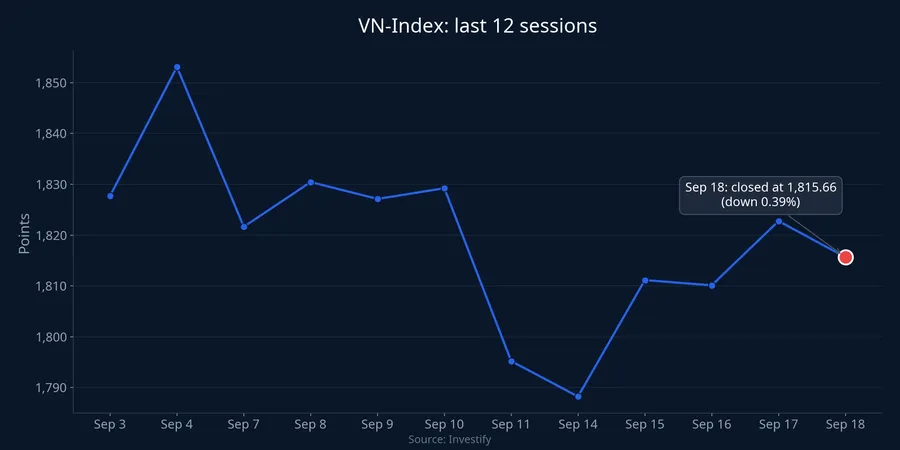
On September 18, the VN-Index climbed as high as roughly 1,841 points and held green for nearly the entire session. Then came the closing call auction (ATC): the index reversed and closed at 1,815.66 points, down 7.11 points, or 0.39%.Người Quan Sát Measured from the intraday high, more than 25 points vanished in a span shorter than a halftime break.
Why it all happened in fifteen minutes
Understanding how index funds operate explains why the swing concentrated at the close. Index funds are not scored on absolute returns but on how closely they track a benchmark, and that benchmark is calculated off the closing price. The mechanics are rigid: every buy, sell, or drop order tied to a rebalancing cycle must execute during the ATC auction of the final session before the basket's composition changes. For this cycle, that session was September 18.
What made that Friday unusual is that four different groups of funds closed their books on the same day. Per a compilation by Elibook drawing on a BSC Research report, 28 index funds track the FTSE GEIS suite with combined assets above USD 1.16 billion, on top of Vietnam's three largest foreign ETFs: VanEck (USD 522 million), Xtrackers (USD 384 million), and Fubon (USD 350 million).Elibook
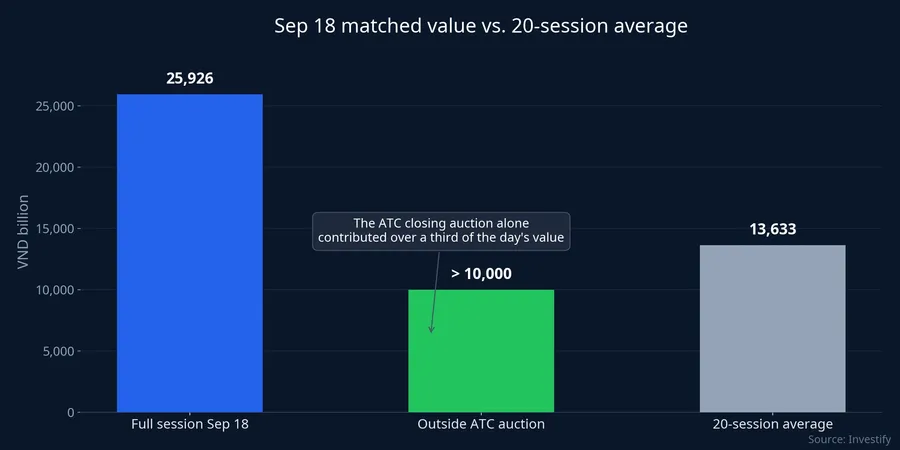
The liquidity figures reflect that pressure clearly. Matched value on HOSE hit VND 25,926 billion on September 18, the highest in roughly four months.Người Quan Sát But strip out the closing auction, and the rest of the day's matched value was just over VND 10,000 billion,Người Quan Sát below the prior 20-session average of VND 13,633 billion. In other words, the four-month liquidity record was manufactured by a single auction, not by a genuinely busy trading day.
Three explanations, and why the data points to mechanical noise
There are at least three ways to read the September 18 decline. The first is that funds were forced to sell under weight-cap rules, unrelated to any company's fundamentals. VIC is the clearest case: the stock exceeded its weight cap in the portfolios of Fubon, Xtrackers, and VanEck alike, forcing all three to trim, and foreign investors net-sold VND 1,074 billion of VIC over the week even as its share price barely moved.Người Quan Sát The second is that domestic investors had accumulated shares ahead of the rebalancing to flip to the funds; when that pre-positioned supply outweighed what foreign investors could actually absorb, the excess spilled out right at the close. The third is macro variables: a hawkish Fed, rising oil prices, and deposit rates still elevated.
The data leans heavily toward the first two. Market breadth on September 18 still favored buyers, with 182 gainers against 126 decliners,Người Quan Sát while foreign investors net-bought more than VND 1,200 billion that session, lifting the week's net buying to roughly VND 2,400 billion.Dân Trí A genuine sell-off rarely leaves that kind of picture: most stocks still rose, foreign investors were still net buyers, and the entire index decline was confined to the ATC auction. That is exactly where index-fund rules require the orders to appear. The macro variables are still worth watching, but they don't explain why the index stayed green all day only to turn red in the final fifteen minutes.
Four phases: the heavy lifting comes in 2027
This is the detail easiest to miss in upgrade coverage. Vietnamese equities don't enter the global index in one shot. FTSE splits the weight increase into four phases, cumulative: 10% from September 21, 2026, rising to 30% by March 22, 2027, to 65% by June 21, 2027, and reaching 100% by September 20, 2027.Báo Chính Phủ
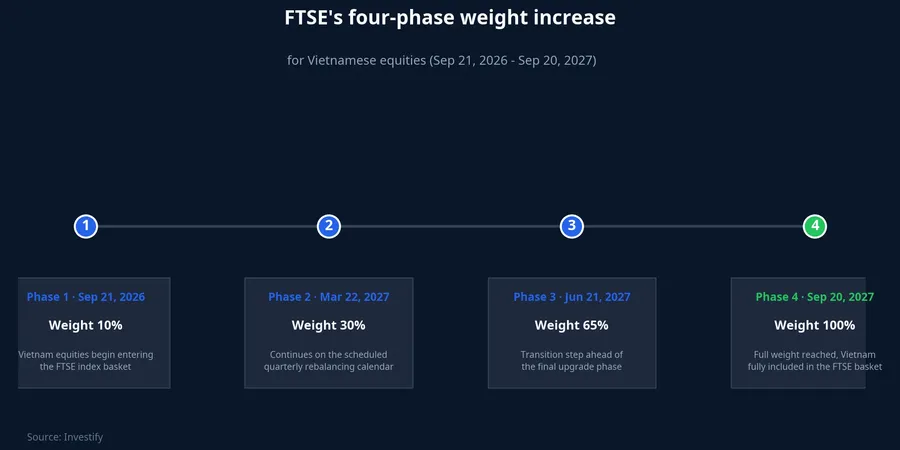
The dollar figures make the picture even clearer. The first phase taking effect today corresponds to roughly USD 200 million in passive inflows by BSC's estimate, or about VND 5,200 billion at the 25,999 VND/USD exchange rate, smaller than a single session's average matched value for the VN-Index basket. The two largest phases, each around USD 700 million, don't land until June and September 2027, nearly a year away.
The initial-phase basket comprises 27 stocks, all listed on HOSE.FireAnt Three large-cap names (VCB, VIC, and VHM) sit alongside three mid-caps (BID, HPG, and VPB), with the remaining 21 in the small-cap tier. By sector, banks contribute 8 names and financial services another 7, meaning more than half the basket sits in the financial sector.
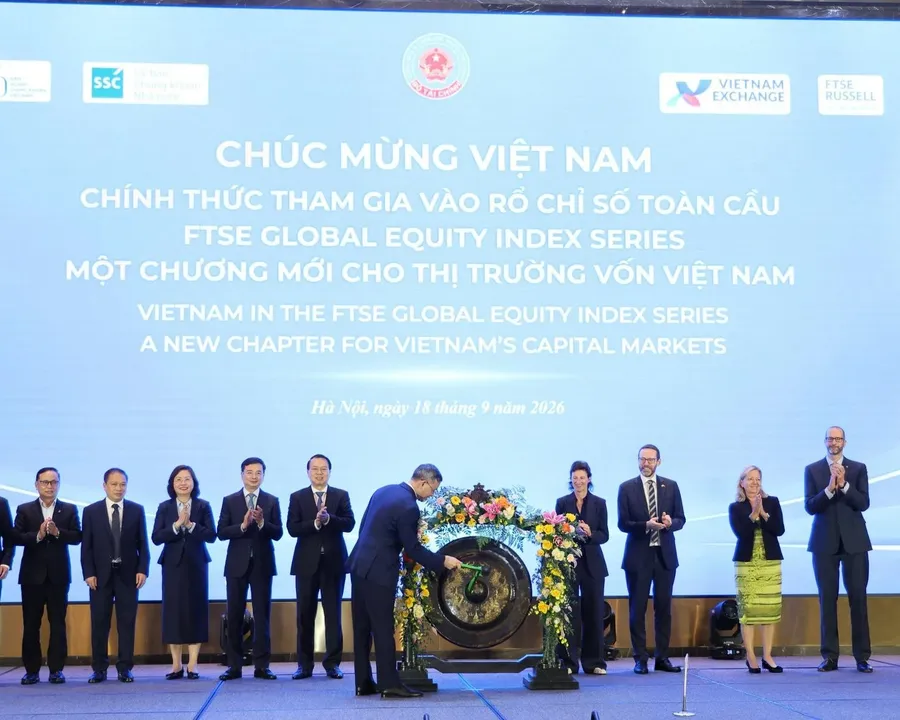
The ceremony in Hanoi, attended by representatives of the Ministry of Finance, the State Securities Commission, and FTSE Russell, is simply a formal confirmation of a decision already announced earlier. The real work, actual passive capital flowing in at the target weights, only begins today, and it will stretch out over the coming year.
Three branches for the week of September 21-25
Most of the rebalancing order flow from this first phase has already been absorbed in the September 18 session, so this week is no longer under the technical pressure of the rebalancing event itself. It's a week for testing whether real money follows. The three branches below have distinct triggers worth tracking rather than guessing.
Recovery branch. The group hit hardest by lopsided selling in the September 18 close (FPT, CTG, MBB, ACB, all down more than 3%) could claw back ground in the first few sessions of the week if the VN-Index decisively clears resistance at 1,860 points alongside continued foreign net buying.Công Luận The logic: ATC sell orders were rule-mandated, so once that pressure lifts, prices have grounds to revert toward their pre-rebalancing equilibrium.
Choppy-range branch. This is currently the one most brokerages lean toward. The index consolidates between 1,790 and 1,850 points, liquidity returns to normal levels, and the market rotates sharply by sector, provided the VN-Index holds support at 1,800 points while foreign investors don't turn heavy net sellers again.Công Luận The logic: most of the upgrade expectation is already priced in, leaving limited additional upside from the news itself.
Deep-pullback branch. The index breaks below 1,790 points and retreats toward 1,768 and then 1,740, if today's session (Sep 21) extends the decline alongside foreign investors flipping back to net sellers. Thinly traded names where index funds hold outsized weight (MCH, SSB, and VPL) are most exposed to sell pressure once the news is out. This risk has precedent: existing ETFs in Vietnam have seen net outflows of more than VND 5,400 billion since the start of 2026, according to a special report from ASEAN Securities.ASEAN Securities

The signals to watch, not just the index level
The closing index level isn't the best data point to read this week, since it blends mechanical effects with genuine capital flows. Two figures worth watching side by side are matched value per session and the foreign net buy/sell position: HOSE matched value returning above VND 20,000 billion without any rebalancing event, alongside foreign investors holding a net-buy stance, would signal that new money has genuinely arrived. Conversely, if matched value slides back to around VND 13,000 billion, roughly last month's average, the market is still trading on old liquidity, and today's milestone hasn't changed anything in terms of real capital flow yet.
On a longer horizon, the date to mark is March 22, 2027, when the cumulative weight jumps from 10% to 30%. That will be the first time the scale of scheduled inflows is large enough to move liquidity on its own, rather than simply producing another fifteen-minute auction like the one just witnessed.