
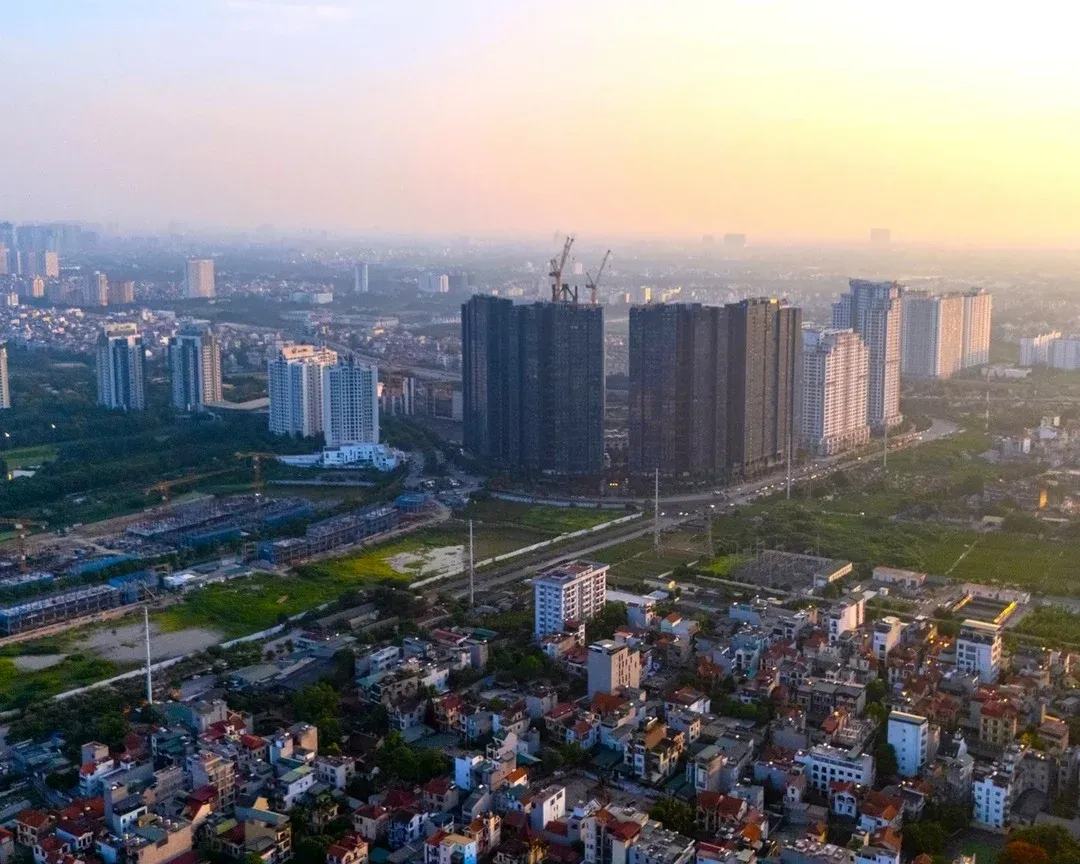

On September 18, 2026, Vietnam's government issued Resolution 278/NQ-CP following its monthly legislative session. The resolution sets apartment building usage terms according to structural lifespan and instructs the Ministry of Construction to finalize the amended Housing Law, clarifying both the right to keep using the land for rebuilding and the financial obligation that comes with new construction.VTV
The news was instantly flattened into one line: once the lifespan ends, you lose the apartment. That reading is wrong. But the opposite reading, that an apartment deed holds its value forever just like a plot of land, is wrong too. The real picture sits between the two, and it comes with a specific number that most buyers' math is missing.
What the popular belief gets right: ownership stays intact
To be fair to homebuyers first: Resolution 278 does not take away apartment ownership. Speaking to Dân Trí on the morning of September 20, Lê Hoàng Châu, Chairman of the Ho Chi Minh City Real Estate Association (HoREA), stressed the need to separate a building's "usage term" from an owner's "ownership term." Setting the usage term by structural lifespan does not mean residents only own their apartment for a fixed window of time.Dân Trí Lawyer Hoàng Hà of the Ho Chi Minh City Bar Association makes the same point: apartment buyers also hold a share of common property and land-use rights, and a design-based usage term does not automatically terminate ownership.Dân Trí The draft amended Housing Law itself has already dropped the term "time-limited apartment" from its definitions section, precisely to head off this misreading.Người Quan Sát
Vietnam is therefore not following Singapore's model, where over 80% of the population lives in HDB flats on 99-year leases, and when the lease expires, both land and unit revert to the state at zero value.Vietstock In Vietnam, residential land is still granted long-term, so there is no countdown clock of that kind.

Where the popular belief goes wrong: an apartment isn't one uniform asset
The error isn't about ownership. It's the default assumption that what you're holding is one uniform block that keeps its value over time. In practice, an apartment consists of two components with very different lifespans: land-use rights, split proportionally among hundreds of owners in the same building and held long-term, and the structure itself, which has a finite life.
Under the direction set by Resolution 21-NQ/TW, issued July 28, 2026, newly built apartments carry a usage term tied to structural lifespan, graded by building class: Class 1 over 100 years, Class 2 between 50 and 100 years, and Class 3 between 20 and under 50 years.Dân Việt
Design lifespan and actual lifespan can diverge sharply. Châu points to a building on Võ Văn Kiệt street, in what used to be District 1, constructed around 1996: its design lifespan was long, yet it had to be demolished after just over 20 years due to serious deterioration. Going the other way, the Ho Chi Minh City Post Office has been standing for decades in good condition. Construction quality and maintenance, not the number written in the design file, are what actually decide a building's real lifespan.


The number missing from buyers' math
This is the actual change Resolution 278 introduces. The current 2023 Housing Law imposes no financial obligation on owners once a building reaches the end of its usage term. Resolution 278 requires the draft law to spell that obligation out.
The mechanism being proposed calculates each owner's contribution as their apartment's floor area multiplied by the cost of new construction per square meter at the time of demolition. An owner who opts out of contributing is instead compensated for their share of land-use rights and hands the land back.
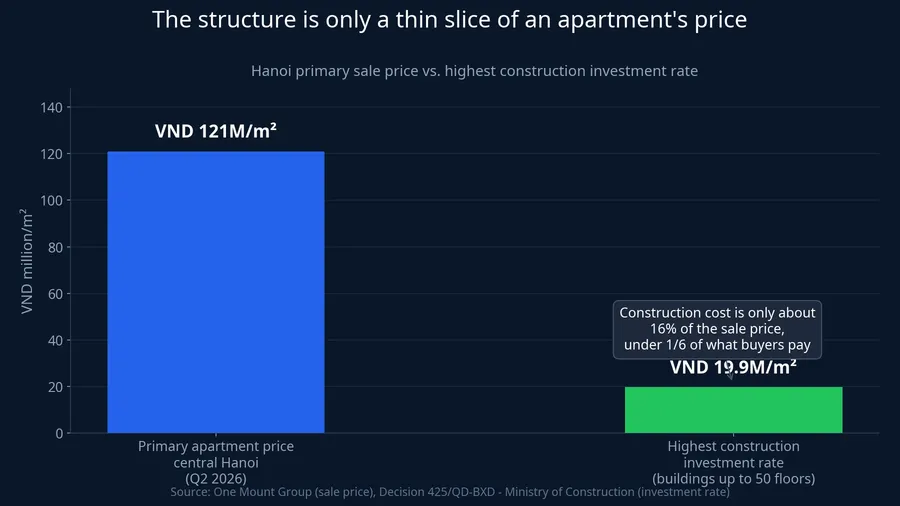
That construction cost figure is already public. Under Decision 425/QD-BXD, dated March 30, 2026, the highest construction investment rate for apartment buildings up to 50 floors is VND 19.9 million/m², while buildings 36-50 floors with basements range from VND 15.6-18.3 million/m².VnEconomy Applied to a 70 sqm apartment, the reconstruction contribution under this rate works out to roughly VND 1.1-1.4 billion. That's an illustrative calculation at 2025 prices; the real figure will be set at the time of demolition, decades from now, and will almost certainly be higher.
One misconception needs clearing up immediately: the 2% maintenance fund cannot cover this. According to HoREA, the 2% fund only covers minor repairs over about 20 years: it cannot fund a full structural rebuild.Vietstock
Why this clause exists
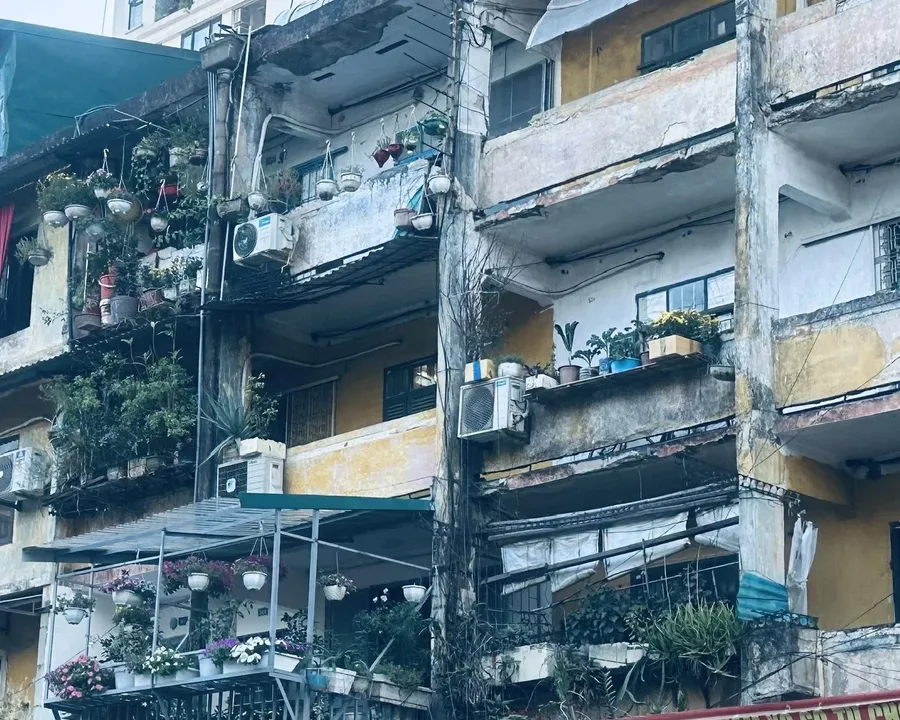
The financial obligation isn't meant to squeeze homebuyers. It exists because the old mechanism has been stuck for years. Per local authority reports as of the end of November 2025, Vietnam has roughly 2,930 old apartment buildings nationwide, concentrated mainly in Hanoi (2,160), Ho Chi Minh City (474), and Hai Phong (178); 1,589 of them have already been quality-inspected.CafeF The biggest bottleneck in renovating this stock has always come down to one question: who pays to rebuild. Resolution 278 answers it by putting the owner's name on the bill. That isn't the only fix needed, though: compensation-ratio disputes between residents and developers, height caps in inner-city zoning, and drawn-out legal procedures all play a role. Still, the funding source is the one bottleneck a single legal clause can pin down decisively, which is why it's being tackled first.
What changes in an investor's comparison
For individual investors treating apartments as a wealth-building channel, the right adjustment isn't to avoid apartments. It's to split the valuation into two separate lines. The first is the land: it holds long-term and captures the full upside of the area's land-price appreciation. But the key difference from raw land lies in the denominator: a single plot has one owner, while the land under a 30-story tower is split among hundreds of units.
The second line is the structure, plus a contingent liability due at the end of its life. Average primary apartment prices in central Hanoi hit VND 121 million/m² in Q2 2026, up 46% year-on-year, per One Mount Group data.TheLeader Against the highest construction investment rate of VND 19.9 million/m², the structure accounts for under one-sixth of what buyers actually pay. The reconstruction bill doesn't wipe out the asset, but it is a real cost that nobody has yet folded into the yield calculation when buying an apartment.
An asset tied to a finite lifespan doesn't lose value in a steady line. It drops in steps. In Singapore, HDB flat values fall sharply once a lease has under 60 years remaining, because later buyers struggle to get bank financing. China took a different route, letting owners pay a renewal fee to extend 70-year land-use rights when they expire.FireAnt Vietnam is charting a third path: keep the land long-term, and shift the structure's lifecycle cost onto the owner.
Two things worth watching
Resolution 278 is a governance directive, not a binding legal instrument. It assigns work to the Ministry of Construction; the actual binding content will sit in the amended Housing Law once the National Assembly passes it, expected to take effect March 1, 2027. The evidence available today isn't enough to say whether the final scope will be broad or narrow, so what follows is a specific watch list, not a prediction.
The first item is the transition clause. The current draft limits the renovation mechanism to buildings constructed in 1994 or earlier. Châu has argued it should apply to all apartment buildings built before the law takes effect. This clause determines which group a given household's current apartment falls into.
The second item is how the usage term gets determined. The latest draft calculates it purely from the design file, while earlier drafts combined that with actual inspection results. The Võ Văn Kiệt building case shows these two methods can diverge by decades on the very same structure.
If the version submitted to the National Assembly keeps both provisions as they stand, the group facing direct impact in the near term is buyers of newly built apartments after the law takes effect, while residents of older buildings are mainly affected through secondary-market price expectations. If the scope is broadened along the lines HoREA is proposing, the entire apartment market currently trading would need to add a new cost line to its math.