
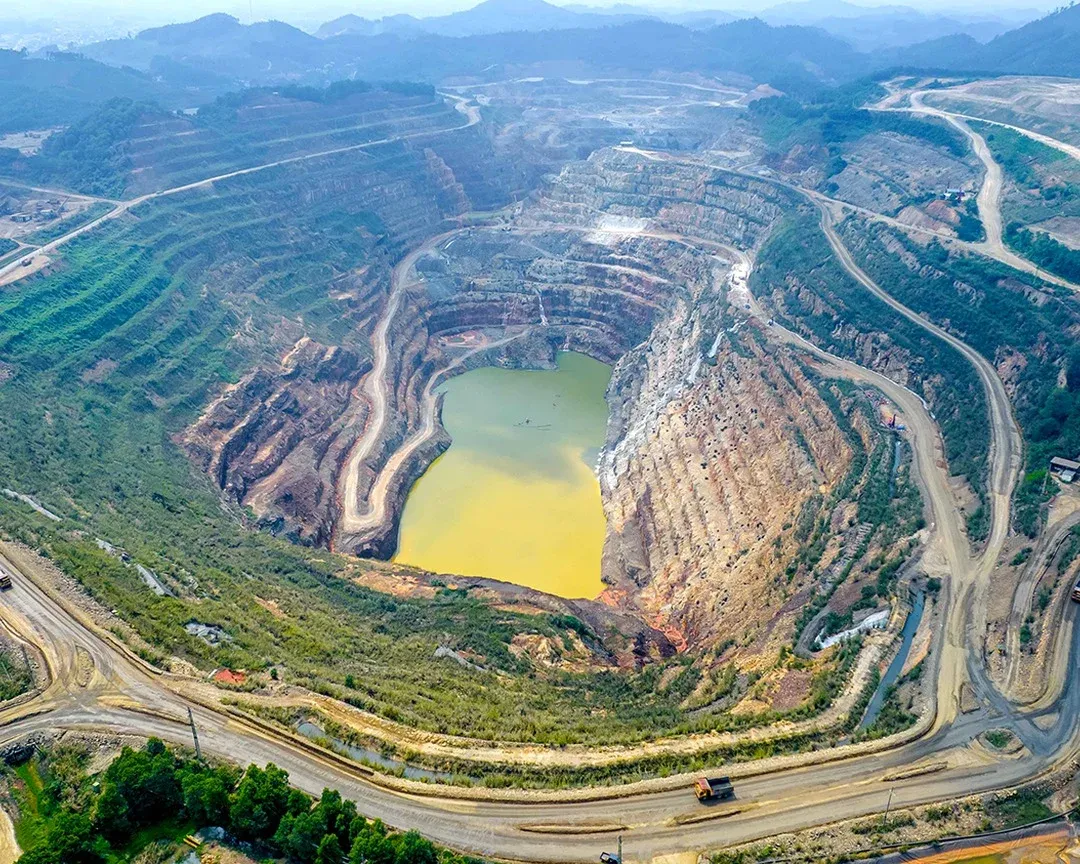

Today, September 17, Masan High-Tech Materials (UPCoM: MSR) locked its shareholder record date for a 10% cash dividend, or VND 1,000 per share, worth roughly VND 1,100 billion in total and expected to hit shareholder accounts on September 24.Tinnhanhchungkhoan It's the company's first-ever cash dividend, arriving after more than a decade and over $700 million invested to build a chain from ore extraction at Núi Pháo (Thái Nguyên province) to domestic tungsten refining.Znews In other words, Vietnam's largest tungsten mine has just turned into cash flowing back to shareholders for the first time.
The $7.6 billion figure everyone is misreading
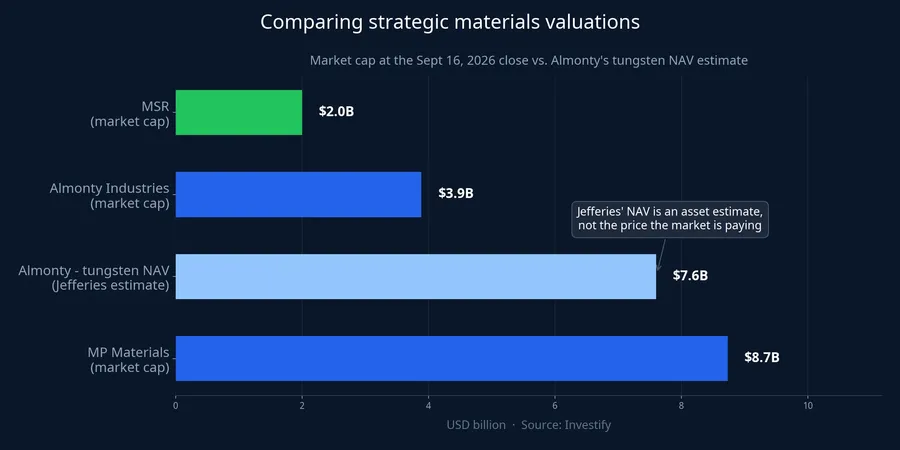
Last week, tungsten investors were passing around a striking number: investment bank Jefferies estimated that the tungsten business of Almonty Industries, a Canadian company listed on Nasdaq that owns the Sangdong mine in South Korea and the Panasqueira mine in Portugal, is worth roughly $7.6 billion, against a backdrop where China controls about 80% of global tungsten supply.Znews
Plenty of articles have set that figure next to MSR's market cap to conclude the stock is cheap. That comparison skips an important detail: $7.6 billion is an analyst's asset valuation, not the price the market is actually paying for Almonty. At the September 16 close, Almonty's actual market cap was just $3.89 billion, roughly half of what Jefferies assigned to its tungsten segment alone.Stockanalysis
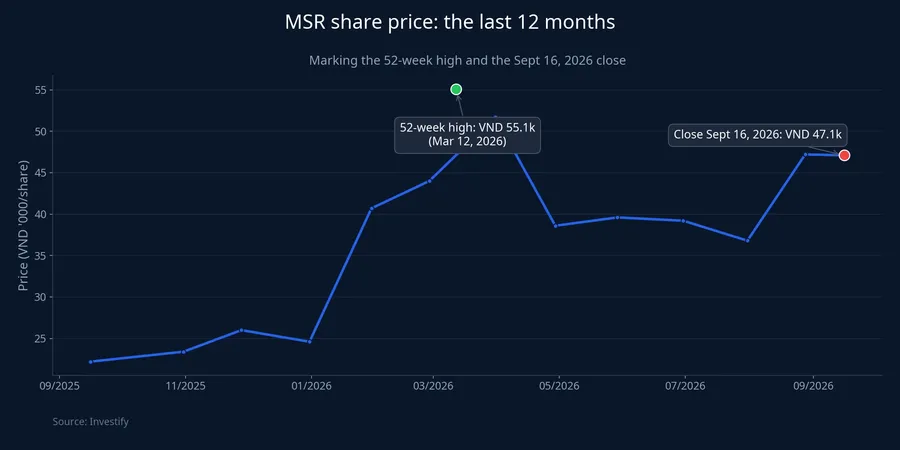
So what's the real picture? At the same close on September 16, MSR finished at VND 47,100 per share, a market cap of VND 51,802 billion, or about $2.0 billion. Another strategic-materials peer, MP Materials, is valued at $8.73 billion.Stockanalysis The gap between MSR and Almonty is therefore only about 2x, not the 4x that the $7.6 billion comparison implies, though 2x is still a gap worth asking about.
The business itself is running counter to that gap
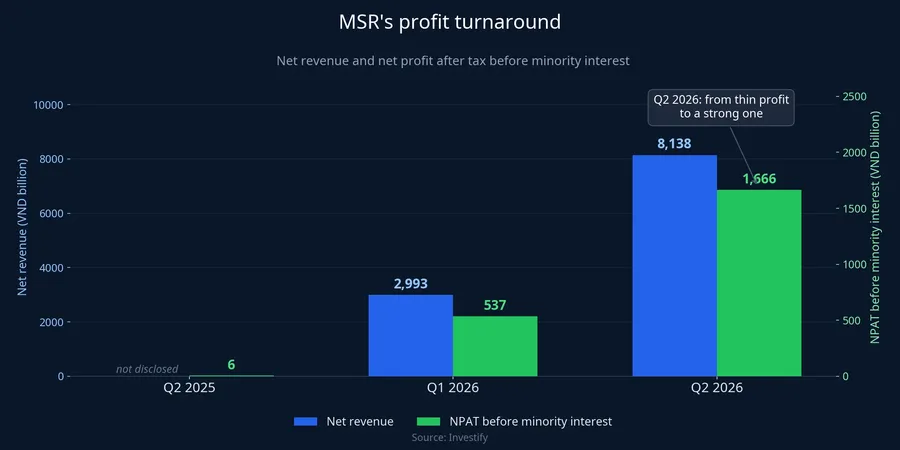
Look at actual operations, and MSR is not the smaller party. In Q2 2026, MSR's net revenue reached VND 8,138 billion, more than 5x the year-ago quarter, while net profit after tax before minority interest hit VND 1,666 billion, up from just VND 6 billion a year earlier.Báo Chính phủ For the first half, revenue reached VND 11,131 billion, up 270%, and profit of VND 2,202 billion already covered about 88% of the full-year plan in just six months.
Converted to dollars, MSR's first-half revenue comes to roughly $428 million. Almonty's trailing 12-month revenue is only $60.42 million.Stockanalysis Put differently, MSR's six-month revenue is about seven times Almonty's full-year revenue, while MSR's market cap is only half the size.
The valuation multiples reflect exactly that split. MSR trades at a P/E of 21.3x, while Almonty sits at 49.2x on the same-day data. The market is pricing Almonty on future expectations, and pricing MSR on profit that has already shown up on the income statement.
What MSR actually holds
MSR's assets break down into three buckets: resources, processing capacity, and the price cycle. On resources, Núi Pháo is one of the largest active tungsten mines outside China; the expanded Núi Pháo area and Núi Chiếm carry potential for another roughly 115 million tonnes of resources, enough to extend mining and processing for another 20-30 years if permitting is completed, according to the company.Znews
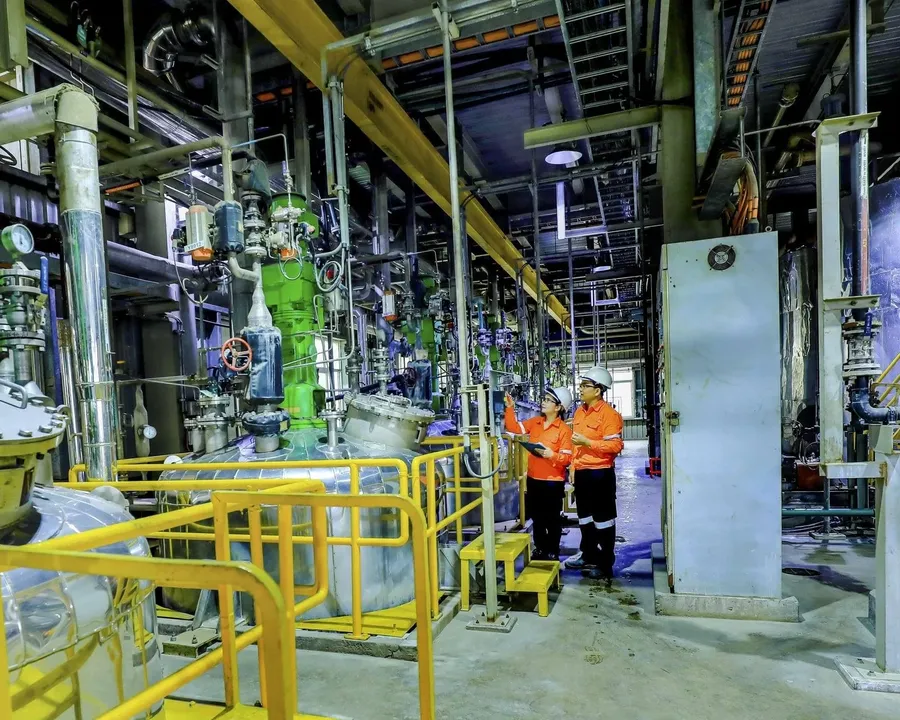
On processing capacity, MSR averaged about 21% of tungsten supply outside China from 2020 to 2025. In Q2 2026, processed ore volume reached 708,000 tonnes, up 29% year-on-year, refined output rose 91%, and the company is targeting tungsten oxide capacity of 8,000 tonnes a year by 2027 through a partnership with South Korea's GB Innovation.
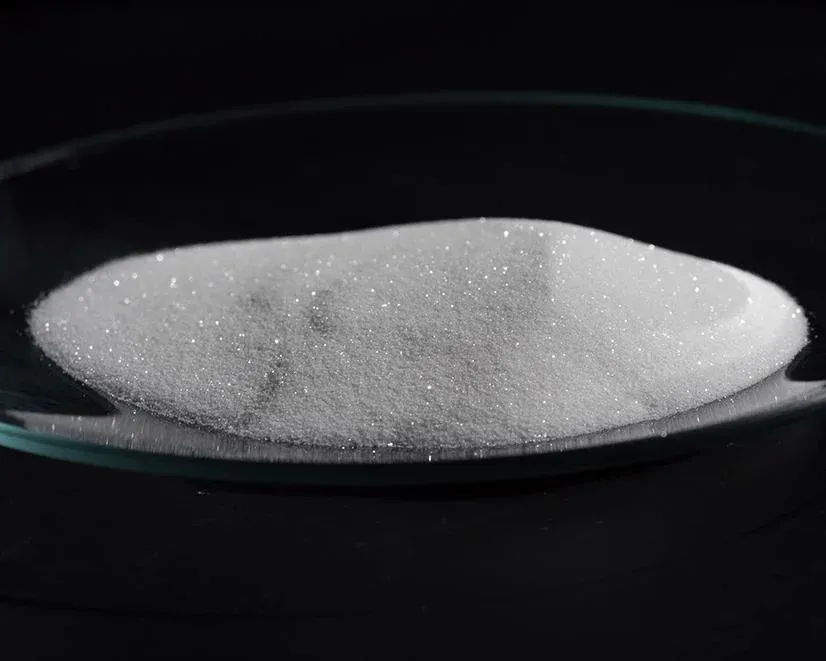
On the price cycle, the average APT price (ammonium paratungstate, an intermediate refined tungsten powder) in Q2 2026 reached $3,245 per mtu, more than six times the year-ago quarter. That single variable explains most of MSR's profit turnaround, and it's also the biggest risk variable for anyone holding the stock.
Policy tailwinds point the same direction. On September 14, the U.S. Department of Defense announced a committed $450 million investment in The Elmet Group, with an option to acquire up to 19.9% of the company, aimed at building domestic tungsten capacity.BBW In Vietnam, Politburo Conclusion 83-KL/TW, dated August 8, 2026, designated materials manufacturing as a foundational industry, with a target of raising the localization rate of some strategic materials to 50% by 2030.Báo Chính phủ
Why the gap hasn't closed
The easy answer is that the market simply hasn't caught up yet. But the data points to at least three other reasons, and all three sit on MSR's side of the ledger.
First, there's almost no float to buy. After selling a 2% stake in May 2026, Masan Group cut its MSR ownership to 92.89%, pushing free float up to 7.11%, or roughly VND 3,700 billion at the current market cap.Masan High-Tech Materials Over the last ten sessions, MSR traded an average of only about 1.6 million shares a day, worth roughly VND 80 billion, a liquidity level a mid-sized fund simply cannot build a position in, and the stock is still on UPCoM rather than HOSE.
Second, the balance sheet still carries heavy debt. At the end of Q2 2026, MSR's total borrowings stood at VND 13,288 billion, a debt-to-equity ratio of 1.56x. The company reports that net debt to EBITDA improved to 2.1x by the end of Q2 and expects to finish the year better than its 1.7x target.Vietstock The deleveraging path is clear, but the current debt load still leads institutional investors to discount the stock.
Third, and this is the point that gets the least attention, profit still depends heavily on purchased ore. Self-mined ore from Núi Pháo covers only part of MSR's raw-material needs; the rest comes from dozens of outside suppliers at meaningfully thinner margins, so when input costs climb alongside selling prices, the incremental profit gets eaten away. The share of internally sourced ore only improves meaningfully starting in 2027, once the transfer of the mining area is complete.
On the other side, Almonty is being priced for a pure growth story: the Sangdong mine is ramping up capacity, the company trades on Nasdaq with ample liquidity, and it sits squarely inside the group of suppliers the West is prioritizing. The valuation gap, then, isn't entirely a case of the market overlooking MSR. A meaningful part of it is a reasonable discount for liquidity, leverage, and raw-material structure.
Three signals worth watching
The nearest one is the Q3 APT price level. When MSR reports Q3 results in late October, comparing that quarter's average selling price against Q2's $3,245 per mtu will show whether the price cycle is still climbing or has already peaked.
Next is the exchange-listing timeline: to move to HOSE, Masan Group needs to keep lowering its ownership stake and expanding the free-float share, and every time the group announces another stake sale, it removes one more notch of the liquidity discount. Further out is the raw-material mix: starting in 2027, as self-mined ore volume rises, margins will depend less on purchased concentrate prices, and the quality of MSR's earnings will look meaningfully different from today.
Until those three things happen, the reasonable read is to treat MSR as an investment tied to the tungsten price cycle, not yet a business with stable cash flow through the cycle. Today's first cash dividend is evidence that the mine has started generating cash for shareholders. It is not yet evidence that this cash flow will stay steady once tungsten prices turn, and that distinction is exactly the line between buying MSR for the long-term story and buying it as a bet that tungsten prices keep rising.