
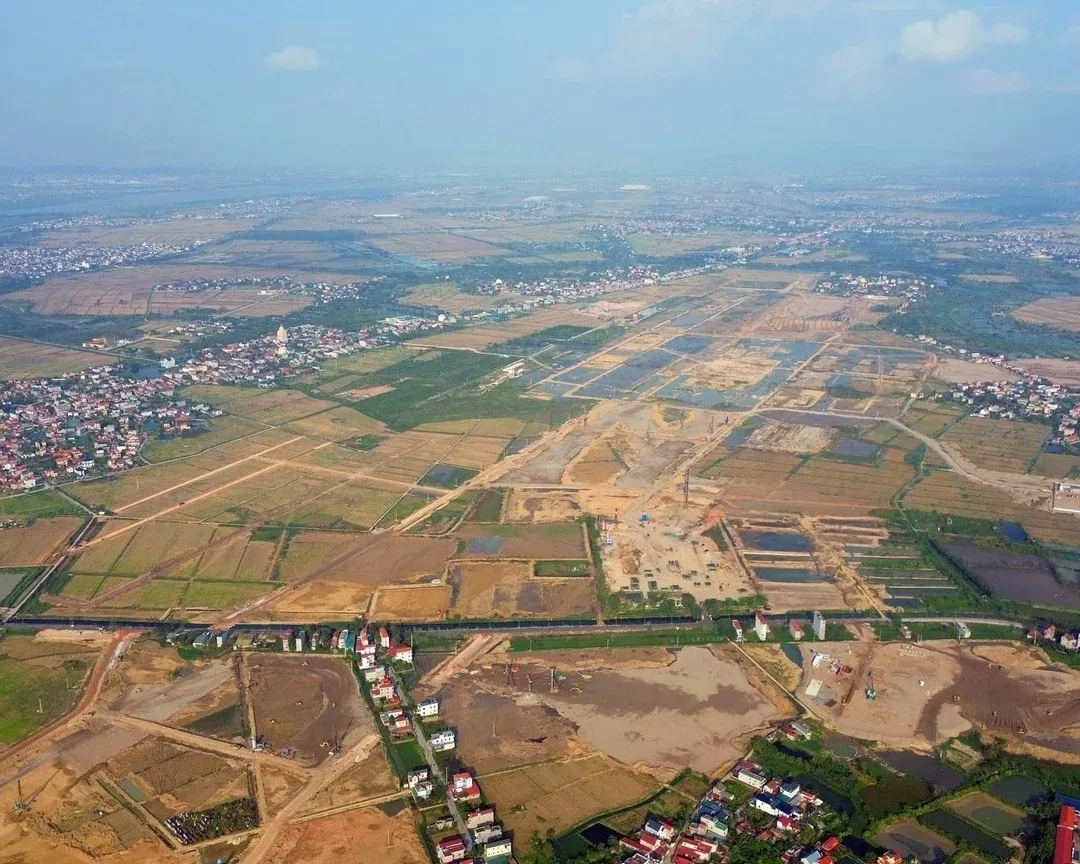

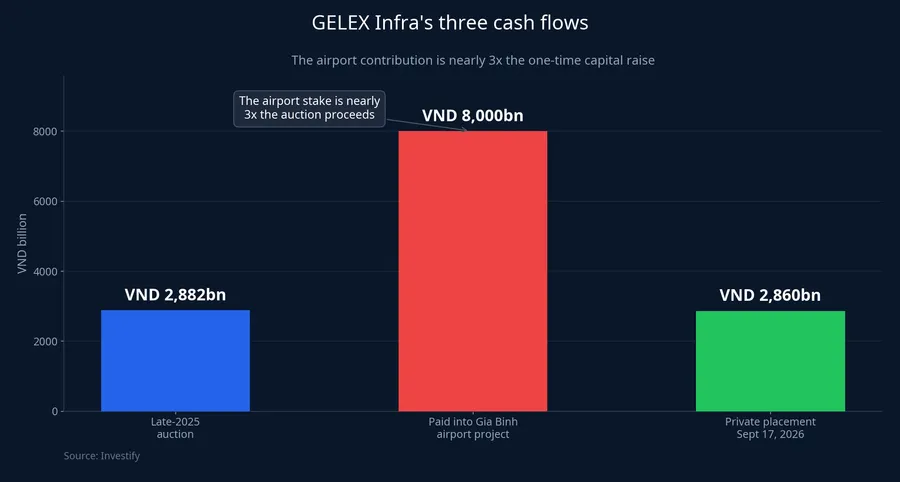
On September 17, 2026, shares of GELEX Infrastructure Joint Stock Company (GEL) hit the daily ceiling, up 6.99% to VND 29,100, the same session its board approved a private placement of 100 million shares.CafeF On the surface, this reads as good news: fresh capital, a positive market reaction. But set the expected VND 2,860 billion against the nine months that came before it, and the picture gets more complicated.
Before this placement, GELEX Infrastructure had already poured more than VND 8,000 billion into an airport project. That capital, under the original plan, was supposed to go toward repaying bank debt instead. The real question isn't whether the company can raise money. It's who ends up absorbing the cost of redirecting that capital.
Late 2025: a strong auction, a short-lived peak
On December 31, 2025, GELEX Infrastructure successfully auctioned 100 million shares on HOSE, raising VND 2,882 billion from 172 investors.VnExpress Subscriptions exceeded the offering by 23%, the average winning price was VND 28,820 per share, and charter capital rose to VND 8,900 billion as a result.
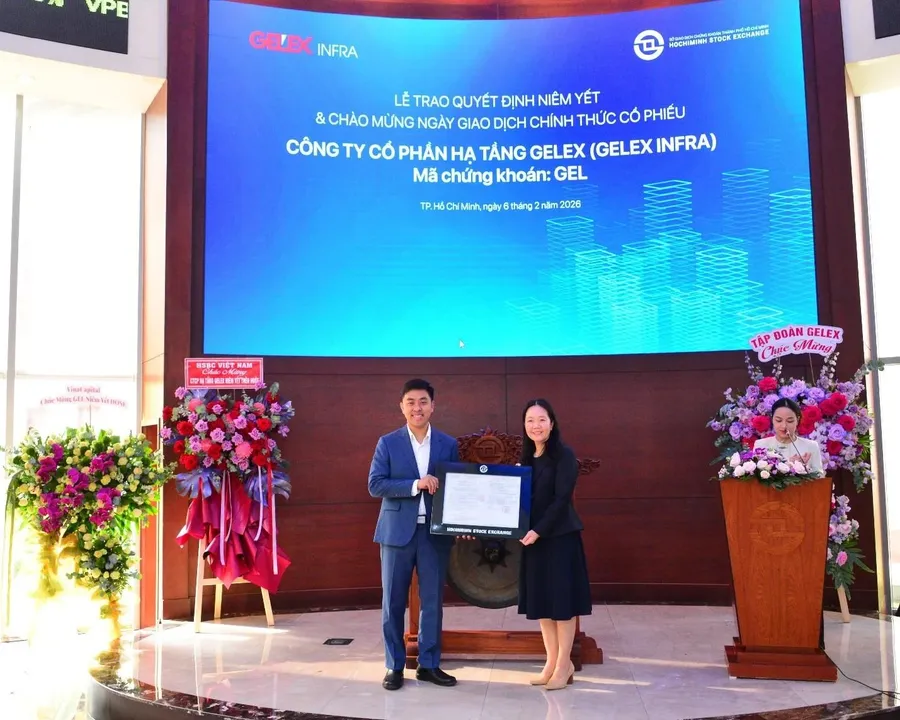
On February 6, 2026, GEL listed at a reference price of VND 28,800 and closed at the ceiling on its very first session. Three weeks later, on February 25, the stock hit a closing high of VND 40,600. That was the smoothest stretch of the whole story, and also the shortest. Right after that peak, the company made a capital decision far larger than the money it had just raised.
A stake nearly three times the size of the money just raised
On February 13, 2026, GELEX Infrastructure's board approved contributing 20% of the charter capital in the entity developing the Gia Binh International Airport project, alongside Masterise Group, which holds the remaining 80%.VietnamBiz The actual amount paid in topped VND 8,000 billion.Nha Dau Tu Compared with the VND 2,882 billion raised from the late-2025 auction, that stake is nearly three times larger, and the gap had to come from somewhere else: mostly debt.
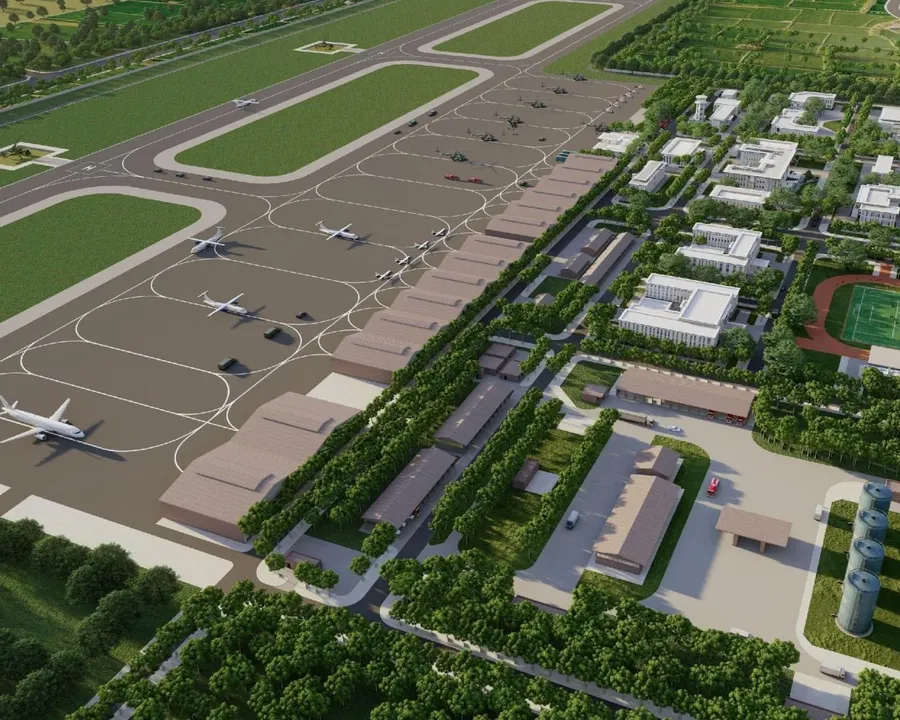
The project itself is rare in scale: total investment of roughly VND 196,378 billion, a 4F-class design, and a planned capacity of 30 million passengers a year by 2030, all funded off-budget by investors.Nguoi Quan Sat For a company with VND 8,900 billion in charter capital, holding 20% of an nearly $8 billion project is an extremely capital-heavy commitment.
The debt meant to be repaid flowed into the airport instead
This is the most important link in the whole timeline, and also the least discussed part of it. Under the original use-of-proceeds plan, part of the IPO money was earmarked to repay bank debt. In May 2026, the company revised that plan: cutting roughly VND 1,358 billion from the debt-repayment line, plus VND 82 billion left unspent, to redirect VND 1,440 billion into the Gia Binh airport contribution.Fili
By July 8, 2026, the company reported it had disbursed VND 2,818 billion of the IPO proceeds: VND 900 billion to raise capital at Titan Hai Phong, more than VND 542 billion for financial restructuring, and VND 1,440 billion into the airport project.CafeF In other words, the debt that was supposed to be repaid with IPO money is still outstanding, while the money itself went into the airport. The placement priced on September 17 exists to deal with that deferred debt, not to fund a new project.
Leverage spiked over two quarters
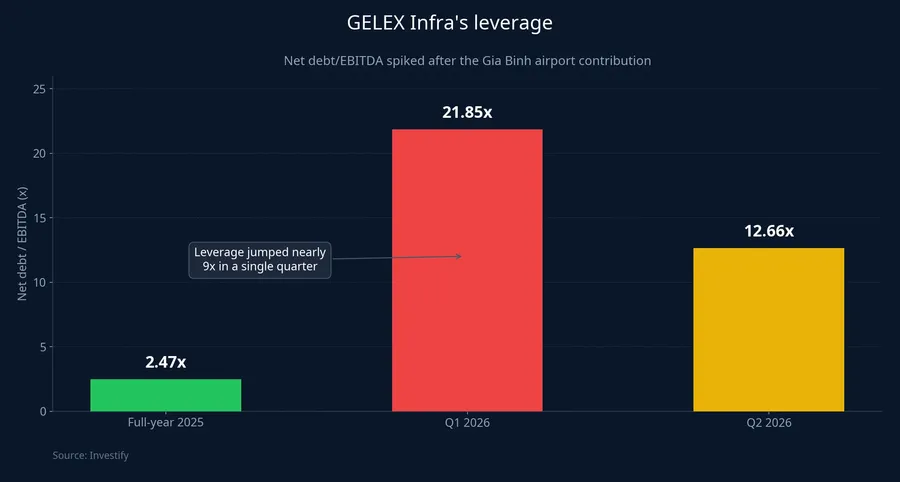
The consequence of that redirected capital shows up clearly on the balance sheet. GELEX Infrastructure's net debt/EBITDA ratio jumped from 2.47x for full-year 2025 to 21.85x in Q1 2026, then eased to 12.66x in Q2 2026. Its debt-to-equity ratio stood at 1.55x at the end of Q2.
In Q2 2026, net revenue reached VND 4,781.7 billion, up 36.4% year-on-year, with after-tax profit of VND 826 billion. But profit attributable to parent-company shareholders was only VND 310.5 billion, just 37.6% of the total, with the rest going to minority shareholders, mainly at Viglacera. In Q1 2026, parent-company shareholders had actually absorbed a VND 200 billion loss. At the annual shareholder meeting on June 26, 2026, shareholders approved not distributing 2025 profits in order to concentrate resources on key projects.Bao Phap Luat
The placement price slid with the market, a roughly VND 470 billion shortfall
The plan presented to shareholders back in June anticipated a price range of VND 31,400 to 35,200 per share, raising an estimated VND 3,330 billion.Mekong ASEAN But the stock didn't follow that script. From its closing peak of VND 40,600 on February 25, GEL slid to a closing low of VND 22,750 on July 27, before recovering to the VND 27,000-29,000 range in September.
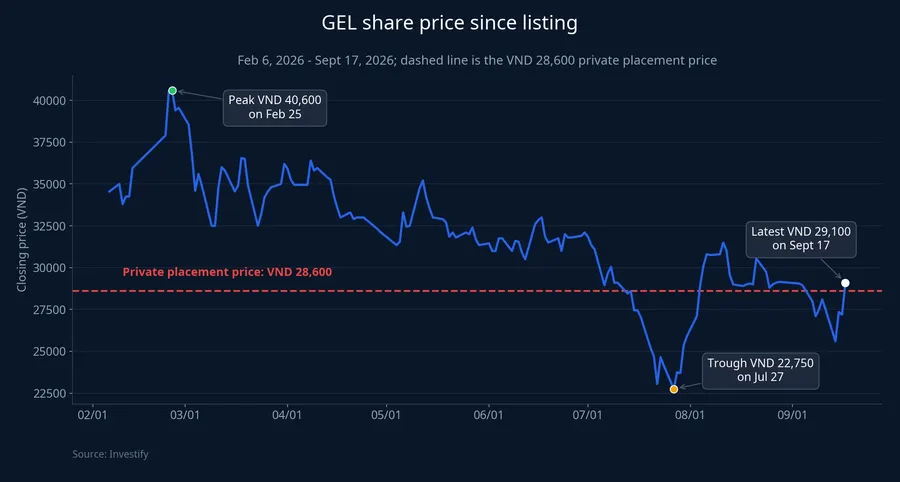
The placement price was set as the average closing price over the 20 sessions before the board's approval, a formula that looks backward. For the same 100 million shares, proceeds fell from roughly VND 3,330 billion to VND 2,860 billion, a shortfall of about VND 470 billion, the cost of pricing six months late on a stock that had fallen sharply in the meantime.
How much minority shareholders get diluted
The buyer list has already been finalized: three investors. An Binh Securities Investment Fund Management JSC will buy 49 million shares (4.95% of post-issuance charter capital), VietinBank Capital will buy another 49 million shares (also 4.95%), and one individual investor will buy 2 million shares.ANTT The privately placed shares carry a one-year transfer restriction.
Shares outstanding will rise from 890 million to 990 million, up 11.24%. GELEX Group's ownership stake in its subsidiary will fall from 70.21% to roughly 63.12%. But for minority shareholders who don't participate, the relative dilution runs to about 10.1% of their ownership stake, a quiet cost they bear so the company can raise the cash to plug the debt that was pushed toward a different project.
Why the stock hit the ceiling on pricing day
The 6.99% gain on September 17 has more than one plausible explanation. First, the finalized buyer list carries real weight: the two fund managers committed to buying 98% of the offering under a one-year lock-up, a signal quite different from a placement with no confirmed buyers. Second, the stock had just dropped 6.91% on September 14, so part of the September 17 gain likely reflects a technical bounce. Third, the broader market rose that session, with the VN-Index up 0.70% to 1,822.77 points.
Matched trading volume on September 17 reached almost 2.95 million shares, more than double the prior session, which leans toward the first explanation: genuine new buying interest rather than pure technical noise. Still, GEL's volume through September has run thin, averaging under 2 million shares a session, so one high-volume session isn't enough to confirm a trend.
Two milestones worth watching
With the market price at VND 29,100 and the placement price at VND 28,600, the gap between the two has narrowed to just 1.7%. If the stock holds above this level until issuance, the three investors will effectively be buying in at market price. If it slips below VND 28,600, they'll be paying above market for a large block and a shareholder position, a risk they already accepted when they committed to buy.
GELEX Infrastructure's leverage risk hasn't been resolved by this placement. It has only been partly deferred. Two milestones matter most: the State Securities Commission's approval decision, since every delay means more interest expense piling up before the cash arrives, and the Q3 2026 financial report, specifically the net debt/EBITDA line. If that ratio keeps falling from 12.66x, leverage pressure is being brought under control. If it holds flat or rises again, the VND 2,860 billion about to be raised will only solve part of the problem, and minority shareholders could face another round of dilution down the road.