

Ban Viet Commercial Joint Stock Bank (BVBank, ticker BVB) has locked in the schedule for the largest capital raise in its history: a rights offering of 320.4 million shares at VND 10,000 each to existing shareholders at a 2:1 ratio, expected to bring in VND 3,204 billion.Tin nhanh chứng khoán At first glance, the offer price looks about 10.3% cheaper than the market price. But the discount shareholders actually capture once they pay in is closer to 7.1%, and that gap cannot be sold off if they choose not to participate.
This offering comes with a firm deadline, a specific amount of cash to prepare, and one term that sets it apart from most other rights issues on the exchange.
What the 2:1 ratio means, and how much cash you need
A 2:1 ratio means that for every 2 BVB shares held as of September 24, a shareholder can buy 1 new share at VND 10,000. An investor holding 1,000 shares can buy 500 more, which means paying in VND 5 million between September 29 and October 19.
To qualify, the shares must be in the account before the ex-rights date. Anyone buying BVB from the September 23 session onward will not receive rights, even if the price looks cheaper at that point.
The size of this capital call is worth measuring against the bank itself. At the September 15 closing price of VND 11,150, BVB's market capitalization stood at roughly VND 7,145 billion, which means the VND 3,204 billion being raised equals nearly 45% of that figure.
The discount shrinks the moment the stock goes ex-rights
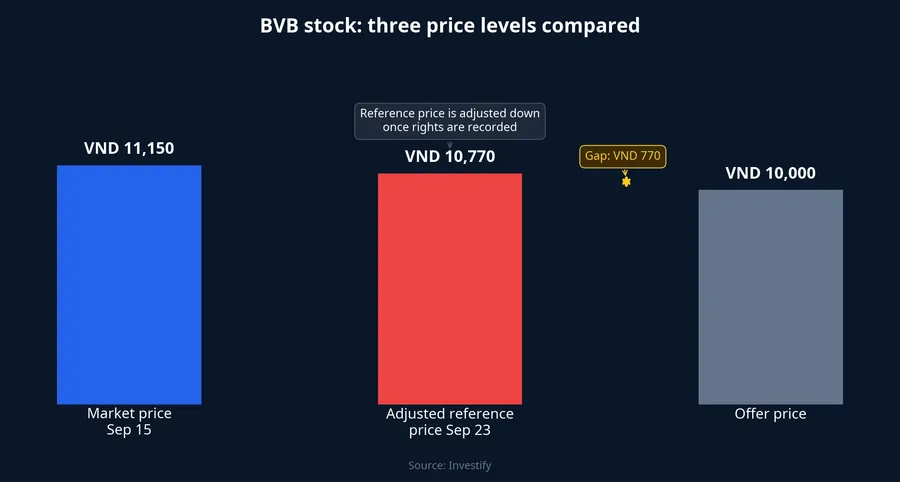
This is where many retail investors stop reading too soon. The VND 10,000 offer price sits about 10.3% below the VND 11,150 market price, but that gap does not hold steady until shareholders actually pay in.
On the ex-rights date, the exchange automatically lowers the reference price using a formula: the new reference price equals the prior closing price times the old share count, plus the offer price times the new share count, divided by the total post-issuance share count. At a 2:1 ratio, the denominator in that calculation is 3.
If BVB closes around VND 11,150 on September 22, the same level as September 15, the reference price on September 23 would land around VND 10,770. The gap between that reference price and the amount investors must pay would then be only about VND 770 per share, or 7.1%. That is the real buffer participants get, not the 10.3% visible today.
That 7.1% figure only means something next to the stock's own volatility. From VND 12,050 on August 28, BVB slid to VND 11,150 by September 15, a 7.5% drop in three weeks. The current buffer is thinner than the swing the stock has already shown, meaning a similar three-week dip could wipe out the entire discount.
No transfers: only two choices remain
In many other rights offerings, shareholders who don't want to put up more cash still have an exit: selling the rights to someone else during a transfer window. Not this time. BVBank has stated clearly that these rights cannot be transferred, there is no minimum subscription, and no underwriter is backing the deal.Thời báo Tài chính Việt Nam
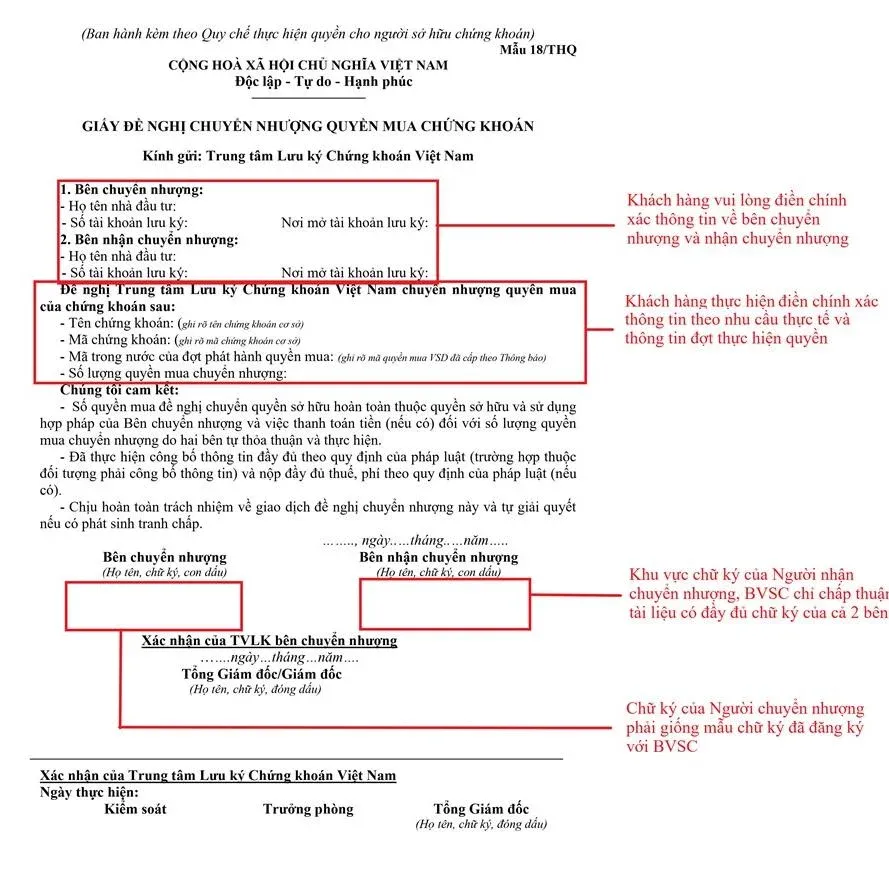
Shareholders are left with two paths: pay in at the set ratio, or let the rights lapse after October 19. The theoretical value of roughly VND 380 per old share, the amount the reference price drops by, cannot be recovered by selling the right itself.
The nearly five-month wait is easy to overlook
Paying in does not mean being able to sell right away. The new shares must clear a supplementary listing process before they can trade, and that stretch tends to run longer than most investors expect. ABBank's two most recent rights offerings show a gap of 154 days (November 2021) and 140 days (January 2026) between the ex-rights date and the supplementary listing date, averaging nearly five months.

Mapped onto BVB's schedule, shares bought through this rights issue may not be tradable until around February 2027. For that entire stretch, the money already paid in absorbs the full swing of the stock's price with no way out midway.
What "33% dilution" means, and what it doesn't
If the offering completes, outstanding shares rise from 640.82 million to 961.23 million, and charter capital grows from VND 6,408 billion to roughly VND 9,612 billion. Shareholders who don't participate will see their ownership stake shrink by exactly one-third.
That 33.3% figure sounds heavy, but it does not mean losing a third of one's wealth, because the new money also flows into shareholder equity rather than vanishing from the balance sheet. BVBank's equity as of June 30, 2026 stood at VND 7,922 billion, equal to a book value of roughly VND 12,360 per share. After adding VND 3,204 billion and dividing by the new share count, book value per share drops to about VND 11,575, a 6.4% decline.
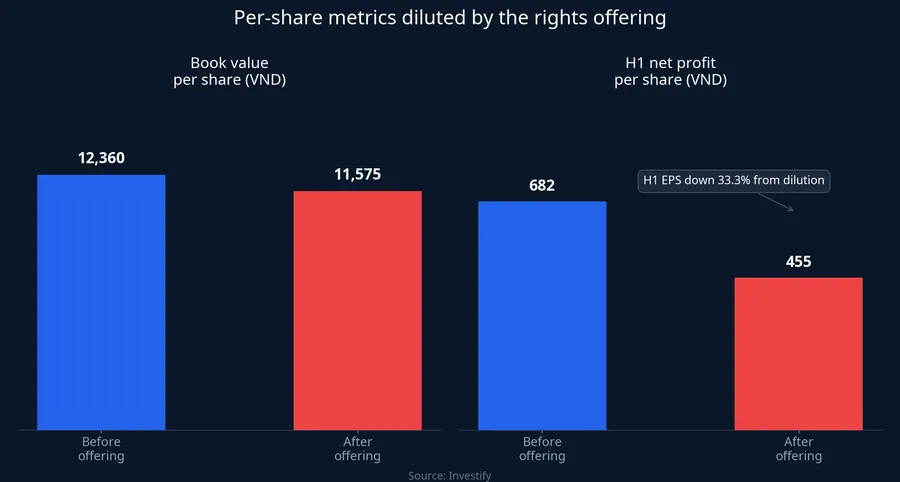
That 6.4% is the real hit to book value for shareholders who sit out, not 33.3%. On the profit side, the math works out differently. First-half after-tax profit of VND 437 billion divided by the current share count comes to VND 682 per share, but divided by the post-issuance share count it falls to VND 455, exactly a one-third decline since the numerator stays flat while the denominator grows by the dilution ratio.
Where the bank stands as it calls for capital
BVBank is raising fresh capital right after a first half that looked very different from a year earlier: pre-tax profit for H1 2026 reached VND 547 billion, nearly 6 times the same period last year and close to 80% of the full-year plan.Vietstock Total assets reached VND 141,974 billion as of June 30, 2026.
That near-6x jump has more than one driver. Net interest income rose 46% to VND 1,680 billion, the main engine, but the comparison base from H1 2025 was very low (just VND 93 billion in pre-tax profit), which inflates the percentage. There was also a one-off bad-debt recovery of more than VND 125 billion booked under non-interest income.
On the other side of the ledger, asset quality slipped. Total bad debt rose 14.7% from the start of the year to VND 2,686 billion, pushing the NPL ratio to 2.89%, with group-5 debt (the category at risk of capital loss) making up about 70% of that total.MekongASEAN A loan-to-deposit ratio of 99.6% shows the bank has used up nearly all of its funding headroom to keep lending.
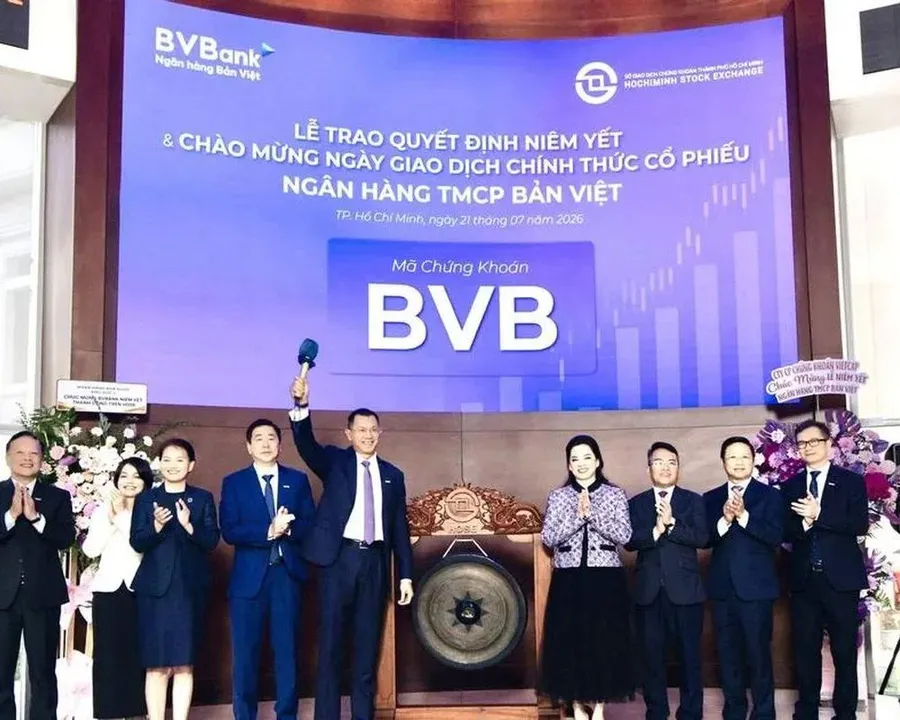
Put side by side, these two pictures explain why the VND 3,204 billion matters: fresh capital feeds directly into equity, creating room for credit growth and for provisioning if group-2 loans keep sliding into worse categories. The offering also continues a longer path. BVB just moved from UPCoM to a listing on HOSE on July 21, 2026, and alongside this offering there is also a 30-million-share ESOP plan, which would push target charter capital to VND 9,912 billion.Thời báo Tài chính Việt Nam
Dates to remember, and how to read the decision
Four decision points fall within the next four weeks: September 22 is the last session to buy BVB while still receiving rights, September 23 is when the reference price drops under the dilution formula, September 24 is the record date, and September 29 to October 19 is the payment window, after which the rights expire.
The standard way to judge a non-transferable rights offering is to weigh the price buffer against how long the capital stays locked up, then check both against the stock's own volatility over the same stretch. Here the buffer is about 7.1% after adjustment, and the capital stays locked for roughly five months. When the buffer is thinner than the volatility already observed, the price gap alone is no longer reason enough to participate.
The decision then shifts to a question about the bank's outlook once the new VND 3,204 billion is in, and that question will be answered in the Q3 and Q4 reports. If the NPL ratio holds around current levels while credit keeps growing, the new capital is being put to its intended use. If bad debt keeps climbing, a large share of what shareholders just contributed is more likely headed into provisioning instead. Those are the two scenarios to watch, not a conclusion already settled.