
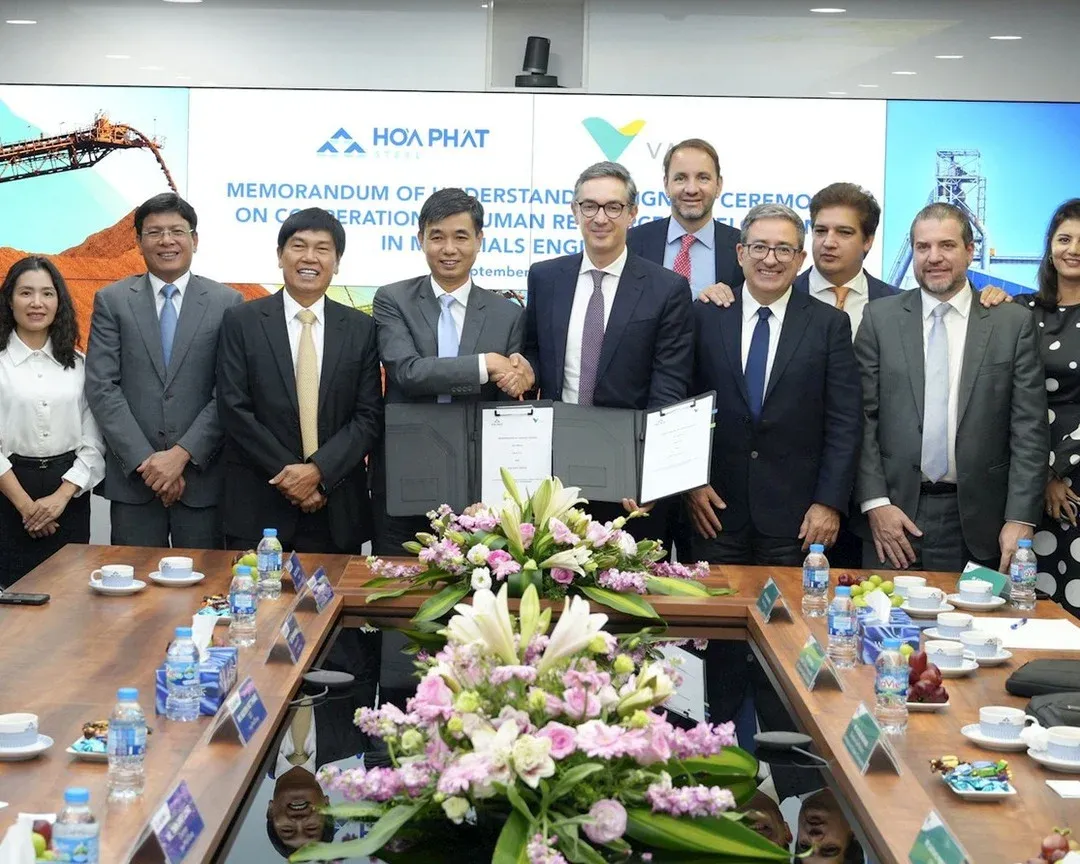

Two Hoa Phat events happened exactly one day apart. On September 10, the Quy Xa iron mine in Lao Cai resumed operations after three years idle following an expired license.Báo Lào Cai On September 11, Hoa Phat Chairman Trần Đình Long and CEO Nguyễn Việt Thắng welcomed a Vale delegation led by CEO Gustavo Duarte Pimenta, marking ten years of partnership and signing a new agreement.MarketTimes
At first glance, the two stories pull in opposite directions: one toward domestic self-sufficiency, the other toward deeper reliance on a foreign supplier. Look closer at the numbers, though, and both point to the same reality. The volume of ore Hoa Phat needs has grown far beyond what its domestic mines can supply, and that gap will widen further once Dung Quat 2 reaches full capacity.
Production has outgrown domestic mining capacity
Hoa Phat is running at the highest output in its history. In the first half of 2026, the group produced 7 million tons of steel, up 36% year-on-year; in the second quarter alone, crude steel output reached more than 3.6 million tons, up 48% from a year earlier.CafeF The full-year target is nearly 15 million tons, up roughly 40%, with most of the growth coming from Dung Quat 2 running at stable capacity.VietnamBiz
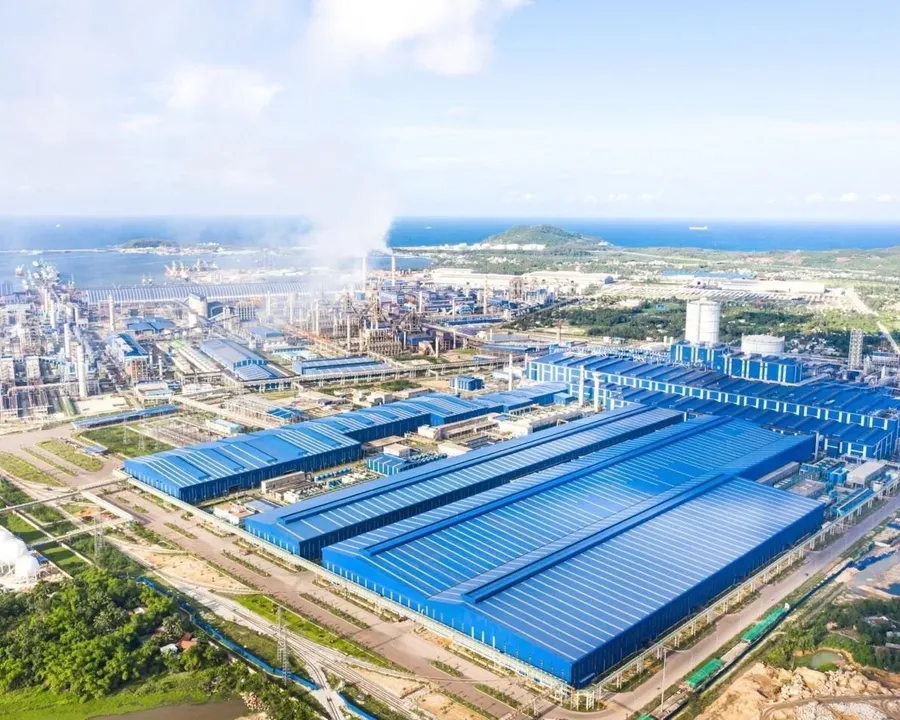
That much steel needs ore, and most of it arrives by ship. Imported iron ore accounts for more than 90% of the raw material input in Hoa Phat's steelmaking.Người Quan Sát At the industry level, Vietnam imports roughly 30 million tons of iron ore a year, about 95% of demand, at a cost of at least $3 billion.CafeF
Set Quy Xa against that figure and the gap becomes clear. The mine's design reserves exceed 73.2 million tons, with a maximum capacity of 5 million tons of crude ore a year over 15 years and 8 months.CafeF From now through the end of 2026, the target is just over 1 million tons of ore.Công Luận
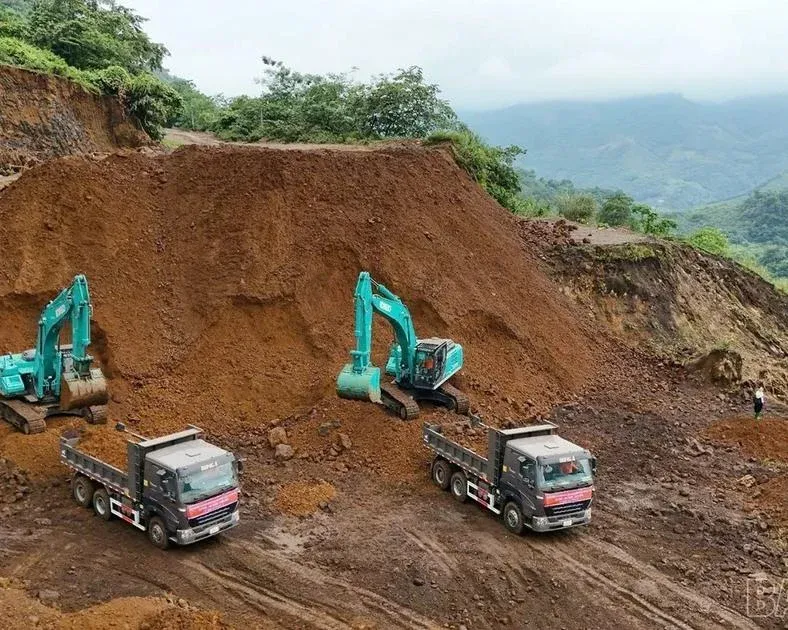
In other words, even running at full design capacity, Quy Xa's 5 million tons a year would cover only a sixth of what Vietnam's steel industry imports. The first shipment of ore is flowing to the Lao Cai Iron and Steel Plant, not to Dung Quat. Domestic self-sufficiency is a real step forward, but not yet a large enough one to reshape Hoa Phat's cost structure in the next few years.
Why this cost structure drives the margin
For a steelmaker smelting from ore, cost of goods sold eats up nearly all revenue, so a few percentage points of input-cost swing is enough to flip profitability. Hoa Phat's last eight quarters make that clear:
| Quarter | Net revenue (VND bn) | Cost of goods sold (VND bn) | Gross margin |
|---|---|---|---|
| Q4 2024 | 34,491.0 | 30,126.1 | 12.7% |
| Q2 2025 | 35,910.5 | 29,320.8 | 18.4% |
| Q4 2025 | 46,176.5 | 39,779.8 | 13.9% |
| Q1 2026 | 52,900.8 | 44,535.8 | 15.8% |
| Q2 2026 | 55,158.9 | 44,671.1 | 19.0% |
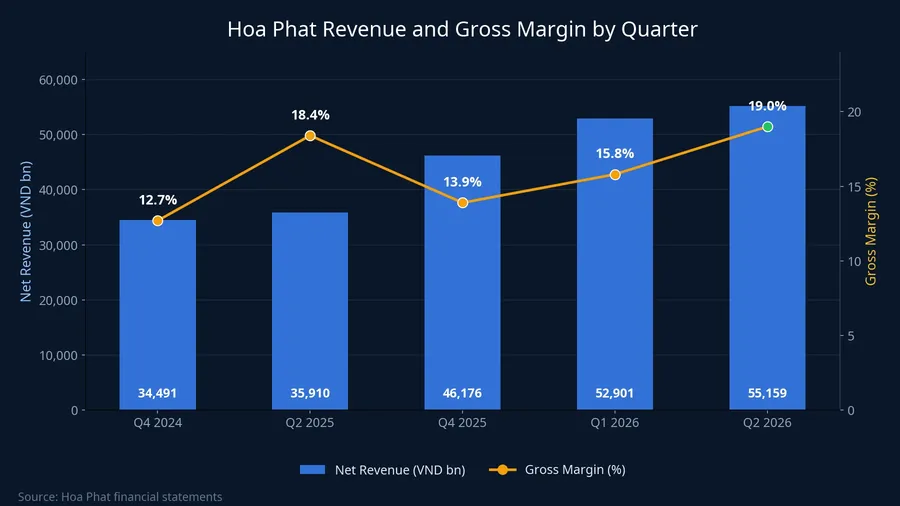
Gross margin in Q2 2026 hit 19.0%, the highest in eight quarters. Cost of goods sold barely moved, from VND 44,535.8 billion to VND 44,671.1 billion, while revenue rose by more than VND 2,200 billion, so nearly all of that gain flowed straight into gross profit.
It's worth acknowledging that the 19.0% figure isn't driven by cheap ore alone. Crude steel output rose 48%, spreading Dung Quat 2's fixed costs and depreciation across more tons of product. Anti-dumping duties on hot-rolled coil imported from China are propping up domestic selling prices. Input materials have also been cheaper than in prior periods. Available data doesn't isolate each factor's individual contribution, so it's more accurate to read the 19.0% figure as the product of several forces converging than to attribute it to ore prices alone.
Where iron ore prices stand
Global iron ore closed at $98.68 a ton on September 10, up 4.4% from $94.55 a month earlier. That's still below the $100 mark, a relatively comfortable zone for steelmakers. Coking coal, the other major input cost, sits at $274 a ton. On the output side, conditions are favorable: hot-rolled coil steel traded at $1,272.93 a ton in the September 11 session.
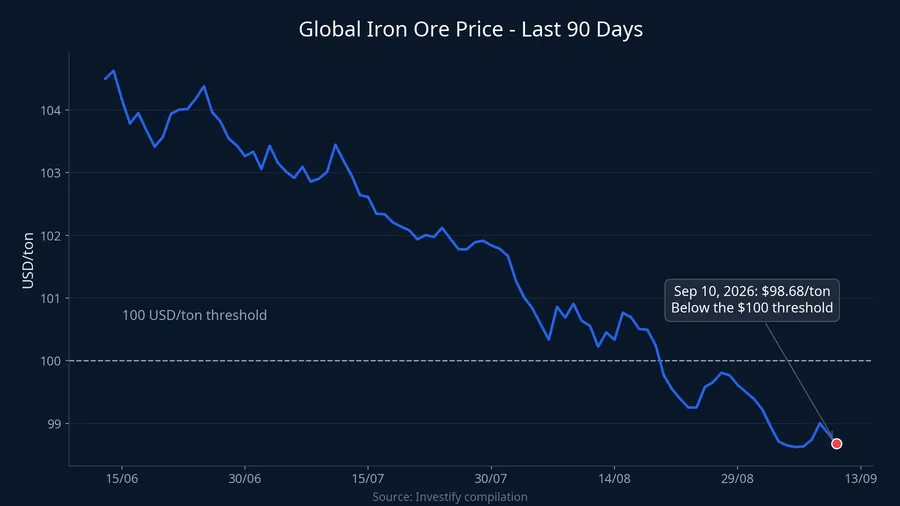
The point worth watching is volume leverage. As Dung Quat 2 ramps up to full design capacity, the volume of ore Hoa Phat consumes rises with it, so every swing in ore prices gets multiplied against a larger base. Margin sensitivity to iron ore prices is therefore growing, not shrinking, even as Quy Xa ore begins to flow in.
Thach Khe: the biggest mine, and the slowest
If Quy Xa is a step already taken, Thach Khe in Ha Tinh remains a long-term story. The mine holds an estimated 500 million tons of reserves, the largest in Southeast Asia, discovered in 1960 and left largely dormant for 15 years.
On July 2, 2026, the Ha Tinh Department of Finance issued Decision 4748/QĐ-STC terminating the project and revoking the investment certificate of the former investor, Thach Khe Iron Company, clearing the way to select a new one.Vietstock This is a legal termination of the old arrangement, not yet a decision on a new investor.
The underlying obstacles remain unchanged: environmental concerns over discharging wastewater into the sea, and roughly 7,000 households totaling 27,000 people in coastal communes still living under a stalled land-use plan, unable to renovate homes as infrastructure deteriorates.Người Quan Sát In May 2026, Hoa Phat proposed either developing the mine alone or in a consortium with Vinacomin, THACO and Vingroup, and requested international experts assess the technology and environmental impact.Tuổi Trẻ This remains a proposal, not an approved plan.
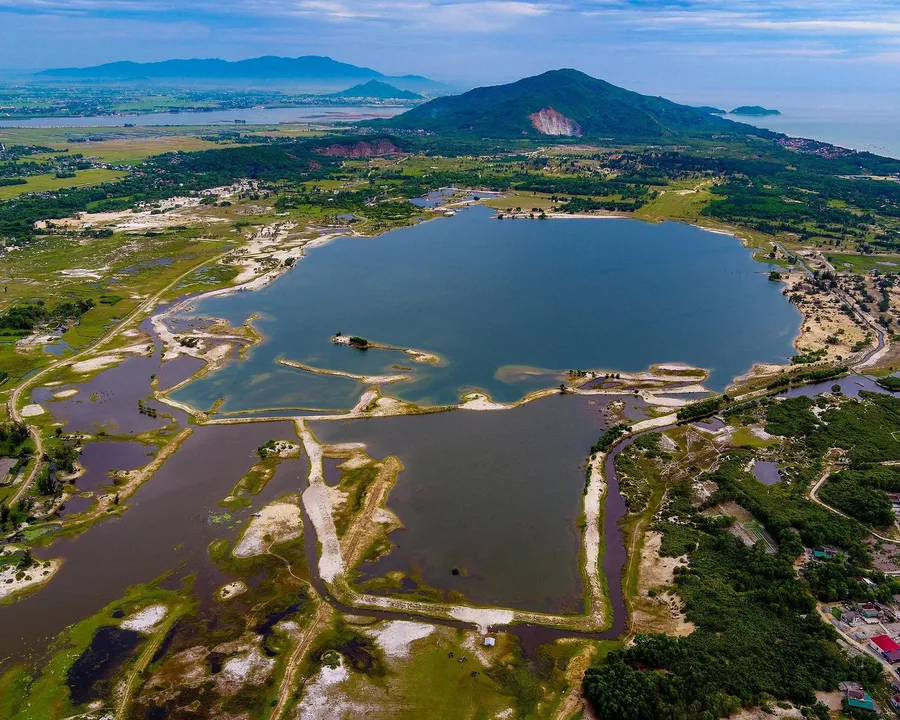
Elsewhere on the same site, Vingroup has already moved a step ahead downstream. The Vinmetal Ha Tinh steel plant received its investment certificate on February 27, 2026, with total capital of nearly VND 80,000 billion and phase-one capacity of roughly 5 to 6 million tons a year.Nhà Đầu Tư The race for mining rights, in other words, isn't Hoa Phat's alone.
What Hoa Phat and Vale actually signed
This is where readers who skim the headline are likely to get it wrong. The September 11 agreement between Hoa Phat and Vale is a human resource development program in materials technology for Vietnam's metallurgy sector.Người Quan Sát During the meeting, the two sides discussed global steel industry trends, new metallurgical technology, energy-saving solutions and a roadmap for cutting carbon emissions.
In other words, the document signed is not a supply contract committing to volumes or ore prices for coming years. It's a commitment to maintaining a strategic partnership, while the substance of that relationship still lives in annual ore purchase contracts whose terms the two sides don't disclose.
What stands out is that Vale's CEO personally flew to Vietnam for a training agreement. A global supplier sends its top leadership only for the customers it wants to keep long-term. For a company ramping production toward nearly 15 million tons of steel a year, that's a signal about the durability of the buying relationship, not about the price of next year's shipment. It's worth being clear that this is a reasonable inference from who showed up to sign, not a term the agreement itself confirms.
What to watch
On the exchange, HPG closed the September 11 session at VND 21,300, down 2.52%, with a market cap of VND 163,500 billion, in a session where the VN-Index fell 34.02 points.
Three upcoming milestones will answer whether domestic ore self-sufficiency actually translates into earnings. In late October, Hoa Phat releases its Q3 2026 financial results; the line worth reading first is the ratio of cost of goods sold to net revenue. Holding around 81%, as in Q2, would mean input costs aren't yet biting; a jump toward the 85-86% range seen in Q4 2025 would mean raw material prices have started eating into margin.
In the final quarter, actual output from Quy Xa and how much of it gets allocated to Hoa Phat's plants will show how much this mine really contributes beyond the Lao Cai Iron and Steel Plant. And in Ha Tinh, the decision on a new investor for Thach Khe is the milestone that will determine whether Vietnam's steel self-sufficiency story stays at Quy Xa's scale or moves into an entirely different one.