
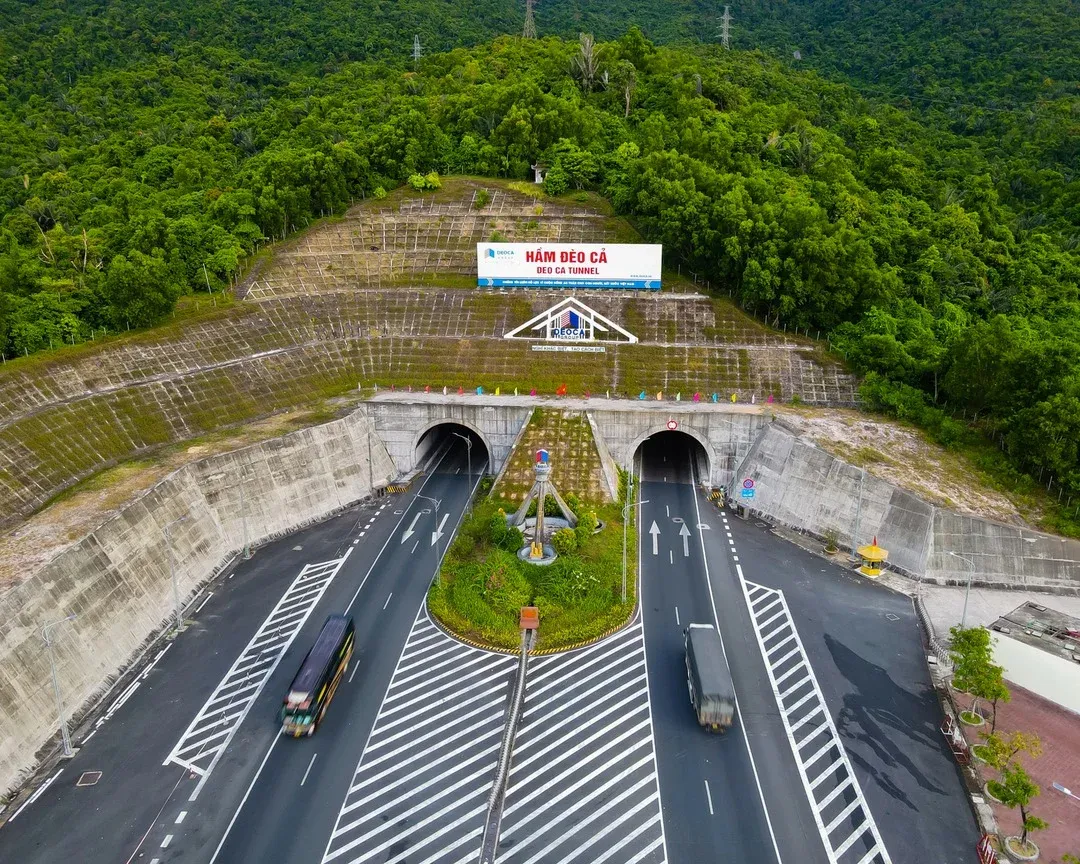

In 2026, Vietnam's National Assembly assigned a public investment plan of VND 1.08 quadrillion, about VND 175 trillion higher than the prior year and the largest figure on record.VnBusiness By the end of August, the country had disbursed 48.9% of the plan set by the Prime Minister, roughly 8.7 percentage points higher than the same period last year.Nhân Dân That money is flowing into Long Thanh airport, unfinished sections of the North-South expressway, and regional connector routes.
Over that same stretch of time, the stock that many investors treat as the clearest proxy for the transport infrastructure sector has moved in the opposite direction. HHV, the ticker for Deo Ca Infrastructure Investment Joint Stock Company, traded around VND 9,950 as of mid-morning on September 7, below its VND 10,000 par value. Versus the September 4, 2025 session, the share price is down 34.7%, while the VN-Index gained roughly 8.5% over the same window.
A company that builds tunnels, builds expressways, and operates nine toll stations, sitting squarely in the path of the largest public investment wave in the country's history, why would its stock get a third cheaper? There is no unusual bad news here. What creates this gap is how budget money actually flows through a BOT operator's financial statements.
Public money is landing in the thinnest-margin segment
Deo Ca runs on two very different income streams. Toll collection contributed about 57% of 2025 revenue but as much as 91% of gross profit. Construction contributed about 35% of revenue, with a much thinner margin.VNDirect
Where is the public investment budget landing? In construction. In just the first five months of 2026, the company won contracts worth roughly VND 6,000 billion, including the expansion of the Ho Chi Minh City - Trung Luong - My Thuan expressway, the Vung mountain tunnel, and phase two of the Dong Dang - Tra Linh expressway. Unexecuted construction backlog for 2026 is estimated to have grown about 144% year-on-year, to roughly VND 4,479 billion.VNDirect
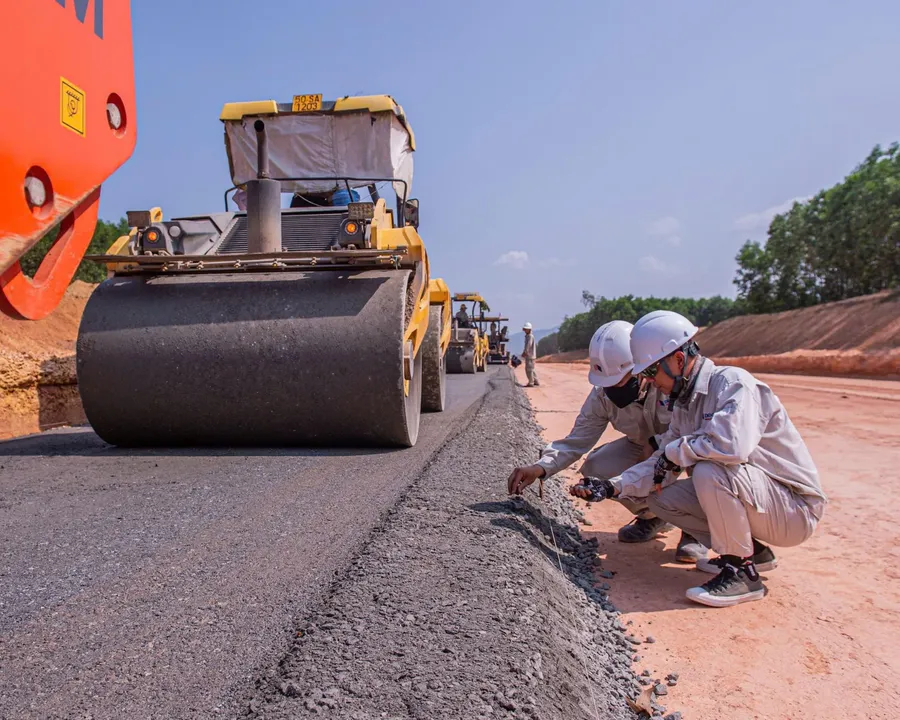
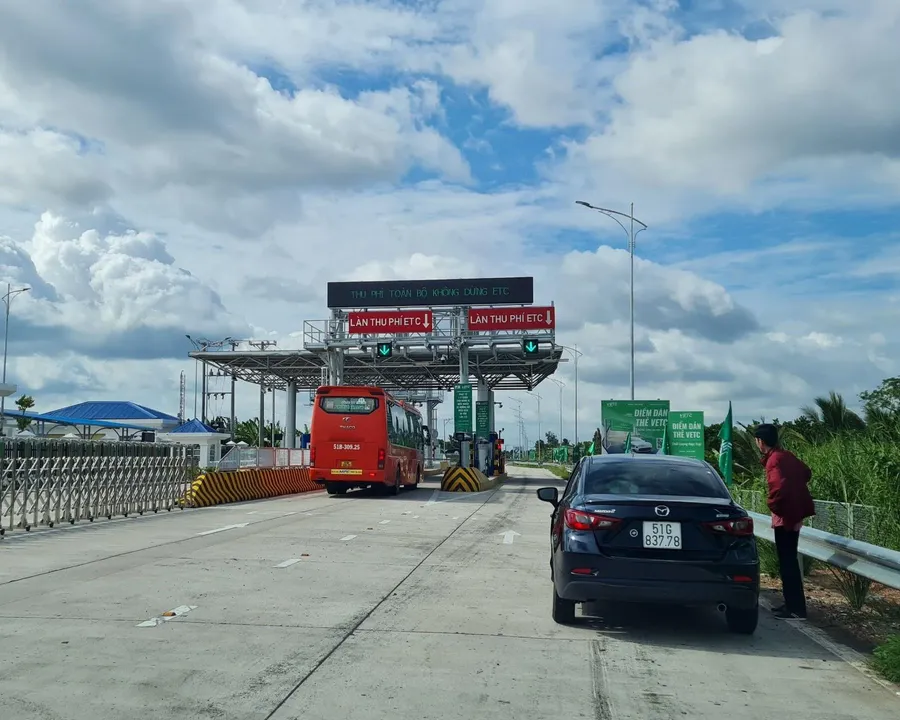
That is a large number in terms of volume, but it flows into the segment that generates less than one-tenth of gross profit. The part that actually produces real profit, the nine toll stations, has a payback horizon stretching to 2035-2049,Vietcap and does not depend on this year's budget. It depends on how many vehicles pass through the tollgates each day.
This is the point new investors tend to miss when reading contract-win headlines. Winning more contracts does not automatically mean earning more profit. For a BOT operator, construction work behaves almost like subcontracting: revenue is booked as work progresses, and the margin retained is thin. Toll revenue, the thing that actually feeds profit, has to wait for construction to finish, for traffic to build up, and for the bank debt repayment period to run its course.
More than half of operating profit goes straight to interest
This is the second mechanism, and the heaviest one in Deo Ca's financial picture. In Q2 2026, the company posted net revenue of VND 970.3 billion, up 2.5% year-on-year, and post-tax profit of VND 171.8 billion, up 13.5%.Stockbiz Looked at on their own, those two lines are solid. But in that same quarter, interest expense reached VND 242.3 billion, equal to 25% of revenue and larger than pre-tax profit of VND 198.2 billion.
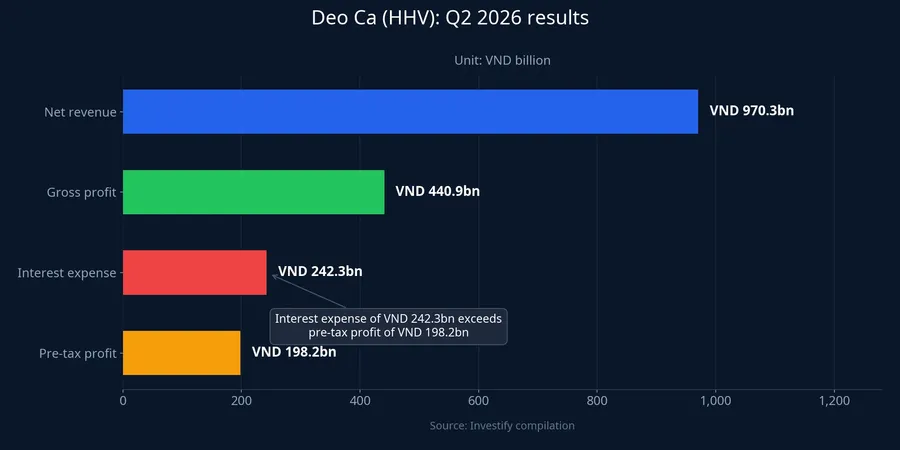
Adding interest expense back to pre-tax profit puts the quarter's EBIT at roughly VND 440 billion. In other words, about 55% of what the business generated from operations went straight to creditors before shareholders saw a single dong of profit.
That number traces back to the balance sheet structure. As of June 30, 2026, total outstanding debt stood at VND 17,874.9 billion, of which VND 17,089.1 billion, about 95.6%, was long-term. Total debt was 2.15 times shareholder equity of VND 13,038.1 billion. That is the defining feature of the BOT model: borrow long-term to build, then collect tolls for decades to pay it down.
This structure is genuinely improving. The debt-to-equity ratio fell from 2.15 times, down from 2.35 times at the end of 2025, and operating cash flow in the first half of 2026 reached VND 621 billion, up 88.2% year-on-year. However, most of that cash flow is cycling back into debt repayment: in the first half of the year the company repaid VND 742.4 billion in principal while borrowing only VND 164 billion in new debt. The business is genuinely getting healthier, it's just that the improvement is going toward reducing debt, not into shareholders' pockets yet.
Bigger projects mean more shares outstanding
The third mechanism gets less attention but hits share price directly. To fund its equity contribution for the Dong Dang - Tra Linh and Cam Lam - Vinh Hao routes, shareholders approved a plan to issue more than 84.8 million new shares, raising charter capital to VND 6,320 billion.Tin nhanh Chứng khoán
The effect shows up directly in the Q2 report: post-tax profit rose 13.5%, yet basic earnings per share fell 8.1%, from VND 285 to VND 262. For existing shareholders, that's simple arithmetic. The profit pie grew, but the number of people splitting it grew faster. The more infrastructure projects that need equity funding, the longer this dilution pressure persists.
The whole infrastructure group got re-rated, not just Deo Ca
It's worth acknowledging that HHV's decline isn't entirely a company-specific story. Over the same one-year window from September 4, 2025 to September 7, 2026, CII fell 39.3%, VCG fell 40.7%, and C4G fell 43.3%, while the VN-Index gained roughly 8.5%. The entire transport infrastructure group has been discounted by a similar magnitude.
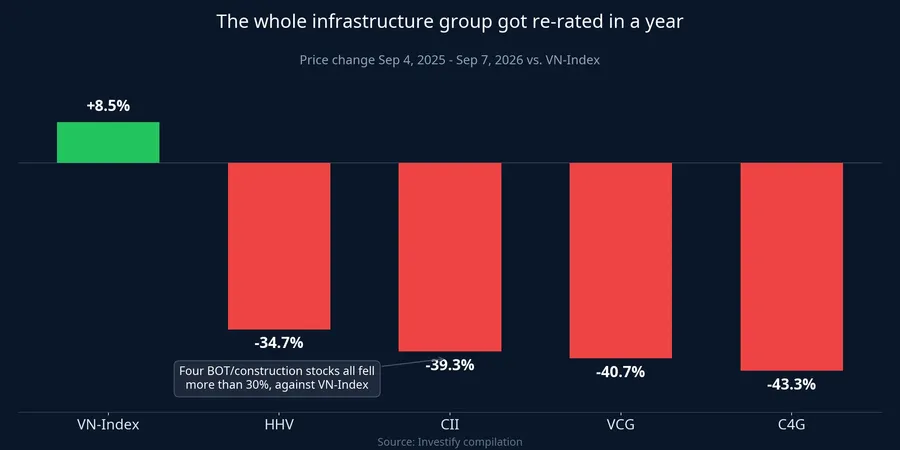
Three explanations coexist here: the market is re-rating the whole sector, since large work volumes paired with thin margins and high leverage warrant a lower valuation; 2026 capital flows have tilted toward banks and large-cap names around the market upgrade narrative, pulling liquidity away from mid-caps; and specifically for Deo Ca, the new share supply from its issuance plan adds extra pressure. The data leans toward the first explanation, since four stocks in the same sector fell by roughly similar magnitudes while the broad index rose. The dilution factor is unique to HHV, so it can only explain the small gap between individual stocks, not the sector-wide decline.
The VND 7 trillion coming in 2027 is the real turning point
Decree 122/2026, issued in early April, opened a path to resolve legal snags at BOT projects. Under it, Deo Ca is finalizing procedures to receive roughly VND 7,000 billion in budget support, including about VND 4,580 billion for the Bac Giang - Lang Son expressway and about VND 2,280 billion for the Deo Ca tunnel, expected to be disbursed in early 2027.VNDirect
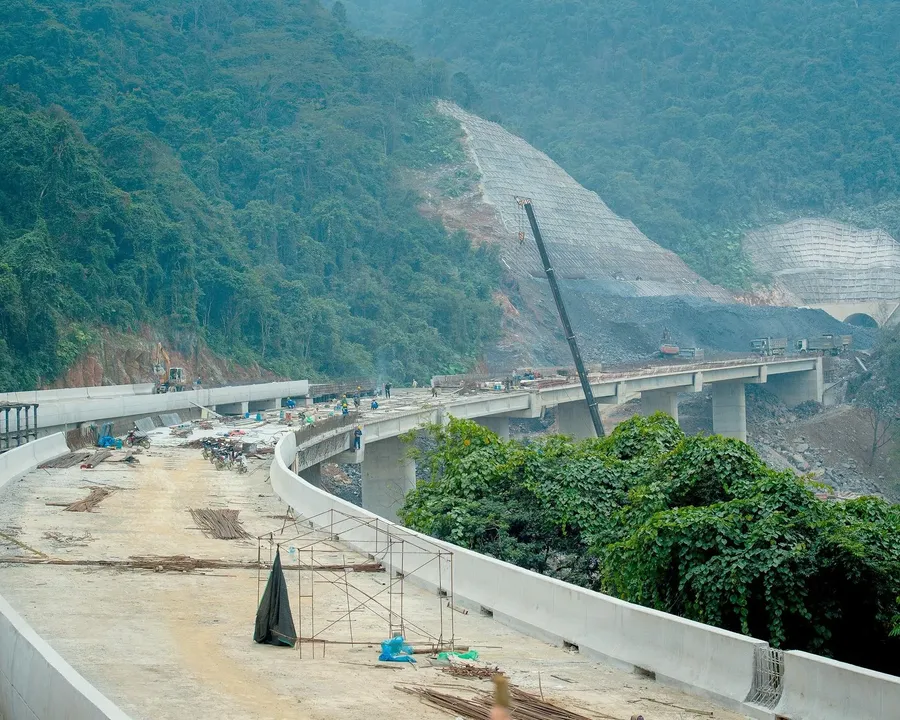
If this support arrives on schedule, outstanding debt is estimated to fall by roughly 40%, sharply cutting interest expense and shifting the BOT segment from a debt-repayment phase into a profit-generating phase. If procedures are delayed, the current high-leverage state simply persists longer.
The gap between the current share price and the target prices brokerages have set, such as VNDirect's VND 14,700, is really the gap between the present and a condition that hasn't happened yet. The market is pricing what already exists: VND 242.3 billion in quarterly interest expense and a fresh batch of shares. The analyst reports are pricing what would exist if the VND 7,000 billion arrives on time.
What new investors should take from this
Looking at the numbers, the gap between "record public investment" and "infrastructure stock down sharply" isn't a paradox. It's the consequence of how policy money moves through specific lines of a company's income statement. For a BOT operator like Deo Ca, three cost layers stand between the budget and shareholder profit, and all three are active at once: thin-margin construction volume, long-term interest expense eating more than half of operating profit, and recurring equity needs that keep creating dilution pressure. This mechanism can explain most of the price decline; it isn't some unusual story unique to one ticker.
The right framework for tracking this group isn't the nationwide public investment disbursement rate. It's company-specific indicators: progress on receiving budget support under Decree 122/2026, quarterly interest expense, and toll traffic volume. Until those indicators move meaningfully, no matter how large the construction backlog gets, it remains future revenue, not profit that has actually reached shareholders. Q4 2026 earnings and the disbursement progress of the early-2027 budget support are the two milestones most worth watching to test this thesis.