
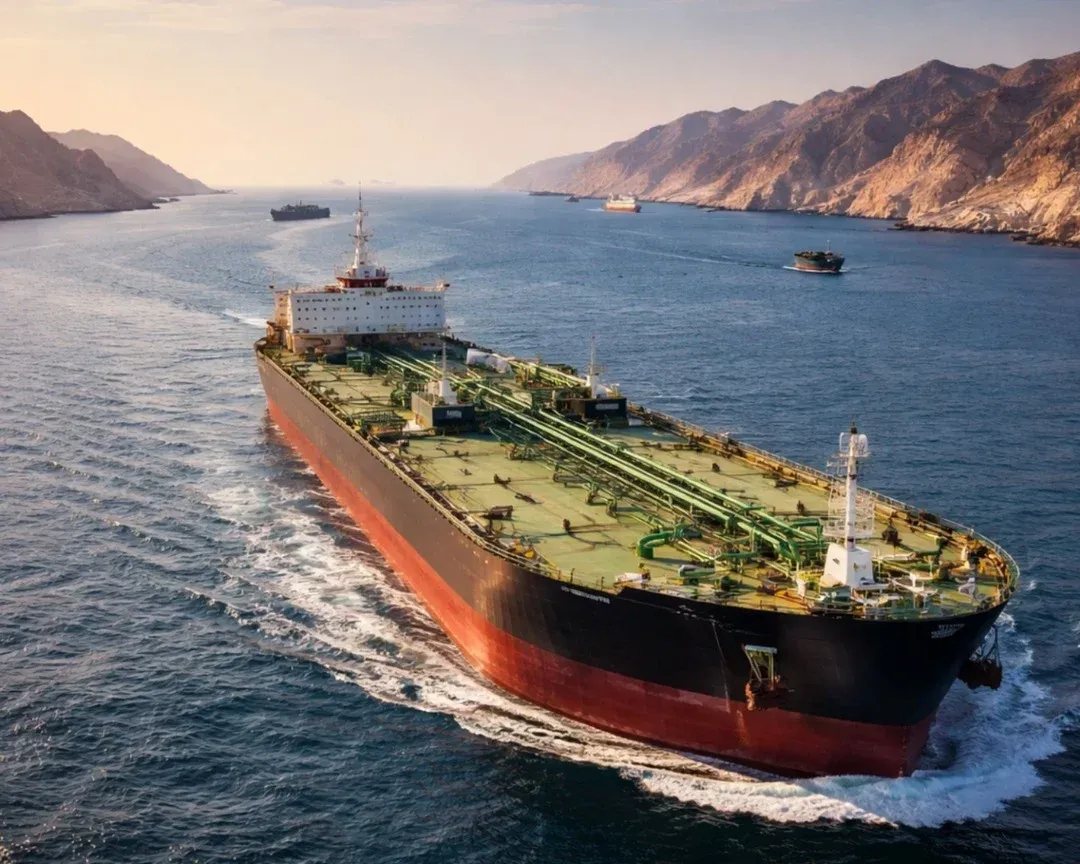

On August 28, Admiral Brad Cooper, Commander of US Central Command (CENTCOM), announced that US forces had cleared the sea mines Iran had scattered across international shipping lanes in the Strait of Hormuz, and warned that any vessel or skiff laying new mines would be destroyed immediately.The National Two days later, that warning was put to the test. But the real question was never whether Iran would retaliate. It was which weapon Iran would choose.
By the morning of August 31, the answer was clear: ballistic missiles, not sea mines. For the oil market, those are two very different scenarios with two very different economic consequences, and this piece works through why.
What happened in 48 hours
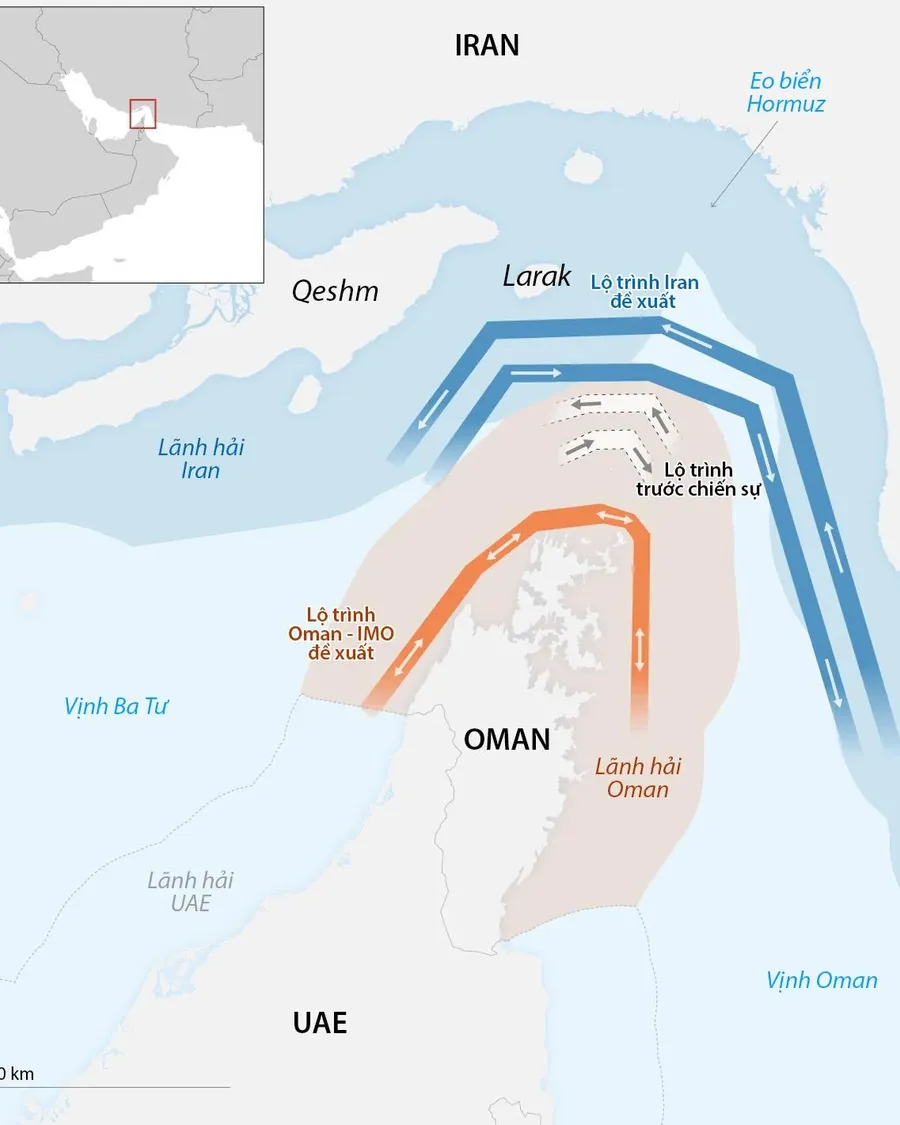
On Sunday, August 30, US forces struck two Iranian launchers on Larak Island, which sits right at the mouth of the Strait of Hormuz. Captain Tim Hawkins, CENTCOM spokesperson, said Islamic Revolutionary Guard Corps (IRGC) units had been spotted preparing to fire rockets carrying sea mines into the strait.CNBC It was the first US strike on Iran since late July, ending more than a month of relative calm. The notable detail wasn't the size of the target, just two launchers in a war that has run six months. It was the payload: sea mines, not warheads.NBC News
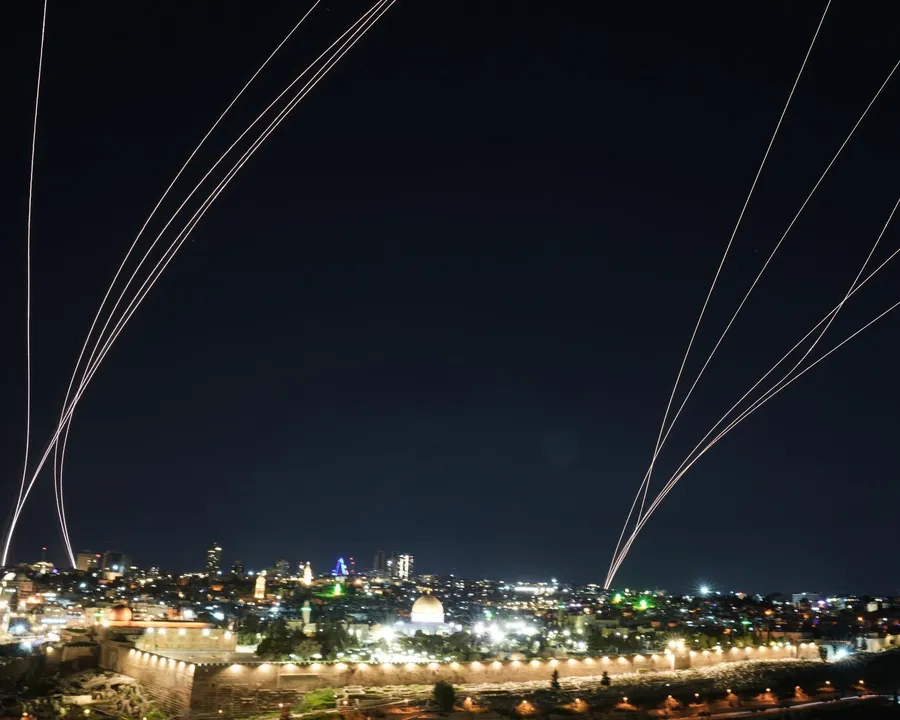
The IRGC immediately vowed to respond and punish those responsible, and alleged the strike killed and wounded soldiers and civilians without giving specific numbers.Jerusalem Post On Monday, August 31, Iran followed through: the IRGC fired ballistic missiles at two air bases hosting US forces in Jordan. The Jordanian army said it intercepted 8 missiles that entered its airspace, after residents reported hearing explosions near the city of Aqaba.Qatar Tribune A US defense source said nearly all of the missiles were intercepted.Jerusalem Post
Two escalation ladders, but oil only listens to one
The US-Iran standoff is running on two parallel ladders, and the big picture shows they carry completely different economic consequences. The first ladder is military: missiles at bases, airstrikes on launchers, air defense intercepts. It's the ladder that has run for six months, and it's where the missile barrage of August 31 landed. It makes big headlines, but it doesn't pull a single barrel of oil off the market, because the bases in Jordan aren't on any oil shipping route.
The second ladder is maritime: mines, attacks on tankers, blocked lanes. This is the ladder that actually touches supply. Sea mines have one property that sets them apart from missiles: they don't need anyone to maintain a presence. Fire a missile and it's gone. Drop a mine and it stays there, forcing every ship to halt until someone clears it. That makes mining the cheapest way to shut down a shipping lane, and the hardest to undo. That's exactly why it took the US months, divers, special forces and aircraft to clear the lane in the first place.
The damage is still substantial. Per Bloomberg, roughly 8 million barrels of oil a day are currently being lost, compared with the roughly 20 million barrels of oil and refined products that used to move through Hormuz daily before the war. Recovery is still in its early stage: per Lloyd's List Intelligence, there were 114 tanker transits through the strait in the week of August 17-23, up more than 30% from the prior week, but still well below pre-war levels.
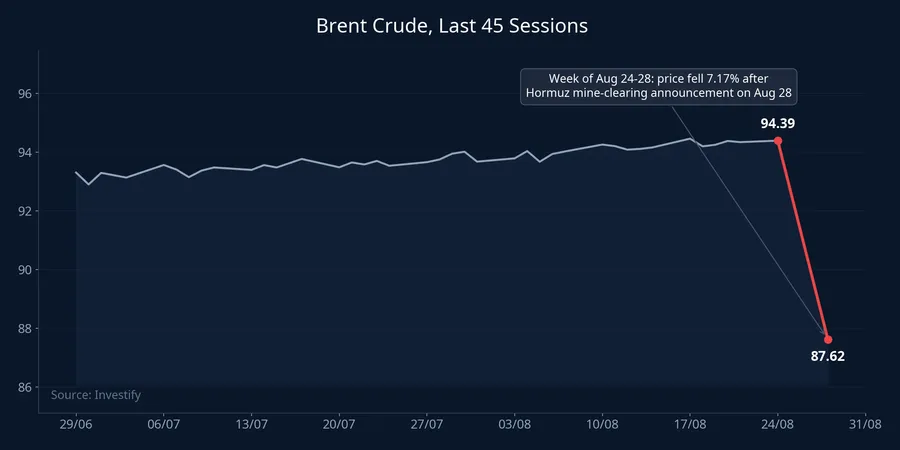
In the week of August 24-28, Brent crude fell from $94.39 to $87.62 a barrel, a drop of 7.17% (DB: BRENT). It's worth being clear this isn't the only explanation for that decline: OPEC+ agreed to raise output by 188,000 barrels a day for September at its August 2 meeting,CNBC and global demand still isn't showing strong signals. The evidence points to the maritime lane as the dominant factor for that particular week, since the mine-clearing news and the price drop fell in the same few-day window, while the OPEC+ decision had already been made earlier in the month. But both forces were pushing prices down at the same time, and their individual contributions can't be cleanly separated.
Three branches for this week
On the morning of August 31, oil's reaction was moderate: Brent for November delivery opened the week above $90 a barrel, while WTI traded around $86. That's higher than the $87.62 close on August 28, but it isn't a sharp jump. The market is waiting to see which ladder Iran climbs next, and each of the three branches below hinges on a specific, observable signal rather than a general sense of how tense things feel.
Branch one: Iran goes back to laying mines. Trigger signal: a fresh mine-laying operation in the just-cleared lane, or this week's tanker transit count falling below the 114 recorded for August 17-23. This is the only branch that pushes oil sustainably into triple digits, because the mechanism has already been proven over the past six months: mines force ships to stop, war-risk insurance premiums jump, shipowners reroute.
Branch two: Iran holds to the pattern set on the morning of August 31. Trigger signal: further retaliation continues to target military bases rather than tankers or shipping lanes, while Hormuz transit counts keep rising. The political cost behind this choice: striking a military base is a matter between Iran and the US, but blocking the world's oil route hits Iran's own largest customers in Asia. In this branch, oil holds its current geopolitical risk premium without expanding it.
Branch three: the standoff drags on, but nobody touches the strait. The nearest trigger is the OPEC+ meeting on September 6. The group has already finished unwinding its voluntary output cuts, and per Bloomberg, citing delegates, members are expected to hold quotas steady for the rest of 2026. If that meeting confirms that direction while the Hormuz lane stays open, the oversupply narrative takes back control and pulls oil back toward last week's downtrend.
Where this touches Vietnamese portfolios
Individual Vietnamese investors almost never trade crude oil directly. For most readers, oil prices reach their portfolios through three indirect channels, and all three have already moved.
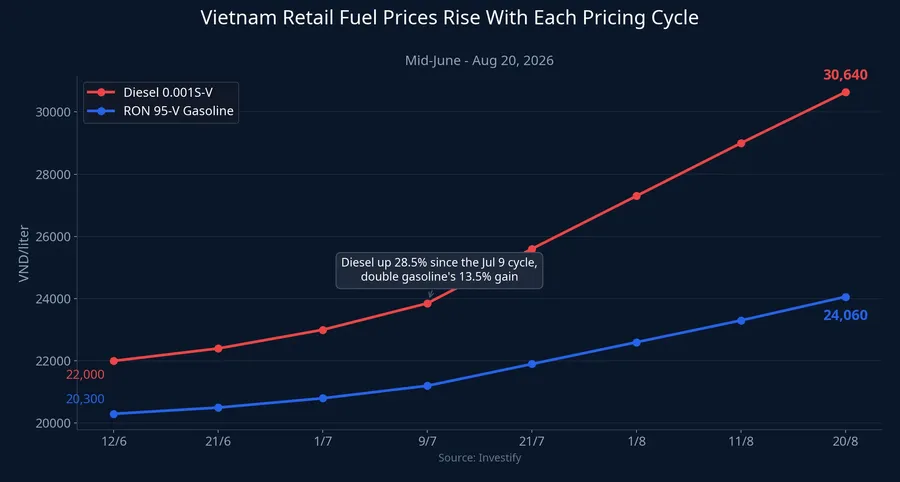
The first channel is retail fuel prices. The August 20 pricing cycle pushed 0.001S-V diesel to VND 30,640 a liter and RON 95-V gasoline to VND 24,060 a liter (DB: VN_DIESEL_V, VN_RON95_V). Compared with the July 9 cycle, diesel is up 28.5% while gasoline rose 13.5%. Diesel is climbing twice as fast as gasoline, and diesel is the fuel that trucks, fishing boats and the entire freight chain burn, so logistics costs feed into the cost base of far more listed companies than just the oil and gas group.
The second channel is oil-sensitive stocks. Higher oil prices typically benefit upstream and oilfield-services names while pressuring fuel-consuming sectors like aviation, transport, plastics and fertilizer. In the August 28 session, GAS closed at VND 84,200 a share, PVS at VND 39,600, PVD at VND 19,150 and PLX at VND 36,250 (DB: GAS, PVS, PVD, PLX). These two groups move in opposite directions, so a portfolio holding both will see a much smaller net effect than the swing in any single name.
The third channel is the exchange rate. Vietnam imports most of its refined fuel, so higher global oil prices raise demand for foreign currency to pay for those imports. The USD/VND rate closed the August 28 session at 26,096.50, essentially flat for the week (DB: USD_VND). This is a slow transmission channel that typically takes several weeks to show up, not something that reacts within a single session.
Gold's link to this story is weaker than most people assume. World gold prices closed the August 28 session at $4,596.29 an ounce, barely changed for the week despite Hormuz headlines dominating the news cycle (DB: GOLD). Over the past six months, the variable driving gold has been Fed rate expectations, not developments in the Gulf. Buying gold as a Hormuz hedge is a bet on a relationship that recent data doesn't strongly support.
Ahead of the September 3 session
The VN-Index closed the week of August 24-28 at 1,832.12 points after five straight sessions of gains, before the market broke for National Day (DB: VN-INDEX). The September 3 session will be the first to absorb the full chain of events since August 30, plus whatever happens during the remaining two days of the holiday.
The sensible way to prepare for a session like this isn't to forecast the index, but to know in advance which signals to read by. Three signals below resolve the three branches above, and all three are public: the form of Iran's next response (missiles at bases is the old ladder; mines or tanker attacks is the new one that actually moves prices); this week's Hormuz transit count against the 114 benchmark, published weekly by Lloyd's List Intelligence; and the outcome of the September 6 OPEC+ meeting, which lands right at the end of the first trading week back from the holiday.
For portfolios, the standard defensive posture during an unresolved geopolitical risk window is to hold cash weighting above normal levels and avoid using margin to front-run a specific branch. The gap between the escalation branch and the de-escalation branch is wide enough that a single news reversal could wipe out any advantage from getting in early. If no fresh mine-laying has occurred by the September 3 session and Hormuz transit counts keep rising, the scenario where oil resumes last week's downtrend looks more likely, and the impact on Vietnam's domestic market would be far smaller than the international headlines suggest.