
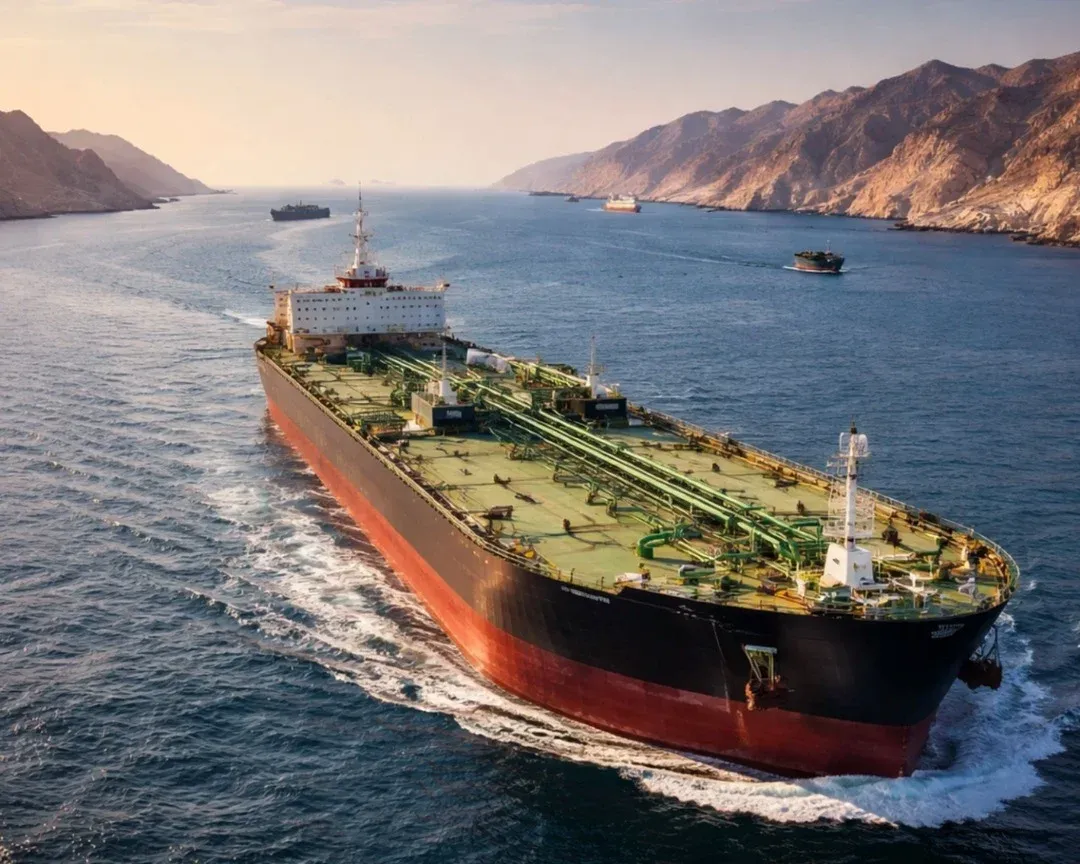

On August 26, Iran's Islamic Revolutionary Guard Corps put out a notable piece of news: not a statement about keeping the Strait of Hormuz closed, but a revenue-sharing agreement with Oman covering traffic through the strait.Vietstock That same week, Brent crude closed August 28 at $87.62 a barrel, down 7.17% from $94.39 just a week earlier.
Put those two facts side by side and a paradox emerges. The usual reflex says a strategic waterway under contested control should push oil prices up, not down. Hormuz carried roughly 20 million barrels a day before the conflict, about a fifth of global oil flows, and Iran still maintains the strait stays closed until Washington meets Tehran's conditions. So why did oil fall exactly as the Hormuz story was heating up?
The week's steepest drop landed the same day Iran sat down to negotiate
Look at the week session by session and the decline wasn't evenly spread. On August 25, Brent lost 3.89% to close at $88.58, the sharpest single-session drop of the week. That was also the day Oman's Foreign Minister Badr bin Hamad Al Busaidi and Iran's Foreign Minister Abbas Araghchi met in Tehran and issued a joint statement on a phased framework for a temporary maritime corridor through Hormuz.Oman Ministry of Foreign Affairs The notable part of that statement wasn't the mine-clearing plan, it was the part about money: both sides agreed to keep a joint working group between the two foreign ministries to work toward an arrangement on maritime traffic management, associated services, and the fees for those services. In other words, transit fees were formally put on the table.
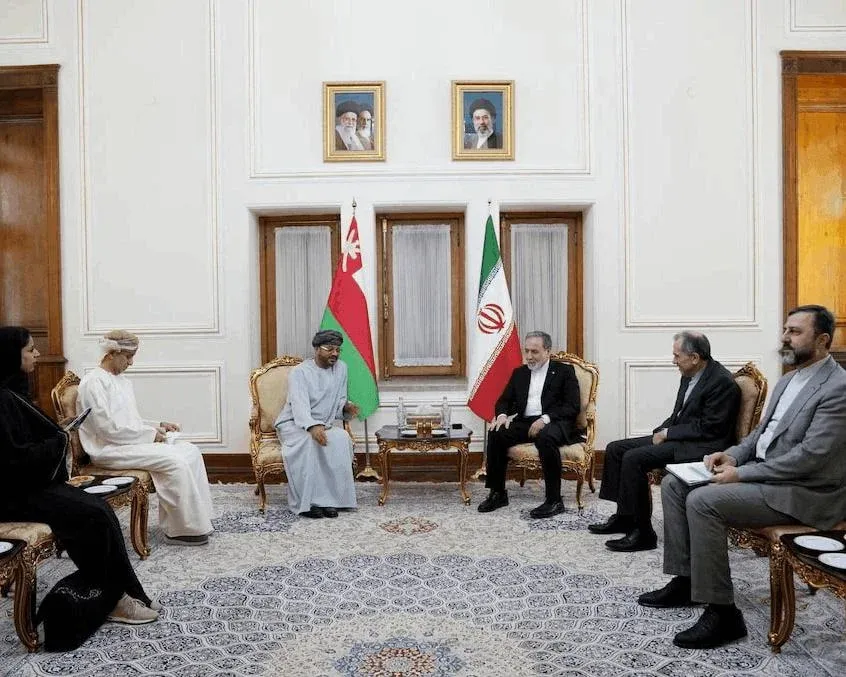
This is where the market read the situation differently from the instinctive reaction. A party that claims control of a strait in order to close it is a supply risk. A party that claims control of a strait in order to charge tolls on it is running a business model, and that model only works if ships keep moving through. Ole Hansen, Head of Commodity Strategy at Saxo Bank, said the resumption of talks is stripping out the geopolitical risk premium that had built into oil prices over months.
US pressure escalated the same week, oil still fell
If oil prices last week only tracked the level of tension, this should have been an up week, not a down one. On August 24, US Treasury Secretary Scott Bessent announced a sanctions campaign called Operation Economic Outcast, targeting international entities facilitating Iran's oil, shipping, crypto, and gold trade, calling it an "economic D-Day." Brent still fell 2.35% that session.
At the same time, the US rejected any arrangement letting Iran collect fees over Hormuz, holding to the position that only the US Navy controls the waterway. President Donald Trump said roughly 10 million barrels of oil passed through Hormuz on August 25 and claimed mines in the strait had been fully cleared, while Iran maintained the strait remained closed. The market appears to have stopped picking a side in that dispute and started counting the barrels actually flowing: during the 60 days the US-Iran memorandum was in effect, roughly 374 million barrels left the Gulf, about 6.1 million barrels a day, nearly three times the 2.3 million barrel average from April through mid-June.
A lower price doesn't mean the world is oversupplied
The 7.17% drop did not come from an oversupplied market, even though there are plausible alternative explanations worth weighing, such as US crude inventories rising per preliminary American Petroleum Institute data, or OPEC+ sticking to its monthly output-increase schedule. Neither explains why the steepest single-day drop landed precisely on August 25, the day Iran and Oman issued their joint statement.
More importantly, the current oil supply base is thin, not loose. OPEC+ spare capacity, the buffer that lets the market absorb supply shocks, was near zero in Q2 2026. A market this thin is sensitive to news in both directions: it falls fast on signs the route is reopening, and it can bounce just as fast if that signal disappears. On August 13, the International Energy Agency (IEA) warned the market could face a shortfall of up to 1.8 million barrels a day in Q3 2026 if Hormuz stays closed for an extended period, while also noting that if the strait reopens, the market could flip into oversupply as soon as Q4 2026. Last week's price action was pricing in that second scenario.
The cost of Hormuz didn't disappear, it moved to a different invoice
For Vietnamese businesses, the number worth watching isn't the spot oil price, simply because no exporter or importer buys Brent directly. They pay freight, surcharges, and insurance premiums, and those three items move on a completely different track from the price of oil.
Drewry's World Container Index (WCI) for the week of August 27 stood at $4,473 per 40-foot container, down just 1% from the prior week. Set against the $2,107 level from early February 2026, freight rates are still more than double.FireAnt In the exact week Brent fell 7.17%, container freight only dipped 1%. That is a gap an investor watching only the oil price board would never see.
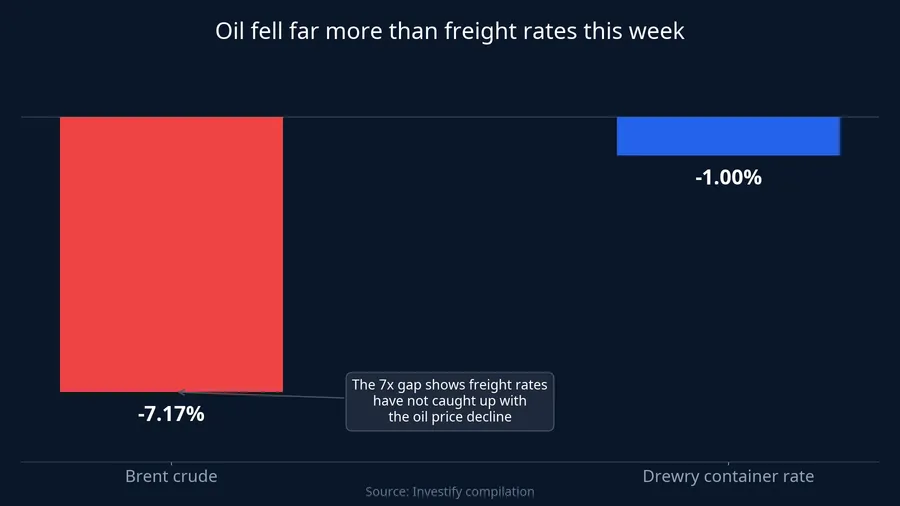
The reason for that gap is that these cost layers hardened into shipping routes months ago, not something that eases the moment positive negotiation headlines appear. Hormuz bypass infrastructure has a clear cap: Saudi Arabia's East-West pipeline carries 7 million barrels a day to the Red Sea port of Yanbu, and the UAE's ADCOP pipeline carries 1.5 million barrels to Fujairah, roughly 9 million barrels a day combined. That is less than half the 20 million barrels that normally moved through the strait. The rest has to detour around the Cape of Good Hope, adding roughly $1 million in fuel costs per voyage and 10 to 14 days to the journey.CafeF
Insurance is the second cost layer, and it hasn't cooled off to match either. At the peak of tension in mid-March 2026, war-risk insurance premiums for vessels transiting Hormuz reached roughly 5% of hull value, versus under 1% in peacetime; another estimate put the increase at roughly four times normal.FireAntVnEconomy Large tanker charter rates also hit unusual levels: on June 24, 2026, a VLCC charter was fixed at 897 Worldscale points, nearly nine times the base rate.FireAnt A third, less-discussed layer is security on the detour route itself: Somali piracy has resumed and the danger zone has expanded into the Gulf of Aden and Gulf of Oman, exactly the corridor shipping lines use to avoid Hormuz. On August 11, 2026, the container ship Vela Nova, carrying 17 crew, was attacked in the eastern Gulf of Oman.FireAnt The detour, in other words, is neither free nor entirely safe.
The invoice has already reached Vietnamese businesses
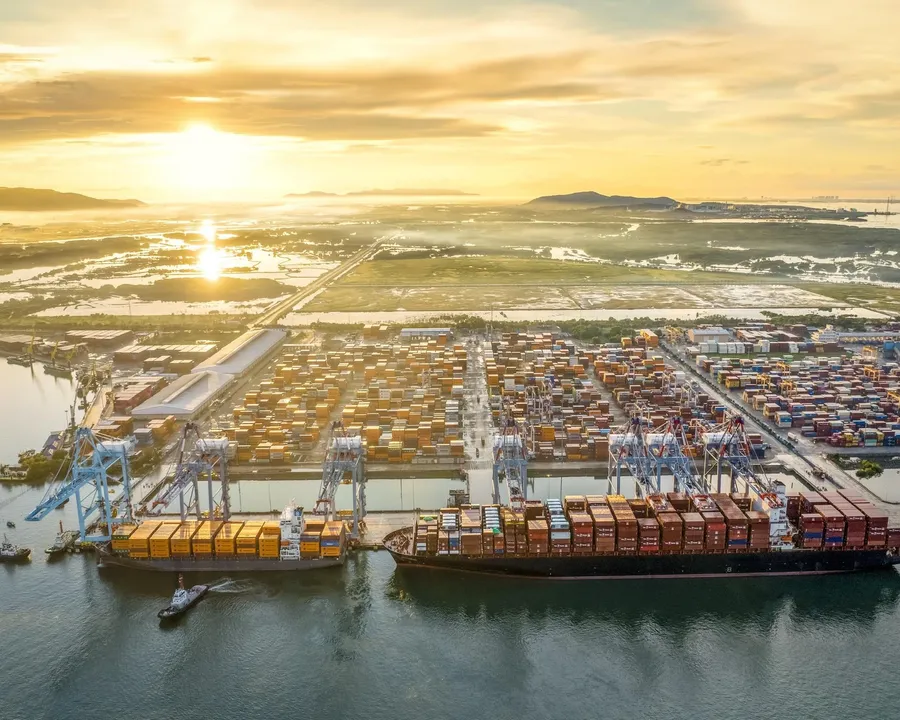
Concrete numbers show the weight of these cost layers. On August 24, the Vietnam Association of Seafood Exporters and Producers (VASEP) said seven-month seafood exports reached $6.7 billion, up 10.5%, while freight rates to the US rose by as much as $3,000 per container and are eating into margins.Nguoiquansat At the individual company level, pepper exporter Phuc Sinh reported June 2026 logistics costs of VND 22 billion, of which VND 17 billion was freight, versus VND 7-8 billion previously, now more than half of its operating costs.Nguoiquansat
On the domestic retail side, the August 27 afternoon price-setting cycle reflected some of crude's cooldown: E10 RON95-III gasoline fell to VND 22,602 a liter, down VND 66, and 0.05S diesel fell to VND 28,084 a liter, down VND 459. That is a modest move relative to crude's swing, since domestic administered prices are averaged over the full cycle rather than pegged to the last session.Nhan Dan

On the stock market, the impact splits cleanly in two directions. Shipping and tanker names benefit while freight rates stay elevated: PVT closed August 28 at VND 20,200 a share, PVP at VND 18,350, and HAH at VND 48,000. Direct exporters — seafood, textiles, agricultural goods — sit on the cost-bearing side. What matters for both groups is that the variable driving their outcomes is the same: freight rates, not the price of a barrel of oil.
Three signals worth tracking instead of the oil price
The Hormuz story isn't over, and last week only shows which scenario the market is pricing in, not which one will actually happen. For investors tracking commodities and shipping stocks, spot oil is a lagging, noisy indicator. There are things that lead it.
First is the pace of mine-clearing in the strait, since that's the technical precondition for ships to return, not a diplomatic statement. Second is the outcome of the joint working group between Iran's and Oman's foreign ministries on the transit-fee mechanism, since it's precisely the possibility of collecting fees that pulled oil prices down last week. Third is the weekly movement of the container freight index, the indicator closest to the actual invoice Vietnamese businesses pay.
The read-through for portfolios sits more in freight rates and negotiation progress than in the oil price line on the board. It's worth remembering that the geopolitical risk premium just stripped out of prices over one week could just as easily get bolted back on in a single session, given OPEC+ spare capacity remains near zero. If the Iran-Oman talks collapse, the resulting price spike is likely to be sharper and faster than last week's 7.17% decline, and the outcome of that joint working group in the coming weeks will be the clearest answer on where things head next.