
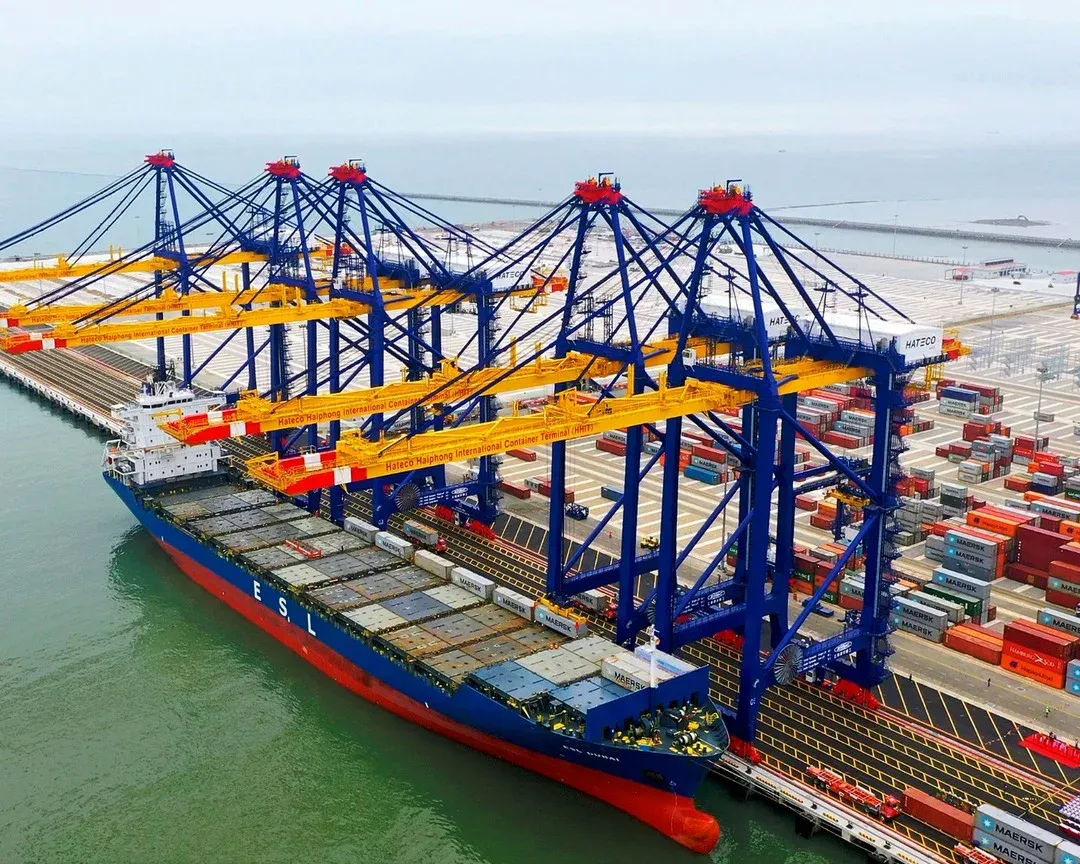

Vietnam's economy reached VND 12,847.6 trillion in 2025, equivalent to roughly $514 billion, with growth of 8.02%.VnEconomy Compared with roughly $6.7 billion in 1990, when Vietnam ranked 85th globally, the economy is now more than 70 times larger and has climbed to roughly 32nd-35th place worldwide.VietNamNet Per-capita income has moved from $99/year in 1990 to roughly $5,026, or VND 125.5 million.VnEconomy
The bigger picture needs to be read against its starting point. In 1990, Vietnam was still under embargo, had not normalized relations with the US, and had not joined ASEAN. That is an unusually low base, and it inflates any multiple calculated from it. What's worth analyzing isn't the 70x figure itself, but the mechanism that produced that distance, and how much runway that mechanism still has.
The engine: foreign capital pulling exports, exports pulling industrialization
Vietnam's growth chain hasn't come from a single catalyst but from an engine that has run continuously for decades: foreign capital built production capacity, that capacity pushed export turnover higher, and exports pulled labor out of agriculture, reshaping the entire economic structure.
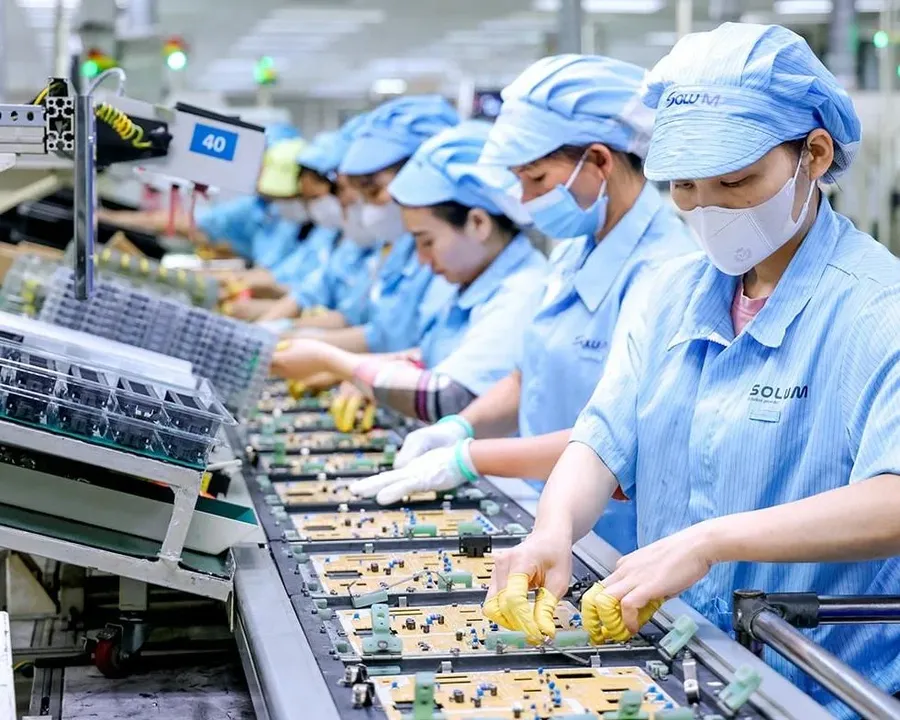
Average annual net FDI inflows rose from $1,338 million in 1990-2000 to $17,121 million in 2020-2025, roughly a 13-fold increase. Average annual export turnover grew from $7.3 billion to $365.5 billion, a 50-fold jump. More telling than either absolute figure is the economy's openness: exports equaled 38% of GDP in 1990-2000, versus roughly 90% of GDP in 2020-2025.
2025 kept the same rhythm: registered FDI reached $38.42 billion, with $27.62 billion disbursed, the highest disbursement in five years.VnEconomy Total import-export turnover topped $900 billion, up 16.9%.VietnamPlus The result shows up clearly in GDP structure: agriculture, forestry and fisheries shrank from 14.7% (2010-2020) to 11.2% (2020-2025), industry and construction expanded from 34.4% to 36.8%, and services rose from 40.1% to 42.5%.
Growth speed: slower on paper, faster in practice
Looking at average real GDP growth by period, the picture initially appears to be declining: 6.88%/year in 2000-2010, 5.86%/year in 2010-2020, and 5.54%/year in 2020-2025. But most of that gap traces back to two pandemic years, when 2020 grew just 2.82%, 2021 grew 2.66%, and Q3 2021 alone contracted 6.02%.
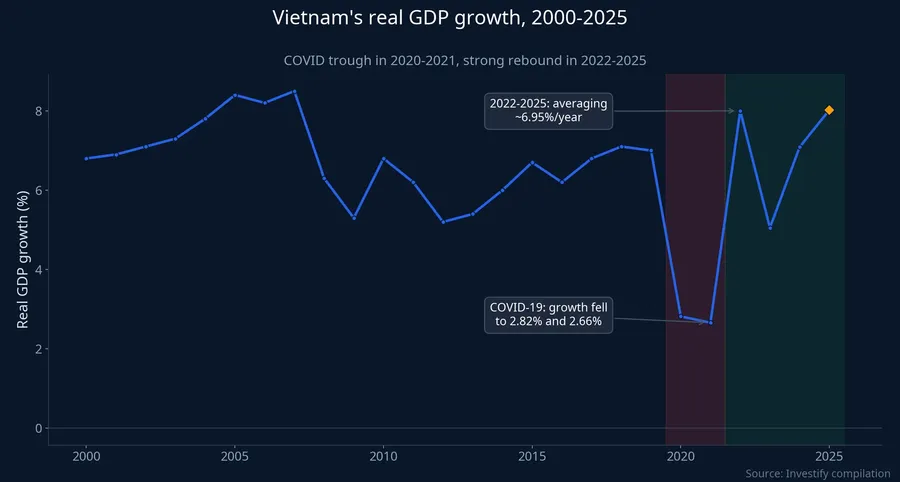
Strip out just the four years 2022-2025, and the average climbs back to roughly 6.95%, matching or even beating the 2000-2010 period. Q4 2025 hit 8.46% and Q1 2026 held at 7.83%, suggesting the rebound isn't a one-quarter event. Growth quality has also improved, not just scale: output per hour worked, measured at purchasing power parity, rose from $4.86 in 2005 to $12.70 in 2025, an average increase of roughly 4.9%/year, ticking up to 5.8% and then 5.7% in the two most recent years.
Where the engine hasn't converted: who keeps the value
How much of that macro growth converts into domestic corporate capability is a separate question. The FDI sector's share of total export turnover climbed from 54.8% in 2010 to roughly 76.2% in 2025.
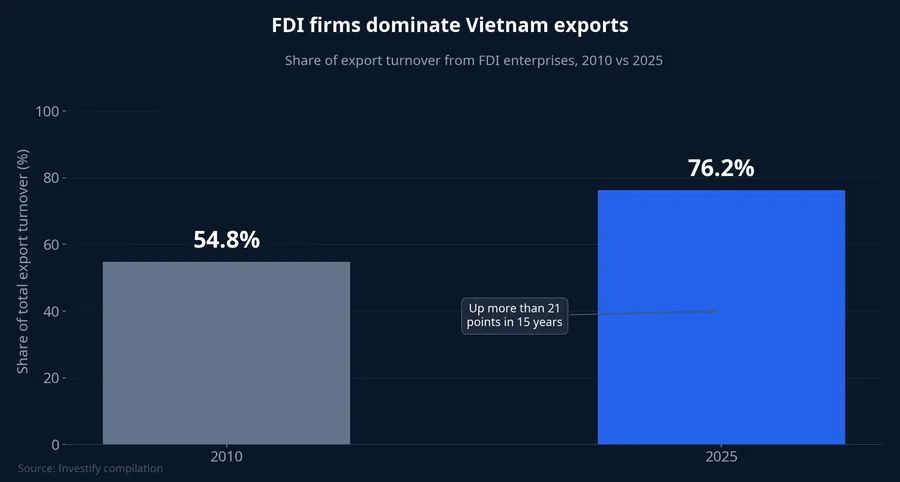
Counting two-way trade, FDI enterprises reached roughly $663 billion, or 72% of the economy's total goods trade.Nhà Đầu Tư In other words, the engine runs very well, but foreign firms still hold most of the steering wheel. At a national conference on reforming the development model on August 20, Nguyễn Trọng Hoài, senior lecturer at the University of Economics Ho Chi Minh City (UEH), pointed out that tech-related exports are growing fast but sit mostly within the FDI sector, while the value-added ratio of domestic firms' exports is actually declining. He proposed shifting from an investment-only model toward one that links investment with technology spillover and innovation.VietNamNet
The concrete metric behind this bottleneck is total factor productivity (TFP): to hit the high-income target around 2045-2047, TFP growth needs to rise from roughly 0.2% to an average of 2% per year, while the easy productivity gains from shifting labor out of agriculture are also thinning out. A regional comparison illustrates both sides of the story: in 1990 Thailand's GDP reached $85 billion, ranking 35th globally, but 35 years later its economy is only about 12% larger than Vietnam's. Ngô Thắng Lợi, senior lecturer at the National Economics University (NEU), cited Vietnam's average GDP growth of roughly 6.4%/year — double the global average — while also noting that Thailand is a cautionary example: the hardest stretch is moving from upper-middle income to high income, not the stretch Vietnam has just completed.
On the market: which link actually captures the profit
For investors, the practical question is where that macro growth flows before it becomes listed-company profit. Total market capitalization as of the August 21 session stood at roughly VND 14.85 quadrillion, with the VN-Index closing at 1,768.12 points.
Comparing Q2 2026 net profit against the year-ago quarter, the spread between sectors is wide. Retail led with weighted-average growth of 108% and median growth of 46%. Logistics and shipping followed with 81% weighted average and 21% median, also posting the highest average revenue growth of any sector, around 32%. Banking rose 36% on a weighted-average basis but showed clear divergence: VCB up 65%, VPB up 78%, STB down 53%. Power and utilities grew 108% weighted average but only 6% on a median basis, since POW alone jumped 387% and pulled the whole group up while NT2 fell 6% and GEG fell 95%.
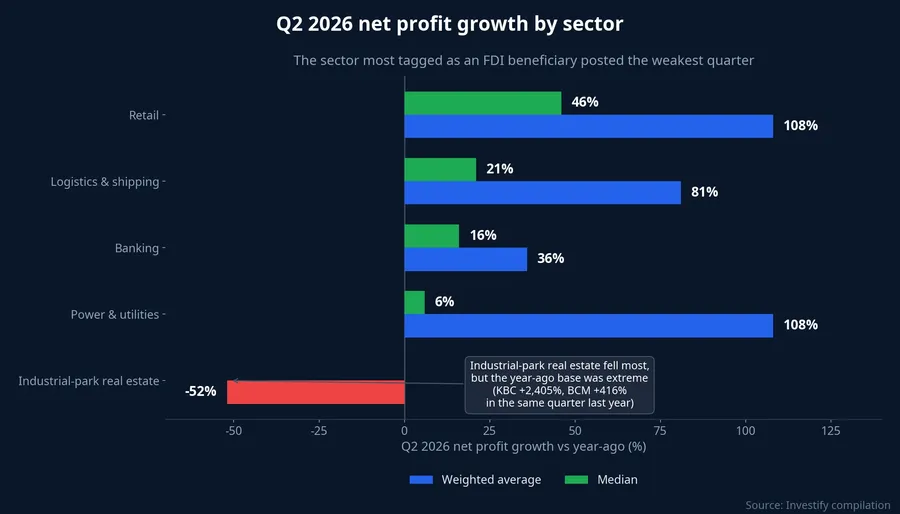
The detail most likely to be misread is industrial-park real estate: the sector most literally tagged as an FDI beneficiary actually posted the weakest quarter, with weighted-average profit down 52% as BCM fell 86%, KBC fell 91%, and SZC fell 80%. That doesn't mean foreign capital inflows are slowing. At least three other explanations deserve consideration before jumping to that conclusion: an extremely high base (KBC jumped 2,405% in Q4 2025, BCM jumped 416% in Q2 2025, making the year-over-year decline look larger than it really is); land-lease revenue recognition that depends on each project's handover schedule rather than being spread evenly across quarters; and a natural lag between when FDI capital is disbursed and when the corresponding lease contract gets booked. All three are consistent with the available data, and none supports reading this as FDI capital pulling back.
By contrast, ports, shipping and retail sit downstream of the growth engine: goods must move as soon as they're produced, and industrial-park income eventually cycles back into domestic consumption. That's why profit in these two sectors is both higher and more evenly distributed, rather than concentrated in a handful of leaders the way power stocks are.
What to watch next
A larger economy doesn't automatically translate into higher profit for listed companies. It only converts through the links where domestic firms actually stand, and under the current structure, that leans toward shipping, ports and consumption more than export manufacturing, where the FDI sector holds most of the pie.
For an economy with exports equal to 90% of GDP and an FDI sector accounting for roughly three-quarters of trade turnover, the two most decisive variables over the next 12 months are global goods demand and trade policy in major markets. The specific signals worth tracking are the share of domestic value-added in exports and the pace of TFP growth, two measures that show whether the engine is shifting from breadth to depth. At the portfolio level, a reasonable defensive framework is to favor sectors with evenly distributed profit growth over ones that are merely on-theme, and to read results across several consecutive quarters rather than stopping at a single one.