
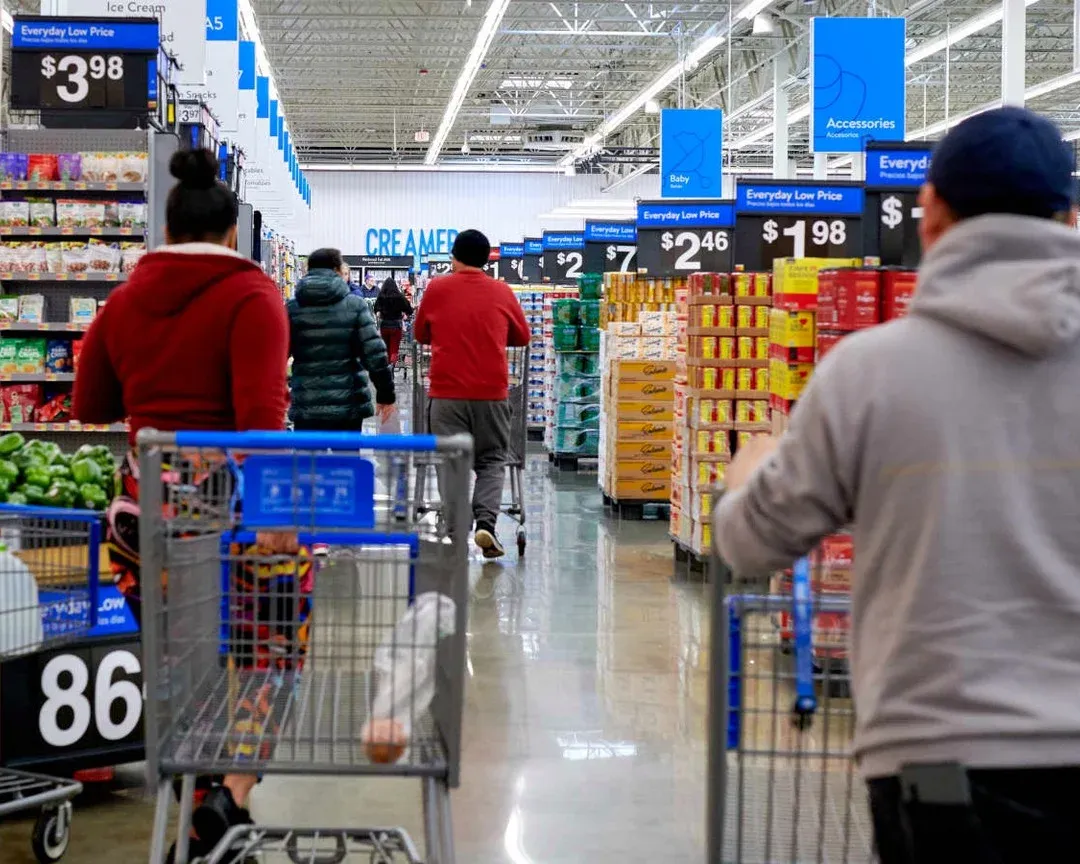

On August 20, Walmart reported quarterly revenue of $187.9 billion, up 5.9% year over year and above the $186.75 billion analysts expected. Adjusted earnings per share came in at $0.81, beating the $0.74 forecast, and the company raised its full-year adjusted EPS guidance to $2.80-$2.87. Revenue beat, earnings beat, guidance raised. Yet Walmart shares dropped 9.2% that same session, erasing more than $80 billion in market cap and marking the stock's worst day since May 2022.Spokesman-Review
The real story isn't in the headline revenue line. It's in the layer beneath it: comparable sales growth at stores open at least a year in the US. That's the metric institutional investors check first when reading a retail earnings report, and this quarter it sent a signal that contradicted everything else in the release.
The second layer: more shoppers, smaller baskets
Walmart's US comparable sales grew just 2.6%, below the 3.7% analysts had forecast and the slowest pace in six years.Yahoo Finance This is the line that triggered the sell-off, not the top-line revenue figure, which is always inflated by new store openings.
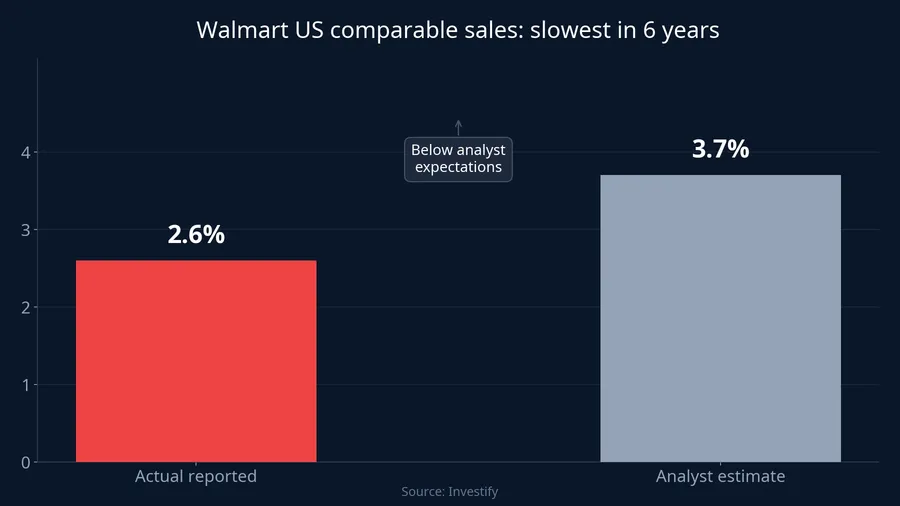
Breaking the 2.6% into its two components makes the shift clearer. Transaction count rose 1.5%, while average ticket size grew just 1.1%.Supermarket News Customers are still showing up. In fact, there are more of them. But each visit brings home less.
That 1.1% only makes sense next to price data. Food-at-home prices in the US rose 2.7% year over year in July, and food accounts for 59% of Walmart's US revenue in the fiscal year just ended.Grocery Dive A 1.1% rise in ticket size against a 2.7% rise in the price of what's in that ticket means the actual volume of goods in each basket has shrunk. That's classic belt-tightening behavior: shopping more often, buying less each time, and sticking to what gets used right away.
What the headline inflation number can't capture
July's consumer price index brought annual inflation down to 3.4%, from 3.5% in June, and the popular reading at the time was that prices were cooling and household purchasing power was holding up.CNBC But that's an average across an entire basket of goods. It cooling doesn't mean every line item is cooling at the same pace.
Gasoline is the least elastic item in that basket. On August 20, the average US retail gas price stood at $4.10 a gallon, the highest ever recorded for that date, with Brent crude trading around $93.82 a barrel.AAA Newsroom Every dollar that goes into a gas tank is a dollar that doesn't go into a grocery cart.
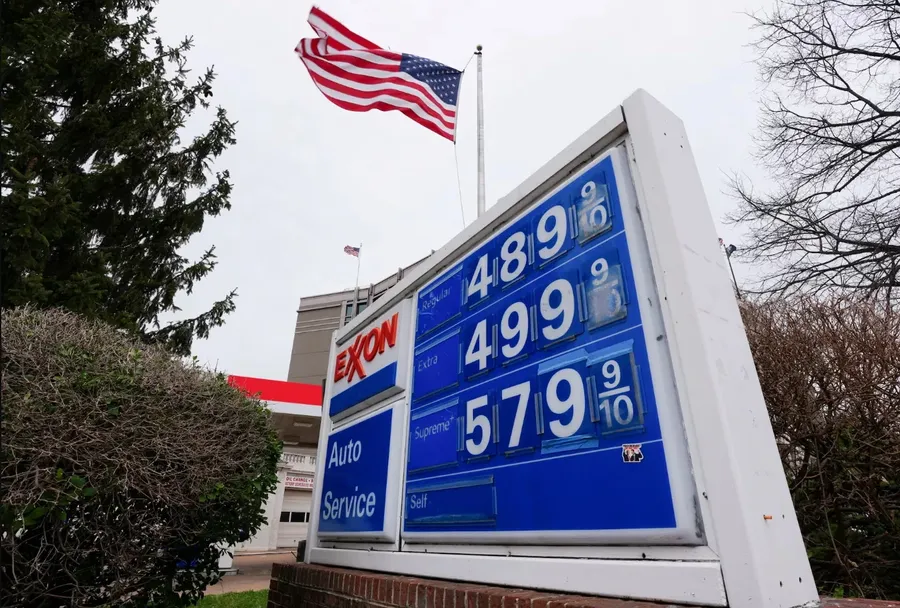
The clearest evidence of that trade-off comes from Walmart's own gas stations. CFO John David Rainey, Walmart Inc., said the average fill-up per visit dropped below 10 gallons for the first time since 2022, calling it "a sign of stress."Yahoo Finance He added that once prices cross $4 a gallon, the threshold creates a psychological effect that forces shoppers to make trade-offs. Higher-income customers are still spending steadily, while lower-income shoppers are being more careful with every purchase.
President & CEO John Furner, Walmart Inc., acknowledged that high prices are straining customers, particularly on ground beef, and emphasized that the company is doubling down on its everyday-low-price model.
Three explanations for the sell-off, not one
Slower comparable sales weren't the only reason the stock fell 9.2%. At least three factors coexisted in the August 20 session, and they need to be read together rather than picking just one.
The first is the quality of the earnings beat. Operating income growth was driven largely by roughly $2.9 billion in tariff refunds, after the US Supreme Court ruled that tariffs imposed under emergency powers were unlawful.Fortune That's a one-time item, not core retail momentum.
The second is what Walmart plans to do with that money. Rainey said the company will funnel nearly all of the refund into price cuts for customers. Discounting keeps shoppers loyal, but it compresses margins in the back half of the year. That pressure is already visible in third-quarter guidance, where adjusted EPS is expected at just $0.62-$0.64.
The third is valuation. Before the August 20 session, Walmart traded at a forward P/E of roughly 38x, well above the roughly 15x median for defensive retail peers. A stock priced for steady growth gets re-rated fast the moment that growth misses a beat.
These three factors amplify each other. But the trigger was still the comparable-sales line, because it's the only one that speaks to shopper behavior rather than accounting.
Spending is shifting, not shrinking
American consumers haven't collapsed. Foot traffic is still growing, revenue is still up nearly 6%, and Walmart is confident enough to raise its full-year outlook. But assuming they're fine just because headline inflation cooled to 3.4% misses a layer of the picture.
A more accurate read: US household spending is shifting, not contracting. Money is flowing toward the cheapest retailer, into mandatory categories like fuel and food, and out of discretionary goods. The average inflation figure doesn't capture that shift. But the largest US retailer's sales ledger records it, receipt by receipt.
If gas prices stay anchored above $4 a gallon into next quarter, discretionary spending will keep eroding, and non-essential retailers are likely to report the same pattern after Walmart does. The indicator worth watching this earnings season isn't the average CPI print. It's average ticket size at individual retail chains, measured against inflation in the specific category each one sells.
What Vietnamese investors should take from this
The first lesson is about how to read a retail earnings report. Total revenue is always inflated by new store openings, so the metric that reflects real health is comparable sales, further split into traffic and ticket size. When traffic rises but ticket size grows slower than category inflation, a company is selling more visits with smaller baskets. That same breakdown applies directly to Vietnam's listed retail chains as Q3 earnings season approaches.
The second lesson is separating one-time gains from core earnings. Walmart's $2.9 billion tariff refund boosted this quarter's operating income but won't repeat next quarter. Provision reversals or asset disposals show up the same way in Vietnamese corporate earnings, without recurring.
At the macro level, US household purchasing power is the demand side for a large share of Vietnam's exports. In the first seven months of 2026, Vietnam exported $104 billion worth of goods to the US, up 23% year over year, with textiles and wood furniture among the top categories.MekongASEAN A smaller basket in the US doesn't feed directly into export orders in the same month, but that lag is usually measured in quarters, not years.
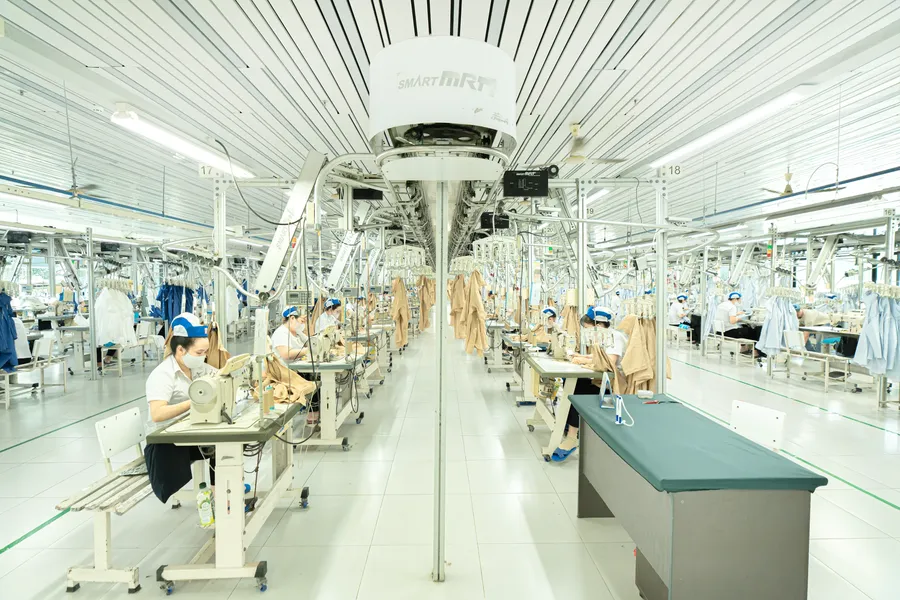
Holiday-season order volume is the closest test of that link. Q4 export data and average ticket size at US retail chains this earnings season are two indicators worth watching side by side.