
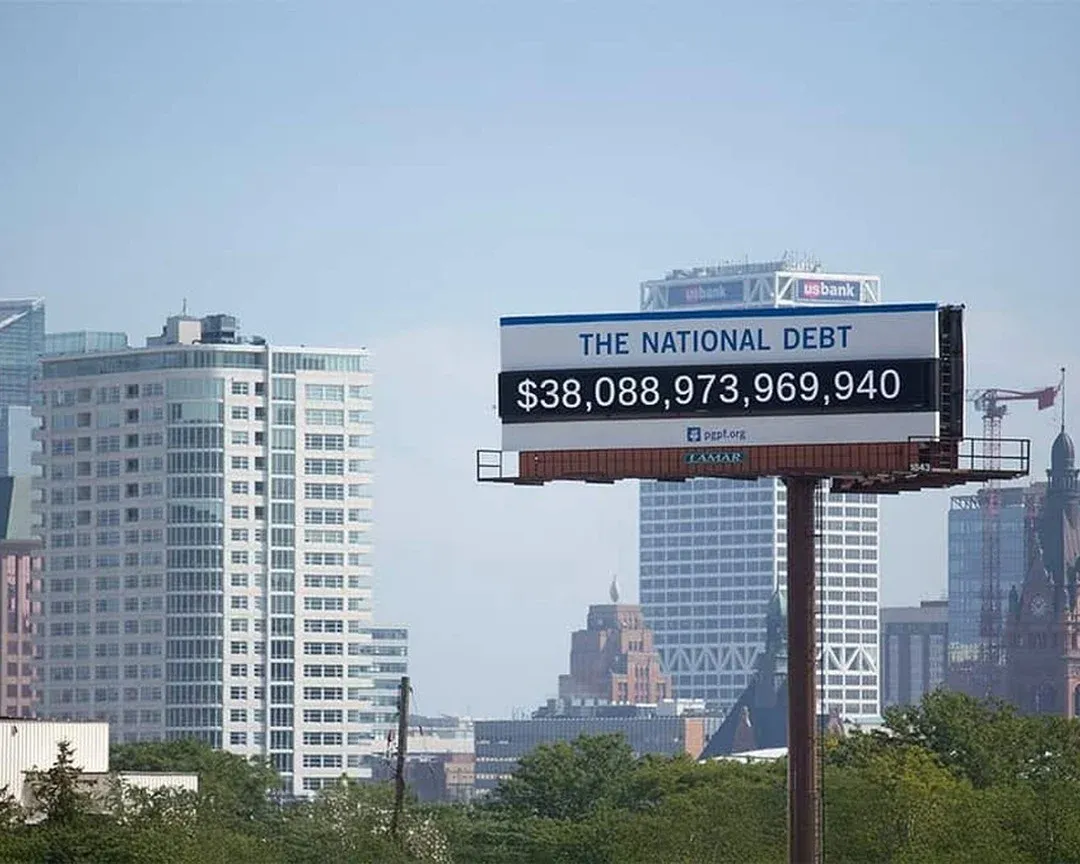

On August 19, total US government debt officially crossed $40.05 trillion for the first time in history.CNBC Conventional logic says a growing debtor should pay higher rates. Yet that same session, the 30-year Treasury yield fell 9 basis points to 5.196%, while the 10-year fell 5.7 basis points to 4.647%.Yahoo Finance Both facts are true at once, and what connects them is a short announcement from the US Treasury.
A milestone that arrived ahead of schedule
The $40.05 trillion figure isn't surprising in direction, only in speed. US debt hit this mark months earlier than forecast, partly due to lost tariff revenue after courts struck down several tariffs.NPR A decade ago, US debt stood at just $19.4 trillion. In other words, the debt has more than doubled in ten years.
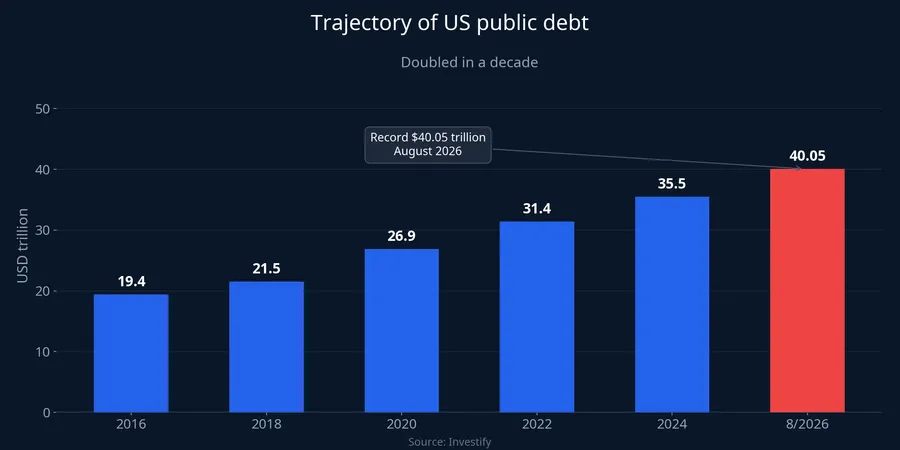
What bond investors are watching most closely isn't the debt balance itself, but the cost of servicing it. Interest payments have climbed to nearly $1.2 trillion this year, the largest federal budget line item outside Social Security and Medicare. In July alone, the budget deficit hit $432.3 billion, the highest monthly figure since March 2021.CNBC
The feedback loop is easy to picture: a large deficit forces more bond issuance, more supply pushes yields higher, and higher yields raise the interest cost on maturing debt that has to be rolled over. That loop pushed the 30-year yield to its highest level since 2007 in the August 18 session.
The Treasury steps onto the demand side
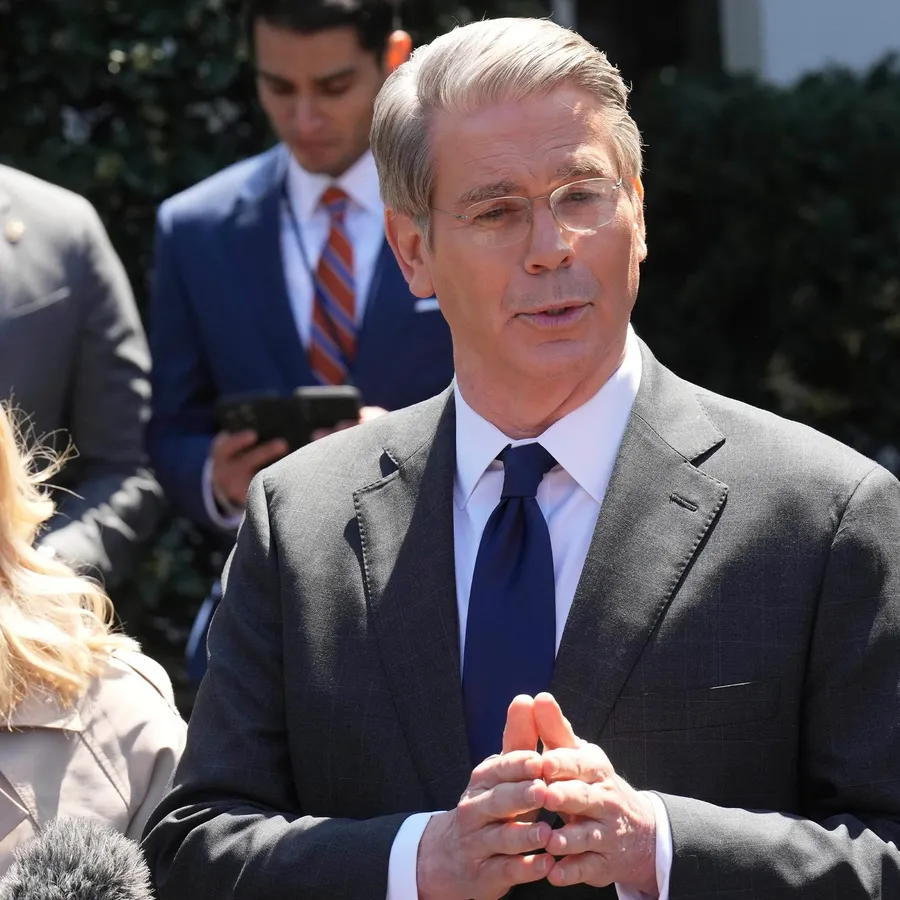
On August 19, US Treasury Secretary Scott Bessent announced at least a doubling in the size of long-term bond buyback operations, from $2 billion to a minimum of $4 billion per operation.CNBC The program targets the 10-to-20-year and 20-to-30-year sectors, running from September 9 to November 4.
The buyback mechanism is fairly simple: the Treasury runs a reverse auction, accepting offers from the market and repurchasing older, less-liquid bonds still outstanding. What needs to be said plainly is that this operation does not reduce total debt, since the cash used to buy back bonds still comes from issuing new debt. It's a reshuffling of the debt portfolio's structure, not repayment.
It's not a new tool, either. The last time the US ran a large-scale buyback was 2000-2002, when the budget was in surplus and the Treasury used the excess to retire outstanding debt, totaling $67.5 billion across 45 operations.New York Fed The program then went dormant for two decades, restarting only in May 2024 with a liquidity-support goal rather than debt reduction.
Why $4 billion can move a $40 trillion market
Next to $40.05 trillion in debt, a single $4 billion operation is a tiny number. So why did yields react immediately?
Part of it is genuine supply and demand. Doubling the operation size creates a large, regular buyer with a published schedule, positioned exactly at the long end of the curve the market has struggled to absorb. Investors holding 20- or 30-year bonds know they now have an extra exit when they need to unwind a position, so the yield they demand to hold that risk falls too.
But the larger part comes from the signal. The announcement landed right after the 30-year yield hit a 19-year peak, and the market read it as confirmation that the US administration has a pain threshold for long-term yields, and is willing to intervene once that threshold is hit. The proof came from the prior session: on August 18, a routine $2 billion buyback went ahead as scheduled, and the 30-year yield still broke to a new high. Same operation, only twice the size, yet a completely different result because the message attached to it had changed.
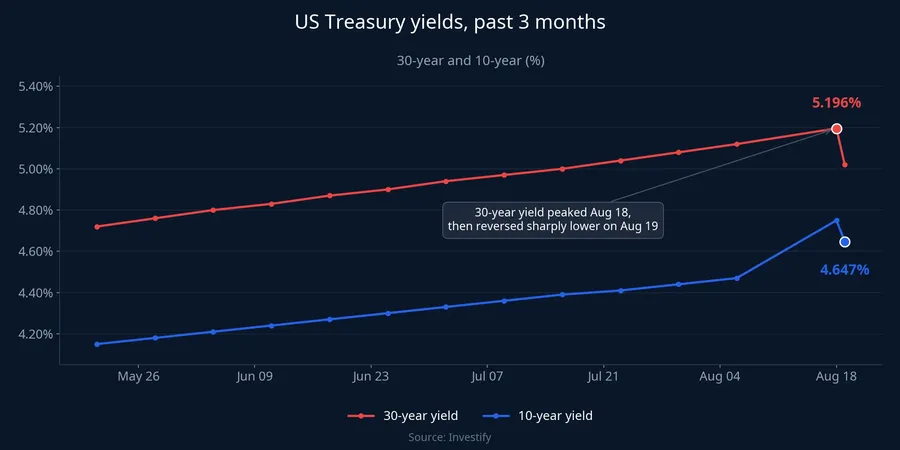
To be fair, this isn't the only explanation. The prior bond selloff was tied to fears of escalation between the US, Israel and Iran, so any sign of geopolitical de-escalation could pull yields lower on its own. German and Japanese government yields eased at the same time, suggesting part of the move is global rather than US-specific. Still, the steepness of the decline skewed heavily toward the long end of the curve, exactly where the buyback program is targeted, which makes the Treasury's announcement the explanation that best fits the session's data.
What this measure cannot do also deserves to be stated clearly. Buybacks can smooth out sudden yield spikes, but they don't touch the root cause: the budget deficit and the pace of new issuance. If fiscal data or inflation keeps deteriorating, the psychological effect of one announcement can evaporate fast.
Where this touches Vietnamese investors' portfolios
US Treasury yields serve as the reference rate for nearly all global capital, so this story reaches the Vietnamese market through three channels.
The exchange rate. This channel has transmitted more weakly than most expected this year. US yields climbed all summer, yet the dollar index still sat at 99.60 points on August 19, and the USD/VND rate closed at VND 26,173.5, down 0.14% from the prior session. The reason is that markets have been pricing in higher odds of Fed easing, which has kept the dollar soft even as Treasury yields climbed. Cooling US yields only ease the pressure on the dong further.
Foreign capital flows. This is the clearest transmission channel. When the dollar-denominated risk-free rate rises, the opportunity cost of holding Vietnamese equities rises with it, giving foreign investors reason to reallocate back toward developed markets. On August 19, foreign investors net-sold roughly VND 711 billion on HOSE, a fifth straight session of net selling, while the VN-Index slipped 0.31% to 1,726.69 points.Người Quan Sát
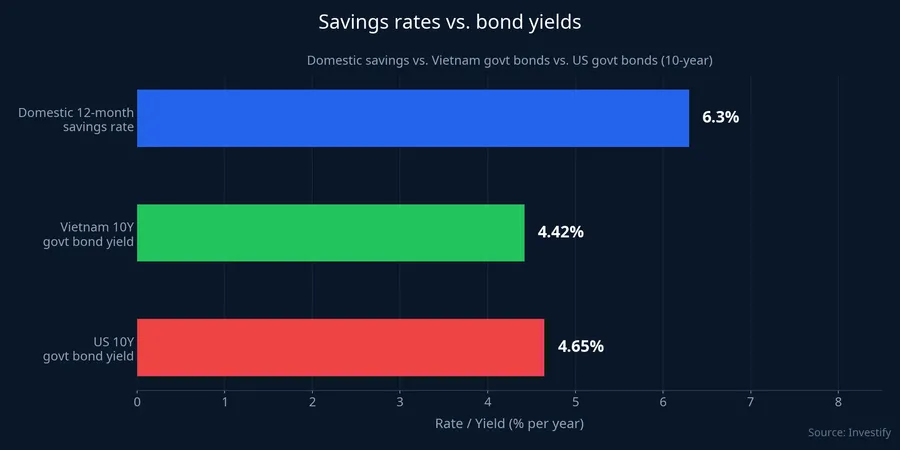
Long-term funding costs. Domestic deposit rates have barely moved all year, with online 12-month rates sitting around 6.3% annually, a sign that dong liquidity remains ample. But Vietnam's 10-year government bond yield has climbed to 4.42% annually, its highest level since the start of the year, tracking fairly closely with the global rise in yields. In other words, what's being affected isn't the savings account, but the long-term cost of capital for businesses and the state budget.
Reading this move the right way
For individual investors, the sensible frame is to treat the August 19 announcement as a signal about the US administration's pain threshold for yields, not a sign that the rate cycle has already reversed. A single 9-basis-point drop after months of climbing isn't enough to change the trend, and the buyback program itself only runs from September 9 to November 4.
The signal worth tracking in coming weeks is first whether the 30-year yield holds below its recent peak, since that is the most direct gauge of whether the market believes the Treasury's commitment. Next is the dollar index: the least comfortable scenario for Vietnam's market is a dollar that strengthens again while yields stay elevated, putting pressure on both the exchange rate and foreign capital flows at once. Closest to home for domestic investors is the pace of foreign net selling on HOSE, the fastest-reacting signal for whether global capital flows have actually loosened up.
If long-term US yields keep cooling and the dollar doesn't strengthen, pressure to pull capital out of Vietnam's market will likely ease in the near term. But if August's US deficit data turns out as bad as July's, the market will quickly return to the old question: who is going to buy all the additional debt that a $40 trillion balance sheet is forced to issue.