
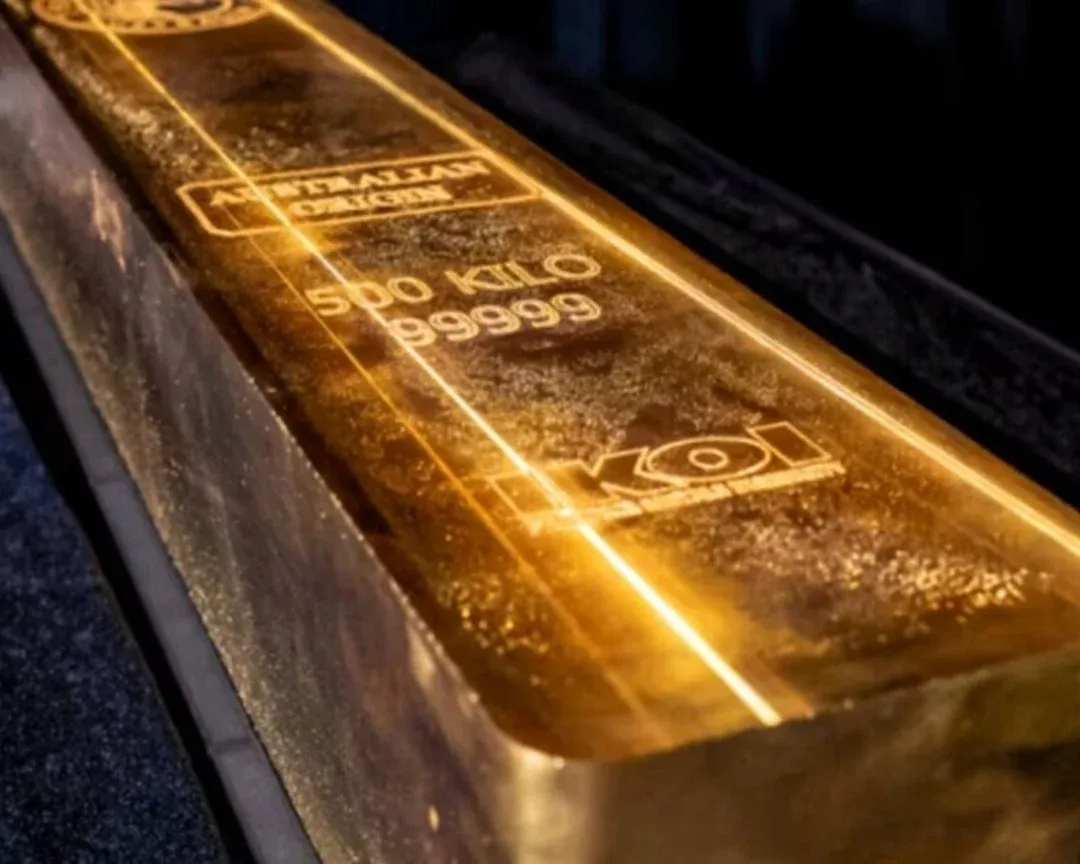

On the night of August 19 US time, what pushed world gold prices up $182.86 an ounce in a single session wasn't a new war, and it wasn't an inflation print. It was a technical announcement about a bond buyback schedule that never mentioned gold at all.
The US Treasury announced it would at least double the maximum size of each Treasury bond buyback, from $2 billion to a minimum of $4 billion, targeting the 10-20 year and 20-30 year segments, running from September 9 to November 4, under Treasury Secretary Scott Bessent.CNBC The reaction was immediate: the 10-year Treasury yield fell roughly 6 basis points to 4.647%, while the 30-year fell 9 basis points to 5.196%.NBC News Just before the announcement, that same 30-year yield had touched 5.31%, its highest level since 2007.Yahoo Finance
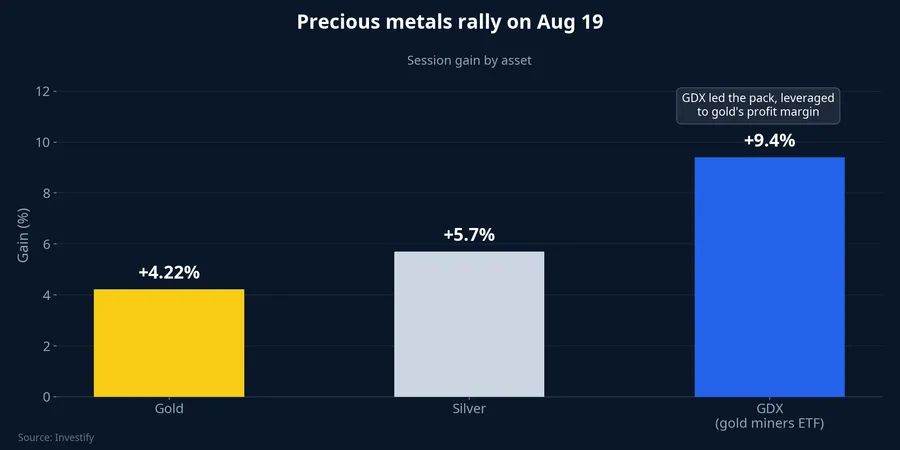
In the same session, world gold prices jumped 4.22% to $4,517.78 an ounce.Yahoo Finance Silver rallied harder, up 5.70% to $66.93 an ounce. The VanEck Gold Miners ETF (GDX) posted its strongest session in nearly four years, closing at $97.31 versus $88.95 the prior session, a gain of roughly 9.4%.Yahoo Finance
The mechanism: how a bond buyback pulls yields down
When the Treasury buys back previously issued bonds, it removes supply circulating in the secondary market. With demand held constant, less supply means higher bond prices and lower yields: the basic inverse relationship at the heart of bond markets. What stands out is where the money goes: the program isn't spread evenly but concentrated in the 10-30 year segment, an area CNBC noted had gone thin on buyers since late June; the Treasury's stated goal is to support liquidity in these longer maturities.Yahoo Finance
A third, less visible but more powerful channel is the term premium: the extra yield buyers demand to hold long bonds instead of short ones. When the Treasury signals it's ready to step in whenever long yields rise too fast, that premium compresses, and the entire long end of the yield curve falls with it.
The size is small, but markets aren't pricing the size
Each buyback round adds just $2 billion. The Wall Street Journal set that figure against the record $432 billion budget deficit posted in July alone, calling it small relative to the scale of the problem.Yahoo Finance This also isn't quantitative easing: the Treasury isn't printing money, it's buying back long-dated debt by issuing more short-dated debt, shifting pressure from the long end of the curve to the short end rather than erasing total debt. Deutsche Bank compared the move to the Fed's Operation Twist rather than a liquidity injection.Yahoo Finance Canada
So what is the market actually pricing? Not the extra $2 billion, but the commitment behind it: a Bessent-led Treasury signaling it will intervene whenever long-term yields rise too fast, and the market just read that as a soft cap on yields.
Why precious metals reacted harder than bonds themselves
Gold and silver pay no interest. The cost of holding them is the yield an investor gives up by not buying bonds instead, so when long-term yields fall, that cost falls too and precious metals become relatively more attractive. The dollar weakening against the G10 currency basket during the session added further support to dollar-denominated gold prices. Silver outran gold because its market is thinner and carries additional industrial demand, which tends to amplify moves in both directions, while mining stocks outran both for a simple accounting reason: their revenue tracks gold prices almost one-for-one while extraction costs are largely fixed in the short run, so a few percentage points of gold gains flow straight to profit margins, magnifying the underlying price move many times over.
It's worth acknowledging this rally had multiple forces stacking on top of each other, not just one. Gold had fallen 1.84% the prior session, so part of the August 19 gain was a technical bounce. The same day, the Fed released minutes from its July meeting that leaned toward inflation concern — a direction that typically pressures gold down, not up — so the timing evidence points squarely to the Treasury's announcement, with yields, the dollar, and gold all reversing within hours of it. It's also worth keeping the price in scale: $4,517.78 remains below the mid-April peak of $4,841.95, so this is a strong bounce within a broad sideways trend, not a new high.
Two paths from here

The biggest risk to gold's rally comes from the very thing driving it. Deutsche Bank warned that if the buyback program eases financial conditions, the Fed may need to tighten in response to offset it, since a Fed still fighting inflation can hardly sit still while long-term yields fall and the dollar weakens.Yahoo Finance Canada
The trigger condition here isn't vague. At the July 29 meeting, the Fed held rates at 3.50-3.75% with a 9-3 vote, with regional Fed Presidents Beth Hammack (Cleveland Fed), Neel Kashkari (Minneapolis Fed), and Lorie Logan (Dallas Fed) all dissenting in favor of a 25-basis-point hike, the most hawkish split since 2016.CNBC On August 5, Kashkari said plainly that it was time to start slowly moving rates up.CNBC If the dissent count widens at the next meeting, or Fed Chair Kevin Warsh signals a hawkish stance on inflation, long-term yields could climb back toward 5.3% regardless of the buyback schedule. Gold would then lose the very support that just lifted it, and mining stocks would amplify the decline just as they amplified the rally.
In the other scenario, the Treasury completes the full buyback schedule through November 4 at a minimum of $4 billion per round, and the 30-year yield holds below the 5.31% level set before the announcement. No Fed assist is needed here, just no Fed pushback. In that scenario, real yields stay lower, the dollar stays under pressure, and precious metals along with mining stocks have room to run further: a familiar environment for anyone who has tracked gold for years, since falling real yields alone are often sufficient for gold to rise, even with no geopolitical shock involved. The weak point worth acknowledging directly: a commitment only holds value until someone tests it. If a long-dated bond auction goes poorly while the deficit remains in the hundreds of billions per month, $4 billion per round will reveal exactly how small it really is.
What it means for Vietnamese investors
This is a foreign macro event, so its impact on the domestic market is indirect and lagged. The clearest channel is domestic gold prices: SJC gold bars were quoted at a sell price of VND 142.7 million per tael in the most recent session, down VND 1.6 million, reflecting the prior day's global pullback rather than the August 19 spike.Báo Lào Cai Domestic gold buyers should remember that listed prices lag world prices by at least one cycle.
The second channel is capital flows. Cooling US Treasury yields typically reduce the appeal of dollar assets and support flows into emerging markets. The USD/VND rate in the most recent session was VND 26,173.5, down 0.14%, but a single session doesn't establish a trend, and a 6-9 basis point drop in US yields is still too small to reverse foreign investors' net-selling position. This is a background-level support factor, not a catalyst.
Three signposts, two scenarios
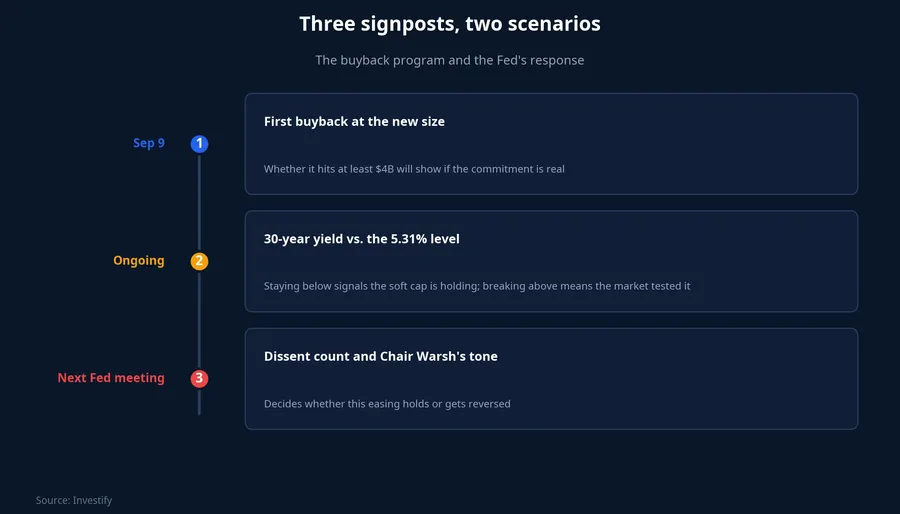
Three upcoming markers will show which path is materializing. September 9 is the first buyback at the new size; whether the actual amount hits the $4 billion minimum will show whether the commitment is real or just talk. The second marker is the 30-year yield against the 5.31% threshold: staying below it means the soft cap is holding, breaking above it means the market has tested it and the Treasury couldn't hold the line. The third marker is the next Fed meeting, where the dissent count and Chair Warsh's tone will decide whether the easing just delivered holds or gets clawed back.
The optimistic case for precious metals rests on the commitment holding and going untested; the pessimistic case rests on the Fed tightening back exactly the slack just created. What decides between the two isn't technical analysis but these three concrete time markers, while most of the information from the August 19 session has already been priced in within hours. For portfolios currently holding precious metals, this is a period to watch those three markers closely rather than react to any single session's swing.