


The audited 2025 accounts of Vietnam Electricity, or EVN, show that retained earnings turned positive on a consolidated basis. That is a meaningful milestone after a period in which input costs rose faster than retail electricity prices. It does not, however, mean EVN's funding pressure has disappeared or that electricity prices will automatically fall. The more useful question is how a utility generates cash, meets its obligations and finances its next investment cycle.
Think of a good year as repairing a leaking roof. The foundation, bills coming due and the cost of extending the house still have to be assessed. For EVN, those extensions are new generation capacity, transmission lines and substations, all of which require funding well before they begin to produce revenue.
A consolidated recovery is not every entity's recovery
Two accounting concepts need to be kept separate. Consolidated accounts capture the group as a whole, including the parent company, subsidiaries and relevant affiliated interests. Standalone accounts cover only the parent legal entity. A positive retained-earnings balance in consolidated accounts therefore does not mean every entity in the group has already eliminated its accumulated losses.
EVN's own clarification on its audited accounts confirms that this distinction remains relevant between the parent company and the consolidated group.EVN This is more than an accounting footnote. It prevents readers from treating a headline that EVN has “cleared its losses” as proof that every financial weakness has vanished.
Retained earnings are the cumulative profit or loss that has not been distributed over time. A negative balance leaves prior losses visible in shareholders' equity. A positive balance provides more room on the balance sheet. Neither figure is a substitute for cash, nor does it by itself establish whether obligations can be paid on time in any given month.
What changed in the recovery year
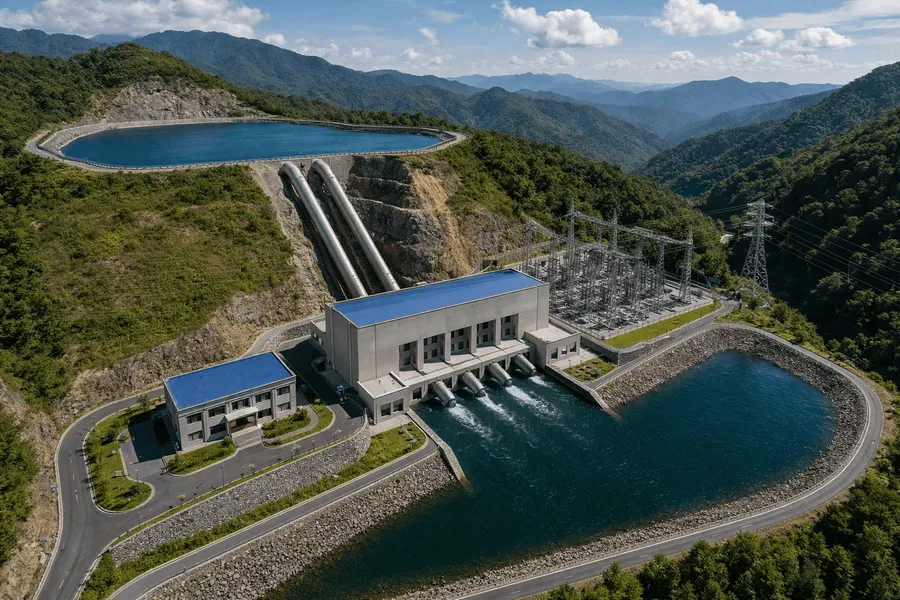
EVN's earlier losses formed when power-purchase costs, fuel costs and exchange-rate movements rose faster than retail prices. The mechanism is straightforward: a utility buys inputs under conditions that can move quickly, while the price charged to households and businesses is adjusted through a separate process. When that lag persists, the gap flows into the income statement.
Its consolidated performance improved in 2025 as revenue and gross margin both strengthened, according to reports on EVN's finances.VTV8 It would still be inaccurate to assign the entire improvement to a retail-price adjustment. Hydrological conditions, the mix between hydropower and thermal power, fuel prices, exchange rates, power-purchase costs and operating discipline can all matter at the same time.
In other words, the better result shows that the gap between revenue and cost narrowed in that year. It does not prove one single cause, and it does not guarantee that favourable conditions will recur. In a capital-intensive sector exposed to both weather and fuel markets, the more careful reading is to track the durability of cash flow over several periods instead of treating one turnaround in the income statement as decisive.
Bank deposits are not idle cash
Reported cash and bank deposits can easily create a reassuring impression. But those resources belong to an integrated system of generation, transmission, distribution and support services; they are not a pool that can immediately be assigned to any purpose. EVN has also stated that the aggregate balance is compiled from member entities across the group.EVN
That changes how financial health should be assessed. Deposits can generate financial income and provide a liquidity buffer. At the same time, EVN needs to pay for fuel, independent power plants, contractors, banks and projects under construction. Some cash also supports the working-capital needs of particular units, so it cannot all be considered freely deployable.
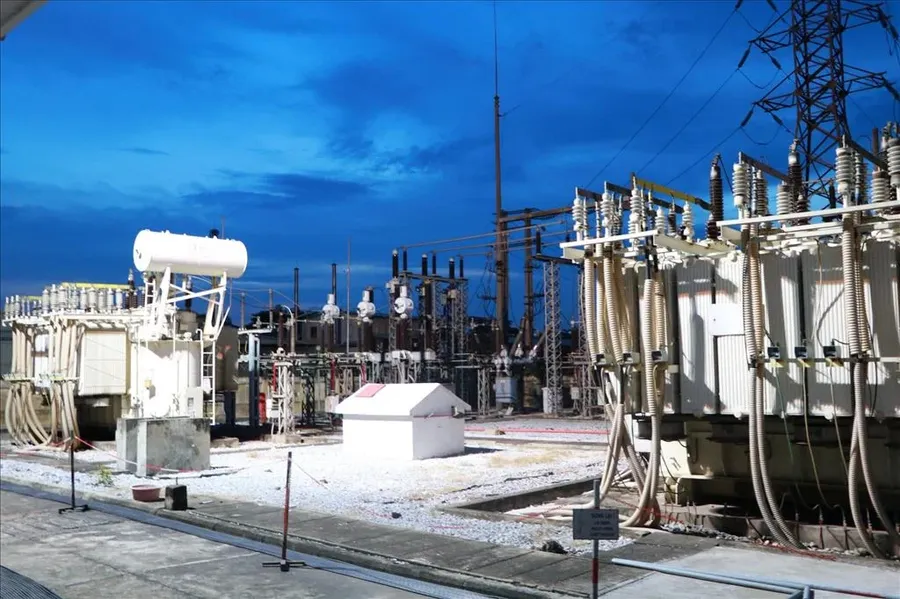
The right question is not whether EVN has money on deposit. It is whether operating cash flow is consistently sufficient for short-term obligations, maturing debt and a contribution to investment. The cash-flow statement, debt maturities and payment schedules to suppliers answer that question better than a year-end balance.
The real test is the investment cycle
The power sector cannot stand still as electricity demand grows. Generation assets, transmission lines and substations need substantial upfront capital, while revenue is earned gradually over their operating lives. A stronger balance sheet can therefore matter: it may support funding arrangements, improve lenders' confidence and ease pressure after a period of losses.
Accounting profit and funding capacity are nevertheless different things. A company can report a profit while still needing long-term borrowing, equity funding or a reallocation of cash flow to finish projects. The key issue is not whether EVN is “flush with cash,” but whether it can balance new investment, debt obligations and a tariff level that covers reasonable costs.
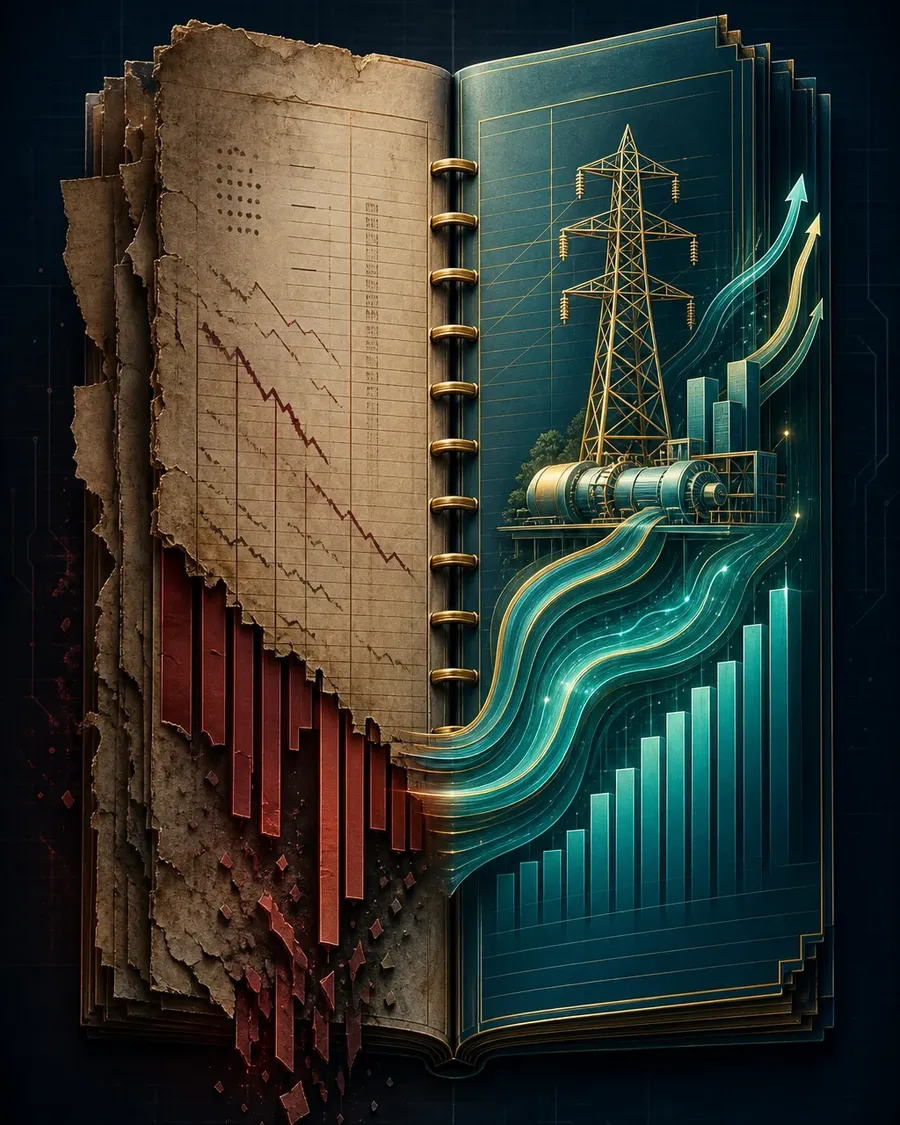
This is why the improvement in 2025 should not be treated as a final verdict. A sharp shift in input costs, delayed projects or funding needs that outpace cash flow could put pressure back on the balance sheet. Conversely, if operating efficiency holds, projects stay on schedule and funding is arranged appropriately, the consolidated recovery can become a foundation for greater stability.
Electricity prices are set for the next period, not by past profit
The average retail electricity price is not calculated by dividing EVN's profit by the number of electricity users. The adjustment mechanism considers power production and operating costs, input assumptions and a reasonable profit level intended to preserve and develop business capital. The Government issued Decree 278/2026/ND-CP to amend parts of the average retail electricity-price adjustment mechanism.Government Portal
That framework means the price for the next period must be assessed using the conditions of the next period: fuel costs, exchange rates, the generation mix, power-purchase costs and cost reviews. A profit already booked in a prior year can make a utility's finances easier to manage, but it does not independently determine the direction of the next tariff adjustment. That is the essential distinction between reading financial statements and forecasting a household electricity bill.
The core thesis is clear. EVN's removal of accumulated losses on a consolidated basis is a real improvement, but it is the start of a balance-sheet repair rather than the end of its funding challenge. The signals to watch are the quality of operating cash flow, input costs, the execution of generation and grid investment, and how the pricing mechanism reflects those variables. They will show whether the improvement is durable or merely the product of one favourable year.