

An attack has been reported off Saudi Arabia at a moment when the Red Sea matters more as an escape route for Middle Eastern oil. Markets are now reassessing more than the safety of one vessel: they are reassessing the reliability of an alternative route while the Strait of Hormuz is under pressure. The evidence does not yet show oil disappearing from the market. This is a transport-risk premium story before it is a physical-shortage story.
Encelia is a real incident, but its scope remains narrow
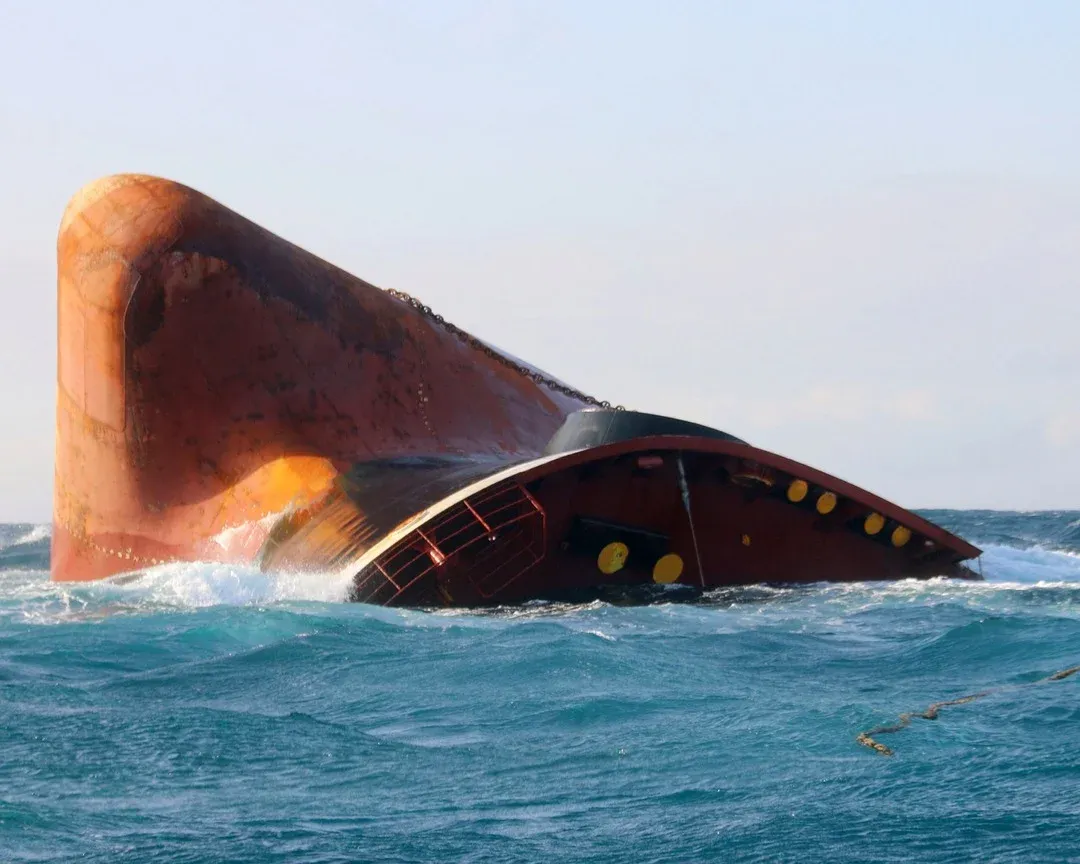
The Houthis said they targeted two Saudi oil tankers, Encelia and Layla. Maritime security reports reviewed by Reuters show that Encelia issued a distress signal, was struck on its starboard side by an unidentified object about 70 nautical miles from Al Shuqaiq, and caught fire. UKMTO had received no reports of casualties or environmental impact, while the claim that Layla was also hit had not been independently verified.Reuters
That distinction matters. One incident is enough for ship operators, brokers, and insurers to reassess the risk of a voyage. It does not prove that the whole corridor has been disabled, that a series of tankers has been damaged, or that Saudi oil exports have fallen. Investors should not turn evidence of a security incident directly into a conclusion that the market is short of oil.
Why the alternative route is now sensitive
The wider picture is that the Red Sea is no longer a secondary route in the region's oil logistics. Saudi Arabia is using its East-West pipeline to move crude from eastern fields to the Red Sea port of Yanbu, reducing its reliance on Hormuz. Recent exports through Yanbu were about 4 million barrels per day.AP
At the southern gateway, oil-product flows through Bab el-Mandeb exceeded 7 million barrels per day in June, up from about 4 million before the Iran conflict.AP These figures should not be added together as total supply or treated as the same oil flow. They show something else: when Hormuz is strained, the Red Sea becomes more valuable as a diversionary route. Risk spreading to that gateway would leave shippers with less room to reroute vessels.
Saudi Arabia still has options, but none are costless. Oil can move north through the Red Sea and then via the SUMED pipeline or Suez Canal, with estimated capacities of up to 2.5 million and 1 million barrels per day respectively. Vessels can also sail around the Cape of Good Hope, adding one to two weeks to the journey.AP The first impact is therefore usually seen in delivery times, charter rates, and insurance rather than an immediate physical shortage.

What Brent is pricing
Investify commodity data put Brent at USD 95.55 per barrel on July 23, up 1.57% from the prior day. It had risen 13.44% from USD 84.23 per barrel on July 16. That is a meaningful move, but it cannot all be assigned to the Encelia incident.
Hormuz remains under pressure while the United States continues strikes on Iran. Traders may also be buying protection against longer voyages and higher delivery costs. The Red Sea incident adds risk to the alternative route, but there is not enough evidence to allocate Brent's rise precisely among Hormuz, Houthi attacks, and precautionary positioning.
Operational choices by ships are more informative than a single trading session. Reuters recorded five oil tankers changing course on July 22, including two that switched their destination to the Suez Canal after warnings to vessels heading for Saudi ports.Reuters AP's review of MarineTraffic data also found at least three tankers turning back on July 21.AP That is evidence that risk has entered operational decisions, not yet evidence that oil flows have been lost.
Insurance is the first transmission channel
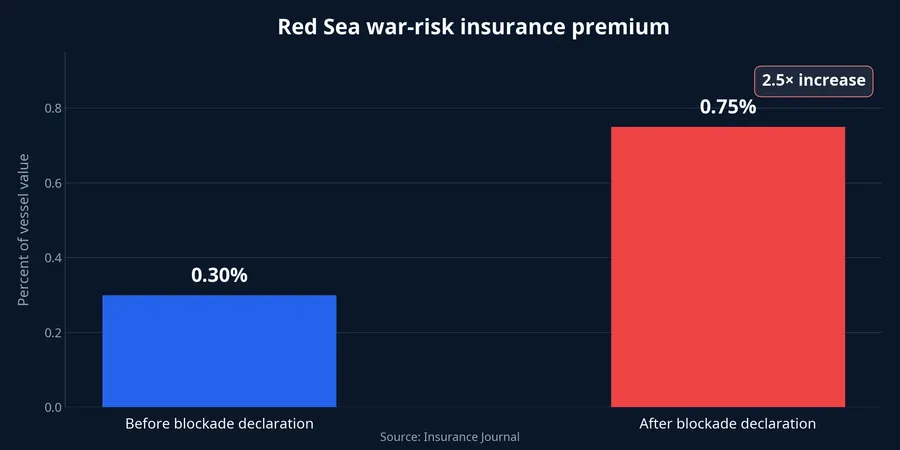
Indicative war-risk premiums for a Red Sea transit rose from about 0.3% to 0.75% of a vessel's value after the Houthi blockade declaration.Insurance Journal That is a 2.5-fold increase. On a high-value tanker, a seemingly small percentage change can add material cost to an entire voyage.
This is why oil can remain expensive without an announced export cut. If insurance rises further, coverage narrows, or ships take longer routes, buyers pay for the risk of delayed delivery. In that case, the market is pricing supply-chain uncertainty, not necessarily a barrel of oil that is already missing.
Three thresholds to keep distinct
De-escalation would require operational evidence: no further UKMTO incidents, redirected vessels returning to normal itineraries, and insurance costs ceasing to rise. A down day in Brent would not prove this because Hormuz headlines can move prices for other reasons. A recovery in actual vessel flows would be the more reliable signal that Encelia was an isolated incident.
The second scenario is disruption through cost. More vessels divert, shipping companies pause some journeys, and insurance premiums move well beyond 0.75% of vessel value. Oil can still arrive, but it takes longer and costs more to deliver. Under that scenario, a higher oil-price range could persist without a reduction in physical supply.
The severe scenario is confirmed only if further attacks coincide with a clear decline in barrels leaving Yanbu or flows through Bab el-Mandeb. The next question would be whether SUMED, Suez, and the Cape route can make up the shortfall. Only disrupted flows combined with inadequate alternatives turn a risk premium into a physical shortage.
This distinction also helps separate price action from the mechanism beneath it. A futures market can react in minutes to a new security headline, while a physical disruption takes time to appear in port data, cargo schedules, and refinery deliveries. The gap does not make the market irrational. It simply means the price is carrying an estimate of a risk that still needs to be tested against operational evidence.
The transmission to Vietnamese investors is not linear
Higher Brent does not immediately or fully pass through to domestic fuel prices. Vietnamese retail prices also depend on the adjustment cycle, taxes, fees, and average refined-product prices. A few hours of elevated Brent is therefore insufficient to conclude that Vietnamese companies' fuel costs have risen by the same amount.
Equity effects are also differentiated by business model. Oil exploration and services companies may benefit if higher prices persist and turn into actual workloads or revenue. Airlines, road transport, plastics, and some manufacturers may face cost pressure. Yet hedging contracts, pricing power, and fuel's share of the cost base determine the outcome for each company. A company with fuel pass-through clauses or hedges can react very differently from a peer in the same industry.
The current thesis is not that oil has become scarce. It is that shipping costs and transport risk have risen. The signals to watch in the coming days are new UKMTO alerts, the number of vessel diversions, insurance premiums, and actual flows through Yanbu and Bab el-Mandeb. Unless those indicators deteriorate together, high Brent is better read as a market buying insurance against uncertainty than as a supply crisis already under way.