


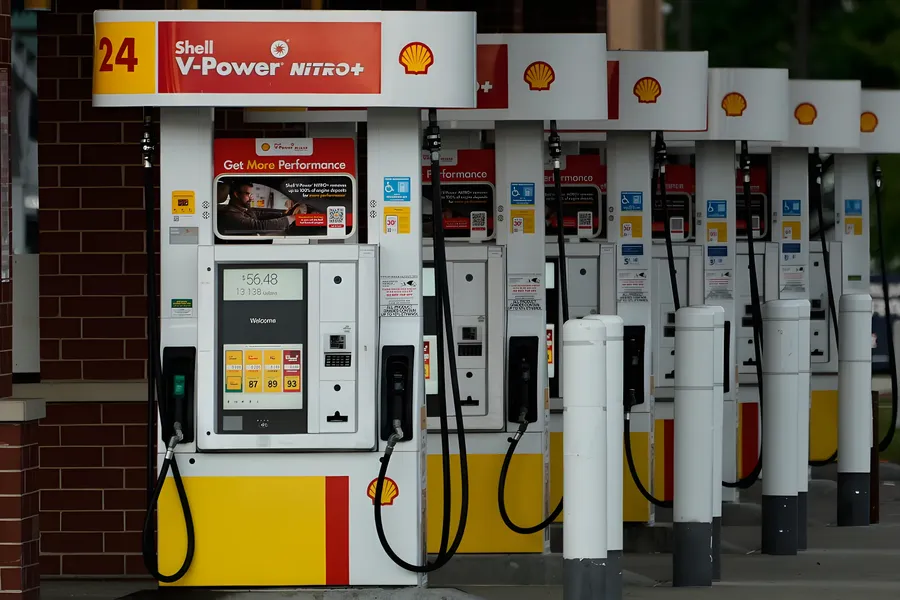
The US average price for regular gasoline returned to $4.003 per gallon on July 20. That moves the oil-market shock from a financial screen into the everyday travel budget of millions of households. Yet a single down day in crude is not enough to tell investors that pressure at the pump has passed.AAA
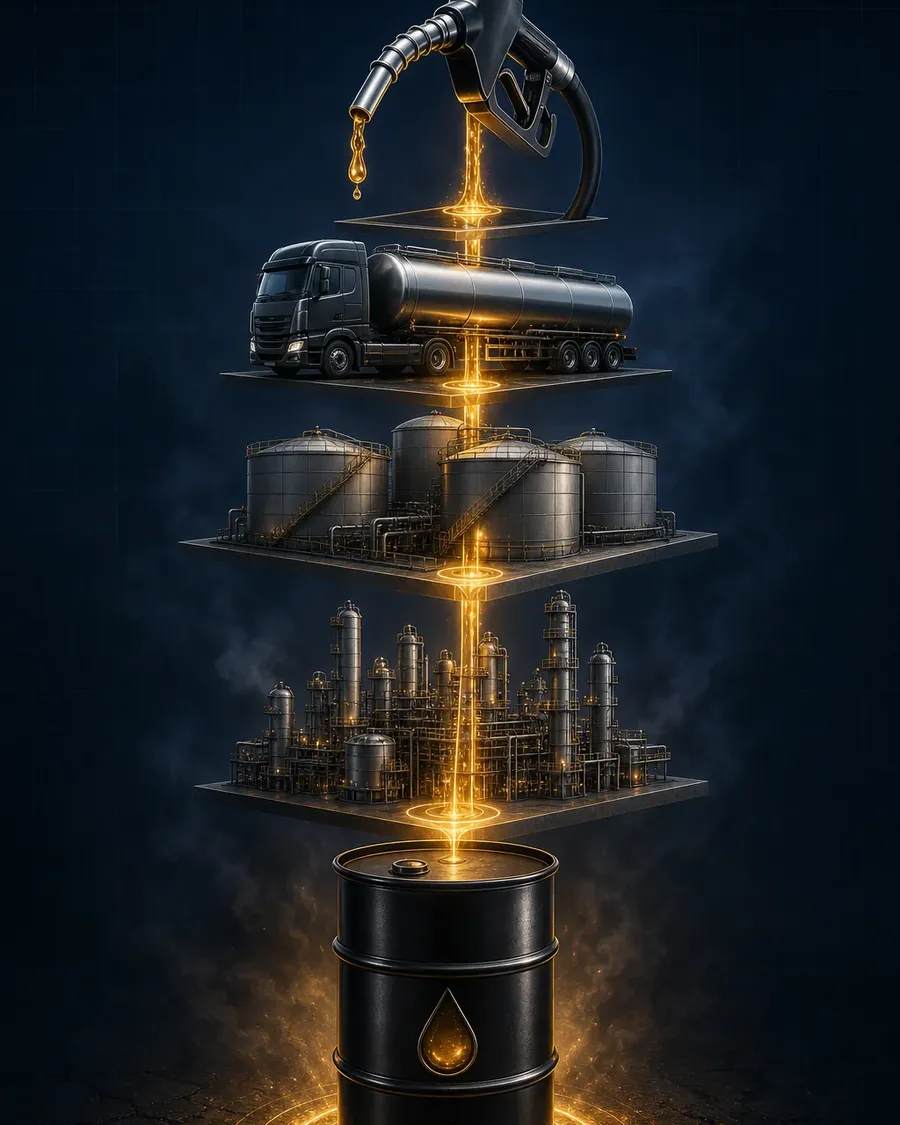
The broader picture is that oil is the first link in the chain, not the final verdict on retail fuel prices. A gallon still has to move through crude procurement, refining, storage, trucking and retail distribution. The central thesis is therefore straightforward: pump-price pressure will ease sustainably only when upstream risks recede, finished-product inventories rebuild and the refining system regains room to breathe.
Two price series answer different questions
AAA and the EIA both track US gasoline, but they are not measuring the same moment in the same way. AAA updates daily using posted station prices compiled by OPIS. Its $4.003-per-gallon reading for July 20 is therefore close to what motorists were seeing at the pump.AAA
The EIA instead publishes a sales-weighted average from its survey sample. Its latest release placed regular gasoline at $3.855 per gallon on July 13, up $0.078 from the previous week and $0.725 higher than a year earlier.EIA That series is better suited to weekly trend analysis and historical comparison than to tracking an intraday move.
It would be a mistake to subtract the EIA figure from AAA's reading and call the result a weekly increase. They use different observation dates and methods. The EIA surveys early in the week, reports cash prices including taxes, and applies statistical checks before publication.EIA
Crude creates the impulse, not an instant bill
On July 20, Brent traded in an $86-to-$91-per-barrel range, versus roughly $72 at the start of the month. Investify market data put Brent's close at $89.22 per barrel and WTI at $82.48, while spot gasoline stood at $3.39 per gallon. These readings show substantial July pressure in both the input and product markets.AP
The initial driver was supply risk around the Strait of Hormuz. S&P Global Energy analysis cited by AP said vessel transits through the strait fell 50% in the week before July 20 from the prior week.AP When delivery to refineries becomes harder or more expensive, feedstock costs rise. That still does not prove that retail prices must move at the same speed.
Refineries are often processing crude bought earlier, and finished fuel must then enter storage and travel by tanker to retail sites. The EIA breaks the pump price into crude costs, refining costs and margins, taxes, and distribution costs and margins. That structure creates a lag between wholesale gasoline and the price shown on a station sign.EIA
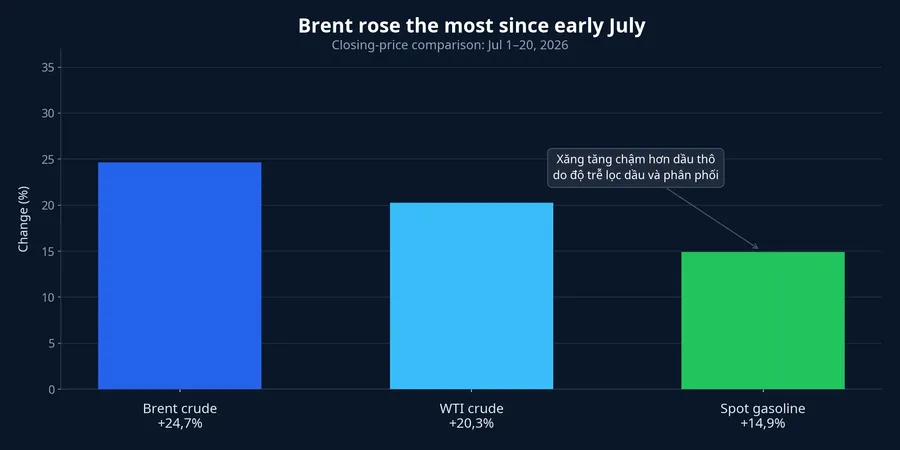
The chart adds an important qualification. From July 1 to July 20, Brent rose about 24.7%, WTI 20.3%, and spot gasoline 14.9%. This describes a lagged transmission process, not a fixed formula that automatically maps a crude move into a retail-price move. Refining margins, purchasing schedules and distribution costs can all change the pace.
Inventories are the buffer that matters
Daily price headlines do not tell the full story. The EIA report released on July 15 showed US gasoline inventories at 210.5 million barrels for the week ended July 10, down 1.5 million barrels from the previous week and 8% below the five-year average for the same time of year.EIA
Inventories are the buffer between refinery output and retail stations. When that buffer is thin, wholesalers have little reason to cut prices merely because crude pulls back for one or two sessions. Conversely, a sustained inventory rebuild would show that the system is absorbing the input shock, even before oil returned to its early-July range.
Refineries were operating at 96.2% of operable capacity, while gasoline production was about 9.6 million barrels per day.EIA The system was already running hard while inventories were declining. For investors watching inflation, that is a more informative signal about finished-product tightness than one red candle in crude.
It would also be too simple to blame the move entirely on driving demand. Average supplied gasoline over the latest four weeks was 8.9 million barrels per day, 1.1% below the corresponding period a year earlier.EIA Transport risk, replenishment capacity and refinery operations are also plausible explanations. The current evidence supports finished-product supply as the stronger link, but it is not sufficient to assign all price movement to one cause.
From the pump to inflation expectations
Gasoline is not just a household fuel bill. It enters CPI directly through energy and indirectly through freight, deliveries and product distribution. The US June CPI report showed the gasoline index down 9.7% month on month but still 26.7% higher year on year.Those comparisons do not conflict: one cooler month can follow a much larger accumulated increase.
A renewed rise at the pump can lift short-term inflation expectations and make markets more cautious about the interest-rate outlook. It is still a leap too far to infer a Federal Reserve policy shift from one day's gasoline price. The Fed also weighs core inflation, employment, wages and the breadth of energy-cost pass-through. Gasoline is an early signal, not a deciding vote.
That distinction also matters to Vietnamese investors following global assets. An energy shock can affect yields, exchange rates and risk appetite toward emerging markets, but the transmission depends on subsequent inflation data and policy reactions. Reading oil, gasoline and inflation as one chain is more robust than using any single move to forecast every asset class.
What would confirm that pressure is easing
The monitoring sequence should run from upstream to downstream. Start with Hormuz transit flows and Brent, which reflect raw-material risk. Then watch gasoline inventories and refinery-utilisation rates. Only after that should investors look at spot gasoline, AAA's daily reading and the EIA's weekly series.
The next EIA inventory report is scheduled for July 22.EIA If inventories rise while refinery utilisation remains high, the supply buffer is being rebuilt and the case for cooler retail prices becomes stronger. If stocks keep falling despite refineries operating near capacity, gasoline prices may remain elevated even if crude stabilises.
The conclusion is not that gasoline must keep rising. The thesis is narrower: one softer oil session is not enough to reverse household fuel bills. Only when input risk declines, product inventories recover and refining and distribution margins compress will the market have convincing evidence that pressure at the pump has genuinely turned.