
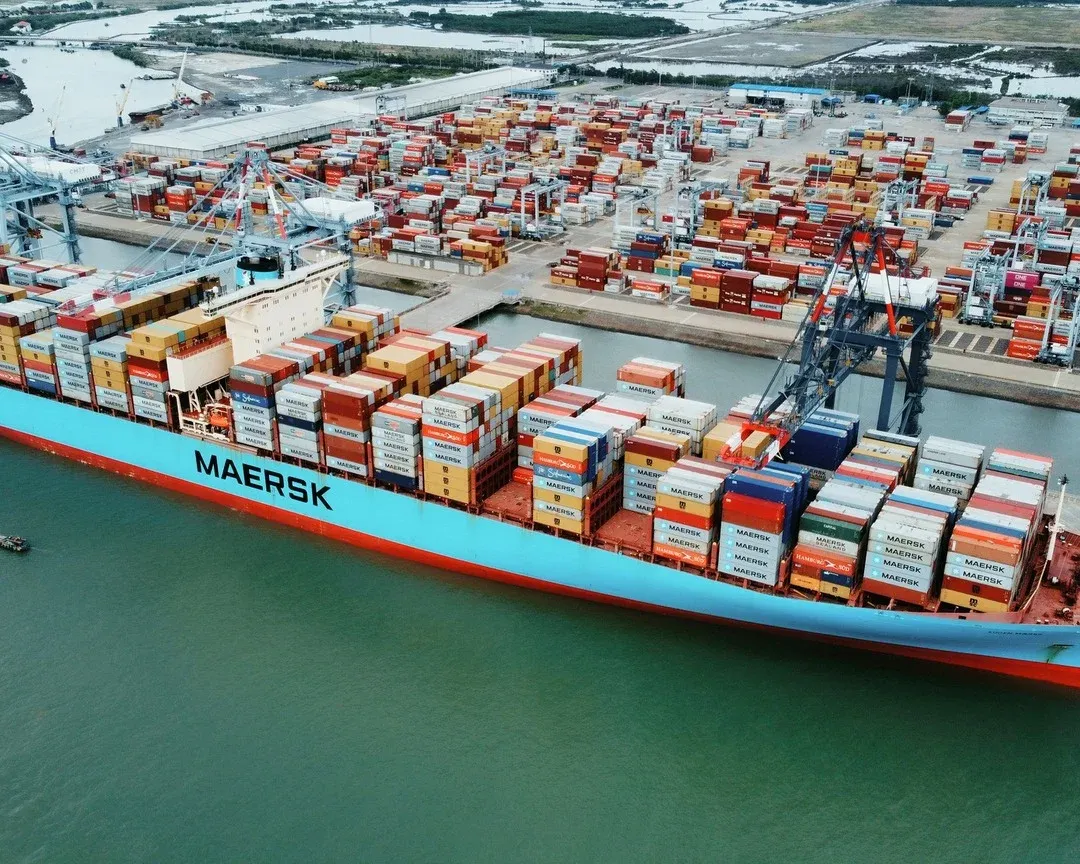

On November 25, 2026, the Office of the US Trade Representative (USTR) concluded that the industrial policies of 14 economies contribute to excess manufacturing capacity, and proposed additional Section 301 tariffs on all 14.USTR Vietnam is on the list, alongside China, the EU, Japan, South Korea, Taiwan, India, Bangladesh, Cambodia, Indonesia, Malaysia, Singapore, Thailand and Switzerland. Mexico and Norway are part of the investigation opened on March 11, 2026, but no determination has been made on them.
For Vietnamese goods, the proposal sets two rates: a ceiling of 35%, or 20% if Vietnam reaches a reciprocal trade agreement with the US.USTR But 35% is not a layer stacked on top of today's rate. The argument of this piece: the real increase is far smaller than the headline number, and whether a trade deal gets signed is the variable that decides the outcome, especially for garments.
Where the proposal stands
This is still a proposal, not an issued tariff. According to the document, written comments are due on January 5, 2027,USTR and the USTR will hold hearings starting January 25, 2027.USTR VietinBank Securities (VBSE), in a report carried by Thuong Truong on November 25, judges that the new tariffs are unlikely to take effect before 2027.Thuong Truong
The VN-Index closed the November 25 session at 1,687.45 points, down 0.57%. The November 26 session is therefore the first in which the market can react to the proposal.
Why the new tariff does not stack
Since July 2026, Vietnamese goods have already faced an additional 12.5% tariff under a separate Section 301 investigation into enforcement of the ban on forced-labor goods.Kevesko That rate replaced the 10% Section 122 tariff that expired on July 24, and Vietnam falls in the group paying 12.5%.Government Portal
According to Reuters, a senior US official said the excess-capacity tariffs will not stack on the 10% or 12.5% already applied to 60 partners since July.The Standard The USTR document also describes 35% as a rate net of the Section 301 tariff already in force. Put the two together and the Section 301 tariff on Vietnamese goods would move from 12.5% to at most 35%: an increase of up to 22.5 percentage points, not 35. At the 20% deal rate, the increase is 7.5 percentage points. Standard most-favored-nation duties and Section 232 tariffs are still counted separately.
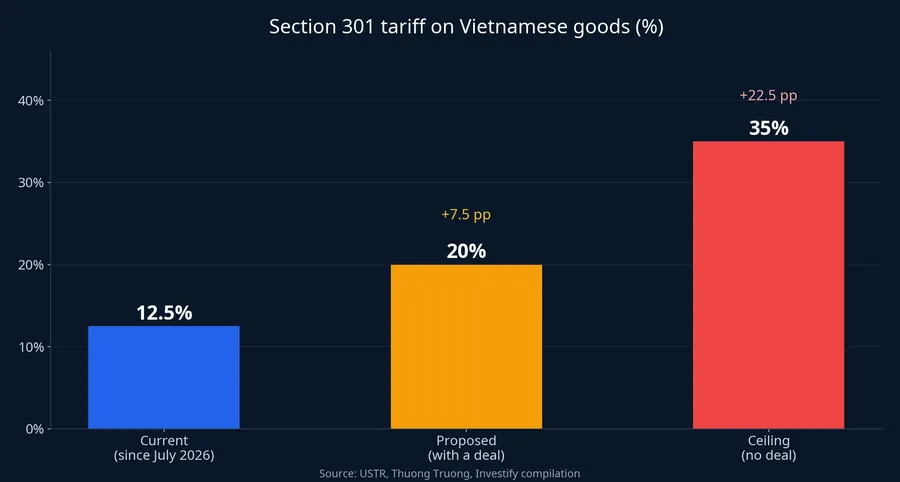
The 20% figure is not new either. The proposal's footnote points to the joint statement on the US-Vietnam framework for a trade agreement of October 26, 2025, in which the US kept a 20% reciprocal tariff on goods of Vietnamese origin.White House In other words, the deal branch brings Vietnam back to the rate the two sides set in last year's framework.
What is targeted and what is exempt
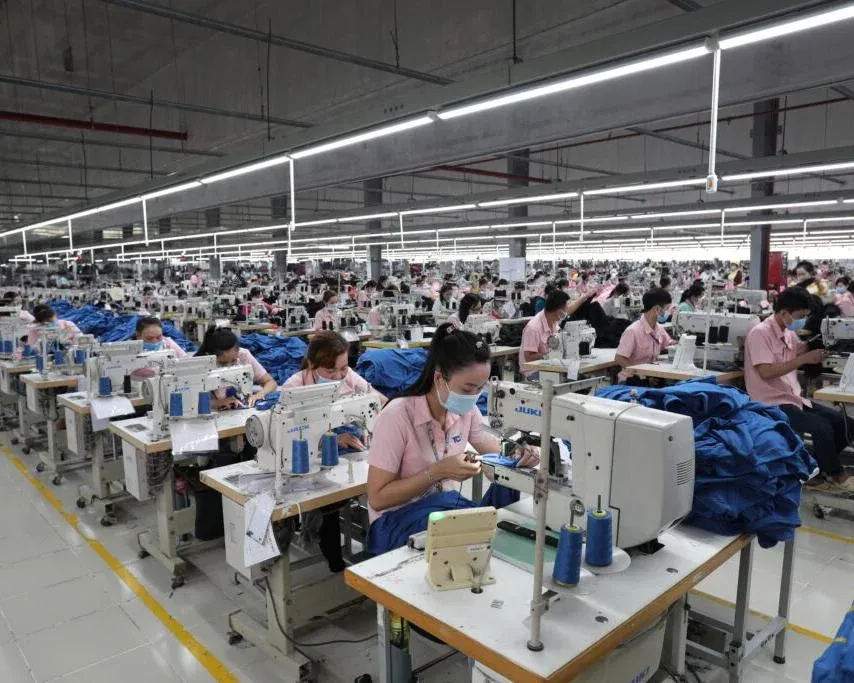
The document names the sectors the USTR considers to have excess capacity in Vietnam: textiles, garments and footwear, shipbuilding and cement, along with information and communications technology.USTR Garments and footwear are two of Vietnam's largest exports to the US, so they take the most direct hit.
The exemption list has three points worth noting for listed companies:
- Wood products already subject to Section 232 tariffs are excluded from the proposal, together with aluminum, steel, copper, autos, auto parts, pharmaceuticals and semiconductors under the same regime. Furniture that already carries Section 232 duties therefore avoids the extra excess-capacity tariff.
- Coffee, cashews and coconuts appear in the exemption annex, as goods the US does not produce in sufficient volume.
- Shrimp and fish fillets are not in the exemption annex. VBSE judges that food products are probably not the focus of the investigation,Thuong Truong but under the document as it stands, seafood remains subject to the tariff.
Garments hinge on competitors' rates
For garment makers, the absolute tariff matters less than the gap to competitors, because US importers place orders wherever the after-tariff price is lower. On the same day, the USTR proposed a ceiling of 18% for Bangladesh, Cambodia, Indonesia and Malaysia. All four already have reciprocal trade agreements with the US, and the document says the proposed rates take those commitments into account. India, which has also not finalized a deal, has a ceiling of 25% and a 17% rate if it reaches one.USTR
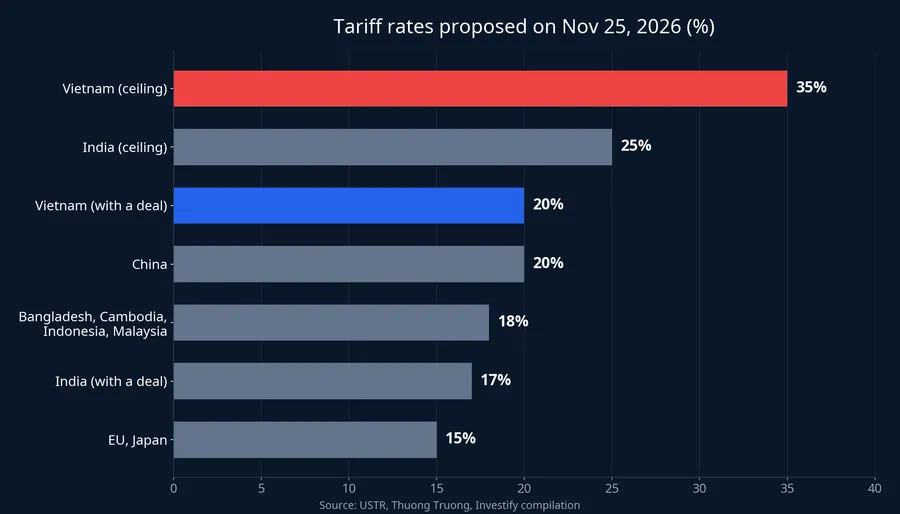
The deal branch puts Vietnam at 20%, close to the 18% ceiling for Bangladesh and Cambodia, its main garment rivals. The no-deal branch puts Vietnam at the 35% ceiling, 17 percentage points above those two. For a thin-margin contract manufacturing industry, a 17-point gap can be enough for importers to move orders elsewhere.
Seafood: a bigger fallback market, but uneven across companies
At the industry level, seafood is in a different position. The US accounts for only about 15.6% of the USD 10.46 billion in seafood exports over the first 10 months of 2026. Exports to the US reached USD 1.63 billion, down 1.2% year on year, while exports to China rose 30% to USD 2.6 billion.Thuong Truong
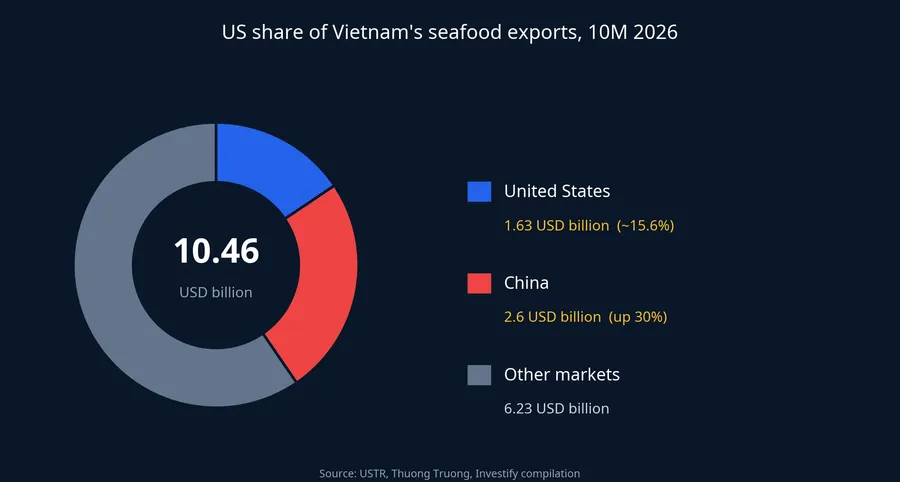
At the company level the picture differs. For Vinh Hoan (VHC), the US is still the largest market: in October 2026, US revenue reached VND 419 billion, up 16% year on year, out of VND 1,263 billion in total monthly revenue, or about 33.2%.FireAnt That share is well above the industry's 15.6%, although the two figures cover different periods and are measured differently (one month of revenue versus 10 months of export value). So the impact on seafood is uneven: companies with a high US share, such as the pangasius and shrimp names VBSE flags, would feel margin pressure first.
Two scenarios and their triggers
With a deal: the 20% rate
The trigger is Vietnam and the US signing a reciprocal trade agreement before the USTR makes its final decision. According to Reuters, Vietnam and India are the two countries yet to finalize a deal with the US. A US official suggested the proposed tariffs could push negotiations forward and could lead to additional deals being closed at the G20 summit in Miami in December.The Tribune That is the US side's assessment, not a signing schedule.
If this branch plays out, the Section 301 tariff rises by 7.5 percentage points from today. Garment makers keep a position close to Bangladesh and Cambodia, and seafood exporters face a much smaller increase than in the other branch.
Without a deal: the 35% ceiling
The trigger is passing the late-January 2027 hearings with nothing signed. The Section 301 tariff could then rise by up to 22.5 percentage points. VBSE, in a report written before the USTR published specific rates, estimates GDP could fall by 0.3–0.6 percentage points over 6 months to 2 years if the additional tariffs had no ceiling. It also cites Bloomberg Economics estimating that Vietnam's effective tariff rate could rise by a further 14.1 percentage points in an adverse scenario.Thuong Truong
The hardest-hit group in this branch is garments and footwear: named in the document and losing their price advantage against Bangladesh and Cambodia. Furniture makers whose products already carry Section 232 tariffs are less affected.
What cushions the wait
Time is the first cushion. With comments due January 5, 2027 and hearings from January 25, orders already signed for the last months of 2026 will ship before any new tariff could apply. Large garment makers have orders through the end of 2026.Thuong Truong TNG alone, according to SHS Securities, has orders filled through the end of Q1 2027, some factories into June 2027, and the Americas account for 49.6% of its nine-month revenue.FireAnt
The second cushion is that Vietnam is not singled out: all 14 economies received proposals, including direct competitors. But most of those competitors already have deals, so that advantage holds only if Vietnam signs too.
Conclusion: the gap to rivals is the real test
The evidence leans one way. The 35% figure is misleading, since the real increase is at most 22.5 percentage points and could be just 7.5 with a deal. What decides the outcome is whether a US-Vietnam trade agreement is signed before the USTR sets the final rate. Garments are the most sensitive group, because the gap to the 18% ceiling for Bangladesh and Cambodia is 2 percentage points if Vietnam signs, and 17 if it does not.
Two dates will settle it. The first is the G20 summit in Miami in December, where the US side says more deals could be closed. The second is the hearings starting January 25, 2027. If both pass without a signature, garments are likely to be the first group to feel order pressure from 2027.