
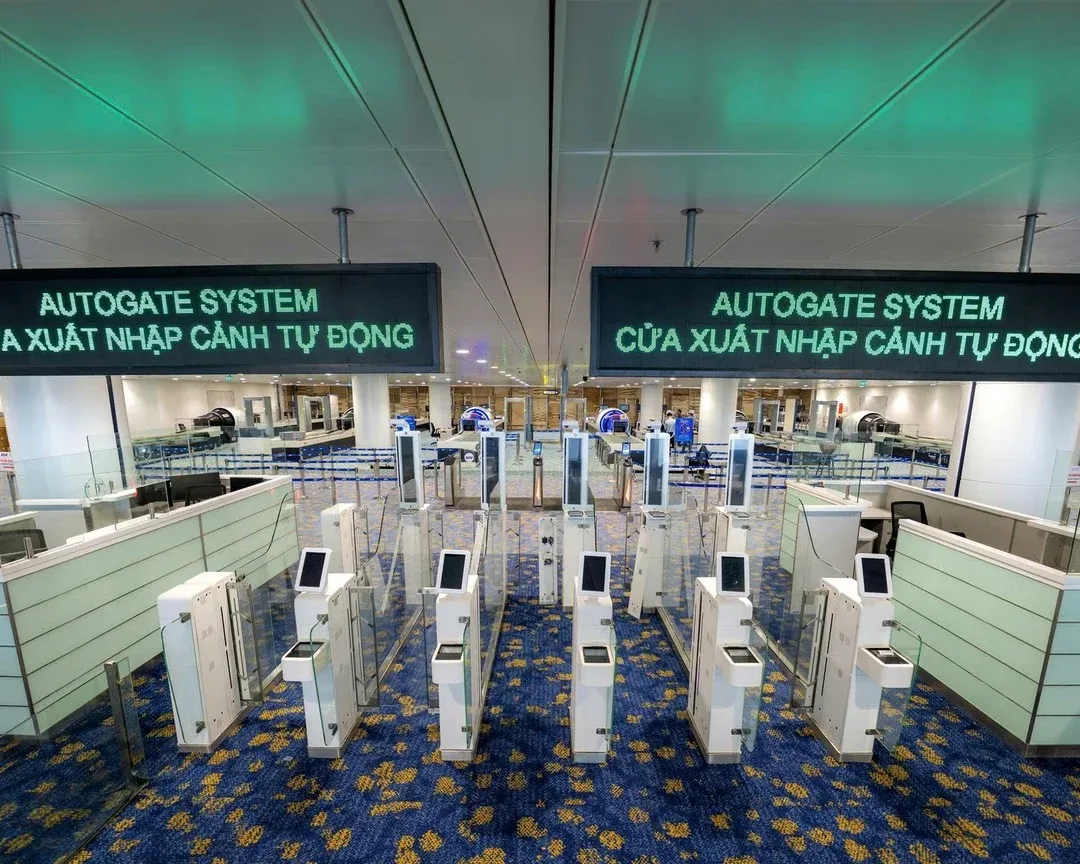

The exit ban exists to collect unpaid tax. Yet according to the Tax Department under the Ministry of Finance, tax authorities had issued more than 250,000 exit-ban notices cumulatively as of 31 October 2026, and over 240,000 of them concerned business owners and business households not operating at their registered address.VietnamNet In the tax system, this group carries status code 06.
The figure needs careful reading. The Tax Department released it on 18 November,Người Quan Sát and the 250,000 is a running total from 1 July 2007 to the end of 31 October 2026.Báo Gia Lai It is not the number of people stopped at the border at any one time.
This piece looks at one question: why does a debt-collection tool land mostly on people who abandoned a business address, and what should anyone who once put their name on a company or business household know?
What status 06 means
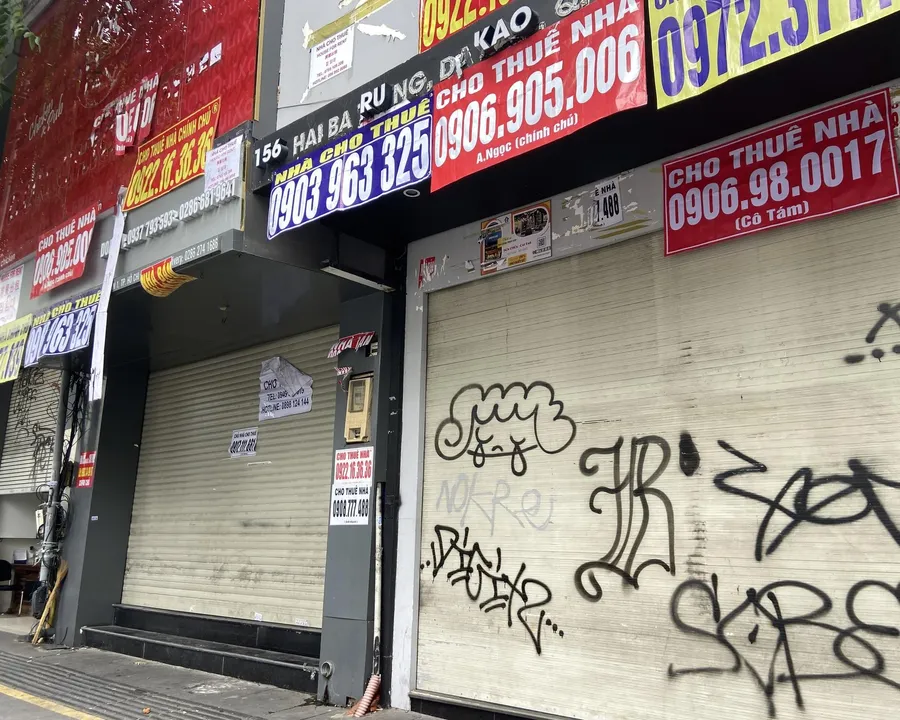
Put simply, a tax code in status 06 belongs to a taxpayer whom the tax authority has verified and formally notified as no longer operating at the registered address. This differs from status 03, which covers taxpayers that have stopped operating but have not finished the paperwork to terminate the tax code. People in status 06 have typically closed a shop, moved away or walked away from a company without telling the tax office, so their tax code stays "hanging" in the system.
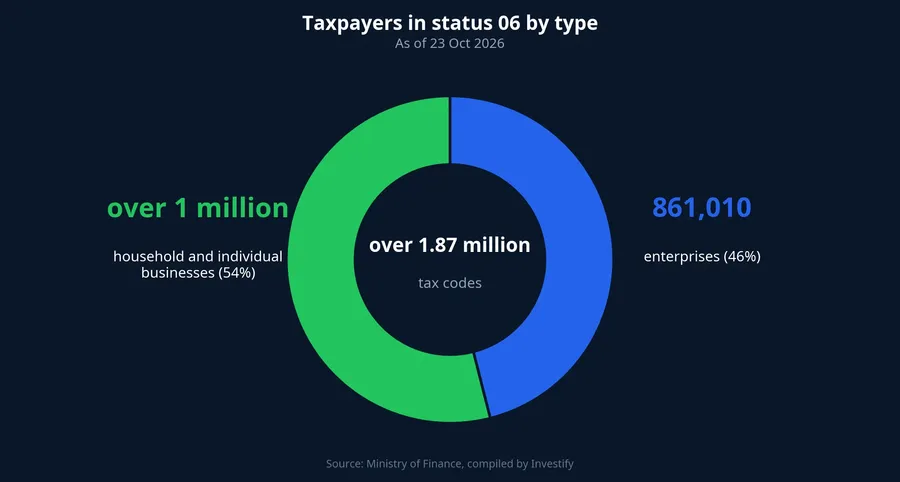
The group is huge. According to the Ministry of Finance, as of 23 October 2026 more than 1.87 million taxpayers were in status 06: 861,010 enterprises and over 1 million business households and individual businesses. Of these, 529,041 entities stopped operating, or were not operating at their registered address, in 2015 or earlier.Thanh Niên
The status-06 rule does not depend on debt
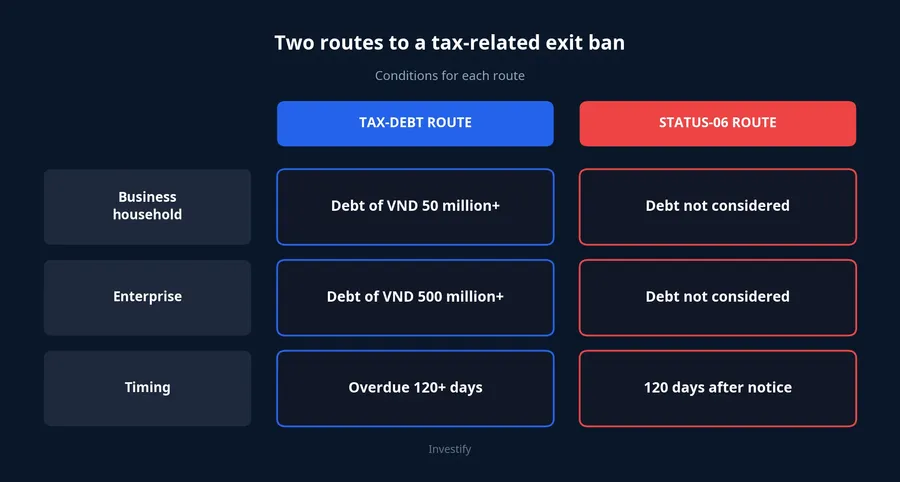
Decree 252/2026/ND-CP, effective 1 July 2026, sets out when a tax-related exit ban applies. The first two cases are debt-based: an owner of a business household or individual business owing VND 50 million or more, or a legal representative or beneficial owner of an enterprise that owes VND 500 million or more, in both cases overdue by at least 120 days.VietnamNet
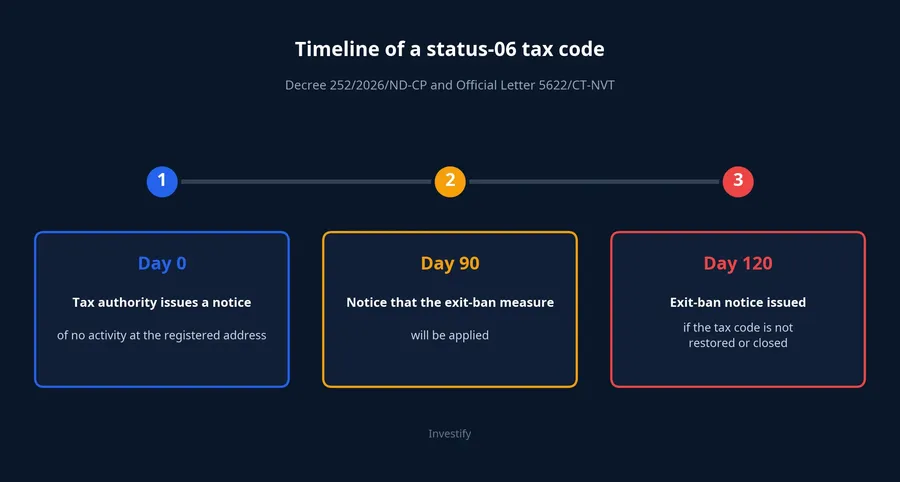
The third case is status 06, and its condition does not mention debt. Point c, Clause 1, Article 28 of Decree 252 covers a person whom the tax authority has notified as not operating at the registered address, "after 120 days from the date of the tax authority's notice without completing the procedure to restore or terminate the tax code."Tạp chí Luật sư Việt Nam
Official Letter 5622/CT-NVT from the Tax Department sets out the sequence. On day 90 after a status-06 notice, if the tax code is still unresolved, the tax authority issues a notice that the ban will be applied. If it remains unresolved 30 days later, the exit-ban notice is issued, whether or not the taxpayer owes anything.Báo Đại biểu Nhân dân
Setting the two conditions side by side explains why status 06 accounts for nearly all the notices. For debtors, the authority must establish a debt above the threshold and overdue long enough. For status 06, the trigger is a date after a notice, and someone who abandoned a business address is often also someone who never reads notices sent to the old address or tax account. With 1.87 million tax codes sitting in limbo, acting on just a small share of them is enough to produce 240,000.
Why people do not close their tax codes
The Ministry of Finance offers its own explanation: the cost of going back to the tax office to finish the process is still high, so taxpayers have little incentive to fix it. It gives a worked example. An enterprise that has sat at its registered address without operating for 10 years, and never did business, would still have to file about 40 VAT returns and 10 corporate income tax finalizations when closing its tax code. The total could reach about VND 55 million: VND 23 million in penalties for late returns, VND 20 million in business license fees and VND 12 million in late-payment interest on those fees.Tuổi Trẻ That is an illustration, not a figure that applies to every file.
For someone who opened a company and walked away, a hanging tax code costs nothing extra until they need to travel abroad. The exit ban turns paperwork that could wait into paperwork that cannot.
What the tax advisers asked for, and how the ministry answered
In commenting on a draft resolution on special measures to ease difficulties for taxpayers, the Vietnam Tax Consultants Association (VTCA) cited Tax Administration Law 108/2025/QH15, under which a person no longer operating at the registered address must "fulfil tax obligations" before leaving the country. VTCA argued that for status-06 taxpayers with no tax debt before the notice and no missing returns, an exit ban is not consistent with the law. It proposed limiting the ban to status-06 taxpayers who owe tax, or who had revenue but did not file returns before moving into that status.Tạp chí Luật sư Việt Nam
The ministry noted the proposal but asked that it stay out of the draft. Its first reason: not yet restoring or terminating a tax code and not yet fulfilling tax obligations are two separate matters. Its second: a "no debt" figure from before the notice must be checked against obligations that arise afterwards. The ministry said it will keep reviewing the issue as it refines tax administration law.Tiền Phong
According to the ministry, the draft adds only one mechanism, for people whose personal data was forged or used without permission: once police confirm they have received and are handling the case, the tax authority holds off on the ban, or lifts it if already applied. The general condition for the whole status-06 group is unchanged.Thanh Niên
The draft does still make the way out cheaper for statuses 03 and 06. The ministry has reported to the Government that it should submit the draft resolution to the National Assembly for inclusion in the agenda of its second session. The draft proposes writing off business license fees and the late-payment interest on them, plus late-payment interest for status-03 and status-06 taxpayers.Báo Đại biểu Nhân dân It remains a proposal that the National Assembly has not passed.

The ways out today
Under the guidance in Official Letter 5622, a status-06 taxpayer has two ways to have the ban lifted.Báo Đại biểu Nhân dân
- Restore the tax code if you still want to do business: file the restoration request, submit all missing tax returns and accept penalties. Once the remaining tax debt is below VND 50 million for a household or individual business, or below VND 500 million for an enterprise, the tax authority issues a notice lifting the ban.
- Terminate the tax code if you are done with the business: complete the missing returns, pay all tax owed and accept penalties. Once the code is terminated, the ban is lifted.
People do use this route. According to the Tax Department, nearly 30,000 taxpayers have fulfilled their obligations since the measure was rolled out, and about 20,000 status-06 cases had the ban lifted.VietnamNet Thanks to electronic data exchange between the Ministry of Finance and the Ministry of Public Security, lifting the ban takes about 5 to 7 minutes after the taxpayer completes the obligations. Taxpayers get 30 days' notice through their electronic tax account and can look themselves up on the eTax Mobile app or the tax authority's web portal.Bnews Putting ban information on VNeID, sending SMS alerts or notifying travel agencies and ticket agents is still at the study stage.VietnamNet
What will change
Under current rules, anyone who once put their name on a company or business household and left, without the tax code being restored or closed, can still be banned from leaving the country, whether or not the debt crosses a threshold. The draft resolution does not change that condition. It adds a mechanism for people whose data was forged and, if passed, would reduce what must be paid to close a tax code.
Whether the condition changes will be answered by the resolution the National Assembly passes. If the final text keeps the scope the ministry described, the way out for status 06 remains settling the tax code, only at lower cost. If the National Assembly adopts VTCA's proposal, status-06 taxpayers with no tax debt and no missing returns would fall outside the ban.