
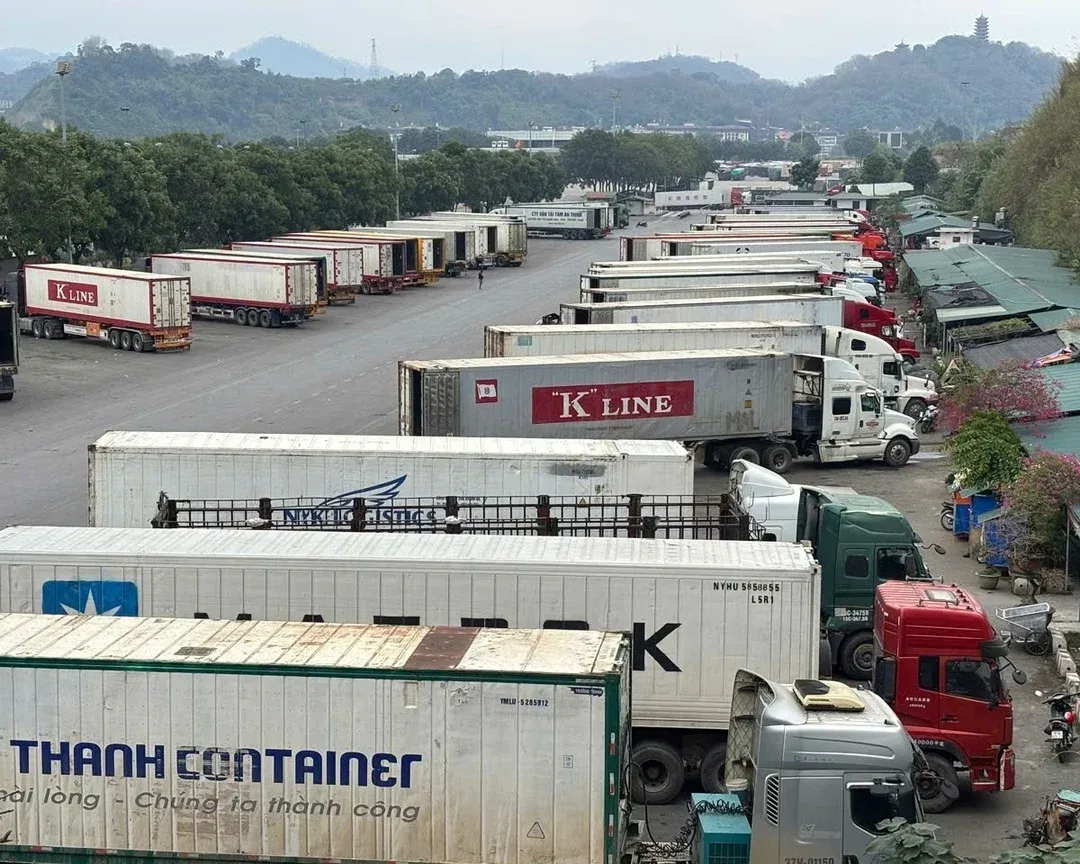

The board of Viettel Post (ticker VTP) approved Resolution 320/NQ-HĐQT on October 21, 2026, backing an investment in a smart border-gate project at the Kim Thành road-bridge crossing, part of the Lào Cai international border gate.Người Quan Sát Planned total investment is over VND 860 billion across roughly 7.87 hectares, in three phases.Kinh tế Chứng khoán That is a large outlay next to what the company currently earns. This post sets it against the financial statements to see how heavy it really is.
The October 21 decision and what is known
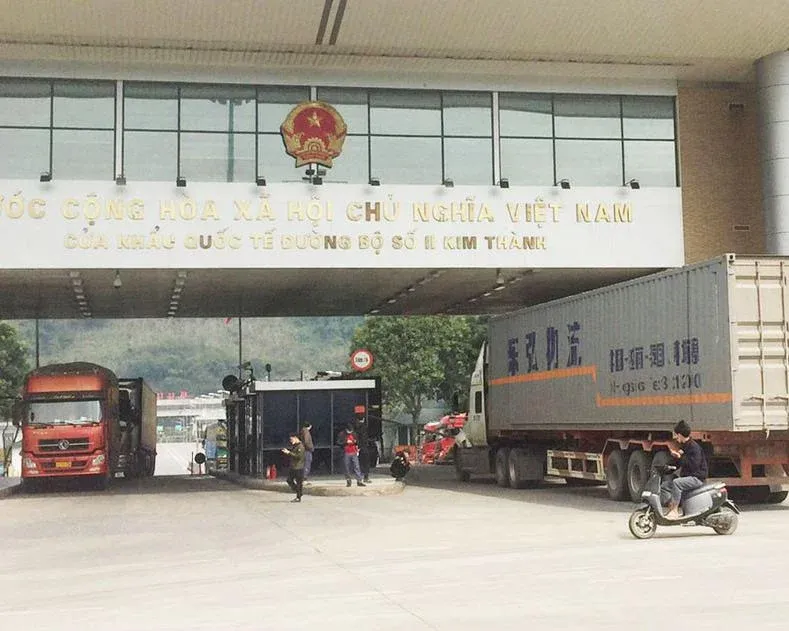
The project itself is not new. On July 16, 2026, the Lào Cai Economic Zone Authority issued a decision approving the investment policy and naming Viettel Post as the investor.Người Quan Sát The October resolution is the company's own board committing to spend.
Viettel Post plans to install the SmartGate automated vehicle-control system, driverless container trucks and a centralized control center, supporting scanning, transshipment, inspection and staging of goods.Báo Đầu tư
Public detail on timing covers mainly phase one. According to Người Quan Sát on September 24, 2026, phase one covers legal procedures and essential infrastructure, with facilities coming into operation gradually from 2027. The later phases expand scale and complete the system by 2032.Người Quan Sát Available sources give no capital figure per phase, and do not say whether Viettel Post will use its own cash, bank loans or fresh funding.
How big is the outlay
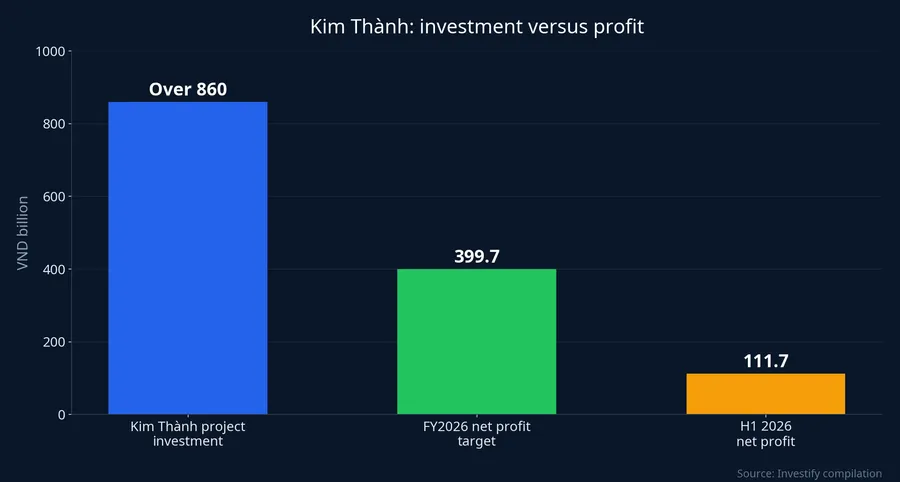
The simplest yardstick is Viettel Post's own earning power. For 2026 the company targets net profit of VND 399.7 billion.Tuổi Trẻ The Kim Thành investment is therefore at least about 2.15 times the profit it hopes to earn this year, if it meets plan.
Actual results are running below plan. In the Q2 2026 consolidated statements, net profit for the first six months was VND 111.7 billion, down 33% year on year.Mekong ASEAN That is only 28% of the full-year target.Tuổi Trẻ At that pace, the project equals nearly 7.7 times first-half profit.
By market value, VTP closed at VND 47,700 on October 26, for a market capitalization of about VND 9,600 billion. The project is roughly 9% of that figure.
First half: revenue up, profit down
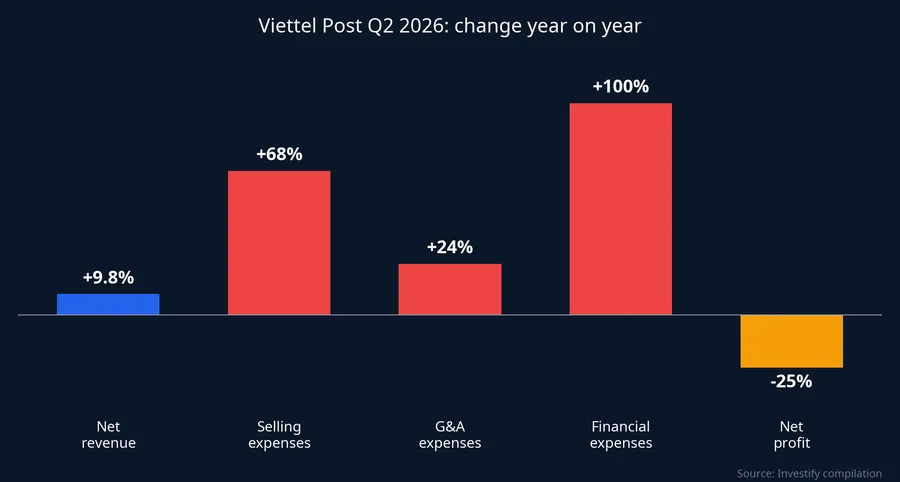
The investment arrives while the core business has had no easy quarter. In Q2 2026, net revenue was VND 5,471.8 billion, up 9.8% year on year, yet quarterly net profit fell 25% to VND 72.7 billion.Tuổi Trẻ
The company's explanation attributes the drop mainly to consumer prices and higher fuel costs.Mekong ASEAN Since early April it has charged a 15% fuel surcharge on domestic delivery freight, but the extra income did not hold profit up.Tuổi Trẻ
The report shows fuel is not the only drag. Gross margin slipped only slightly, from 5.6% to 5.4%. The bigger damage sits below gross profit: selling expenses rose 68% to VND 37 billion, administrative expenses rose 24% to VND 169 billion, and financial expenses doubled to nearly VND 34 billion.Tuổi Trẻ The company names fuel as the main reason, but the numbers suggest operating costs also contributed, and the report does not break results out by business line.
There is a counter-signal. Management data cited by Báo Đầu tư show total first-half revenue up only about 3.4%, while revenue from core logistics rose roughly 40%. The company expects Q3 consolidated revenue to grow 10.9%.Báo Đầu tư That is a revenue plan, not a profit figure.
A border gate earns differently from parcel delivery
Parcel delivery earns money order by order, on a gross margin around 5%, and takes fuel prices directly. A smart border gate earns fees on services around moving goods across the border, such as scanning, transshipment, staging and storage. The customers are exporters, importers and hauliers, not people sending parcels.
That customer base depends on freight volume through Lào Cai. According to Báo Lào Cai on October 3, 2026, goods traded through the province's border gates in the first nine months of 2026 exceeded USD 2.99 billion, up 34.83% year on year. Exports were about USD 1,867.72 million, up 70.33%.Báo Lào Cai
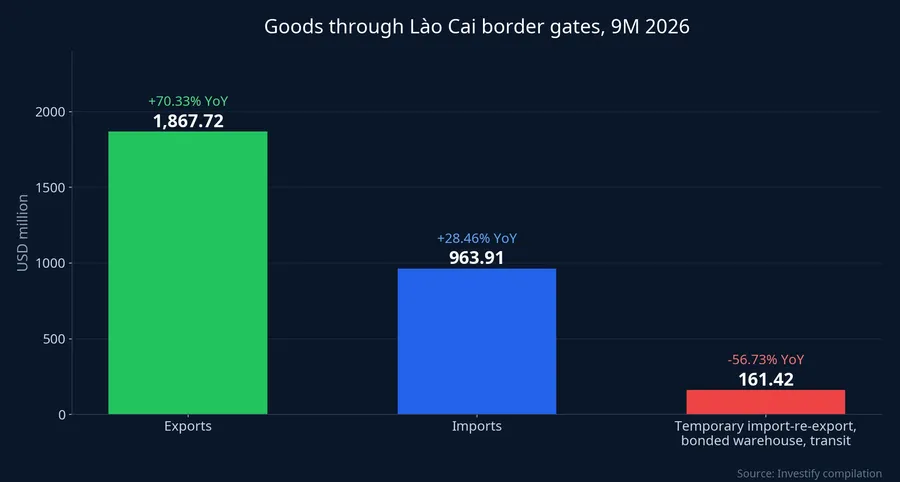
Two caveats apply. First, this covers all border gates in the province, not only the Kim Thành crossing Viettel Post will operate. Second, cross-border flows shift quickly: temporary import-re-export, bonded warehouse and transit goods fell 56.73% over the nine months.Báo Lào Cai Revenue at a clearance yard therefore depends on trade policy on both sides, not only on equipment capacity.
Kim Thành is also not alone. Viettel Post is studying a smart logistics center at Lao Bảo in Quảng Trị, with planned area of about 21.87 hectares.Người Quan Sát The company wants to build experience at Kim Thành and then study rolling the model out to other key border gates. If that happens, VND 860 billion could be only the first of a series of outlays.
Where the money would come from
The Q2 report shows a cash cushion. As of June 30, 2026, cash and equivalents were VND 1,001.2 billion, 2.9 times the start of the year, with short-term financial investments of VND 1,192.8 billion.Mekong ASEAN Some of that came from shareholders: the share offering that closed on May 19, 2026 raised over VND 502 billion net and lifted charter capital to nearly VND 1,720.3 billion, while Viettel Group still holds 61.16%.Báo Pháp luật
On the other side of the balance sheet, short-term borrowings and finance leases rose 21.3% to VND 1,634.5 billion, more than the cash on hand.Mekong ASEAN The cash looks enough to cover VND 860 billion on paper, but it also has to fund daily operations and short-term debt, so it cannot all go to one project.
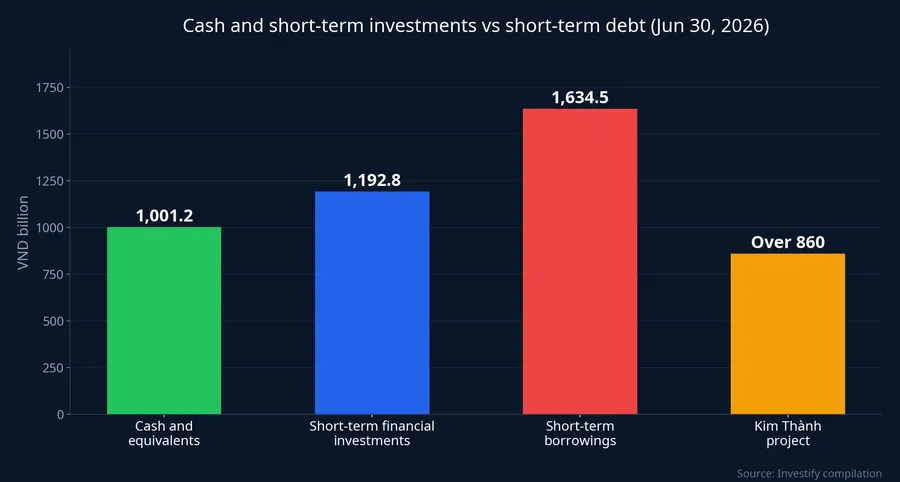
Because the project runs in three phases to 2032, annual cash pressure will be lower than the headline total. How heavy it proves for shareholders depends on three undisclosed items: phase-one capital, the split between debt and equity, and the year the gate starts producing revenue. These balances are as of end-Q2 and may have changed since.
Conclusion and two things to watch
Kim Thành moves Viettel Post from parcel delivery toward border logistics infrastructure. For now it is a committed expense with no revenue timetable. The prudent reading is a long-term outlay that pays off from 2027 onward, not a driver of 2026 profit.
The nearest marker is the Q3 2026 financial statement, which sources had not yet published as of October 26. It will show whether profit recovered once the fuel surcharge ran a full quarter, and how much of the VND 1,000 billion-plus in end-Q2 cash remains. If nine-month profit is still far from the VND 399.7 billion target while cash falls and short-term debt keeps rising, funding phase one gets harder. If profit recovers and cash holds, phase one could be funded without straining the balance sheet.
The second marker is any disclosure of the funding plan and phase-one timetable. A board resolution on bank borrowing for the project, or a plan to raise more from shareholders, would answer directly who pays for this border gate.