
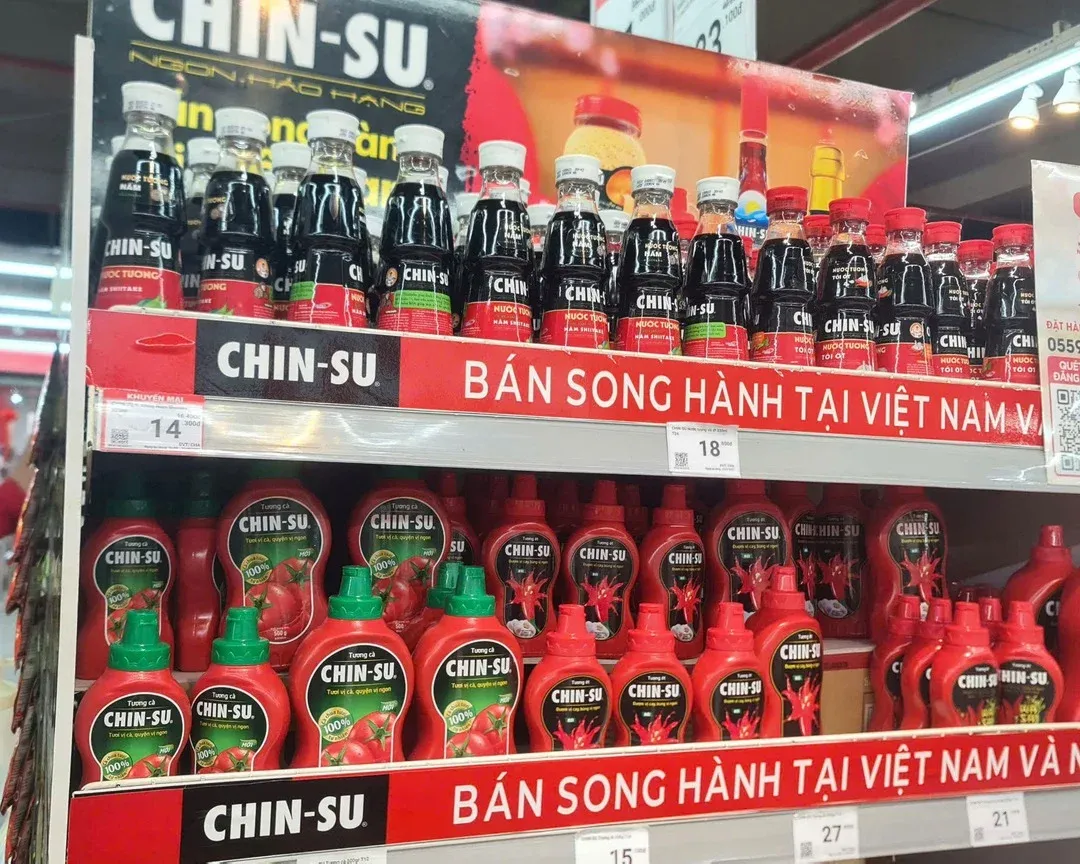

The numbers settle the outcome: Lepus Investment JSC bought the full 73 million MCH shares it had registered, taking its stake in Masan Consumer from 0% to 5.58%. According to the transaction report that CafeF republished on the morning of October 25, the trades ran from October 9 to 23, 2026.CafeF With that block, Masan Group (MSN) lifts its holding in Masan Consumer from roughly 69.4% to roughly 74.9%.
For holders of MSN or MCH, the price paid matters less than a different question: how the profit of the company behind Chin-su fish sauce, Omachi noodles and Vinacafé coffee has been re-split between the two shareholder groups, and how much further Masan can go.
From the October 6 filing to the results report
On October 6, Lepus registered to buy up to 73 million MCH shares, equal to 5.584% of charter capital, through both negotiated and order-matching trades, in a window running October 9 to 23. Lepus is a subsidiary in which Masan holds a 98% indirect economic interest.Mekong ASEAN
Lepus counts as an organization related to MCH insiders. Ms. Đỗ Thị Hoàng Yến is both Chair of the Board and Director of Lepus, and also serves as head of governance, Company Secretary and authorized information disclosure officer at Masan Consumer. She personally holds no MCH shares.CafeF Other persons related to Lepus hold 24,468 shares, or 0.002% of capital.
One limit deserves to be stated plainly. The Lepus report, as relayed by the press, gives only the total volume and the period. It does not break trades down by session and does not state the purchase price. The actual cash spent is therefore unknown, and no large block traded inside the window should be attributed to Lepus until the report confirms it.
What Masan Consumer just reported
To see what this outcome means for shareholders' money, set it beside the results Masan Consumer has just published. For the first nine months of 2026, revenue reached VND 24,380 billion, up 14.6% year on year. Profit after tax before minority interests was VND 5,222 billion, up 12%.
In the third quarter alone, revenue was VND 8,743 billion, up 16%, and profit after tax was VND 1,938 billion, up 14.1%. Convenience food was the largest category of the quarter at VND 2,940 billion in revenue, up 19.3%, followed closely by condiments at VND 2,919 billion, up 19%.CafeF Profit is rising steadily, which makes the question of who owns what a weighty one.
Splitting the profit: who gains, who gives up a share
Putting the nine-month profit of VND 5,222 billion next to the ownership ratios gives an illustrative calculation. It is Investify's own estimate, not a figure published by Masan, and it only serves to show scale.
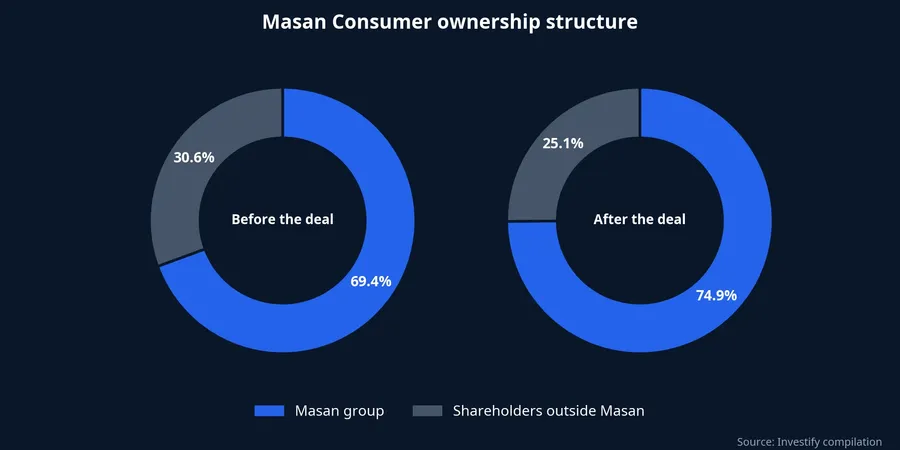
The 5.58% block Lepus just bought corresponds to roughly VND 291 billion of nine-month profit, calculated as VND 5,222 billion times 5.58%. Because Masan holds only 98% of the economic interest in Lepus, the portion that actually flows to MSN shareholders through this block is about VND 286 billion.
On the other side, before the deal shareholders outside Masan held about 30.6% of capital, equal to about VND 1,598 billion of nine-month profit. After the deal their share falls to about 25.1%, or about VND 1,311 billion.
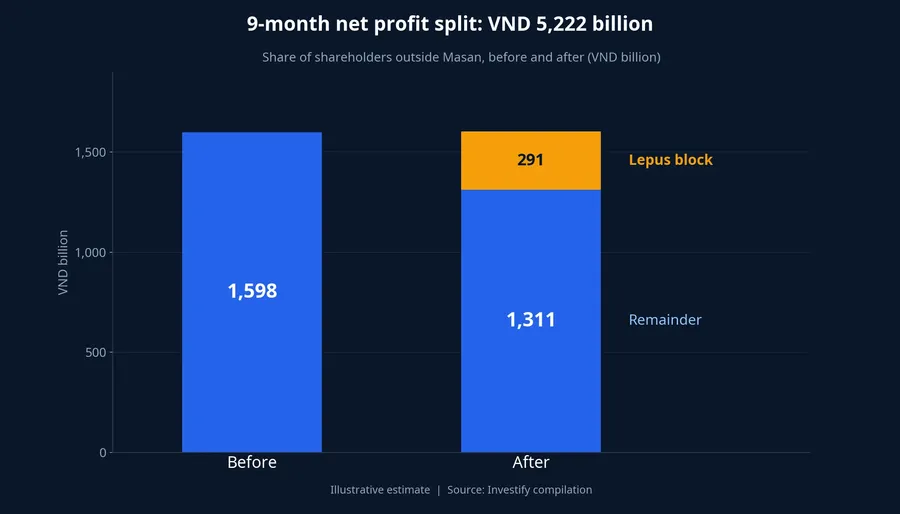
Two points to keep in mind. First, profit before minority interests also includes the share belonging to minority holders in Masan Consumer's own subsidiaries, so each side's true figure would be somewhat smaller. Second, ownership is not the same as economic interest: Masan holds MCH through several layers of subsidiaries, so the group's real economic interest does not coincide exactly with the 74.9% ownership level.
For MCH minority shareholders, profit per share is unchanged, because Lepus bought shares already in circulation rather than newly issued ones. What changes is the size of the group: roughly 73 million fewer shares sit outside Masan's hands.
What the 75% threshold means
Under Clause 1, Article 35 of the 2019 Securities Law, an organization or individual, together with related persons, that already holds 25% or more of a company's voting shares must launch a public tender offer if further purchases take them to or past 35%, 45%, 55%, 65% and 75%, according to Luật Minh Khuê's reading of the law.Clause 2 of the same article lists exemptions, for example when the share transfer has been approved by the general shareholders' meeting.
At about 74.9%, Masan is approaching the 75% line, not touching it. Buying more the old way, by registering and accumulating on the exchange, would push the group over the line. To go further, Masan would need to launch a public tender offer or rely on an exemption. The plan announced so far does not mention such a step, so there is no basis yet to say Masan will buy more.
A 74.9% stake is also not a sign of delisting. The 75% mark is the trigger for the tender-offer obligation, not a cap on ownership or an automatic condition for leaving the exchange. Maintaining a listing is judged under separate shareholder-structure rules.
What the report leaves unanswered
The results report leaves three things open: the average purchase price, the cash actually spent, and volume by session. The answers will come from three places.
Masan's fourth-quarter financial statements come first. The cost of buying additional shares in a subsidiary will appear in the consolidated cash flow statement, while the gap between the price paid and the book value of the additional stake is usually booked to equity rather than to profit. That is where MSN holders will learn what the group paid for the roughly 5.5 percentage points it just bought.
MCH's shareholder register is second. Lepus will have to appear as a major shareholder next to Masan Consumer Holdings JSC, and the register also shows how the remaining free float is distributed. The third is foreign ownership in MCH, an indirect trace of who sold. Even so, only an official report broken down by session can confirm the seller and the buyer.
Conclusion
The thesis is simple. This deal moves a slice of Masan Consumer's profit from outside shareholders to the Masan group: about VND 291 billion of nine-month profit on the illustrative calculation, in exchange for a sum Masan has not yet disclosed. For MCH holders, profit per share stays the same, but the largest shareholder is now close to the 75% line, beyond which any further purchase brings a tender-offer obligation or requires an exemption.
The next thing to watch is the average purchase price in Masan's fourth-quarter financial statements. That figure will show what the 5.58% stake actually cost.